
Many bakers and event planners enjoy decorating cakes with artificial flowers. However, a major concern is ensuring these decorations do not contaminate the food. It is important to know how to use them safely.
Artificial flowers can be used safely on cakes if specific precautions are followed. Key steps include selecting appropriate flowers, thoroughly cleaning them, and creating a barrier between the flowers and the edible cake parts. Adhering to these methods prevents contamination and ensures food safety.
Using artificial flowers can enhance a cake’s appearance, but food safety must always be the top priority. Without proper handling, there is a risk of transferring undesirable substances to the cake. Understanding and applying safe preparation techniques allows for beautiful and worry-free cake decorations.
Is it safe to put artificial flowers on a cake?
A common question is whether artificial flowers can be safely placed on a cake. This concern arises from the materials used in artificial flowers, which are not typically made for food contact. Understanding the potential risks is essential for safe cake decoration.
It can be safe to place artificial flowers on a cake, but only with careful consideration and proper handling. The primary issue is that these flowers are not manufactured to be food-grade. They may contain dyes, glues, or other materials that could be harmful if they come into direct contact with food, necessitating a barrier.
Failing to address food safety risks can have serious consequences. Potential contaminants from artificial flowers include non-food-grade dyes, adhesives, and materials from stems or wires. These substances can leach into the cake or frosting. Additionally, dust, dirt, or small fibers can accumulate on the flowers during storage or transport and then fall onto the cake. Recognizing these potential hazards helps in implementing effective preventive measures.
Why Food Safety is Crucial
- Public Health: Ensuring no harmful substances transfer to food protects consumers from illness.
- Reputation: Maintaining high food safety standards builds and preserves trust in professional services.
- Regulatory Compliance: Adhering to food safety guidelines helps avoid legal issues.
Potential Contaminants in Artificial Flowers
| Contaminant Type | Description | Risk to Cake |
|---|---|---|
| Dyes | Synthetic colors used in petals and leaves. | Can leach into edible parts. |
| Adhesives | Glues used for assembly. | May contain toxic chemicals. |
| Wires/Stems | Materials like plastic, metal, or covered wire. | Can contain heavy metals or other non-food-safe components. |
| Dust/Debris | Environmental particles collected over time. | Physical contamination. |
To minimize these risks, using "food safe artificial flowers" is often discussed, though few are explicitly certified as such. The focus should be on creating effective physical barriers and thorough cleaning to prevent any transfer of non-food-safe materials.
How to sanitize fake flowers for cake?
Once artificial flowers are selected, the next step is proper sanitization to ensure they are safe for cake decoration. Simply wiping them down may not be enough. A thorough cleaning and barrier method is necessary to protect the food.
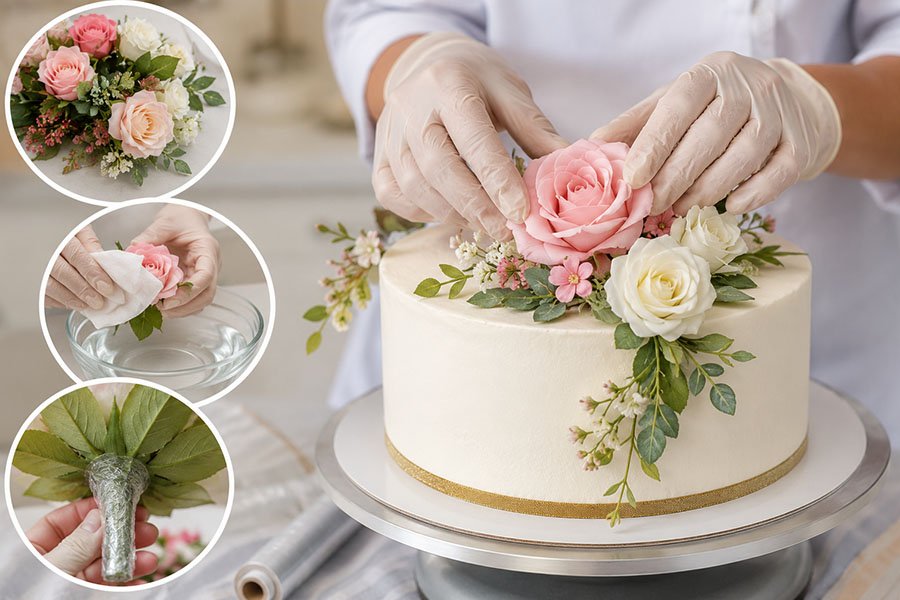
To sanitize fake flowers for cake decoration, carefully clean them and establish a physical barrier. Begin by removing all surface dust. Then, gently wipe the flowers with a damp cloth, avoiding chemical cleaners. Crucially, wrap any part of the flower that will touch the cake, especially stems, with food-grade floral tape or plastic wrap to create a non-permeable barrier.
Sanitization is a critical step that should not be overlooked. It prevents the transfer of contaminants from the flowers to the edible parts of the cake. This process involves more than just surface cleaning; it also includes physically isolating the non-food-grade materials from the food. The aim is to remove accumulated dust, dirt, and any loose particles, and then to ensure no direct contact between the flower materials and the cake.
Step-by-Step Sanitization Process
- Dust Removal: Use a soft brush, a clean, dry cloth, or a can of compressed air to remove all surface dust and loose fibers from the flowers. Pay attention to crevices and under leaves.
- Gentle Wiping: Dampen a clean cloth with plain water and gently wipe down petals and leaves. Do not use soaps, detergents, or chemical cleaners, as these can leave residues that are not food safe.
- Complete Drying: Allow the flowers to air dry completely. Any residual moisture can promote mold growth or adversely affect frosting.
- Stem Preparation: Trim the stems to the desired length using clean wire cutters.
- Barrier Wrapping: This is a crucial step. Wrap all cut ends and any portion of the stem or flower that will come into contact with the cake with food-grade floral tape or plastic wrap. This acts as an impermeable barrier against potential contaminants.
- Additional Barrier (Optional): For flower heads or leaves resting directly on the cake surface, consider placing a small piece of parchment paper or wax paper underneath for an extra layer of protection.
Recommended Barrier Materials
- Food-Grade Floral Tape: Specifically designed for use in food-adjacent applications.
- Plastic Wrap: A readily available household item effective for creating barriers.
- Parchment Paper: Useful for creating a flat barrier beneath flower heads.
While few products are specifically marketed as "food safe artificial flowers," implementing these sanitization and barrier techniques allows for their safe incorporation into cake designs.
What is the 4 day cake rule?
The "4-day cake rule" is an important guideline for food safety, especially when decorating with non-edible items like artificial flowers. Understanding this rule helps in planning and ensuring that cakes remain safe for consumption.
The "4-day cake rule" recommends that most cakes, particularly those containing perishable ingredients like dairy-based fillings or fresh fruit, be consumed within four days of baking. This guideline primarily addresses the prevention of bacterial growth in edible components. Although it does not directly apply to the artificial flowers themselves, it emphasizes the importance of food freshness and the duration of the flowers’ contact with the cake.
This rule is fundamentally about managing the perishability of food items. Cakes, especially those with certain fillings and frostings, are susceptible to bacterial spoilage over time. The longer a cake is stored, the higher the likelihood of microbial growth, even under refrigeration. This rule highlights the need for careful planning, including when to place artificial decorations and how long the cake will be on display.
Basis of the 4-Day Rule
- Bacterial Proliferation: After approximately four days, bacteria can multiply to levels that pose a health risk, even in properly stored cakes.
- Quality Degradation: The texture, flavor, and overall freshness of the cake diminish significantly beyond this period.
- Ingredient Sensitivity: Many cake components, such as cream cheese frosting, whipped cream, or fruit, are highly perishable.
Connection to Artificial Flower Usage
- Contact Duration: Extended contact between artificial flowers and the cake increases the hypothetical risk of contaminant transfer, even with barriers, though this risk is mitigated by proper preparation.
- Storage Conditions: The rule influences how cakes are stored. If a cake with artificial flowers is kept beyond the recommended period, considerations for dust accumulation or prolonged contact become more critical.
- Event Timelines: For events, the rule guides the timing of cake delivery, display, and consumption, impacting when flowers should be placed and potentially removed.
Practical Considerations for Cake Display
| Scenario | Artificial Flower Management |
|---|---|
| Short-term Display (e.g., event day) | Place thoroughly prepped flowers shortly before the event. |
| Longer Display (e.g., store window) | Ensure robust barriers are in place. Regularly inspect flowers for dust or damage. |
| Refrigerated Storage | Confirm flowers are completely dry before placement to prevent moisture-related issues. |
Adhering to the 4-day cake rule, combined with proper artificial flower preparation, ensures that both the aesthetic appeal and the food safety of the cake are maintained.
How to prep fake flowers for cake?
Once the artificial flowers are selected and cleaned, the final stage is preparing them for integration into the cake design. This involves specific steps to ensure both aesthetic appeal and food safety. This detailed preparation transforms the raw materials into safe and beautiful cake decorations.
To prepare artificial flowers for cake decoration, one must thoroughly clean them, precisely cut and wrap their stems, and carefully plan their insertion. Begin by removing all dust and gently wiping each flower. Next, trim stems to the required length and wrap any part that will contact the cake with food-grade tape or plastic wrap. Finally, insert them into the cake using an appropriate barrier to ensure stability and prevent direct contamination.
Meticulous preparation is key to achieving a stunning and safe cake. Just as a chef meticulously preps ingredients, decorators must carefully prepare their non-edible elements. This process involves ensuring that all materials are handled hygienically and that effective barriers are in place to isolate the flowers from the cake. Precision in these steps prevents design flaws and safeguards the cake’s integrity.
Detailed Preparation Steps
- Flower Selection: Choose high-quality artificial flowers that are robust and shed minimal particles. Flowers with fewer intricate parts might be easier to clean and barrier-wrap.
- Thorough Cleaning: As previously detailed, dust each flower with a soft brush or compressed air, then wipe it gently with a water-dampened cloth. Ensure complete drying.
- Stem Trimming: Using clean wire cutters, trim the flower stems to the exact length needed for your cake design. Consider the depth they will be inserted into the cake and how they will interact with other decorations.
- Essential Stem Wrapping: This is critical. Wrap the entire length of the stem that will be inserted into or rest against the cake with food-grade floral tape or plastic wrap. This creates a non-permeable barrier, preventing any direct contact between the flower’s internal components (like wire or non-food-grade plastic) and the cake.
- Barrier at Contact Points: For any parts of the flower (petals, leaves) that will directly touch the cake’s surface, consider placing a small, unobtrusive piece of parchment paper or wax paper underneath as an additional protective layer.
- Planned Insertion: Before inserting, identify the exact placement for each flower. For added security and stability, consider inserting a food-grade flower pick or a clean, new straw into the cake first, then placing the wrapped flower stem into this pre-made hole. This minimizes direct contact with the cake and provides structural support.
Essential Tools for Preparation
- Clean Wire Cutters: For precise and safe stem trimming.
- Soft Brush/Compressed Air: For effective dusting.
- Clean Cloth: For wiping surfaces.
- Food-Grade Floral Tape/Plastic Wrap: Crucial for creating barriers.
- Parchment/Wax Paper: For under-flower barriers.
- Food-Grade Flower Picks/Straws: For secure and hygienic insertion.
Best Practices for Secure Placement
- Pre-visualization: Plan the arrangement beforehand, perhaps on a dummy cake, to finalize the design.
- Stability Check: Ensure each flower is firmly placed and will not shift or fall during transport or display.
- Aesthetic Balance: Continuously assess the visual harmony of the arrangement from all angles.
By following these precise preparation steps, artificial flowers can be integrated into cake designs safely and effectively, contributing to a beautiful and worry-free presentation.
My insights: How Can You Be Sure That Artificial Flowers Won’t Contaminate Your Cake?
Worried about artificial flowers on your beautiful cake? Don’t let contamination fears ruin your masterpiece! Ensure food safety and stunning aesthetics.
To guarantee artificial flowers don’t contaminate your cake, use only food-grade, non-toxic flowers designed for cake decoration. Always employ barriers like floral picks, straws, or food-safe wrap to prevent direct contact between the flowers and the cake. Thoroughly clean flowers and avoid those with flaking dyes or exposed wires.
Minimizing Contamination Risks with Artificial Flowers
Incorporating artificial flowers into cake decoration offers design flexibility and lasting beauty. However, ensuring food safety is paramount. By understanding the potential risks and implementing proper precautions, you can confidently use faux blooms without compromising hygiene. The key lies in selecting appropriate materials and creating effective physical barriers between the decorative elements and the edible surfaces.
Key Strategies for Safe Artificial Flower Use
Adhering to specific guidelines will significantly reduce any risk of contamination from artificial flowers.
Source and Quality Control
Prioritize artificial flowers specifically labeled as "food-contact safe" or "food-grade." These products are manufactured with non-toxic materials and dyes. Always check for safety certifications or reliable suppliers specializing in cake decorating supplies. Avoid craft-grade flowers, as they are not intended for food proximity and may contain harmful chemicals or non-food-safe components.
Creating Physical Barriers
This is the most critical step to prevent direct contamination. Never allow raw stems, wires, or the fabric of the flower to touch the cake’s surface or frosting directly.
| Barrier Method | Description | Best Use Case |
|---|---|---|
| Floral Picks | Small plastic tubes designed to hold flower stems, isolating them from the cake. | Ideal for inserting stems into the cake. |
| Drinking Straws | Cut to size, these can act as sleeves for thicker stems or wire, then inserted into the cake. | Versatile for various stem sizes. |
| Cling Film/Foil | Wrap stems securely with food-safe cling film or aluminum foil before inserting or placing on cake. | Flexible for wrapping irregular shapes. |
| Cake Toppers/Stands | Position flowers on an inedible base or separate tier of the cake stand, avoiding direct cake contact. | For elaborate arrangements or non-inserted flowers. |
Pre-use Preparation
Before placing any artificial flowers on or near a cake, clean them thoroughly. Gently wipe them down with a damp cloth to remove any dust, packaging residue, or manufacturing particles, and allow them to air dry completely. Inspect each flower for any loose glitter, flaking paint, or exposed wires, as these can easily fall onto the cake and pose a risk. If a flower shows signs of shedding or damage, it’s best to avoid using it.
Conclusion
Using artificial flowers on cakes requires careful attention to food safety. The main steps involve choosing high-quality flowers, cleaning them thoroughly, and using barriers on all parts that touch the cake. Following these simple rules ensures that your decorated cakes are both beautiful and safe for everyone.