
Choosing artificial flowers can feel simple at first. But the wrong colors, textures, or flower types can make a room feel out of season fast.
To choose artificial flowers for different seasons, match the flower type, color palette, texture, and arrangement style to the mood of each season. Use soft pastels and fresh stems in spring, bold colors in summer, warm earthy tones in autumn, and whites, reds, evergreens, or metallic accents in winter.
Artificial flowers look best when they match the season: light in spring, bright in summer, warm in autumn, and calm or festive in winter.
What Kind of Artificial Flowers Look the Most Realistic?
Realistic artificial flowers solve a common décor problem. People want lasting beauty, but they do not want flowers that look stiff, shiny, or cheap.
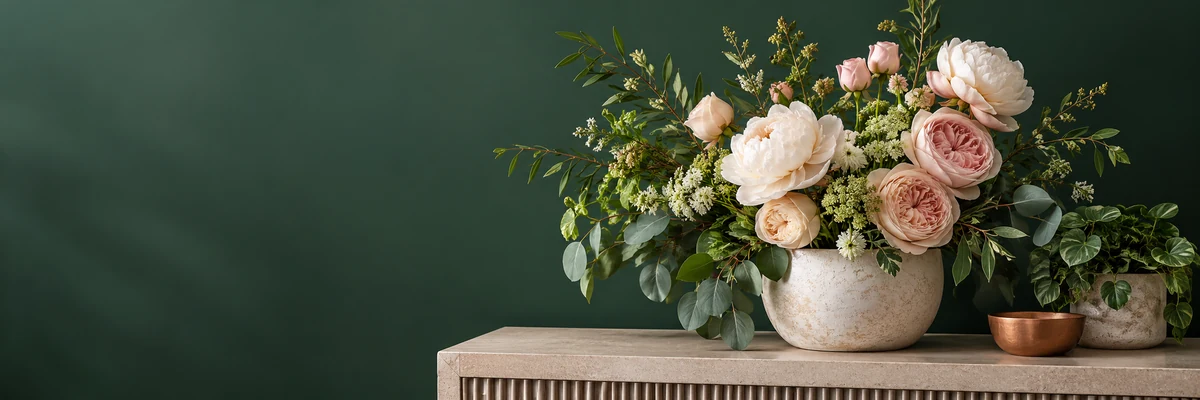
The most realistic artificial flowers usually have real-touch petals, high-grade silk or polyester, wired stems, natural color variation, and irregular shapes. Good fake flowers should not look too perfect. They should copy the small bends, soft edges, and uneven tones found in fresh flowers. Real-touch flowers are often made with polymers such as latex or silicone to create a soft feel close to fresh petals.
Look for Texture Before Color
A realistic flower starts with surface detail. Petals should have a soft matte finish. Leaves should show light veins. Stems should bend naturally. If every petal has the same shape, the flower can look flat. Fresh flowers are never perfectly even, so good artificial flowers should include slight variation.
Compare Materials by Use
| Material | Best For | Seasonal Use |
|---|---|---|
| Real-touch latex or PU | Close-up arrangements, weddings, tabletops | Spring and summer |
| High-grade silk | Soft indoor bouquets and event décor | All seasons |
| Polyester | Durable home and commercial displays | Autumn and winter |
| Plastic blends | Outdoor fillers and large installations | Summer and holiday décor |
Real-touch blooms are strong choices for roses, orchids, tulips, and calla lilies because these flowers are often viewed close-up. Silk or premium polyester can work better for large flower walls, ceiling installations, and retail displays because they are lighter and easier to handle. For outdoor seasonal décor, UV-resistant artificial flowers are more practical than delicate silk stems.
The best test is simple. Place the flower where people will actually see it. If it sits on a dining table, touch and petal detail matter more. If it sits above eye level or in a large background installation, color balance and shape matter more. Realism is not only about material. It is about matching the flower quality to the viewing distance.
Which Flower Represents Each Season?
Seasonal flower choices can guide artificial flower styling. Without a seasonal anchor, a display may look pretty but disconnected.
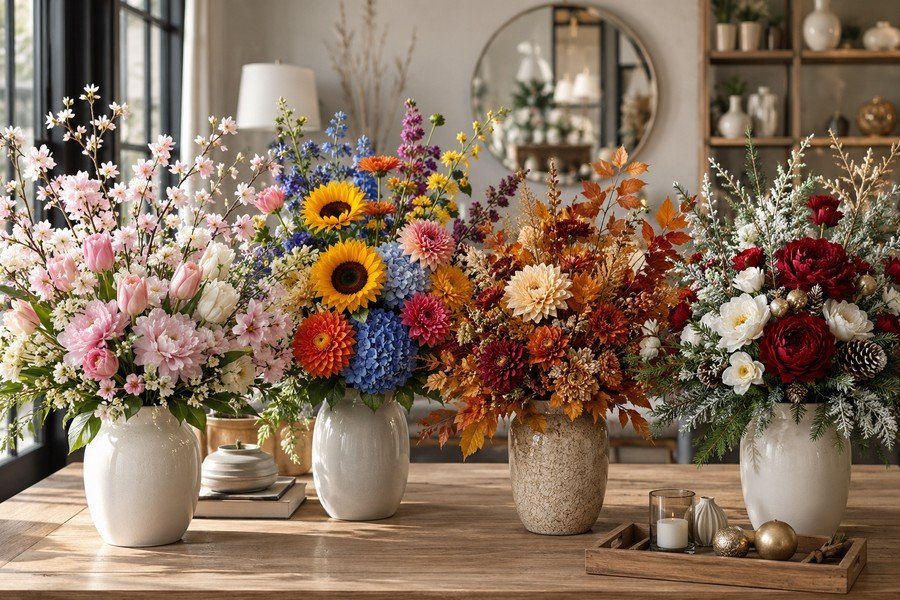
Spring is often represented by tulips, daffodils, cherry blossoms, and peonies. Summer suits roses, hydrangeas, sunflowers, and lavender. Autumn works well with dahlias, chrysanthemums, marigolds, and berries. Winter is often linked with amaryllis, hellebores, paperwhites, evergreens, and white branches. Wedding floral guides also connect spring with lilacs, peonies, tulips, and ranunculus; summer with hydrangeas and garden roses; autumn with dahlias and chrysanthemums; and winter with amaryllis, hellebores, and anemones.
Build the Season With Color First
| Season | Main Mood | Good Artificial Flowers | Best Colors |
|---|---|---|---|
| Spring | Fresh, soft, new | Tulips, peonies, cherry blossoms, ranunculus | Blush, cream, lavender, pale yellow |
| Summer | Bright, open, lively | Roses, hydrangeas, sunflowers, geraniums | Coral, white, blue, yellow |
| Autumn | Warm, textured, grounded | Dahlias, chrysanthemums, marigolds, berries | Terracotta, rust, amber, burgundy |
| Winter | Calm, rich, festive | Amaryllis, orchids, evergreens, pine, berries | White, red, deep green, gold |
Use Flower Meaning as a Styling Tool
A seasonal flower does more than match the calendar. It creates a feeling. Tulips feel optimistic. Peonies feel romantic. Sunflowers feel warm and casual. Dahlias feel full and dramatic. Amaryllis feels bold and elegant. This helps when choosing flowers for different spaces.
For a spring reception area, artificial cherry blossoms or tulips can make the room feel lighter. For a summer wedding arch, hydrangeas and roses create volume without looking too heavy. For autumn retail décor, dahlias and berries add texture and visual weight. For winter dining tables, white orchids, amaryllis, pine, and berry stems can feel clean but still seasonal.
Artificial flowers are useful because they allow planners and decorators to use seasonal looks even when fresh flowers are expensive, fragile, or unavailable. The key is restraint. A winter display does not need every holiday flower. A few strong seasonal signals are enough.
What Are the Latest Trends in Fake Flowers?
Fake flowers are no longer only used as a low-maintenance substitute. They are now part of larger home, event, and retail design trends.
The latest artificial flower trends include hyper-realistic real-touch stems, wild garden-style arrangements, earthy neutral palettes, oversized installations, vintage floral looks, and reusable event décor. In 2026, floral styling is moving toward softness, warmth, natural variation, and more expressive botanical design. Current floral palette trends include soft romantic blush tones, fresh garden yellows and greens, earthy neutrals, airy coastal colors, and moody botanical shades.
Trend 1: Natural Wildness
Perfect round bouquets are less dominant now. More arrangements use asymmetry, mixed stem heights, and airy movement. This works especially well with artificial flowers because wired stems can be shaped again and again. A wild spring arrangement may include cherry blossoms, tulips, and soft greenery. A summer version may use roses, cosmos, and loose vines.
Trend 2: Warm, Earthy Colors
Cool white interiors are giving way to warmer tones. Artificial flowers in beige, olive, terracotta, butter yellow, soft peach, and muted plum can fit this shift. These colors feel less plastic and more natural. They also work well across several seasons. For example, a cream rose can move from spring to winter when paired with different greenery.
Trend 3: Large-Scale Reusable Décor
Event planners and retailers often choose artificial flowers because they can be reused. Large arches, ceiling flowers, floral walls, and window displays are more practical when the flowers can be stored, reshaped, and installed again. Industry trend reports also point to natural wildness, artistic structure, premium materials, reusability, and large-scale installations as important directions for artificial flowers.
Trend 4: Vintage and Heirloom Florals
Soft roses, peonies, hydrangeas, and faded colors are becoming popular for romantic interiors. This style avoids bright plastic colors. It uses cream, dusty pink, mauve, and faded green. The result feels collected, warm, and timeless.
What Flowers Should Not Be Mixed Together?
Mixing flowers is not only about beauty. Some combinations look awkward, and some fresh flowers can even shorten the life of others.
For artificial flowers, avoid mixing flowers that clash in season, scale, finish, or style. For fresh flowers, daffodils should not be placed directly with many other cut flowers unless they are conditioned first, because their sap can affect water uptake in nearby stems. Cut daffodils release a slimy substance into vase water, which can block other flowers from absorbing water.
For Artificial Flowers, Avoid These Mixes
| Avoid Mixing | Why It Looks Wrong | Better Choice |
|---|---|---|
| Spring tulips with heavy autumn berries | The seasonal message feels confused | Pair tulips with ranunculus or blossoms |
| Neon tropical flowers with vintage roses | The style conflict is too strong | Use one clear theme |
| Glossy plastic stems with real-touch flowers | The quality gap becomes obvious | Keep finishes similar |
| Tiny fillers with oversized blooms only | The scale feels unbalanced | Add medium-size flowers |
| Too many colors in one vase | The bouquet loses focus | Use a 3-color palette |
Style Harmony Matters More Than Strict Rules
Artificial flowers give more freedom than fresh flowers. You can mix roses with hydrangeas, orchids with branches, or peonies with greenery in any month. But each arrangement still needs logic. A bouquet should have one main season, one main color story, and one clear use.
A spring arrangement can include peonies, tulips, and eucalyptus because they feel soft and fresh together. A summer arrangement can include roses, hydrangeas, and lavender because they feel full and bright. An autumn display can include dahlias, chrysanthemums, berries, and dried-looking leaves because they share warmth and texture. A winter design can include amaryllis, pine, white orchids, and red berries because they support a calm festive style.
The safest method is to choose one hero flower, two support flowers, and one greenery type. This keeps the arrangement rich but not messy. It also helps bulk buyers and event planners control cost, storage, and repeat use.
My Insights: How Should You Choose Artificial Flowers for Different Seasons
Seasonal artificial flowers should not be chosen only by flower name. The better question is how each flower will work with the season, the room, the lighting, and the purpose of the display.
Choose artificial flowers for different seasons by building a seasonal system. Start with the season’s mood, then select a flower family, color palette, material quality, and arrangement shape. This method makes artificial flowers look intentional, realistic, and suitable for homes, weddings, commercial spaces, and long-term décor.
A Practical Seasonal Selection System
| Step | Question to Ask | Example |
|---|---|---|
| 1. Season | What should the space feel like? | Fresh in spring, warm in autumn |
| 2. Flower Type | Which flowers naturally express that feeling? | Tulips for spring, dahlias for autumn |
| 3. Color Palette | Which colors support the season? | Pastels, brights, earth tones, whites |
| 4. Material | How close will people stand to the flowers? | Real-touch for tables, polyester for displays |
| 5. Shape | Should the arrangement feel loose, full, or structured? | Loose spring stems, full winter centerpiece |
Match Use Case With Durability
A home vase can use softer, more delicate artificial flowers. A wedding centerpiece needs better realism because guests sit close to it. A retail display may need stronger stems and fuller volume because it must hold its shape for weeks. Outdoor summer décor should use UV-resistant materials when possible. Winter displays may need stronger greenery, pine, berries, and branches because they create structure.
Think in Seasonal Layers
A strong seasonal arrangement has three layers. The first layer is the hero flower. This creates the main message. The second layer is support flowers. These add volume and color depth. The third layer is greenery, branches, berries, or fillers. This creates movement and makes the arrangement feel complete.
For spring, the hero flower may be a tulip or peony. The support flowers may be ranunculus and small blossoms. The greenery should be light. For summer, the hero flower may be a rose or sunflower. The support flowers may be hydrangeas or lavender. The greenery can be fuller. For autumn, the hero flower may be a dahlia. The support flowers may be chrysanthemums, berries, and dried-look leaves. For winter, the hero flower may be amaryllis or orchid. The support pieces may be evergreens, pinecones, berries, or metallic accents.
This system makes buying easier. It also keeps artificial flowers from looking random. Each season has its own voice, and the flowers should speak that voice clearly.
Conclusion
Choose artificial flowers by season, color, texture, and purpose. When each detail supports the season, faux flowers look more natural, useful, and beautiful.