
Choosing artificial wedding flowers can feel risky. The wrong bouquet may look fake, clash with the venue, or weaken the whole wedding style.
To choose the right artificial flowers for your wedding, match the flowers to your theme, season, venue, color palette, budget, and viewing distance. Use real-touch blooms for close-up pieces, silk flowers for soft movement, and structured faux greenery for arches, aisles, and large installations.
Artificial wedding flowers look best with purpose: detailed bouquets for close views, full arches for distance, and balanced centerpieces for lasting wedding photos.
What Is the 3 5 8 Rule for Flowers?
The 3 5 8 rule gives wedding arrangements a simple structure. Without a structure, artificial flowers can look crowded, flat, or random.
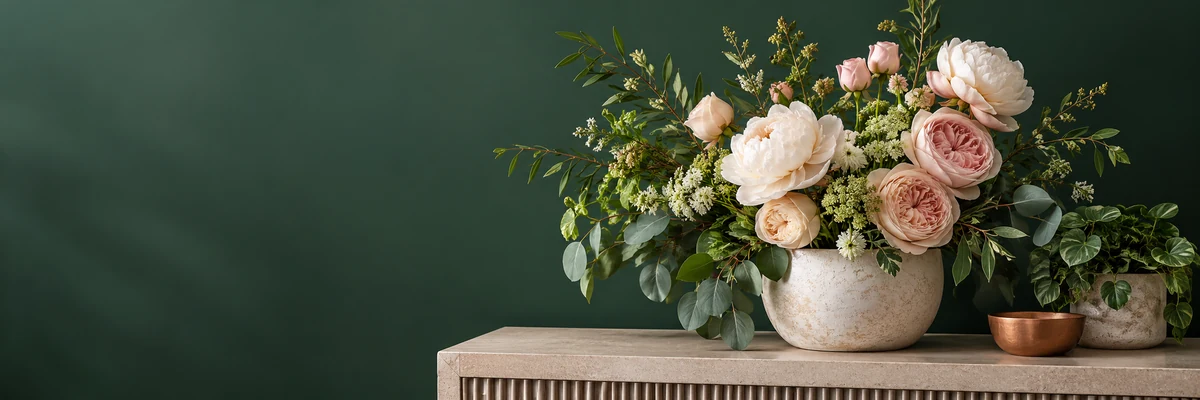
The 3 5 8 rule means using 3 focal flowers, 5 greenery stems, and 8 filler or accent flowers to create a balanced floral arrangement. It helps artificial wedding bouquets, centerpieces, and aisle flowers look fuller, more natural, and more professionally arranged. Floral guides describe this rule as a composition formula for balance, with focal flowers, greenery, and accents working together. :contentReference[oaicite:1]{index=1}
How the Rule Works in Wedding Flowers
| Number | Floral Role | Wedding Example |
|---|---|---|
| 3 | Focal flowers | Roses, peonies, orchids, ranunculus |
| 5 | Greenery stems | Eucalyptus, ruscus, olive leaves, fern |
| 8 | Filler accents | Baby’s breath, wax flowers, berries, small blossoms |
The 3 focal flowers set the mood. They should match the wedding theme first. For a romantic wedding, ivory roses, blush peonies, or soft ranunculus work well. For a modern wedding, white orchids or calla lilies can feel cleaner. For a garden wedding, larger roses and loose blossoms feel natural.
The 5 greenery stems create shape. Greenery helps the bouquet breathe. It also hides stems, gaps, and wiring in artificial arrangements. Faux eucalyptus is useful for soft movement. Ruscus works well for a clean shape. Olive leaves suit outdoor, rustic, or Mediterranean wedding styles.
The 8 filler accents add texture. They should not steal attention from the focal flowers. Small blossoms, berry stems, and light fillers make artificial flowers look less stiff. This is important because faux flowers can look too perfect if every bloom has the same size and finish.
How to Use It Without Making the Bouquet Look Formulaic
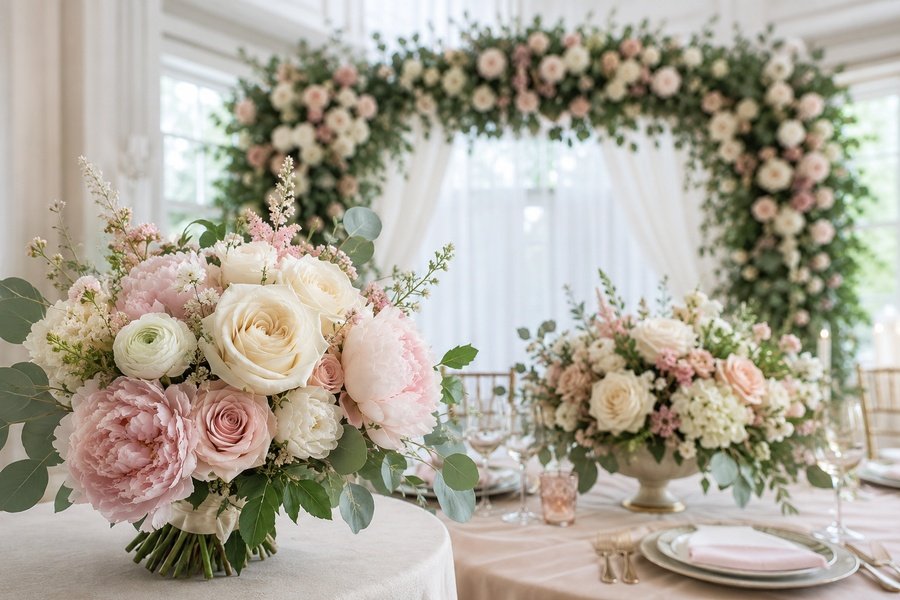
The rule should guide the arrangement, not trap it. A bridal bouquet can follow the 3 5 8 idea but still look loose and natural. A centerpiece can use the same ratio in a wider shape. A floral arch can scale the rule up by using groups of focal blooms, greenery clusters, and accent flowers.
For artificial wedding flowers, this rule is especially helpful because it controls bulk. Too many large faux flowers can look heavy. Too many fillers can look messy. A clear ratio keeps the design polished and easy to repeat across bouquets, centerpieces, pew flowers, and reception décor.
What Kind of Artificial Flowers Look the Most Realistic?
Realism matters most in wedding flowers. Guests will see bouquets, boutonnieres, and centerpieces closely, so cheap materials are easy to notice.
The most realistic artificial wedding flowers are usually real-touch flowers, premium silk flowers, wax-coated flowers, and high-quality faux greenery. Real-touch flowers often use latex or polyurethane to copy the soft feel of petals, while premium silk flowers add light movement and natural drape. Real-touch flowers are commonly described as latex or polyurethane blooms that mimic the feel of real petals, and wax-coated flowers are also used for a lifelike finish. :contentReference[oaicite:2]{index=2}
Choose Material by Wedding Use
| Wedding Item | Best Artificial Material | Why It Works |
|---|---|---|
| Bridal bouquet | Real-touch roses, peonies, ranunculus | Close-up realism matters most |
| Bridesmaid bouquets | Premium silk or mixed real-touch | Good look with lower weight |
| Boutonnieres | Small real-touch or silk blooms | Needs detail in photos |
| Centerpieces | Silk flowers with greenery | Soft shape and easy volume |
| Ceremony arch | Silk, polyester, and faux greenery | Lightweight and large-scale |
| Cake flowers | High-quality silk or food-safe décor pieces | Clean and controlled look |
Real-Touch Flowers
Real-touch flowers are a strong choice for hero blooms. Roses, tulips, orchids, peonies, and ranunculus look convincing when the petals have soft edges, realistic weight, and gentle color variation. These flowers are useful for the bridal bouquet because the bouquet appears in many photos.
But real-touch flowers are not always needed everywhere. They can cost more and may be heavier. If the flowers are used high on an arch or far from guests, premium silk or polyester flowers can be enough.
Premium Silk Flowers
Many “silk flowers” today are made from synthetic fabric, not real silk. Still, the name is common in the wedding industry. Good silk flowers are useful for soft, airy, layered designs. They work well for cosmos, sweet peas, poppies, small wildflowers, and foliage. They can move more naturally than heavy real-touch flowers.
Small Details That Make Faux Flowers Look Better
Realistic artificial flowers should not look too perfect. Look for petals with small bends, soft color changes, and natural edges. Avoid overly shiny leaves. Bend wired stems into gentle curves. Mix open blooms with half-open buds. Add greenery to break up repeated shapes.
The best artificial wedding flowers are not always the most expensive ones. The best ones are the flowers that fit the viewing distance, lighting, theme, and arrangement size.
How Much Do People Spend on Fake Flowers for a Wedding?
Wedding flower spending can vary a lot. Couples often choose artificial flowers to control cost, reduce stress, and avoid seasonal price changes.
People may spend anywhere from a few hundred dollars to several thousand dollars on fake wedding flowers, depending on quality, quantity, and whether they buy, rent, or DIY. Individual artificial bouquets, corsages, centerpieces, or garlands may range from about $20 to $300 each. Zola notes that artificial wedding flower pieces can cost from $20 to $300 each, while The Knot reported the average U.S. wedding flower cost at $2,800 for fresh wedding florals in 2026. :contentReference[oaicite:3]{index=3}
Common Fake Wedding Flower Budget Levels
| Budget Level | Estimated Spend | Best For |
|---|---|---|
| Minimal | $150–$500 | Bridal bouquet, boutonniere, small table accents |
| Moderate | $500–$1,500 | Bouquets, boutonnières, simple centerpieces |
| Full wedding décor | $1,500–$3,500+ | Ceremony arch, aisle flowers, reception centerpieces |
| Luxury faux floral design | $3,500+ | Large installations, custom designs, premium materials |
What Changes the Cost?
The biggest cost factor is not only the flower type. It is the total floral plan. A bride with one bouquet and a few table pieces will spend much less than a couple using flowers for the ceremony arch, aisle, welcome sign, sweetheart table, cake table, guest tables, and photo backdrop.
Material also matters. Real-touch flowers often cost more than basic silk flowers. Custom color matching can add cost. Larger blooms may cost more per stem but may reduce the number of stems needed. Greenery can save money because it adds volume without using too many premium flowers.
Buy, Rent, or DIY?
Buying works well when couples want to keep the bouquet or reuse the flowers after the wedding. Renting works well when couples want a polished look without storing many items later. DIY works well when the wedding style is simple and the couple has time to test arrangements before the wedding.
Artificial flowers can also reduce hidden stress. They can be ordered early. They do not wilt. They are not limited by season. They can be previewed before the wedding day. This makes them useful for destination weddings, outdoor weddings, and weddings with long setup times.
The smartest budget method is to spend more on flowers people see closely and spend less on flowers seen from far away. Use better blooms for the bridal bouquet, groom boutonniere, and head table. Use larger silk flowers and greenery for arches, aisles, and background areas.
What Flowers Should Not Be Mixed Together?
Some flowers should not be mixed because they clash in style. Fresh flowers may also have care issues that affect nearby blooms.
For artificial wedding flowers, avoid mixing flowers that clash in season, scale, color temperature, or material quality. For fresh flowers, daffodils should not be placed directly with many other cut flowers unless conditioned first, because their sap can shorten the life of nearby stems. Daffodils release sap after cutting, and several floral care guides recommend conditioning them separately before mixing. :contentReference[oaicite:4]{index=4}
Artificial Flower Combinations to Avoid
| Avoid Mixing | Why It Looks Wrong | Better Choice |
|---|---|---|
| Tropical orchids with rustic wildflowers | The themes feel unrelated | Choose tropical-modern or garden-rustic |
| Bright neon flowers with dusty vintage roses | The color story feels confused | Use one color temperature |
| Cheap glossy plastic with real-touch blooms | The quality gap becomes obvious | Keep finishes similar |
| Oversized flowers with only tiny fillers | The scale feels unbalanced | Add medium-size blooms |
| Too many flower types in one bouquet | The design loses focus | Use 2–4 main flower types |
Think About Wedding Style First
A wedding bouquet should support the wedding style. A classic ballroom wedding may use roses, orchids, hydrangeas, and clean greenery. A garden wedding may use peonies, ranunculus, sweet peas, and loose vines. A beach wedding may use orchids, anthuriums, palms, and white roses. A rustic wedding may use dahlias, roses, dried-look fillers, and soft greenery.
When these styles mix without control, the flowers can look random. For example, a rustic burlap table with glossy tropical flowers may feel disconnected. A modern black-and-white wedding with many wild pastel flowers may also feel unclear unless the design is planned carefully.
Match Texture and Finish
Artificial flowers have different finishes. Some petals are matte. Some are soft and real-touch. Some are fabric-like. Some leaves are shiny. If one bouquet includes too many finishes, guests may notice the artificial quality faster.
A good rule is to keep the hero flowers in one finish and use greenery to soften the transitions. If the bouquet uses real-touch roses, choose soft silk fillers and matte greenery. If the arch uses polyester flowers, avoid placing a few very expensive real-touch flowers in the same close-up area unless the finishes blend well.
Keep the Color Story Tight
Most wedding bouquets look better with three main colors: one base color, one accent color, and one greenery tone. Ivory, blush, and sage is a safe romantic palette. White, champagne, and olive feels classic. Terracotta, cream, and muted green works for autumn. Black, white, and deep green feels modern.
Artificial flowers are easy to overbuy because they last long and are available in many colors. But a wedding bouquet needs control. A clear palette will always look more expensive than a crowded mix.
My Insights: How to Choose the Right Artificial Flowers for Your Wedding?
The right artificial wedding flowers should be chosen by design purpose, not only by flower name. A beautiful faux flower can still be wrong if it does not fit the venue, dress, season, table style, or camera distance.
To choose the right artificial flowers for your wedding, build the floral plan around five decisions: wedding style, color palette, flower material, arrangement role, and budget priority. Use the most realistic flowers for close-up pieces and use volume-friendly flowers for large décor.
Step 1: Start With the Wedding Mood
Before choosing flower types, define the mood. Romantic weddings need soft, rounded flowers. Modern weddings need cleaner shapes. Garden weddings need loose movement. Luxury weddings need strong structure and full floral moments.
| Wedding Mood | Best Faux Flowers | Best Colors |
|---|---|---|
| Romantic | Roses, peonies, ranunculus | Blush, ivory, champagne |
| Modern | Orchids, calla lilies, anthuriums | White, green, black, beige |
| Garden | Sweet peas, tulips, cosmos, vines | Soft pink, lavender, sage |
| Rustic | Dahlias, roses, wildflowers, berries | Terracotta, cream, olive |
| Classic | Roses, hydrangeas, orchids | White, ivory, soft green |
Step 2: Decide Where Realism Matters Most
Not every flower needs the same quality level. The bridal bouquet should have the highest realism because it appears in portraits, close-up photos, and ceremony moments. Boutonnieres also need detail because they sit close to the face and suit. Centerpieces need realistic top views because guests sit near them. Arches and ceiling flowers need shape, color, and fullness more than touch detail.
This helps the budget work harder. Use premium real-touch flowers for the bridal bouquet. Use mixed silk and real-touch flowers for bridesmaid bouquets. Use silk flowers and greenery for centerpieces. Use large artificial flowers, greenery, and fabric support for arches or backdrops.
Step 3: Match the Flowers to the Venue
A hotel ballroom can handle fuller flowers and formal designs. A garden venue needs flowers that look natural in daylight. A beach wedding needs flowers that can handle wind, heat, and transport. A church ceremony may need classic flowers with soft colors. A modern rooftop wedding may look better with orchids, white roses, and strong greenery.
Artificial flowers give more control than fresh flowers, but the venue still matters. Lighting can change how petals look. Direct sun may make shiny petals look cheaper. Dim indoor light may hide small details. Before finalizing the flowers, test a sample in similar lighting.
Step 4: Use a Clear Floral Hierarchy
A wedding floral plan should have hero pieces and support pieces. The hero pieces are the bridal bouquet, ceremony backdrop, sweetheart table, and main photo area. These pieces deserve more design attention. Support pieces include aisle markers, guest table flowers, welcome sign flowers, and bar arrangements. These should match the design but do not need to be as detailed.
| Floral Area | Priority Level | Best Approach |
|---|---|---|
| Bridal bouquet | Very high | Best materials and most detail |
| Groom boutonniere | High | Small but realistic |
| Ceremony arch | High | Strong shape and volume |
| Guest centerpieces | Medium | Balanced design and clean palette |
| Aisle flowers | Medium-low | Reusable clusters |
| Welcome sign flowers | Medium | Good color match |
| Background décor | Low-medium | Volume and shape matter most |
Step 5: Choose Flowers That Photograph Well
Wedding flowers live in photos long after the wedding day. Artificial flowers should look soft under natural light and flash. Matte petals usually photograph better than shiny petals. Slight color variation also helps the flowers look natural. Avoid flowers with hard plastic edges in close-up areas.
White flowers should not be too blue-white. Blush flowers should not be too neon. Greenery should not look overly glossy. If possible, take phone photos of sample flowers under daylight, indoor light, and warm evening light. This simple test can prevent many mistakes.
Step 6: Plan for Reuse
Artificial wedding flowers can be reused after the ceremony. Aisle flowers can move to reception tables. Ceremony arch flowers can become a sweetheart table backdrop. Bridesmaid bouquets can decorate the cake table or bar. Centerpieces can become home décor after the wedding.
This is one of the strongest reasons to choose faux flowers. The right artificial flowers can support the wedding day and still have value later. They are also easier to prepare early, pack safely, and keep consistent across the full event.
The best artificial wedding flowers are not chosen by trend alone. They are chosen by purpose. When the flower material, color, scale, and placement all support the wedding design, faux flowers can look graceful, realistic, and deeply personal.
Conclusion
Choose artificial wedding flowers by style, realism, budget, venue, and placement. The right faux flowers should support the wedding, photograph well, and feel intentional.