
?Are your outdoor flowers wilting as soon as the weather gets hot? It is frustrating to spend money on plants that die within weeks. I have a simple way to keep your garden beautiful.
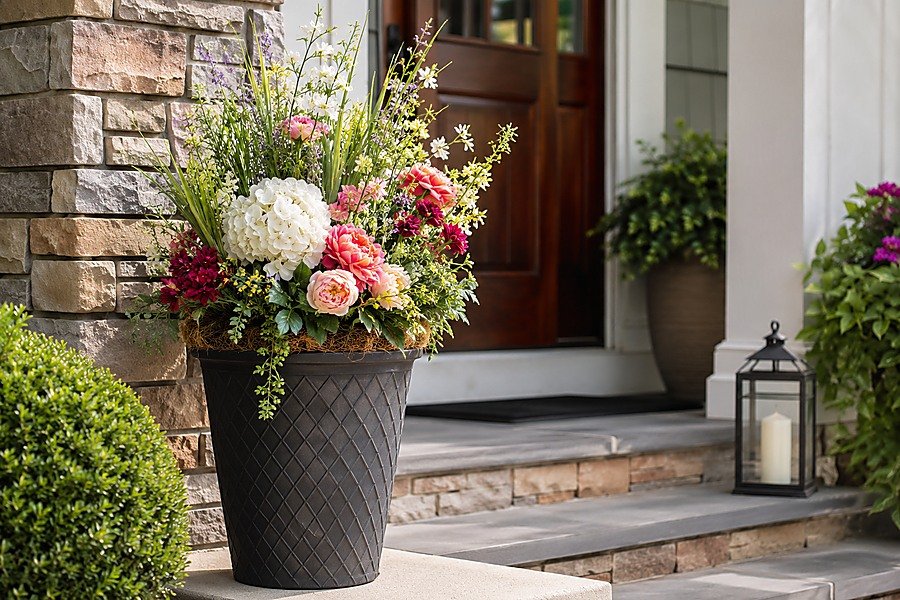
To fill an outdoor planter with artificial flowers, you should use a heavy base like gravel and a mounting layer like floral foam. Secure the stems with glue and cover the top with real mulch. Use UV-rated flowers and spray them with a protectant to prevent sun damage.
I have worked in the floral industry for over ten years. I have seen how much money people waste on fresh flowers that do not last. I want to share my secrets for creating outdoor displays that look real and stay perfect. You do not need a green thumb to have a stunning entryway. You just need the right materials and a few simple steps. Keep reading to learn how to master this professional look.
What to fill a planter with for fake flowers outdoor?
Are you worried about your artificial flowers flying away in a storm? Many people find their decorations in the neighbor’s yard after a windy night. It is a common problem that is easy to fix.
You should fill the bottom of the planter with heavy items like rocks or bricks for stability. Use dry floral foam or spray foam to hold the flower stems in place. Top the planter with natural materials like moss or wood chips to hide the fake parts.
The Importance of Weight
When I start a project, I always look at the wind factor. Most outdoor planters are light. If you put artificial flowers in them, they become like sails on a boat. The wind will catch them and tip the whole thing over. I like to fill the bottom third of the pot with large stones or heavy gravel. This creates a low center of gravity. It ensures your display stays exactly where you put it.
Using the Right Foam
You cannot use the soft green foam meant for real flowers. That foam holds water and will crumble outside. I use high-density dry foam. It is much stronger. You can also use expanding spray foam from a hardware store. I spray it into the pot, let it grow, and then stick the stems in while it is still a bit soft. Once it dries, those flowers are not going anywhere.
Adding a Natural Top Layer
To make the display look real, the top layer must look like earth. I never leave the foam visible. It looks bad and tells everyone the flowers are fake.
| Material Type | Pros | Cons |
|---|---|---|
| Wood Mulch | Very realistic, smells natural | Can wash away in heavy rain |
| River Rocks | Stays in place, looks modern | Can be heavy and expensive |
| Dried Moss | Great for filling gaps | May fade in direct sunlight |
| Real Soil | Most believable look | Can get muddy when it rains |
Protecting the Stems
I always suggest using a bit of outdoor-grade glue on the stems. Before you push the stem into the foam, put a dab of glue on the end. This prevents the wind from pulling the flowers out of the foam. It is a small step, but it saves you from having to fix your planter every morning. I do this for all my commercial clients because they need their décor to be zero maintenance.
How to fill a large outdoor planter with artificial plants?
Large planters look great but they are very expensive to fill completely with foam or soil. They are also too heavy to move once they are full. This makes changing your décor a very hard task.
Fill the bottom half of a large planter with empty plastic jugs or foam blocks. Put a layer of landscape fabric over these fillers to create a flat base. Add your floral foam on top of the fabric and then arrange your plants to save money and weight.
Using Lightweight Fillers
In my years of design, I have learned that you don’t need to fill the whole pot with expensive materials. I use what I call "fillers" for the bottom. Empty soda bottles or milk jugs with the caps on work perfectly. They take up space but add almost no weight. This makes it easy for you to move the planter if you want to clean your porch or change your layout.
Creating the Mounting Surface
After the bottles are in, I put a piece of landscape fabric or a thin wooden board on top. This creates a solid floor. Now, you only need a few inches of floral foam instead of a whole bucket of it. This saves you a lot of money. I use this trick for large hotel lobbies where the pots are huge. It works every time and keeps the costs down.
The Design Structure
When I fill a large pot, I follow a simple three-part rule. It helps the arrangement look professional and full.
- Height: Place your tallest plant in the middle. I use things like artificial tall grass or boxwood.
- Volume: Surround the tall plant with bushy flowers. This fills the middle of the pot.
- Drape: Use trailing vines like ivy to hang over the edges. This hides the rim of the planter and looks very lush.
Securing Large Items
If you are using a tall artificial tree or a large bush, foam might not be enough. I sometimes use a bag of quick-set concrete at the very bottom. I stick the main trunk into the wet concrete and let it dry. Then I fill around it with my lightweight bottles and foam for the smaller flowers. This makes the large items very secure. It is the best way to handle tall plants in windy areas.
How do you make fake flowers look good outside?
Do your artificial flowers look like cheap plastic? If the colors are too bright or the stems are too straight, they will look fake. This can make your whole house or event look less professional.
Choose flowers with high realism and "real touch" textures. Use a UV-resistant spray to keep the colors from fading in the sun. Bend the stems into natural, curved shapes and mix in some real dried branches or stones to trick the eye.
Choosing Quality Materials
I always tell my clients to look at the details. Real flowers have imperfections. They have different shades of color on one petal. Cheap fake flowers are usually just one solid color. I look for silk flowers that have 3D printing or hand-painted details. These look much better under natural sunlight. If you buy high-quality items, they will look real even from a few feet away.
Sun Protection is Key
The sun is very strong. It can turn a red flower pink in just a few weeks. I use a UV-protectant spray on all my outdoor projects. You just spray it on once every few months. It acts like a shield. This is the best way to protect your investment. I have had flowers last for three seasons outside just by using this simple spray.
Natural Shaping Techniques
Real plants do not grow perfectly straight. When I take flowers out of a box, they are often flat. I spend time bending the wire in the stems. I make them lean a little to one side. I pull the leaves apart so they don’t all face the same way.
| Realism Hack | Action | Why it Works |
|---|---|---|
| Stem Bending | Curve the wires | Real plants grow toward the sun. |
| Texturing | Mix silk and plastic | Different materials catch light like real leaves. |
| Grounding | Use real dirt on top | The sight of soil tricks the brain. |
| Pruning | Trim excess leaves | Makes the arrangement look less crowded and more natural. |
Mixing Real and Fake
One of my favorite tricks is to mix real greenery with fake flowers. You can plant real ivy in the pot and then stick artificial roses into the soil. The real ivy grows and smells like a plant, which makes people think the roses are real too. I use this for high-end weddings. It gives you the beauty of the flowers you want without the high cost of fresh blooms that wilt.
How to cheaply fill a large planter?
Are you on a tight budget but need to fill a lot of space? Buying enough flowers for many large planters can cost a lot of money. You need a way to get a high-end look without a high-end price.
Use recycled materials like crushed cans for the bottom filler. Buy your flowers and greenery in bulk from B2B platforms to get lower prices. Focus on large-leaf greenery to fill most of the space and only use a few expensive flowers as focal points.
Sourcing Free Fillers
I never pay for the stuff that goes at the bottom of the pot. I use what I have. Old newspapers, crushed aluminum cans, or even fallen branches from the yard work well. If you use paper, just make sure to cover it with a plastic bag so it doesn’t get soggy. These materials are free and they take up a lot of room. This leaves you more money to spend on the flowers that people will actually see.
Buying in Bulk
If you have a big project, do not shop at a local craft store. The prices are too high. I always look for suppliers on B2B platforms like Alibaba or Global Sources. You can buy a whole box of the same flower for the price of five stems at a retail shop. This is how I manage to decorate large spaces on a small budget. Buying in bulk is the smartest move for any event planner or designer.
Strategic Flower Placement
You do not need a hundred flowers to make a pot look full. I use "high-impact" greenery. Large palm leaves or ferns cover a lot of area very quickly. I fill 80% of the planter with this cheap greenery. Then, I add three or five very high-quality flowers in the center. Because the greenery looks so lush, the whole arrangement looks expensive.
Saving on Seasonal Changes
I like to keep a "permanent" base of green plants in my planters. This base stays there all year. Instead of replacing the whole thing, I only change the small flower accents.
- In Spring: I add a few yellow tulips.
- In Summer: I swap them for red hibiscus.
- In Autumn: I use orange sunflowers.
This way, you only buy a few new stems every few months. It keeps your porch looking fresh and new without spending a lot of money. I have done this for years and it is the most cost-effective way to handle outdoor décor.
My insights: Master the Art of Long-Lasting Outdoor Faux Floral Displays
Tired of wilting blooms and high water bills? Maintaining real outdoor plants is a constant struggle. Discover how to create stunning, maintenance-free arrangements that withstand the elements year-round.
To fill an outdoor planter with artificial flowers, secure the base with heavy weights like gravel. Insert floral foam or pool noodles to anchor stems securely. Arrange using the "Thriller, Filler, Spiller" method, then finish with UV-protectant spray and a top layer of decorative moss to hide mechanics.
Professional Techniques for Realistic and Durable Arrangements
Creating a convincing faux display requires more than just sticking stems in a pot; it demands a balance of structural integrity and artistic layering. By blending the "Thriller, Filler, Spiller" design principle with weatherproofing strategies, you can achieve a professional look that survives wind and sun.
Strategic Material Selection
The foundation determines the longevity. Use heavy materials like bricks or river rocks at the bottom to prevent tipping during storms. For the anchoring layer, high-density floral foam or repurposed pool noodles provide the necessary grip for stems. If your area is particularly windy, consider using hot glue or floral wire to lock the stems into the foam.
Design and Longevity Guide
To maximize realism, mix different textures and shades of greenery. Artificial plants often look "too perfect," so slightly bending the wired stems and rotating them to fill gaps creates a more organic silhouette.
| Component | Material Recommendations | Purpose |
|---|---|---|
| Foundation/Weight | Gravel, Bricks, Sand | Prevents the planter from blowing over. |
| Anchor Layer | Floral Foam, Pool Noodles | Holds stems at the desired height and angle. |
| Design Layers | UV-Rated Silk or Plastic Blooms | Ensures color doesn’t fade in direct sunlight. |
| Top Dressing | Spanish Moss, Pebbles, Bark | Hides "the mechanics" and mimics real soil. |
Maintenance for Realism
Regularly spray your arrangement with a UV-inhibitor to prevent color bleaching. Additionally, a quick rinse with a hose or a light dusting every few weeks keeps the "foliage" looking fresh and prevents the buildup of outdoor debris.
Conclusion
Filling outdoor planters with artificial flowers saves time and money. Use heavy bases, UV protection, and smart fillers to create beautiful, low-maintenance displays that look real all year long.
Frequently Asked Questions
What is the best base for fake flowers in outdoor planters?
Use floral foam with gravel or concrete mix to hold stems in place. It keeps flowers stable in rain and wind.
Can you mix real and fake flowers in a planter?
Yes. Mixing real soil, herbs, or twigs with faux flowers enhances realism and scent.
How do you keep fake flowers from fading outside?
Use UV-resistant sprays, and choose fade-proof silk flowers rated for outdoor use.
Will fake flowers survive winter outdoors?
With waterproof filler and wind-secure stems (e.g., Gorilla Glue + fishing line), yes—especially in covered areas.
How often do you need to replace artificial flowers outdoors?
High-quality arrangements can last 2–3 years with proper base and weatherproofing.
How can I make my planter look natural, not fake?
Follow nature’s rule: mix stem heights, bend stems slightly, and add imperfections like fading or drooping.
What do you put at the bottom of large planters?
Crushed bottles, pool noodles, or old towels add volume without weight, topped with soil or mulch for realism.
Should I glue or tape fake flower stems?
Glue is better. Use clear Gorilla Glue and wrap fishing line to lock stems in place invisibly.
Can animals dig into artificial flower planters?
Yes—unless layered with fabric fillers like towels or jeans to block scent and soil movement.
Do fake plants need sun protection?
Yes. Even fake flowers can bleach under UV. Position in shade or apply UV spray regularly.