
A beautiful gown can lose impact when the bouquet feels random. The wrong color, shape, or texture can quietly break the whole bridal look.
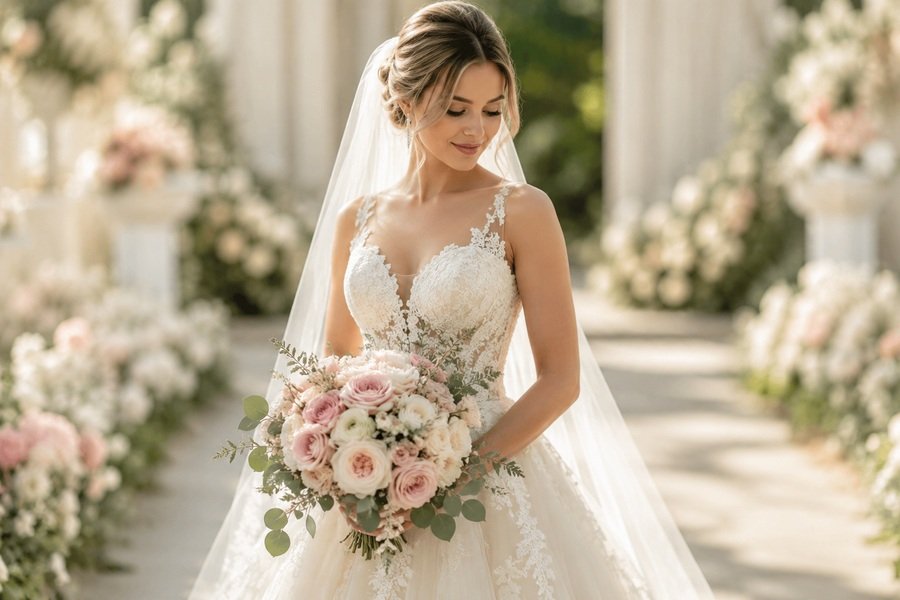
To match your bridal gown with a faux flower bouquet, focus on harmony instead of exact matching. Choose flowers that echo the gown’s color undertone, fabric texture, silhouette, and wedding style. A faux bouquet should support the dress, balance the bride’s frame, and look realistic in photos, close-ups, and ceremony moments.
A faux flower bouquet gives more control than fresh flowers. It can be tested with the gown before the wedding day. It can travel well. It can also stay beautiful long after the ceremony. But it still needs careful styling. The best bouquet does not look like an accessory added at the last minute. It looks like part of the bridal design.
Should the bouquet match the dress?
A bouquet that exactly matches the dress can look flat. A bouquet that clashes with the dress can feel distracting. The best choice sits between both.
The bouquet should complement the dress, not copy it. Match the mood, undertone, scale, and texture instead of trying to match the exact dress color. Ivory gowns pair well with warm whites, champagne, blush, and soft greenery. Bright white gowns work better with crisp whites, cool pastels, or clean green accents.
Match undertone before color
A bridal gown is rarely just “white.” It may be bright white, ivory, cream, champagne, blush, nude, or soft gray-white. Faux flowers should respect that undertone. A cool white bouquet can make an ivory gown look yellow. A warm cream bouquet can make a bright white gown look too stark.
| Bridal gown tone | Best faux bouquet direction | Avoid |
|---|---|---|
| Bright white | Pure white roses, cool greenery, pale blue accents | Heavy cream or yellow ivory |
| Ivory | Warm white, champagne, blush, sage green | Blue-white artificial flowers |
| Champagne | Nude, taupe, soft peach, antique rose | Neon pink or cold white |
| Blush | Dusty pink, mauve, ivory, soft brown greenery | Too much red or orange |
| Lace gown | Garden roses, ranunculus, soft fillers | Hard plastic-looking flowers |
| Satin gown | Calla lilies, orchids, sleek roses | Messy, oversized wild stems |
Let the dress lead the style
The dress should always be the main visual guide. A structured satin gown often looks best with a clean bouquet. A lace gown can handle softer garden flowers. A boho gown works with loose greenery, trailing ribbons, and airy stems. A dramatic ball gown can carry a fuller bouquet, but a simple sheath dress may need a slimmer shape.
Balance, not competition
A bouquet should not cover the most beautiful part of the gown. If the bodice has beadwork, embroidery, or floral appliqué, the bouquet should sit lower and stay simple. If the gown is minimal, the bouquet can bring texture and movement. This is especially useful with faux flowers because the design can be adjusted before the wedding. You can remove one bloom, bend one stem, soften one color, or shorten the handle until the bouquet feels natural beside the dress.
How to display a fake wedding bouquet?
A fake wedding bouquet can be displayed before, during, and after the wedding. It should look intentional, not stored or placed carelessly.
To display a fake wedding bouquet, use a clean vase, bouquet stand, shadow box, wall frame, or bridal keepsake shelf. Before the ceremony, display it upright in a weighted vase. After the wedding, place it in a shadow box, glass dome, or decorative vessel where dust, sunlight, and moisture are controlled.
Display it before the wedding
Before the ceremony, the bouquet should stay upright and shaped. Faux stems can bend if they are pressed too long in a box. A tall, narrow vase works well because it supports the stems without crushing the flower heads. A ceramic vase, glass cylinder, or covered floral bucket can keep the bouquet clean during preparation.
| Moment | Best display method | Why it works |
|---|---|---|
| Bridal suite | Tall vase or bouquet stand | Keeps the shape ready for photos |
| Flat lay photos | Lay bouquet diagonally beside shoes, veil, and rings | Adds color and softness |
| Ceremony entrance | Place in a vase near welcome signage | Connects the floral theme |
| Reception table | Use as sweetheart table décor | Reuses the bouquet naturally |
| After wedding | Shadow box or glass dome | Turns it into a keepsake |
Display it during the reception
A faux bouquet can become part of the reception décor after portraits are finished. It can sit on the sweetheart table, cake table, guest book table, or memory table. This is a smart way to get more visual value from one arrangement. Since faux flowers do not wilt, they can stay fresh-looking through long ceremonies, outdoor heat, travel, and reception lighting.
Display it after the wedding
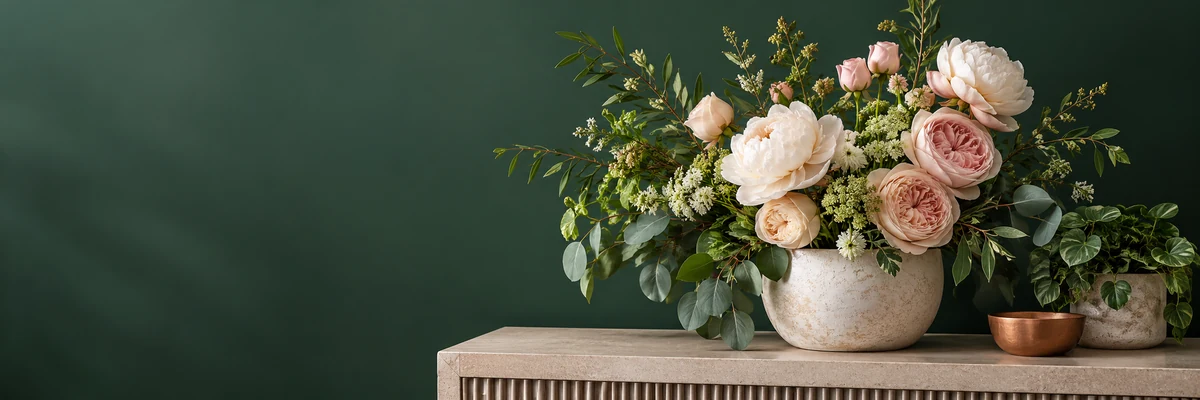
After the wedding, clean the bouquet lightly with a soft brush or cool air. Do not store it in direct sun because some faux petals can fade. A shadow box is a good choice for a formal keepsake. A glass dome feels romantic and works well with smaller bouquets. A simple vase works best for brides who want to use the bouquet as home décor. If the bouquet has ribbons, charms, or fabric from the gown, display those details facing forward. They help the piece feel personal instead of decorative only.
How to make fake flowers look better for a wedding?
Fake flowers look better when they are shaped, layered, cleaned, and styled like real flowers. Small details matter more than the flower type.
To make fake flowers look better for a wedding, choose high-quality blooms, bend the stems naturally, remove cheap leaves, mix sizes, use realistic greenery, hide wires, and wrap the handle with ribbon. A few fresh-looking textures, uneven heights, and soft color gradients can make faux flowers look more natural in photos.
Start with better materials
Not all fake flowers look bridal. Some have shiny fabric, thick plastic edges, or flat colors. Better faux flowers usually have soft petals, natural veining, color variation, and flexible stems. Silk, latex-touch, real-touch, and soft polyurethane flowers often photograph better than stiff plastic blooms.
Shape each stem
Fresh flowers never sit in a perfect circle with identical angles. Faux flowers often look fake because they are too even. Bend each stem slightly. Open the petals with your fingers. Turn a few flower heads outward. Let some greenery extend past the main blooms. A bouquet should have air and movement.
| Problem | Quick fix |
|---|---|
| Flowers look too perfect | Bend stems at different angles |
| Petals look flat | Gently open and separate petals |
| Stems look fake | Wrap with floral tape and ribbon |
| Bouquet looks too round | Add soft greenery or trailing filler |
| Color looks too plain | Mix ivory, cream, blush, and soft green |
| Plastic leaves look cheap | Remove them or replace with better greenery |
Use depth and focal points
A wedding bouquet needs focal flowers, medium flowers, filler, and greenery. The focal flowers create the shape. Medium flowers soften the space around them. Filler adds detail. Greenery gives depth. If every bloom is the same size, the bouquet can look like a craft project. If the bouquet has a clear center, soft edges, and natural layers, it starts to look more like a florist-designed arrangement.
Finish the handle well
The handle is often where faux bouquets fail. Exposed wires, rough plastic stems, or uneven tape can look unfinished in close-up photos. Wrap the handle with satin ribbon, silk ribbon, lace, or a fabric strip that matches the gown. Use pearl pins or a simple knot if the gown is classic. Use long flowing ribbon if the dress is romantic or boho. A clean handle makes the bouquet feel intentional and bridal.
What is the trend in wedding bouquets in 2026?
Wedding bouquets in 2026 are becoming more personal, more sculptural, and more connected to the full wedding design. Brides are moving away from one standard bouquet shape.
The 2026 wedding bouquet trend favors expressive flowers, smaller fashion-forward bouquets, long exposed stems, sculptural shapes, meadow-inspired movement, monochrome palettes, and personal color stories. Faux bouquets can follow these trends well because they allow strong shapes, rare colors, and durable flowers without seasonal limits.
Smaller bouquets with stronger style
Many brides are choosing bouquets that feel like fashion accessories. These bouquets are not always large. They may be small, clean, and highly styled. A petite bouquet can make a detailed gown easier to see. It can also feel modern with a fitted dress, short dress, civil ceremony look, or minimalist bridal outfit.
Long stems and visible structure
Long-stem bouquets are becoming more popular because they add a modern line. The stems are not hidden. They become part of the design. This trend works well with faux flowers because artificial stems can be shaped and reinforced. Calla lilies, tulips, orchids, and long-stem roses can create this look.
| 2026 bouquet trend | How to use it with faux flowers | Best gown match |
|---|---|---|
| Meadow-inspired movement | Add airy greenery and varied stem heights | Soft A-line or garden gown |
| Sculptural bouquet | Use orchids, calla lilies, or curved stems | Modern satin or column gown |
| Monofloral bouquet | Choose one flower type in one tone | Minimalist gown |
| Long exposed stems | Keep stems visible and neatly wrapped | Sleek or architectural dress |
| Small fashion bouquet | Use fewer premium-looking blooms | Detailed lace or short dress |
| Bold color story | Add peach, yellow, burgundy, or blue accents | Simple ivory or white gown |
Personal color stories
Soft neutrals are still common, but many 2026 bouquets include more color. Peach, butter yellow, dusty pink, lavender, burgundy, icy blue, and rich green can all work. The key is control. One accent color is often enough. A faux bouquet should not use too many loud colors unless the whole wedding design is colorful.
Faux flowers fit the trend well
The 2026 trend is not only about flowers. It is about styling. Faux flowers are useful because they can hold sculptural shapes, survive outdoor weather, and stay consistent from sample to wedding day. They also allow brides to use flowers that may be unavailable, fragile, or expensive in fresh form. This makes faux bouquets practical for destination weddings, hot climates, winter weddings, and long photo schedules.
My insights: How to Match Your Bridal Gown with a Faux Flower Bouquet?
Matching a bridal gown with a faux flower bouquet is really a design question. It is not just a flower question.
The best way to match your bridal gown with a faux flower bouquet is to treat the bouquet as part of the gown styling. Start with the dress tone, then match the bouquet shape to the dress silhouette, the flower texture to the fabric, and the color accents to the full wedding palette.
Use a four-step matching method
A faux bouquet should pass four checks before the wedding day. It should match the dress, the bride, the venue, and the camera. A bouquet may look nice on a table but too large in a portrait. It may look realistic in person but too shiny under flash. It may match the wedding colors but fight with the gown fabric. These checks help prevent that.
| Matching step | Question to ask | Practical choice |
|---|---|---|
| Dress tone | Is the gown cool white, ivory, champagne, or blush? | Choose flower whites from the same temperature |
| Dress silhouette | Is the gown slim, full, structured, or flowing? | Match bouquet scale and shape |
| Fabric texture | Is the gown satin, lace, tulle, crepe, or beaded? | Choose flowers with similar softness or contrast |
| Photo test | Does the bouquet look real in natural light? | Adjust shine, shape, and color before the wedding |
Match bouquet shape to gown silhouette
A ball gown can support a classic round bouquet, lush garden bouquet, or soft cascade. A mermaid gown often works with a cascading or elongated bouquet because both shapes move downward. A sheath or column dress pairs well with a slim bouquet, single-stem bouquet, or sculptural flowers. An A-line gown is flexible and works with hand-tied, garden, or posy shapes.
Match texture to fabric
Texture is often more important than color. Satin is smooth, so it works with sleek flowers like calla lilies, orchids, roses, or tulips. Lace is detailed, so it works with garden roses, ranunculus, sweet pea-style flowers, and soft filler. Tulle feels airy, so the bouquet can include delicate greenery and light movement. Beaded gowns already shine, so the bouquet should avoid glittery artificial details.
Test the bouquet with the dress
A faux bouquet gives one major advantage. You can test it early. Hold it while wearing the gown or a dress with a similar shape. Take photos from the front, side, close-up, and walking angle. Check whether the bouquet hides the waist, covers the bodice, or looks too small beside the skirt. If something feels off, adjust the size, ribbon length, greenery, or flower color. This step makes the bouquet look custom instead of generic.
Keep the final look calm
The most elegant bridal looks usually have one clear focus. If the dress is dramatic, let the bouquet support it. If the dress is simple, let the bouquet add interest. If the bouquet is colorful, keep the shape controlled. If the bouquet is large, keep the flower palette softer. A faux bouquet should never announce itself as fake. It should simply look beautiful, balanced, and right for the bride.
Conclusion
Match the faux bouquet to the gown’s tone, texture, shape, and mood. When the bouquet supports the dress, the whole bridal look feels complete.