
How to Secure Outdoor Artificial Flowers — 11 Wind-Proof Fixes?
Wind can turn your décor budget into waste fast. Pots tip, stems snap, and faux blooms fly down the street. Guests complain, venues worry, and you carry the cost.
To understand how to secure outdoor artificial flowers, you combine extra weight, smart shapes, and anchors. You fix liners, stems, and planters as one unit, use rental-safe grips where drilling is not allowed, and run a simple three-level gust test before every rollout.
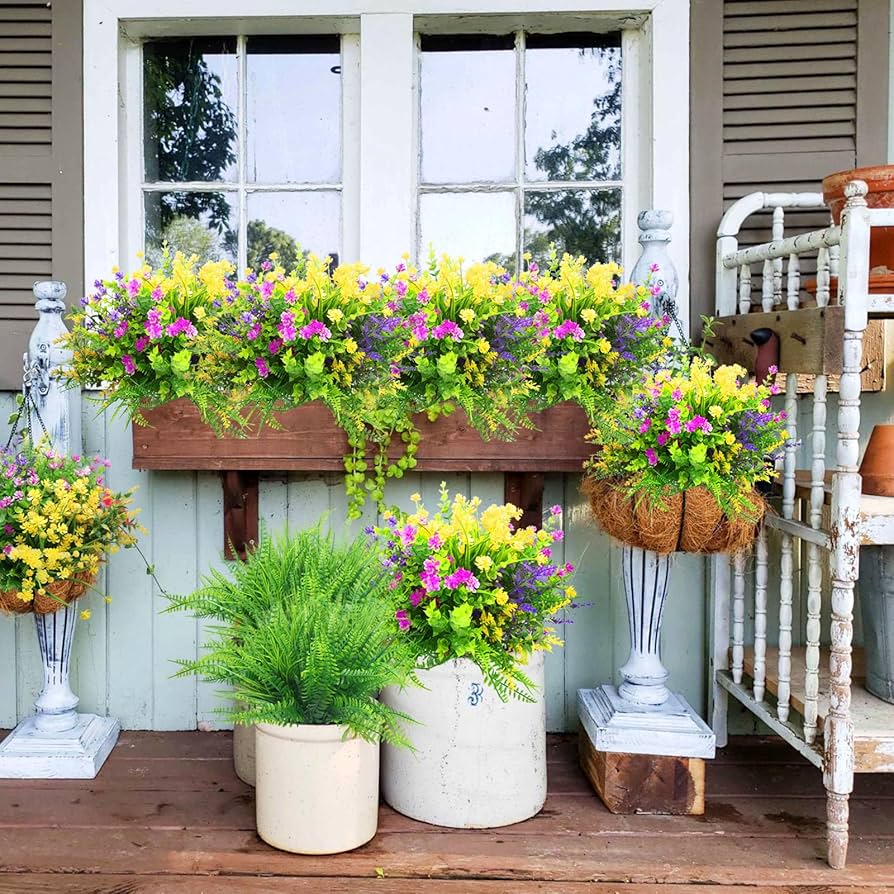
When you manage serious projects, you do not trust luck with wind. You want a clear system for how to secure outdoor artificial flowers that your team can repeat in any city. In this guide, you see how to read wind, how to build anchor stacks, and how to test layouts with the same discipline you use for branding and budgets.
Wind Basics: Mass vs. Surface Area for Faux Arrangements?
Strong wind does not hate flowers. It hates light things with big faces. It looks for whatever is tall, wide, and easy to push over. Many “pretty” designs make this problem worse on balconies and streets.
You learn how to secure outdoor artificial flowers faster when you see the link between mass and surface area. You keep bases heavy, stems lower, and shapes compact, so wind has less to grab and less leverage to tip your décor.
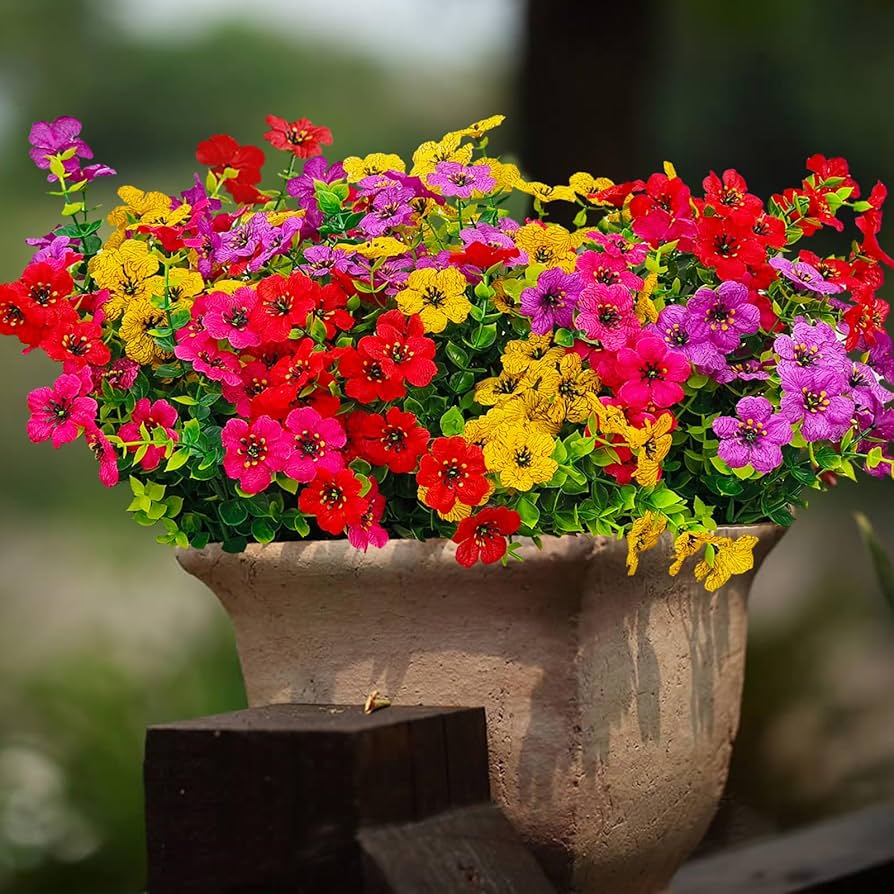
How mass and shape decide if your faux flowers stay put
You can think about every outdoor faux arrangement as a small structure, not a simple bouquet. It has a base, a body, and a top. Each part helps or hurts how to secure outdoor artificial flowers in real wind.
1. Base mass and footprint
More mass in the base means more resistance to movement. A wider footprint means wind has to work harder to tip the piece.
- Choose stone, concrete, metal, or heavy resin planters instead of thin plastic.
- Fill liners with gravel, sand, or pre-cast blocks, not just loose foam.
- Keep the heaviest layer low in the pot, not near the top of the stems.
For more on layered ballast and pot fills, you can read our guide on what to put in a fake plant pot.
I saw this clearly with a coastal restaurant client. They first used light plastic pots for outdoor centerpieces. Every strong wind night ended with staff chasing products across the terrace. When we talked about how to secure outdoor artificial flowers there, I proposed heavier resin planters with hidden ballast in the bottom third. The upfront cost rose a little, but the owner stopped paying for broken stems and lost pieces after storms and later rolled the same spec to two more locations.
2. Center of gravity
The center of gravity is the “balance point” of the setup. If it is too high, even a small push can tilt the piece and undo your work on how to secure outdoor artificial flowers.
- Shorten stems for outdoor use and insert them deeper into foam or cement.
- Keep most flower mass in the lower half of the visible design.
- Use trailing greenery rather than tall spikes to add drama at the edges.
One wedding planner used tall trumpet vases on a clifftop venue. They looked beautiful but behaved like bowling pins. When we reviewed how to secure outdoor artificial flowers for that site, I guided her to lower cylinders with more compact arrangements. We kept the same color story but moved weight down. She told me after the event that staff felt relaxed for the first time on that location.
3. Surface area and wind “sails”
Wind pushes against surfaces, not just weight. Large, flat shapes become sails.
- Avoid very flat, wide flower domes outdoors. Rounded, compact shapes catch less wind.
- Break up big leaf faces with mixed textures. Ferns, grasses, and smaller leaves help.
- Turn large leaves slightly so the narrow edge faces the main wind direction where possible.
If you want to go deeper than pure mechanics and connect stability with brand meaning, you can read this earlier article: What Do Artificial Flowers Mean? It shows how control and consistency shape how clients read your spaces, which is the same thinking you apply when you learn how to secure outdoor artificial flowers in visible, public zones.
When you train your eye to see mass, center of gravity, and surface area, you catch risks early. You start asking “where is the weight?” and “what does the wind see?” before you even think about ribbons and color, and that mindset is the real base of how to secure outdoor artificial flowers professionally.
Anchoring Systems: Liner Pins, Straps, Guy Lines, and Plates?
Weight helps, but it is not enough. If foam moves inside the pot or stems slide out, you still lose control. You must lock all parts together so they act as one.
A big part of how to secure outdoor artificial flowers is building layered anchors. You pin foam to the liner, strap inserts, and, for taller or high-risk pieces, add slim guy lines or base plates that connect to something solid.
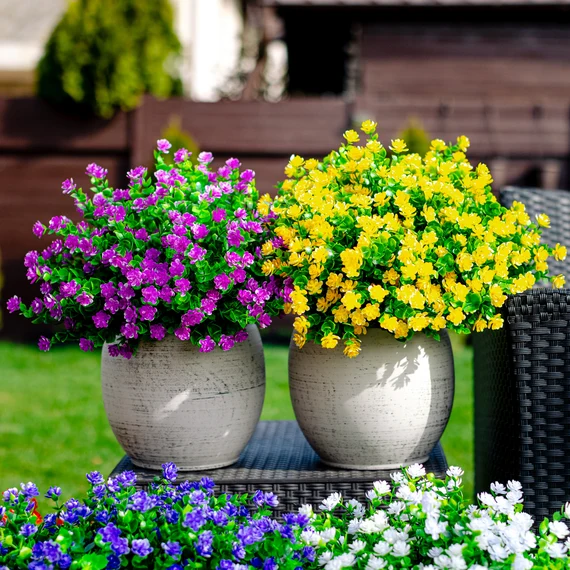
How to build an anchor “stack” that survives real gusts
Think about anchors as a stack with three levels. Each level stops a different way the setup can fail. You can skip some layers indoors, but outdoors you use all three when the risk justifies it and when you want a repeatable method for how to secure outdoor artificial flowers.
1. Foam to liner: stop the insert from lifting
First, you make sure the insert or foam cannot jump out.
- Use U-shaped liner pins that press through foam into drilled holes or compacted ballast.
- For plastic liners, fix the foam with short self-tapping screws and wide washers.
- Place pins or screws around the edges and through the center, not only in corners.
One rental company kept “losing” floral balls from urns on a windy rooftop bar. Staff found whole balls rolling on the floor after each event. We sat down and mapped out how to secure outdoor artificial flowers in those classic urns. After we added four strong liner pins per piece, they went through two full seasons without a single ball eject.
2. Stems to foam: tie the greenery into a single unit
Next, you lock stems so they cannot slide or pull out under force.
- Cross stems with coated floral wire and anchor both ends deep into foam.
- Use narrow straps over key branches, then cover them with foliage to hide the hardware.
- For very heavy stems, pre-insert metal mesh just under the surface and tie into that.
One international retail client had a problem with shoppers pulling stems from big planters for selfies. When we reviewed how to secure outdoor artificial flowers for their flagship store, I redesigned their inserts with an internal wire grid. I explained that this added labor in production but would cut in-store losses. After the change, their store managers reported fewer damaged displays and almost no missing stems.
3. Planter to structure: plates, brackets, and guy lines
Finally, you connect the planter to something the wind cannot move easily.
- Place narrow steel base plates under large planters and screw the plates into decking where allowed.
- Use powder-coated brackets that clamp to railings and hold troughs inside the safety line.
- Add thin guy lines from tall pieces back to railings or heavy furniture and hide lines with foliage.
On one rooftop pool project, the hotel engineer was nervous about tall faux trees near the edge. We built a shared picture of how to secure outdoor artificial flowers in that zone using plate-mounted planters with two slim guy lines each, fixed to a hidden structural rail. After installation, he pulled hard on one trunk and saw the whole piece barely move. That test earned approval for three more properties.
When you present this anchor stack in drawings and photos, decision makers see that you treat how to secure outdoor artificial flowers as a structured process, not a guess.
Rental-Safe Options: Gel Pads, Micro-Clamps, and Sand Tubes?
In many venues, you are not allowed to drill, bolt, or glue. Walls are old, floors are delicate, and rules are strict. You still need stability that respects those limits.
When you ask how to secure outdoor artificial flowers in rental scenarios, the answer is non-destructive tools. You combine gel pads, micro-clamps, and sand tubes to add grip and weight, then remove everything without damage when the event ends.
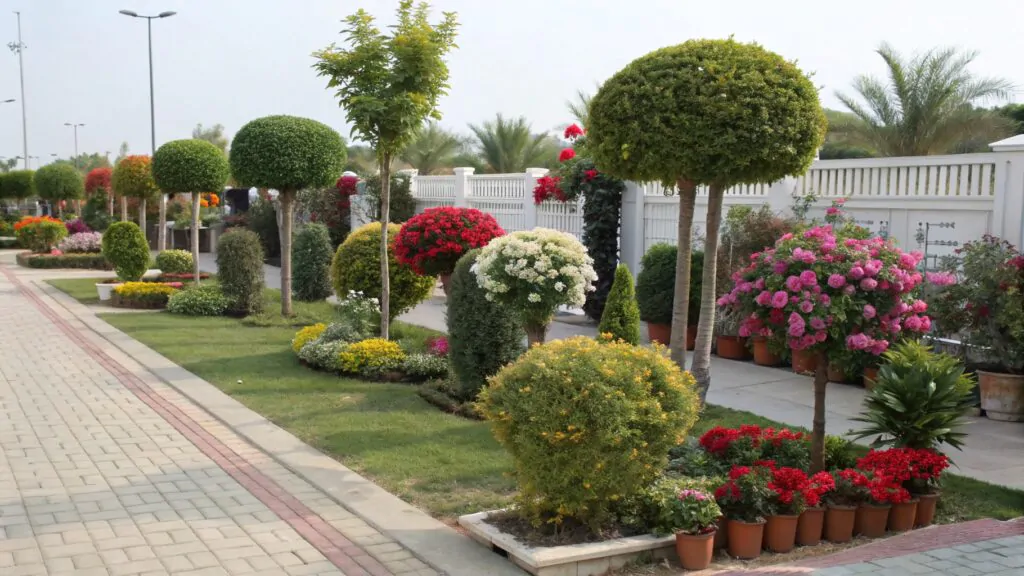
How to stop wind without upsetting landlords or venue managers
Rental-safe wind control is about trust. Venues need to know that you will leave their space exactly as you found it. You show respect for surfaces while you protect guests and décor, and you prove that you understand how to secure outdoor artificial flowers without a single screw.
1. Gel pads and reusable putty for grip
High-friction gel pads and reusable putty help keep small and medium objects from sliding or tipping.
- Place gel pads under small pots on smooth tables, rail caps, or ledges.
- Use tiny dots of putty inside saucers so ceramic bases grip glass or polished stone.
- Test each product on a hidden patch first, and remove soon after the event to avoid residue.
I worked with an agency that handled product launches on a rooftop with glossy stone ledges. The venue banned all tape. We set up a small trial so the venue manager could see how to secure outdoor artificial flowers with gel pads only. After the event, we removed everything cleanly. That test earned the agency a long-term contract because the venue trusted their methods.
2. Micro-clamps for rails and edges
Micro-clamps and small brackets grip edges without drilling.
- Use padded clamps on balcony rails to hold slim trough planters on the inside of the safety line.
- Fix foam rails or garlands along stair rails with small clamps and cable ties, then cover them with foliage.
- Tighten clamps by hand, not with tools, to avoid over-compressing metal or wood.
A rental house I supply keeps a full set of labeled clamps on each truck. Their crew knows which clamp fits which rail depth. During training, we walk through how to secure outdoor artificial flowers on each type of rail with the right clamp. When they work in older buildings, they show the clamps to the venue first. This open approach builds confidence long before guests arrive.
3. Sand tubes and soft ballast for hidden weight
Sometimes you only need more weight, not more grip.
- Place sand tubes along the inside of rectangular planters behind the visible foliage.
- Wrap sandbags in fabric that matches the brand color, so ballast also looks like décor.
- Hide soft ballast behind photo walls or under stages, away from guest traffic.
For one fashion retailer’s outdoor photo wall, we could not drill into the mall floor. We designed heavy soft ballast that sat behind the base, covered with matching fabric. The team learned how to secure outdoor artificial flowers along the wall edge with the ballast in place. The wall passed a strong internal wind test, and the retailer kept the same system for the rest of their roadshow.
When you treat gel pads, clamps, and sand tubes as standard kit, your crew arrives ready. They do not panic when a venue bans screws, because they already know how to secure outdoor artificial flowers with clean, reversible solutions.
Balcony, Hotel, and Event Safety Rules You Must Follow?
Décor can never be “just decoration” on balconies, rooftops, and busy hotel zones. If something falls or blocks a path, you face real risk, not only a bad review.
A serious answer to how to secure outdoor artificial flowers always includes safety rules. You keep layouts inside handrail limits, protect escape routes, respect fire rules, and keep heavy items away from edges and main guest paths.
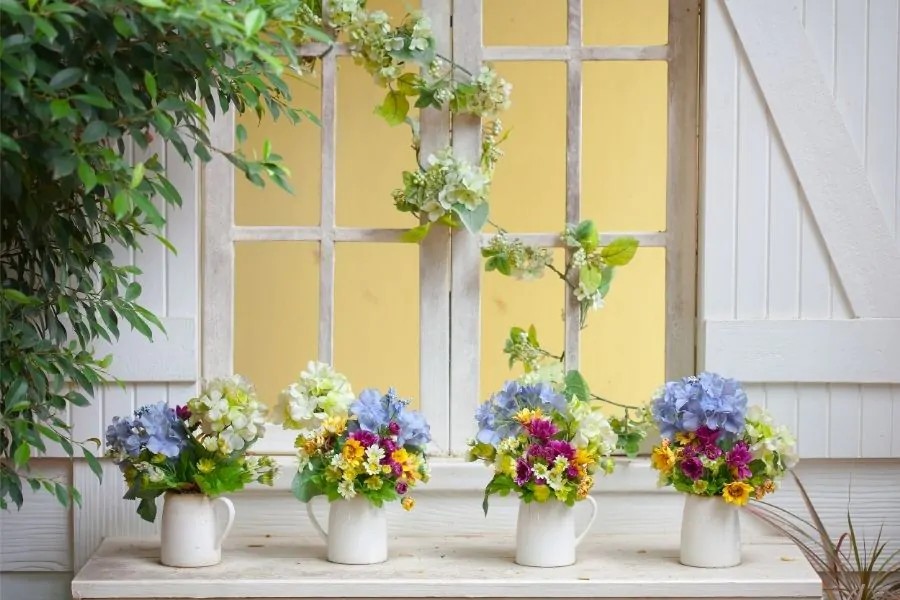
How to make wind-safe décor pass hotel and landlord checks
You do not work alone when you design for hotels or large events. Engineering, safety, and operations teams all have a say. When you show that you know how to secure outdoor artificial flowers within their rules, you gain allies instead of blockers.
1. Handrail height and edge zones
Balcony and rooftop rules often start with rail height and clear space.
- Do not place tall items where guests can climb or stand on them to lean over rails.
- Keep heavy planters a safe distance inside edges, especially above streets or crowded areas.
- Use brackets that hold troughs on the inside face of rails, never outside.
On one high-rise hotel project, I joined a video call with the brand and engineering teams. I shared simple sketches that showed how to secure outdoor artificial flowers while keeping planters set back from the rail and below a defined height. I also explained where extra ballast sat inside each pot. The engineer said this was the first décor proposal that talked his language and approved with minor edits.
2. Fire, materials, and access
Fire and maintenance rules shape where and how you can place décor.
- Ask if the venue needs fire-rated foliage and request their standard if they have one.
- Keep exits, fire hose cabinets, and alarm panels completely clear of planters and walls.
- Make sure cleaners and technicians can still reach drains, filters, and covers without moving heavy pieces.
A convention center client once had to remove a full faux hedge wall the day after install because it sat right in front of a fire hose cabinet. No one had linked that wall to the bigger question of how to secure outdoor artificial flowers inside a full safety plan. After that, we mapped critical points on the floor plan before design. We now treat every big piece as part of a safety puzzle.
3. Trip and impact risks
Even stable décor can cause accidents if it blocks natural movement.
- Keep guy lines, cables, and ballast inside planter footprints, not across walking paths.
- Avoid low items in dark corners where guests might not see them.
- Check how staff move trolleys and carts, and protect those routes.
In one resort, the housekeeping manager joined the décor walkthrough. She showed where staff pushed heavy carts. Two large planters sat right in that line. We talked through how to secure outdoor artificial flowers there without blocking traffic. We moved them back slightly and added more ballast. The visual impact stayed strong, but the risk reduced.
When you show that you understand how to secure outdoor artificial flowers inside all these safety frames, you become the partner that hotels and venues prefer to call back.
Stress-Test Protocol: Level-1/2/3 Gust Test Before Launch?
A design that looks stable in a calm showroom may fail outside. You cannot see wind in a photo. You must simulate it before you ship.
The most practical way to learn how to secure outdoor artificial flowers is to run a three-level gust test. You simulate light, medium, and strong gusts, watch what moves, then adjust ballast and anchors until each level passes.
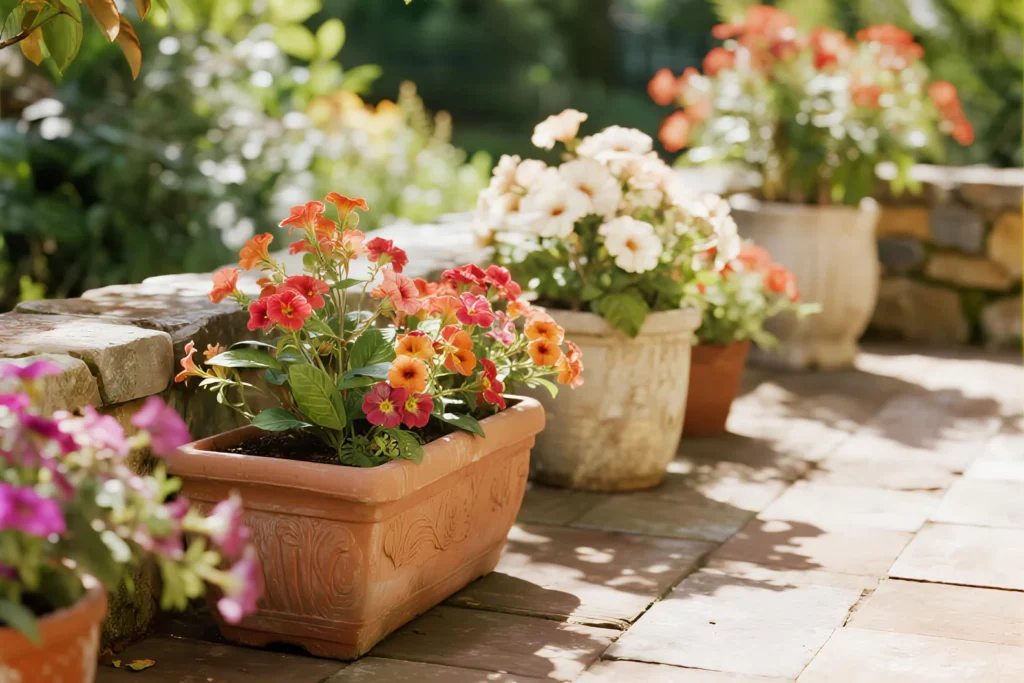
How to use a three-level gust test as your safety net
A clear test turns wind control from guessing into routine. Your team follows steps, writes down results, and improves designs before guests ever see them, which is the most reliable way to internalize how to secure outdoor artificial flowers.
1. Level 1: everyday breeze
This level covers normal terrace or balcony usage.
- Use a large fan on low power from one direction for 30–60 seconds.
- Watch for small shifts, light wobble, or stems that start to lift.
- Fix small issues with deeper stems, extra pins, or small ballast changes.
A rental client had repeated complaints about centerpieces sliding when terrace doors opened. We designed a simple Level 1 test in their warehouse using fans. They saw at once which vases were too light and which foam blocks were loose. These tests gave every new staff member a hands-on lesson in how to secure outdoor artificial flowers before they ever loaded a truck.
2. Level 2: strong but common gust
This level copies a solid gust you see during weather changes or in exposed corners.
- Increase fan power or move closer with a handheld blower.
- Test from two or three directions, not just the front.
- Check that inserts do not lift, pots do not slide far, and tall elements bend but do not snap.
One multi-site retailer now uses Level 2 as their standard for street-facing displays. If any pot moves more than a few centimeters or any stem pulls free, they either add more weight or move that design indoors only. That policy makes “how to secure outdoor artificial flowers” a measurable check, not a vague hope.
3. Level 3: rare but serious gust
This level represents the kind of gust that might trigger an alert or notice from the venue.
- Use your strongest blower on short bursts toward the most exposed pieces.
- Focus on tall or top-heavy décor, and anything near edges or high traffic.
- Decide if the design needs a full rebuild, more anchors, or a clear use limit.
I once tested a very tall entry piece for a hotel. It passed Level 1 and Level 2 but failed Level 3 every time. We shared the test video with the team and talked through how to secure outdoor artificial flowers at that entrance without taking risks. We kept that tall design indoors and built a lower, heavier version for outdoors. Because we had clear test levels, the decision felt professional, not emotional.
You can use simple public tools like the Beaufort wind scale as shared language when you explain each test. When everyone from marketing to engineering understands how to secure outdoor artificial flowers at Level 1, 2, and 3 conditions, approvals become faster and smoother.
Ready to Secure Your Next Outdoor Project?
You do not have to solve all of this alone. You can work with a supplier who builds ballast, anchors, and safety thinking into every planter and garland and who speaks your language on how to secure outdoor artificial flowers.
Request wind-safe faux flower samples
Share your site photos, balcony plans, and wind concerns. I can suggest planter weights, anchor stacks, and rental-safe kits that match your budget and protect your brand image. You get proven, visual answers to how to secure outdoor artificial flowers across different venues and seasons.
Conclusion
When you design for wind, follow safety rules, and test every layout, you master how to secure outdoor artificial flowers and protect both your décor budget and your client’s reputation.
FAQ
Q1: How do you know if a planter is heavy enough for outdoor use?
A1: As a simple rule, a wind-exposed planter should be hard to lift with one hand when fully planted. In every project, you test how to secure outdoor artificial flowers with actual gusts, not only with numbers on paper.
Q2: Can you secure outdoor artificial flowers without drilling or screws?
A2: Yes. When you ask how to secure outdoor artificial flowers in venues that ban drilling, the answer is gel pads, micro-clamps, and soft ballast. These options grip tables, rails, and floors without leaving damage.
Q3: What is the biggest mistake people make with outdoor faux flowers?
A3: The biggest mistake is using indoor designs outside. Tall, light vases with wide tops look great inside but behave like sails outside. Any serious guide on how to secure outdoor artificial flowers starts by changing those shapes.
Q4: How early should wind and safety be discussed with a hotel or venue?
A4: You bring wind and safety into the first design call. When you frame the talk around how to secure outdoor artificial flowers within their rules, engineering and safety teams see you as a partner, not a risk.
Q5: How often should outdoor artificial flowers be checked after install?
A5: Many brands schedule a quick weekly visual check and a deeper monthly anchor check. Each visit is a chance to confirm how to secure outdoor artificial flowers in changing seasons, before small issues become big ones.
Q6: Do you need fire-rated artificial flowers outdoors?
A6: Some hotels and public spaces require fire-rated materials even outdoors. When you ask them how to secure outdoor artificial flowers under their policy, they will tell you which reports and certificates they need from your supplier.
Q7: What tools should every event crew carry for wind control?
A7: At minimum, crews should carry liner pins, coated wire, straps, clamps, gel pads, and sand tubes. With this kit, they can act on how to secure outdoor artificial flowers on tables, rails, and free-standing backdrops in most venues.
Q8: How do you explain extra wind-proofing cost to clients?
A8: You compare a small add-on cost with the risk of damage or incidents. When you show them clear steps on how to secure outdoor artificial flowers, they see that they are paying for risk control, not only more decorations.
Q9: Can one layout work in both calm and very windy locations?
A9: The visual style can stay the same, but the build changes. You use the same look with different planters, ballast, and anchors, and you document how to secure outdoor artificial flowers in each climate or city.
Q10: How can Botanic Blossoms support long-term outdoor projects?
A10: Botanic Blossoms can adjust stem lengths, select heavier planters, pre-build anchor stacks, and pack rental-safe kits. We guide your team on how to secure outdoor artificial flowers across multiple sites with less trial and error.