
A modern home can feel clean but cold. Empty corners, hard lines, and plain shelves often need softness. Faux potted plants add that life without daily care.
To style faux potted plants for modern homes, choose realistic plants, match them with simple planters, vary the height, and place them where real greenery would naturally belong. Use tall plants for corners, medium plants beside furniture, and small plants on shelves, tables, and consoles.
I like faux potted plants because they bring structure and calm at the same time. They do not need sunlight, watering, trimming, or special care. They can make a living room feel warmer, a bedroom feel softer, and an office feel more relaxed. The best styling does not try to fill every empty space. It gives each plant a clear purpose.
What Makes Faux Potted Plants Work in Modern Homes?
Modern interiors often depend on clean lines, open space, and simple colors. This can look beautiful, but it can also feel too sharp if there is no natural texture.
Faux potted plants work in modern homes because they add greenery, height, shape, and visual softness without adding maintenance. They balance straight furniture lines, fill empty corners, and bring a natural feeling into rooms that may not have enough light for real plants.
They Add Shape Without Clutter
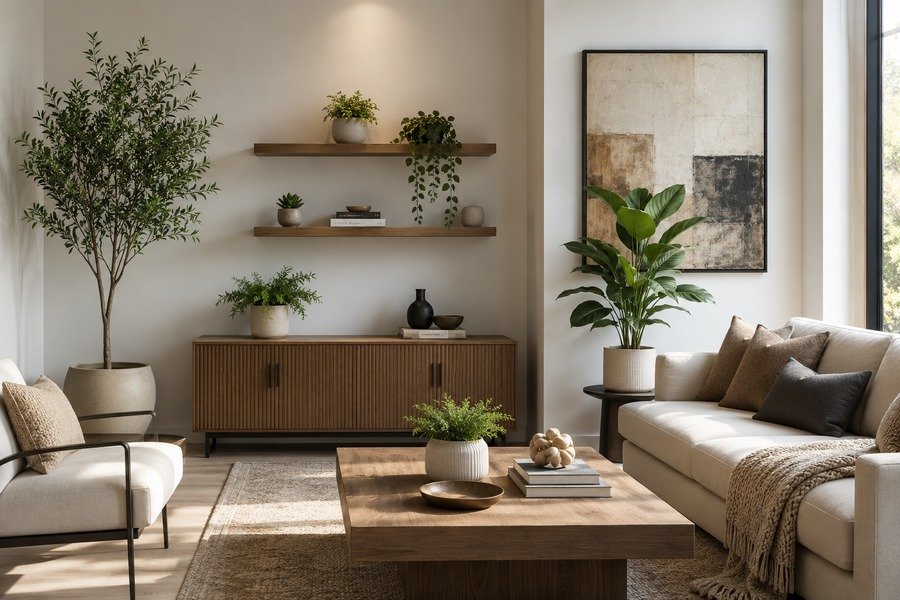
Faux potted plants are useful because they act like living sculptures. A tall faux olive tree can lift the eye upward. A faux snake plant can add strong vertical lines. A small faux fern can soften a shelf. A faux eucalyptus plant can add calm color to a side table.
In modern home décor, every item should earn its place. A faux plant should not sit in a room only because the corner is empty. It should improve the shape of the space. It can balance a low sofa, soften a sharp console, or make a quiet reading corner feel complete.
Small styling points:
- A tall faux plant works well beside a sofa, window, cabinet, or accent chair.
- A slim plant works better than a wide plant in narrow rooms.
- A round leafy plant can soften square furniture.
- A structured plant can make a loose room feel more organized.
- A small potted plant can break up books, trays, and framed photos on shelves.
They Bring Green Into Difficult Spaces
Real plants are beautiful, but they are not always practical. Some homes have dark corners, dry air, busy schedules, pets, or frequent travel. Faux potted plants solve these problems because they stay consistent.
This is especially useful in apartments, short-term rentals, offices, bathrooms without windows, and rooms with strong air conditioning. A realistic faux potted plant can bring a fresh look into a place where a live plant may struggle.
The key is to style the faux plant as if it were real. I avoid placing a tropical-looking plant in a strange spot where it would never grow. I prefer to put faux greenery near windows, in corners with indirect light, beside seating areas, or close to natural materials like wood, stone, linen, and ceramic.
They Support a Calm Modern Palette
Modern homes often use white, beige, gray, black, cream, wood, and soft earth tones. Faux potted plants add green without fighting that palette. The right greenery can make neutral rooms feel warmer and more finished.
For a clean modern home, I prefer soft green leaves, matte finishes, and simple shapes. Very shiny leaves can look plastic. Very bright green colors can look artificial. A slightly muted leaf color usually feels more natural and easier to style.
Where Should You Place Faux Potted Plants?
A faux plant can look random if the placement is wrong. Good placement makes the plant look intentional, useful, and connected to the room.
Place faux potted plants in areas that need height, softness, balance, or visual interest. Good spots include empty corners, beside sofas, near windows, on console tables, beside beds, on open shelves, in bathrooms, and in home offices. Each plant should support the room’s layout.
Use Tall Plants to Anchor Corners
A tall faux potted plant is one of the easiest ways to finish an empty corner. Modern rooms often have unused vertical space. A tall faux olive tree, fiddle leaf fig, palm, or rubber plant can make the corner feel designed instead of forgotten.
I like tall plants in these places:
- Beside a sofa where the wall feels bare.
- Near a window to make the plant look more believable.
- Behind an accent chair to create a reading corner.
- Beside a media console to soften electronics.
- Next to a cabinet or sideboard to balance height.
A tall plant should not block walking space. It should frame the room. If the plant is too wide, the area can feel crowded. If the plant is too short, it may not fill the vertical gap. A good rule is to match the plant to the furniture nearby. A tall sofa or cabinet needs a plant with enough height to stand beside it.
Use Medium Plants to Connect Furniture
Medium faux potted plants are useful because they connect the floor level to table level. They work well beside chairs, under windows, next to beds, and beside desks. They can make furniture groupings feel softer without making the room busy.
For example, a medium faux snake plant beside a modern armchair can make the corner feel grounded. A faux monstera beside a low cabinet can add depth. A faux rubber plant near a bedroom dresser can soften the straight lines.
Small placement ideas:
- Put a medium plant near one side of a sofa, not both sides.
- Place one beside a desk to make a work area feel less cold.
- Use a medium plant in a bedroom corner to create calm.
- Add one near a hallway console to make an entryway feel welcoming.
- Place one near a bathtub or vanity if the bathroom needs softness.
Use Small Plants to Style Surfaces
Small faux potted plants are best for detail work. They are not meant to dominate the room. They should add small touches of green to shelves, coffee tables, nightstands, kitchen counters, and office desks.
I like to style small faux plants in groups with books, trays, candles, bowls, framed art, or ceramic pieces. The plant should not sit alone like an afterthought. It should be part of a small scene.
A coffee table may need one small plant with a tray and a book. A shelf may need one trailing plant to break up straight horizontal lines. A nightstand may need a small plant to add calm without taking too much space. In a modern home, small details should feel edited, not crowded.
How Do You Make Faux Potted Plants Look Real?
Some faux plants look good in product photos but flat in real rooms. The difference often comes from shaping, potting, and small natural details.
To make faux potted plants look real, shape the leaves and stems, avoid perfect symmetry, use a quality planter, cover the base with moss or stones, and keep the leaves clean. Place faux plants near natural light or realistic locations so the eye accepts them more easily.
Shape the Plant Before Styling
I never place a faux plant straight out of the box. Shipping can press the leaves together. A plant that looks flat will feel fake even if the material is good. The first step is always shaping.
Pull the stems gently away from the center. Open the leaves. Bend some stems upward and others slightly outward. Turn a few leaves in different directions. Real plants do not grow like perfect fans. They lean, twist, overlap, and reach toward light.
Small shaping points:
- Do not make every leaf face the same direction.
- Bend branches slowly so they do not crease.
- Leave some gaps so the plant can “breathe.”
- Make the front full, but do not ignore the sides.
- Rotate the plant after shaping so it looks balanced from the room’s main view.
Hide the Artificial Base
The base is often the part that gives a faux plant away. Many artificial potted plants come with plastic soil or a small black nursery pot. This can look unfinished in a modern home.
A simple fix is to place the plant inside a larger decorative planter. This is called using a cachepot. Then cover the top with preserved moss, small stones, bark, sand, or clean decorative gravel. This small step makes the plant feel more like part of the home.
For modern interiors, I prefer:
- White ceramic planters for a clean look.
- Concrete planters for an urban look.
- Matte black planters for contrast.
- Woven baskets for warmth.
- Terracotta pots for natural texture.
- Stone-look planters for quiet luxury.
Mix Realistic Materials Around It
A faux plant looks more natural when the surrounding materials feel real. Wood, linen, clay, stone, wool, cotton, and ceramic all help reduce the artificial feeling. I like to place faux potted plants near textured rugs, wooden shelves, linen curtains, ceramic lamps, or stone trays.
The goal is not to hide the plant. The goal is to support it. When the plant sits in a room with natural textures, the eye reads the whole scene as warm and organic.
Keep It Clean
Dust is one of the easiest ways to spot a fake plant. A real plant may collect dust too, but a dusty faux plant looks neglected. I clean faux potted plants with a microfiber cloth, a soft brush, or gentle cool air. For larger leaves, I wipe each leaf carefully. For small leaves, I shake the plant outside or use light air.
A clean faux plant looks fresher, photographs better, and lasts longer. This is especially important in modern homes because clean lines and simple colors make dust more visible.
What Planters Work Best With Faux Potted Plants?
A good faux plant can look cheap in the wrong pot. A simple plant can look expensive in the right planter.
The best planters for faux potted plants are simple, stable, and matched to the home’s style. Ceramic, concrete, terracotta, stone-look, matte metal, and woven baskets all work well in modern interiors. The planter should be larger than the nursery pot and balanced with the plant’s height.
The Planter Sets the Style
The pot is not just a container. It is part of the design. A faux plant in a plastic nursery pot can look unfinished. The same plant in a ceramic planter can look calm and intentional. A woven basket can make the plant feel relaxed. A concrete pot can make it feel modern. A terracotta pot can make it feel warm and natural.
Here is one simple guide:
| Planter Style | Best Room Style | Best Faux Plant Match |
|---|---|---|
| White ceramic | Minimal, Scandinavian, modern | Olive tree, orchid, snake plant |
| Matte black | Modern, industrial, bold neutral | ZZ plant, rubber plant, fiddle leaf fig |
| Woven basket | Cozy modern, organic, coastal | Palm, ficus, eucalyptus |
| Concrete | Urban, loft, minimalist | Snake plant, cactus, decorative grass |
| Terracotta | Natural, Mediterranean, warm modern | Herb plant, olive tree, rubber plant |
| Stone-look planter | Quiet luxury, neutral modern | Large leafy plant or sculptural tree |
Scale Matters More Than Decoration
A common mistake is using a pot that is too small. A large plant in a tiny pot looks unstable. A small plant in a huge pot looks awkward. The planter should feel strong enough to support the plant visually.
Small scale tips:
- A tall floor plant needs a planter with enough width and weight.
- A tabletop plant should not block conversation or sight lines.
- A shelf plant should fit the shelf depth.
- A bedroom plant should feel calm, not oversized.
- A bathroom plant should leave counter space clear.
- A hallway plant should not narrow the walking path.
Keep Planters Related, Not Identical
Modern homes look best when planters feel connected but not overly matched. I do not like using the exact same pot in every room. It can feel too staged. I prefer to repeat one material or one color family.
For example, a home can use white ceramic pots in the living room, a woven basket planter in the bedroom, and a stone-look planter near the entryway. These pieces do not match exactly, but they share a soft neutral feeling. That makes the home feel designed, not copied from a showroom.
My insights: How to Style Faux Potted Plants for Modern Homes
Modern homes need balance. They need clean space, but they also need warmth. Faux potted plants help create that balance when they are styled with purpose.
Faux potted plants style modern homes best when they are treated as design tools, not filler objects. Use them to shape empty corners, soften furniture, add height, and bring natural texture into low-maintenance spaces. The most modern look comes from restraint, realistic details, and strong planter choices.
Think in Layers, Not Singles
My main insight is that faux potted plants look best when they are part of a layered room. One lonely plant in a corner can feel random. A plant placed with furniture, lighting, art, and texture feels intentional.
A tall plant can create the background layer. A medium plant can support the furniture layer. A small plant can finish the surface layer. This creates depth without clutter. It also helps a room feel lived in.
Small layering ideas:
- Put a tall faux tree near a chair and floor lamp to create a reading area.
- Add a small plant to a shelf with books and ceramic objects.
- Place a medium plant beside a sofa to soften straight lines.
- Use a trailing plant on a high shelf to add movement.
- Add one small potted plant to a bathroom vanity for a spa feeling.
- Use a structured plant in a home office to make the desk area feel calmer.
Choose Plants by Room Function
A modern home works better when each room has a clear feeling. Faux plants should support that feeling.
For a living room, I prefer larger plants because the room can handle more scale. For a bedroom, I prefer softer shapes and calmer greenery. For a kitchen, I like small herbs, olive stems, or compact greenery. For a bathroom, I like plants that suggest freshness. For an office, I like structured plants that feel clean and focused.
The plant should match the room’s purpose. A dramatic palm may work in a large living room, but it may feel too busy in a small bedroom. A small faux succulent may work on a desk, but it may disappear in an open living room.
Make Faux Feel Intentional
The best faux potted plant styling does not try too hard. It does not fill every surface. It does not use too many species. It does not rely on bright plastic greenery. It focuses on believable shape, good placement, and a proper planter.
A simple modern formula works well:
- Choose one tall plant for height.
- Choose one or two medium plants for balance.
- Choose a few small plants for surfaces.
- Use planters in related colors.
- Add moss, stones, or bark to cover the base.
- Shape the leaves before placing the plant.
- Clean the plant regularly.
- Leave enough empty space around it.
The Best Faux Plant Solves a Design Problem
I prefer choosing faux potted plants by problem, not only by plant type. If a corner feels empty, use a tall tree. If a shelf feels stiff, use a trailing plant. If a room feels too cold, use a warm basket planter. If a console looks flat, add a medium plant with height. If a bathroom has no window, use a realistic faux plant that adds softness without needing light.
This approach makes faux plants feel useful. They are not just decorations. They shape the mood, balance the furniture, and bring a natural layer into modern homes. When the plant, planter, and placement work together, faux potted plants can look calm, stylish, and believable.
Conclusion
Faux potted plants style modern homes best when they add purpose, proportion, texture, and calm greenery without crowding the room.