
Event flowers need to look beautiful, stay reliable, and fit the budget. The wrong choice can create stress before guests even arrive.
A fake flower is better for events that need durability, early setup, reuse, allergy control, and stable colors. A real flower is better for events that need fragrance, natural movement, luxury freshness, and emotional value. For many weddings, corporate events, and parties, the best answer is a hybrid mix of both.
The demand for artificial flowers is growing because buyers want durable, low-maintenance decoration for homes, events, and commercial spaces. Grand View Research reports that the U.S. artificial flowers market is expected to grow from 2025 to 2030, supported by demand for long-lasting décor and wider online retail options.
Are Fake Flowers Better Than Real Flowers for Events?
Many event buyers ask this question because fake flowers look more realistic than before, but real flowers still carry strong emotional value.
Fake flowers are better than real flowers for events when the main goals are long setup windows, outdoor durability, reusable décor, consistent color, and easier logistics. They work especially well for wedding arches, flower walls, hanging installations, aisle arrangements, table centerpieces, retail displays, and corporate event décor.
Fake Flowers Reduce Event-Day Risk
Events often have tight timelines. A team may need to install flowers early in the morning, move décor between ceremony and reception spaces, or prepare a venue the day before. Fresh flowers can be sensitive to heat, sunlight, wind, and handling. Fake flowers make setup easier because they do not wilt during a long event day.
Better Homes & Gardens notes that faux flowers are useful when arrangements must be styled before guests arrive, and that high-quality faux florals now offer better tone, texture, flexible stems, and natural-looking imperfections. This matters for event planners because early setup can save labor pressure and reduce last-minute stress.
Fake Flowers Are Strong for Large Visual Pieces
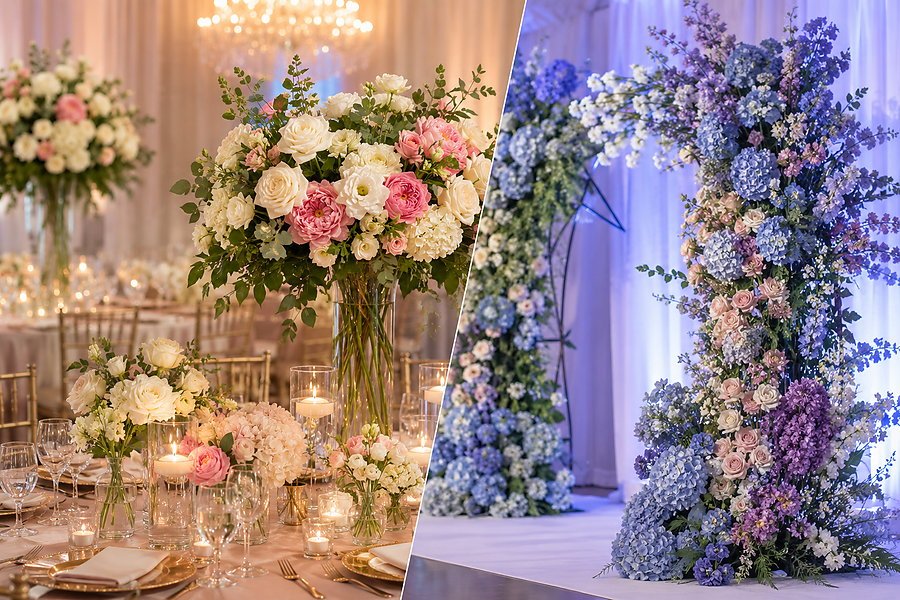
A fake flower is often the smarter choice for large décor pieces. Flower walls, ceiling installations, ceremony arches, hanging garlands, staircase greenery, and photo booth backdrops need volume and structure. These pieces are touched, moved, installed, packed, and sometimes reused.
A small viewpoint: fake flowers are best when flowers act like architecture.
If the flowers need to cover a wall, frame a stage, hang from a ceiling, or build a large backdrop, artificial flowers often give more control. They can be shaped, wired, packed, and installed without the same freshness concerns.
Fake Flowers Help With Reuse
A fake flower arrangement can be used again. A wedding planner can reuse arch flowers for multiple weddings. A hotel can keep lobby arrangements for months. A retailer can reuse seasonal displays. A corporate event company can store garlands, greenery panels, and centerpieces for future bookings.
Balsam Hill describes artificial flowers as long-lasting, low-maintenance, cost-effective over time, and available across seasons. This makes them practical for repeat events and rental-based décor businesses.
Are Real Flowers Better Than Fake Flowers for Events?
Fake flowers solve many practical problems, but real flowers still offer something artificial flowers cannot fully replace.
Real flowers are better than fake flowers for events when fragrance, natural freshness, delicate movement, symbolic meaning, and premium floral artistry matter most. They are often preferred for bridal bouquets, luxury tablescapes, intimate dinners, memorial events, brand experiences, and floral designs where scent and natural beauty are part of the experience.
Real Flowers Feel Alive
Fresh flowers have scent, softness, and natural variation. They move differently. They open and fade in a way that feels emotional. For weddings, memorials, anniversaries, and high-touch celebrations, this natural quality can matter more than convenience.
A bridal bouquet is a good example. Many couples still prefer real flowers for the bouquet because it is photographed closely and carried by the bride. The same applies to boutonnières, corsages, small dinner table arrangements, and luxury hospitality events where guests sit close to the flowers.
Real Flowers Support Floral Artistry
Fresh floral design can feel more expressive because real stems have natural posture, fragrance, and seasonal character. A skilled florist can use delicate flowers, rare blooms, local stems, and seasonal textures to create a feeling that is hard to copy with artificial flowers.
A small viewpoint: real flowers are best when flowers are part of the emotion, not only the decoration.
If the event story depends on scent, seasonality, or natural softness, real flowers often create a stronger guest experience.
Real Flowers Can Be More Sustainable in the Right Setting
The sustainability question is not simple. Local, seasonal fresh flowers can be a better choice than imported flowers that require long shipping and refrigeration. Fake flowers can reduce waste when reused many times, but low-quality artificial flowers used once can also create waste.
The best event choice depends on sourcing, reuse, materials, transport, and disposal. For an event brand, this means the question should not be “fake or real?” only. It should also be “How will these flowers be sourced, used, reused, or composted?”
Which Is More Cost-Effective for Events: Fake or Real Flowers?
Flower cost depends on quality, scale, labor, design complexity, season, and location. The cheaper option is not always the better value.
Fake flowers are usually more cost-effective for repeated events, large installations, DIY projects, and rental décor. Real flowers can be more cost-effective for small, simple, seasonal arrangements. For weddings, fresh flower costs vary widely, while artificial flowers may cost more upfront but save money when reused.
Fresh Flower Costs Can Add Up Fast
Wedding flowers are a common reference point because they include bouquets, ceremony flowers, reception décor, centerpieces, corsages, boutonnières, and installations. Brides reported that the average cost of wedding flowers in the U.S. in 2025 was about $2,200, with many couples spending between $500 and $3,500. The Knot reported an average wedding flower cost of $2,800 based on its Real Weddings Study, with costs affected by seasonality, flower type, logistics, and arrangement size.
These numbers show why many event buyers compare fake and real flowers carefully. A small dinner may not need artificial flowers. A large wedding with an arch, centerpieces, aisle flowers, hanging greenery, and a photo wall may benefit from artificial or hybrid design.
Fake Flowers Change the Value Formula
Fake flowers may not always be cheaper at the first purchase. High-quality silk flowers, real-touch flowers, and custom artificial arrangements can cost more than expected. But they can be reused, rented, resold, or kept after the event.
A simple comparison helps:
| Event Need | Better Choice | Reason |
|---|---|---|
| One small dinner | Real flowers | Freshness and scent matter |
| Large wedding arch | Fake flowers | Durable and reusable |
| Bridal bouquet | Real or hybrid | Close-up beauty matters |
| Flower wall | Fake flowers | Volume and structure matter |
| Corporate stage décor | Fake flowers | Early setup and repeat use |
| Luxury dining table | Real flowers | Guest experience is close-up |
| Outdoor summer event | Fake or hybrid | Heat can damage fresh flowers |
| Memorial ceremony | Real flowers | Symbolic freshness matters |
Labor Also Matters
Flower cost is not only the flower itself. It also includes design time, delivery, setup, installation, breakdown, storage, and sometimes disposal. Real flowers need careful timing and often need professional handling. Fake flowers need storage, cleaning, shaping, and transport. Neither option is truly labor-free.
A small viewpoint: the best value is the flower that fits the job.
A cheap fake flower that looks plastic is not a good deal. An expensive fresh flower that wilts before photos is also not a good deal. The right choice protects the event experience.
When Should Event Planners Use Both Fake and Real Flowers?
For many events, the strongest design is not fully fake or fully real. It is a smart blend.
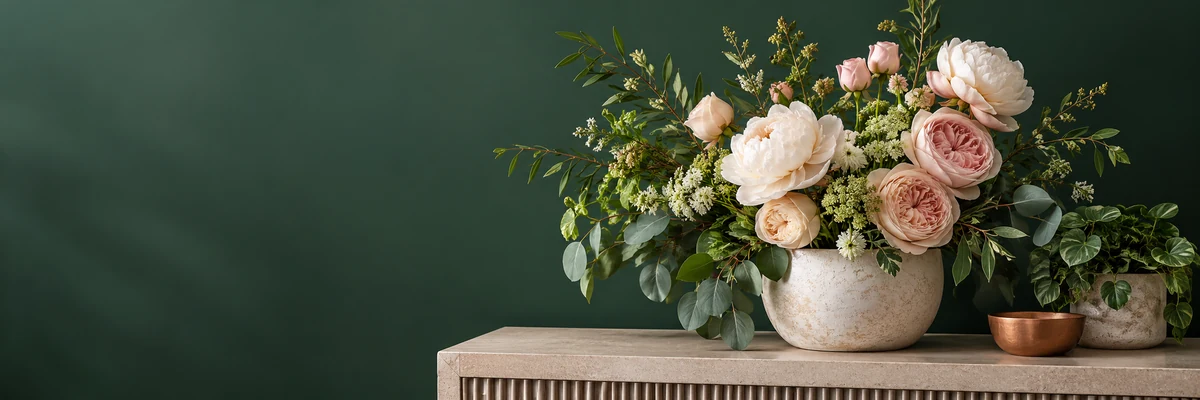
Event planners should use both fake and real flowers when they want the beauty of fresh flowers and the stability of artificial décor. A hybrid approach works well by using real flowers for close-up pieces and fake flowers for large installations, high-heat areas, reusable backdrops, ceiling décor, and hard-to-reach displays.
Use Real Flowers Where Guests Get Close
Fresh flowers work best where people will touch, smell, or closely photograph them. These areas include bridal bouquets, boutonnières, corsages, sweetheart tables, VIP dinner tables, bar arrangements, and small luxury centerpieces.
A real flower in these places gives softness and emotion. It also gives the event a natural detail that guests can notice up close.
Use Fake Flowers Where Structure Matters
Artificial flowers work best where flowers need to perform like décor material. Use them for arches, wall panels, ceiling installations, aisle markers, staircase garlands, entry displays, welcome sign flowers, and photo booth backdrops.
The Knot describes artificial wedding flowers as human-made flowers that can look similar to real flowers and can help couples save time and money while creating pieces they can enjoy later. This makes them useful for large pieces that need to be built ahead of time.
Hybrid Styling Ideas
Use real flowers in the bridal bouquet and artificial flowers on the ceremony arch.
Use fresh roses on dining tables and faux greenery garlands along stair rails.
Use real flowers for VIP table accents and fake flowers for the photo wall.
Use real fragrant flowers near guests and artificial blooms in high, hard-to-reach installations.
Use faux flowers for outdoor heat-sensitive areas and fresh flowers indoors.
A small viewpoint: hybrid design feels premium when the placement is strategic.
Guests do not usually inspect every ceiling garland or far-away arch flower. They notice the full effect. Save fresh flowers for close moments and use artificial flowers for scale.
My insights: Is a Fake Flower or Real Flower Better for Events?
The better flower is not the one with the better reputation. It is the one that solves the event’s real problem.
A fake flower is better for events that need control, reuse, early setup, and visual scale. A real flower is better for events that need fragrance, natural emotion, and close-up luxury. The most practical event strategy is often a hybrid design that uses each flower type where it performs best.
Start With the Event Type
A wedding needs emotion and beauty. A corporate event needs brand consistency. A hotel event needs polished décor. A prom needs durability. A retail launch needs strong visuals. A private dinner needs intimacy. These events do not need the same flower choice.
For a wedding, real flowers may be best for bouquets and family flowers. Fake flowers may be best for arches, installations, and flower walls. For a corporate event, fake flowers can keep the room consistent across several days. For a private dinner, real flowers may create a more personal and sensory experience.
Think About Distance
Distance changes everything. Flowers seen from three feet away need higher realism. Flowers seen from across a ballroom need shape, color, and scale. This is why artificial flowers work well in backdrops and overhead designs, while real flowers often work well on guest tables.
A useful rule is simple:
| Viewing Distance | Better Option |
|---|---|
| Close-up hand-held flowers | Real or premium faux |
| Guest table flowers | Real, premium faux, or hybrid |
| Ceremony arch | Fake, real, or hybrid |
| Ceiling installation | Fake flowers |
| Flower wall | Fake flowers |
| VIP luxury dinner | Real flowers |
| Outdoor long event | Fake or hybrid |
Match the Choice to the Budget
A low budget does not automatically mean fake flowers. Sometimes local seasonal fresh flowers are cheaper and prettier than low-quality faux stems. A high budget does not automatically mean real flowers. Sometimes premium artificial installations create a stronger and more reusable design.
The smartest buyers compare total value. They ask how long the flowers need to last, how close guests will be, whether the flowers can be reused, how much setup time is available, and whether the event needs scent.
Keep the Design Honest
A fake flower should not pretend too hard. It should be chosen because it performs well. A real flower should not be used only because it feels traditional. It should be chosen because its freshness matters.
For many modern events, the best answer is balanced. Use real flowers where they create emotion. Use fake flowers where they create structure. Use greenery to connect both. Keep colors consistent. Keep styling natural. Shape artificial stems by hand. Keep fresh flowers hydrated and protected.
In the end, a fake flower and a real flower can both be beautiful. The better choice is the one that makes the event easier to plan, better to photograph, and more enjoyable for guests.
Conclusion
Fake flowers are better for durability, reuse, and scale. Real flowers are better for scent, emotion, and freshness. For most events, a thoughtful hybrid design works best.