
Bulk flowers can reduce event costs, but crushed petals, uneven colors, and weak stems can ruin the final photographs. A low unit price means little when half the order needs repair.
The most dependable wholesale wedding flowers are real-touch focal stems, silk-touch roses and peonies, artificial hydrangea bundles, wired filler flowers, and reinforced greenery or garlands. Buyers should approve samples, specify colors and dimensions, require protective packing, and allow enough time to inspect, reshape, and replace damaged pieces.
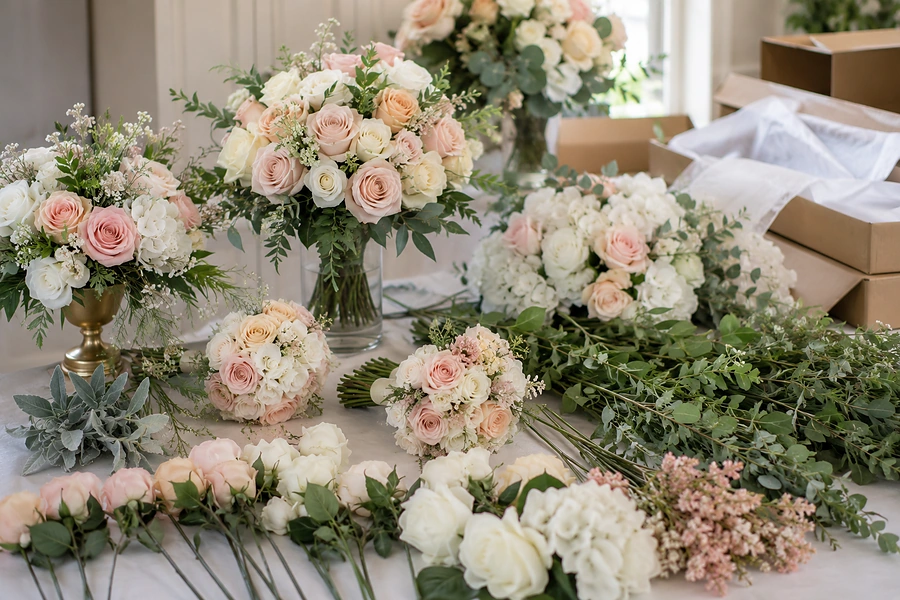
Artificial wedding flowers are available throughout the year and can be arranged well before an event. They also allow planners to preview complete bouquets and displays instead of waiting to see how seasonal fresh flowers look on the wedding day.
What Are the Best Wholesale Artificial Flowers for Weddings?
A catalog may contain hundreds of attractive flowers. Only a smaller group works reliably across bridal bouquets, centerpieces, arches, aisle arrangements, and photography.
The best wholesale artificial wedding flowers combine realistic surfaces with strong construction. Real-touch roses, tulips, and orchids work well at close range. Silk-touch peonies and hydrangeas create lightweight volume. Wired filler sprays and artificial greenery complete large arrangements while controlling cost and installation weight.
I divide bulk wedding flowers into focal blooms, supporting flowers, fillers, and greenery. This prevents the common mistake of spending the whole budget on large premium flower heads.
1. Real-Touch Focal Flowers
Real-touch artificial flowers are my first choice for the parts guests and photographers will see closely. I use them in bridal bouquets, table-level arrangements, cake-table displays, and ceremony focal points.
Polyurethane, soft polymer coatings, and similar materials can create smooth petals with a natural level of flexibility. These flowers are especially effective for:
- Roses
- Tulips
- Calla lilies
- Orchids
- Magnolias
- Anthuriums
- Succulents
Real-touch flowers usually cost more than basic polyester stems. I therefore place them where texture and close-up realism matter most.
A photo-perfect real-touch flower should have a matte surface, controlled petal thickness, a natural center, and a flexible wired stem. I avoid flowers with oily surfaces, thick edges, strong chemical odors, or identical petal positions.
2. Silk-Touch Roses and Peonies
Most products described as silk flowers now use polyester or another synthetic fabric rather than natural silk. The material is lightweight and can be shaped into large, layered blooms.
Silk-touch roses and peonies are useful for:
- Bridesmaid bouquets
- Floral arches
- Welcome signs
- Staircase installations
- Flower walls
- Large centerpieces
- Hanging arrangements
These flowers provide more visual volume per carton than heavy molded blooms. They are also easier to install on frames.
Fabric quality still varies. I check the petal edges, transparency, color gradient, print quality, and shape recovery. Cheap fabric may fray or appear flat under flash photography.
3. Artificial Hydrangea Bundles
Hydrangeas are one of the most efficient wholesale wedding flowers because one head covers a large area. A few stems can fill a vase, hide mechanics, or create the base of a floral wall.
Artificial hydrangeas work best when the head contains several petal sizes and more than one shade. A single bright color across every petal usually looks artificial.
Hydrangeas can arrive compressed because their large heads take up carton space. I choose products with wired branches or flexible internal supports. Each section can then be opened after delivery.
4. Wired Filler Flowers
Small flowers make a wedding arrangement look complete. They also soften the gaps between large roses, peonies, and hydrangeas.
Reliable wholesale fillers include:
- Baby’s breath
- Wax-flower sprays
- Small daisies
- Blossom branches
- Lavender
- Queen Anne’s lace
- Berry sprays
- Seeded stems
Wired filler sprays are easy to divide into smaller pieces. This gives designers more control over bouquets, boutonnieres, bud vases, and aisle markers.
I avoid fillers that shed large amounts of artificial pollen or decorative powder. Loose material can collect on tablecloths, clothing, cakes, and photography surfaces.
5. Reinforced Greenery and Garlands
Greenery creates shape and depth while lowering the average cost of a large installation. Eucalyptus, ruscus, ivy, olive leaves, fern sprays, and mixed garlands work across many wedding styles.
Natural-looking artificial florals usually include slight asymmetry, color variation, and differences in leaf direction. Perfectly repeated leaves can make even an expensive arrangement look manufactured.
For garlands, I inspect the backing and attachment points. A beautiful leaf is not useful when it falls off during installation.
| Bulk Option | Best Wedding Use | Main Advantage | Main Risk |
|---|---|---|---|
| Real-touch focal flowers | Bouquets and close-up displays | Strong tactile realism | Higher cost and weight |
| Silk-touch roses and peonies | Arches and large arrangements | Lightweight volume | Creasing and frayed edges |
| Artificial hydrangeas | Centerpieces and flower walls | Fast coverage | Compressed heads |
| Wired filler sprays | Bouquets and bud vases | Flexible and cost-efficient | Shedding or weak branches |
| Greenery and garlands | Tables, arches, and backdrops | Adds shape and depth | Loose leaf connections |
Should You Buy Loose Stems, Flower Bundles, or Finished Arrangements?
Ordering the wrong product format can create unnecessary labor. Loose stems provide flexibility, but they also require more planning, cutting, wiring, and assembly.
Buy loose stems when you need full design control, coordinated bundles when you need fast centerpiece production, and finished arrangements when labor time is limited. For most wholesale wedding projects, a mixed order works best: premium loose stems for focal designs and standardized bundles or garlands for repeated decorations.
The right format depends on the size of the event, the skill of the design team, and the time available for preparation.
Loose Artificial Stems
Loose stems offer the most control over color, height, spacing, and flower combinations. I use them for bridal bouquets and custom ceremony arrangements.
Their main advantages include:
- Easy color mixing
- Flexible stem placement
- Better control of bouquet proportions
- Simple replacement of damaged pieces
- More options for future reuse
Loose stems also require the most work. Every stem may need to be opened, straightened, trimmed, and arranged.
A wholesale order with 1,000 stems can become a serious labor project. I calculate processing time before comparing product prices.
Coordinated Flower Bundles
A bundle contains several flower heads, leaves, or fillers attached to one main stem. Bundles are useful for repeated table arrangements and venue decorations.
I can place one or two bundles in a vase and then add selected focal flowers. This produces a consistent result across many tables without building every arrangement from the beginning.
Bundles should still look adjustable. When every branch is fixed in one position, the arrangement may appear stiff.
Pre-Made Bouquets and Centerpieces
Finished bouquets reduce design labor and help maintain consistency. They are useful for:
- Bridesmaid bouquets
- Toss bouquets
- Aisle arrangements
- Small table centerpieces
- Pew flowers
- Welcome-desk arrangements
I request approval photographs before production and again before shipment. The photographs should show the actual order under neutral lighting, not only the supplier’s original catalog sample.
Finished products need stronger packaging than loose stems. Bouquets can lose their shape when the carton is too shallow or when heavy items are placed above the flower heads.
Garlands, Panels, and Installation Pieces
Pre-made garlands and flower panels reduce on-site installation time. They are practical for arches, ceilings, staircases, tables, and photo backdrops.
I check the joining method before ordering. Panels and garlands should connect without leaving obvious gaps. The supplier should provide matching spare leaves and flower heads for quick repairs.
| Product Format | Design Flexibility | Labor Required | Best Use |
|---|---|---|---|
| Loose stems | High | High | Custom bouquets |
| Flower bundles | Medium | Medium | Repeated centerpieces |
| Finished bouquets | Low to medium | Low | Bridal-party flowers |
| Garlands | Medium | Low | Tables and arches |
| Flower panels | Low | Low | Walls and backdrops |
How Many Wholesale Wedding Flowers Should You Order?
Under-ordering creates visible gaps. Over-ordering locks money into unused inventory and increases shipping volume.
Estimate wholesale flower quantities from a complete décor list, not from the guest count alone. Count every bouquet, boutonniere, centerpiece, aisle marker, arch section, sign, staircase, cake display, and photo area. Then add replacement stock for damage, color differences, design changes, and installation mistakes.
I begin with a sample arrangement. I record exactly how many focal flowers, supporting blooms, fillers, and greenery pieces it uses. I then multiply that recipe by the number of required arrangements.
Build a Floral Recipe
A simple medium centerpiece might include:
| Component | Example Quantity |
|---|---|
| Large focal blooms | 3 |
| Medium supporting flowers | 5 |
| Hydrangea or volume flower | 2 |
| Filler sprays | 3 |
| Greenery stems | 4 |
| Total main pieces | 17 |
Twenty matching centerpieces would require approximately 340 main pieces before spare stock.
The correct quantity changes with vase size, arrangement style, and viewing angle. A compact low centerpiece needs fewer stems than a loose garden-style design.
Add a Practical Spare Allowance
I do not order the exact calculated quantity. Some pieces may arrive damaged, differ slightly in color, or fail during assembly.
Spare stock is especially useful for:
- Delicate flower heads
- Long branches
- Pale fabric flowers
- Hand-painted stems
- Garlands with small leaves
- Items ordered from different production batches
I keep the spare percentage higher for custom colors and products that cannot be reordered quickly.
Separate Close-Up Flowers From Distance Flowers
Not every part of a venue needs the same grade.
I divide the order into three viewing zones:
- Close range: bridal bouquet, sweetheart table, cake table, and dining centerpieces
- Medium range: aisle flowers, welcome signs, and ceremony arrangements
- Long range: arches, ceiling décor, stage backgrounds, and flower walls
I use more real-touch flowers in close-range zones. I use lightweight silk-touch blooms and greenery in large background installations.
This method protects the visual result without applying the highest unit cost to every stem.
Order by Color Family, Not Only Product Name
Color consistency is one of the main risks in wholesale purchasing. “Ivory,” “champagne,” “blush,” and “dusty rose” can vary between suppliers and production batches.
I use physical color samples or recognized color references whenever possible. I also specify whether the finish should be warm, cool, muted, or bright.
All important flowers should come from the same approved production batch. Later reorders may not match perfectly.
How Far in Advance Should You Order Wholesale Wedding Flowers?
Artificial flowers remove the short shelf life of fresh flowers, but they do not remove production, shipping, inspection, and replacement time.
Begin wholesale artificial wedding flower sourcing several months before the event. Approve material and color samples first, confirm the bulk order after the design test, and schedule delivery early enough for inspection and reshaping. Custom colors, large quantities, sea freight, and finished arrangements require more time than stocked loose stems.
Current wholesale guides consistently recommend early planning and physical samples rather than relying only on listing photographs.
A Safer Purchasing Timeline
| Stage | Recommended Action |
|---|---|
| Initial planning | Define colors, flower types, quantities, and budget |
| Supplier review | Compare samples, materials, construction, and packaging |
| Design test | Build one bouquet, centerpiece, or panel |
| Bulk approval | Confirm specifications and production sample |
| Pre-shipment check | Review quantity, colors, cartons, and photographs |
| Delivery | Inspect every carton and record damage |
| Preparation | Fluff, reshape, trim, and organize pieces |
| Event setup | Bring spare flowers, wire, tape, and tools |
The exact schedule depends on whether the flowers are ready stock or custom-made. A supplier guide published in 2026 gives one example of real-touch wholesale planning with samples taking about 15 days and bulk production taking 60 to 90 days after approval. These figures are not universal, but they show why custom bulk orders should not be left until the final weeks.
Why Early Delivery Matters
An early delivery window gives the buyer time to:
- Count every carton
- Compare the goods with the approved sample
- Identify crushed or missing pieces
- Check color under venue-like lighting
- Reshape the flowers
- Build test arrangements
- Request replacements
- Adjust the final design
Artificial flowers do not need to arrive immediately before the wedding. Receiving them early is one of their main operational advantages.
I store the inspected flowers in a dry, clean space. I avoid direct sunlight, heat, moisture, and heavy stacking.
How Do You Make Sure Bulk Flowers Arrive Photo-Perfect?
A beautiful production sample does not guarantee a beautiful delivery. Export packing determines whether the final flowers keep their shape.
To make wholesale wedding flowers arrive photo-perfect, require individual head protection, adequate carton depth, internal dividers, strong outer boxes, moisture barriers, and controlled compression. Approve the packing method before shipment and ask for photographs of open cartons, sealed cartons, labels, and pallet construction.
General carrier guidance recommends sturdy outer packaging, separate protection for fragile products, suitable cushioning, and enough internal support to prevent movement and surface damage. FedEx guidance for floral arrangements also recommends securing arrangements and using corrugated dividers where needed.
Protect the Flower Heads
Large roses, peonies, and hydrangeas should not carry the weight of the carton above them. The package needs enough depth to prevent permanent flattening.
Protective options include:
- Individual sleeves
- Tissue between layers
- Shaped paper supports
- Corrugated partitions
- Inner trays
- Small bags around pale flowers
- Stem ties that prevent movement
I avoid tight vacuum packing for premium wedding flowers. It may reduce freight volume, but it can create severe creases and increase preparation time.
Keep Heavy Parts Away From Petals
Metal bases, vases, frames, and heavy stems should be packed separately from delicate flowers. A divider is not enough when a heavy item can shift during transportation.
UPS guidance recommends wrapping fragile items separately and using suitable cushioning inside a strong box.
Control Moisture, Dirt, and Color Transfer
White and ivory wedding flowers reveal every mark. They should be protected from carton dust, printed packaging, dark ribbons, and colored foliage.
I request clean inner bags or protective liners for pale products. The flowers must be completely dry before packing.
Dark leaves and hand-painted stems should not press directly against white petals. A transfer test can identify this problem before the bulk order ships.
Use Carton Labels That Support Inspection
Every carton should identify:
- Product code
- Flower name
- Color
- Quantity
- Carton number
- Purchase order
- Destination
- Handling direction
- Gross and net weight
A clear carton list helps the buyer find priority products without opening every package randomly.
Inspect Before and After Shipment
My pre-shipment inspection checks:
- Material and texture
- Approved color
- Flower-head diameter
- Stem length
- Petal count or fullness
- Wire strength
- Glue marks
- Loose leaves
- Odor
- Packing pressure
After delivery, I photograph any damage before reshaping the flowers. This creates a useful record for claims and future packaging improvements.
My Insights: Wholesale Wedding Flowers—Proven Bulk Options That Arrive Photo-Perfect
The best wholesale flowers are not simply the most realistic stems in a supplier’s showroom. They are the products that remain realistic after production, packing, freight, storage, and installation.
Proven wholesale wedding flower options include real-touch focal blooms, lightweight silk-touch volume flowers, adjustable filler sprays, reinforced greenery, and standardized pre-made pieces. They arrive photo-perfect when the buyer controls samples, specifications, color batches, carton design, delivery timing, inspection, and final reshaping.
My main insight is that the buying unit should be the completed wedding design, not the individual flower.
Use Premium Materials Where the Camera Looks
I place the best real-touch roses, orchids, or tulips in the bridal bouquet and other close-up arrangements. I use lighter flowers in wide installations and background areas.
This creates a more efficient material plan:
| Wedding Area | Recommended Bulk Option |
|---|---|
| Bridal bouquet | Premium real-touch focal stems |
| Bridesmaid bouquets | Silk-touch flowers with selected real-touch accents |
| Dining centerpieces | Hydrangeas, roses, fillers, and greenery |
| Ceremony arch | Lightweight fabric flowers and reinforced garlands |
| Flower wall | Panels with added focal blooms |
| Cake table | Real-touch flowers with clean, removable stems |
| Aisle arrangements | Coordinated flower bundles |
| Hanging installation | Lightweight silk-touch flowers and greenery |
Standardize Repeated Designs
One approved centerpiece recipe is easier to reproduce than 20 individually designed arrangements.
I prepare a reference photograph, component list, stem count, finished dimensions, and color order. Every assembler then works from the same standard.
Standardization reduces waste and makes missing components easier to identify.
Treat Packaging as Part of the Product
A wholesale flower is not finished when it leaves the production line. It is finished when it reaches the buyer in usable condition.
I therefore include packaging requirements in the purchase specification. Carton dimensions, flower-head protection, inner bags, dividers, compression limits, and labels should be agreed before production ends.
Plan a Recovery Process
Even good packaging may leave minor bends after a long journey. Wired artificial flowers can usually be opened and reshaped carefully.
I use this preparation process:
- Open cartons several days before assembly.
- Sort products by code and color.
- Support each flower head while opening the petals.
- Bend wired branches gradually.
- Use cool, low airflow for light fabric creases.
- Test any steam or moisture on a spare flower first.
- Remove loose threads and visible glue carefully.
- Compare completed arrangements with reference photographs.
I avoid boiling water and strong heat unless the supplier specifically confirms that the material can tolerate them. A viral reshaping method may work on one polyester flower and damage a coated or glued product.
Buy the Supplier’s Process, Not Only the Sample
A supplier should be able to repeat the approved quality across the whole order. I ask how materials are controlled, how colors are matched, how products are inspected, and how cartons are tested.
I also check the replacement policy before ordering. Bulk-order guidance recommends reviewing what happens when flowers arrive damaged, incorrect, or late.
The safest wholesale purchase combines strong products with a clear process. Realistic stems matter, but samples, production control, protective packing, early delivery, and organized inspection are what make an entire wedding arrive ready for photographs.
Conclusion
Choose realistic focal blooms, lightweight volume flowers, wired fillers, and reinforced greenery. Approve samples and packaging early so every wholesale arrangement arrives consistent, adjustable, and camera-ready.