7 Best Outdoor Artificial Plants for Business: The Ultimate Hotel and Restaurant Guide


  Empty entrances, faded planters, and uneven greenery can quickly weaken a guest’s first impression. I solve this problem with outdoor artificial plants for business that stay attractive, controlled, and ready for daily commercial use.


  Outdoor artificial plants for business give hotels and restaurants lasting greenery without daily watering, seasonal gaps, or constant replacement. I focus on realistic materials, UV-ready construction, stable installation, and layouts that support both guest experience and operations.


    Applicable scenario: Hotel entrances, restaurant patios, rooftop lounges, pool decks, and commercial terraces.


  I have worked with artificial flowers and greenery for more than ten years. During that time, I have learned that a beautiful product photo is only the starting point. A successful commercial outdoor display must also handle sun, wind, dust, rain, guest traffic, freight, cleaning, and replacement planning. This guide explains how I select outdoor artificial plants for business and how I help buyers reduce risk before bulk production.
Why Are Outdoor Artificial Plants for Business a Smart Commercial Choice?
A busy outdoor space needs a consistent appearance, but live plants can create labor pressure, seasonal gaps, water problems, and different results across multiple locations.
Outdoor artificial plants for business help hotels and restaurants maintain a planned visual standard while reducing watering, pruning, pest control, soil care, and frequent plant replacement.
Applicable scenario: Hotel courtyards, covered patios, lobby approaches, pool areas, and outdoor event zones.
I Start With the Guest Experience
I do not treat greenery as a small finishing item. I treat it as part of the full customer journey. A hotel guest sees the entrance before the room. A restaurant customer sees the terrace before the menu. Clean, balanced, and well-scaled greenery can make the space feel calm, private, welcoming, and well managed.
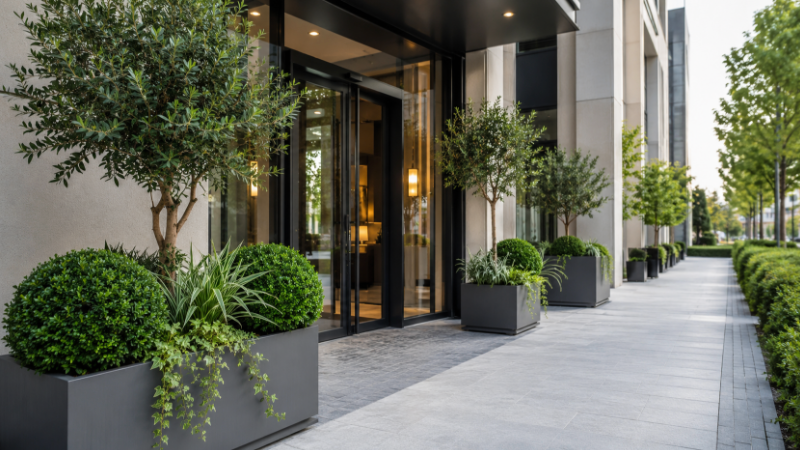
When a hotel buyer sends me entrance photos, I first check the viewing distance, doorway width, wall color, lighting, signs, and main traffic route. I do not place a wide tree where it blocks an automatic door. I do not use a small planter beside a large building entrance. I use paired plants to frame key areas, lower greenery near seating, and trailing plants where hard walls need a softer look.
One buyer once asked me for “two green trees for the front door.” I could have quoted two standard trees immediately. Instead, I asked for daytime photos, evening photos, door dimensions, wind direction, sun hours, and the expected display period. The original choice was a thin indoor-style ficus. After reviewing the site, I recommended fuller olive trees with stronger inner supports and heavier planters. The final entrance looked more balanced, and the buyer avoided an unstable installation.
I Use Artificial Greenery to Create Consistency
Live plants can perform well in suitable conditions. Still, hotel groups and restaurant chains often need the same appearance across several zones or locations. Real plants can grow at different speeds. They can lose leaves, suffer from heat, react to watering mistakes, or look weak between maintenance visits.
I recommend outdoor artificial plants for business when the buyer needs a fixed height, controlled color, repeatable shape, and clear visual standard. An approved sample can become the reference for every site. This makes procurement, installation, photography, brand review, and future replacement easier.
Artificial greenery is also useful in difficult areas. These areas may include deep shade, hot walls, narrow planters, covered terraces, rooftop corners, and locations with limited water access. The product still needs the correct outdoor specification. An indoor plant should not be moved outside and presented as a commercial outdoor solution.
For a deeper product comparison, I recommend my guide to the
best fake plants for outdoors .
It explains why materials, color control, fixing, and exposure matter more than a simple “outdoor” label.
My View: Low Maintenance Still Needs a Clear Plan
I often hear that artificial plants need no maintenance. I do not agree. They need less care than live plants, but they still need cleaning, inspection, reshaping, and correct placement.
The main benefit of outdoor artificial plants for business is control. A facilities team can follow a simple care routine instead of managing watering, soil, pests, plant growth, and seasonal decline. The buyer gains a more stable display and a more predictable maintenance cost.
I see the best results when the plant, planter, fixing method, drainage, cleaning process, replacement parts, and installation position are planned together. That complete system protects the appearance and helps the buyer avoid unnecessary future costs.
What Should Buyers Look for in Commercial-Grade Outdoor Artificial Plants?
A realistic plant can still fail outside if its leaves, stems, color, base, or fixing method were not designed for commercial exposure.
I check UV protection, material type, color depth, stem strength, leaf attachment, planter stability, packing recovery, cleaning access, and bulk consistency before I approve outdoor artificial plants for business.
Applicable scenario: Supplier review, sample approval, hotel procurement, restaurant chain sourcing, and commercial project planning.
I Check the Material and the UV Claim
I start with the product components. I ask which parts are PE, PVC, PU, fabric, metal, fiberglass, wood, or mixed material. I also ask whether the UV protection is added inside the raw material, applied on the surface, or used in both ways. A general UV-resistant claim does not explain which component received protection.
I ask for test details when a project has strong sunlight or a long planned display period.
ISO 4892-2
describes xenon-arc exposure methods for plastics under controlled light and moisture conditions.[1]
covers fluorescent ultraviolet lamp exposure with controlled moisture and heat.[2]
These methods can support material comparisons, but they do not guarantee an exact outdoor lifespan in every climate.
One customer once sent me photos of two samples that looked almost identical. One sample had deeper leaf color, stronger edges, and better joints. The cheaper sample had thin leaves and a strong plastic shine. I placed both samples in daylight, bent the leaves, checked the joints, and photographed them from normal guest distance. The difference became very clear. This test helped the buyer choose a better product before placing a large order.
I Check Realism in Natural Daylight
Outdoor light exposes weak details. Flat green color can look cheap. Strong shine can make the leaves look plastic. Repeated leaf shapes can make a tree look machine-made. Poor trunk texture can also weaken an otherwise attractive product.
I prefer several green tones, natural vein detail, controlled surface shine, flexible stems, and small differences in leaf angle. I also check the transition between the trunk and branches. A good leaf cannot save a poor trunk, and a good trunk cannot save weak leaf attachment.
I use a simple viewing test for outdoor artificial plants for business. I review each product close up, at one meter, and at the normal guest viewing distance. Restaurant terraces need strong close-range realism because customers may sit beside the plants. Hotel entrances need a strong overall shape because guests often see the display from farther away.
gives more detail about leaf texture, color, daylight performance, and structure.
I Check Strength, Fixing, and Bulk Repeatability
Commercial plants receive more contact than normal home décor. Guests may touch the leaves. Cleaning teams may move the planters. Wind may pull the plant in one direction. Delivery may compress branches and change the shape.
I inspect the stem wire, branch connection, leaf attachment, trunk support, inner base, and final planter weight. Tall outdoor artificial plants for business need more than an attractive decorative pot. They need stable internal fixing and a site-ready installation method.
A buyer once asked me to reduce the planter size because the freight volume was too high. I did not reject the request. I reviewed the full packing plan instead. I changed the inner packing, kept the factory base compact, and suggested that the buyer add the final decorative planters locally. The buyer reduced freight without accepting a light and unsafe finished display.
I also check whether mass production can match the approved sample. I record height, width, leaf count, color range, trunk finish, pot size, weight, and packing method. Buyers can use my
artificial flowers supplier checklist
to build a stronger approval process.
My View: The Lowest Price Can Create the Highest Project Cost
I compare total project cost, not only unit price. A low-cost plant may need more replacement, more reshaping, more fixing, more cleaning, or more complaint handling. A stronger product can reduce labor and protect the property’s visual standard.
I ask buyers to include sample cost, freight, planters, installation, spare parts, maintenance, and replacement risk when they compare outdoor artificial plants for business. This gives a more honest view of value.
Which Outdoor Artificial Plants for Business Work Best at Hotel Entrances?
Hotel entrances need strong shapes, clear sight lines, stable planters, and a polished appearance that remains consistent through daily guest traffic.
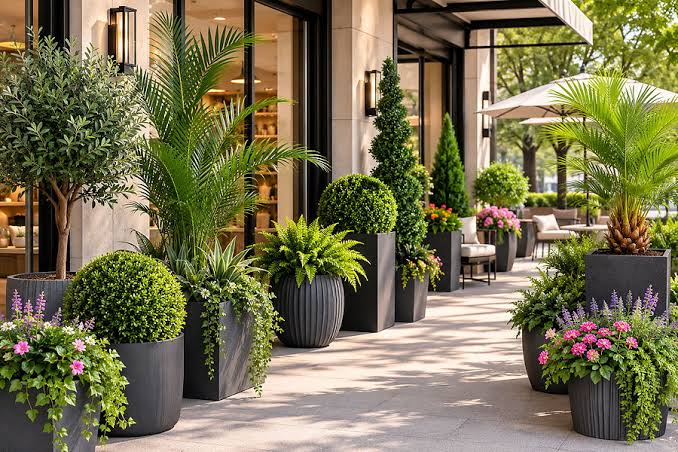
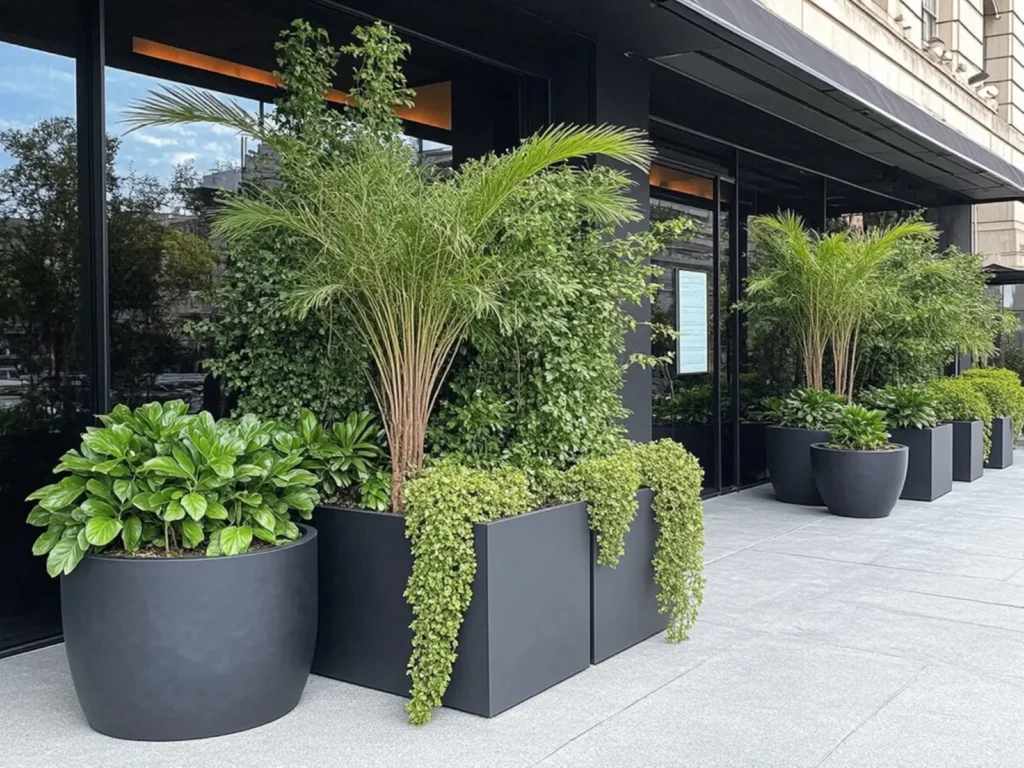
I often use artificial olive trees, boxwood topiaries, palms, bamboo screens, agave, yucca, ficus trees, and layered planter inserts in hotel outdoor projects.
Applicable scenario: Resort entrances, boutique hotel patios, porte-cochères, pool decks, and outdoor reception areas.
I Use Symmetry to Create a Strong Entrance
Paired plants create order and help guests notice the entrance. I often use two olive trees, two boxwood forms, or two structured mixed planters. I match the plant height and width to the doorway, building scale, and guest viewing distance.
I avoid small pots beside large hotel doors because the display can look temporary. I also avoid very wide plants near automatic doors because the branches may enter the walking path. The product should support the entrance, not compete with it.
A hotel customer once selected a standard tree directly from a catalog. I asked for a front photo with a person standing beside the entrance. That one photo showed that the original tree was too small. I recommended a taller tree with a wider canopy and a stronger planter. I also prepared a simple placement mockup. The buyer approved the new scale before ordering, which reduced the risk of receiving a product that looked weak on site.
addresses slip, trip, and fall hazards in work areas.[3]
Buyers should keep planters, bases, and branches away from required paths and service routes.
I Use Layering Across Hotel Patios
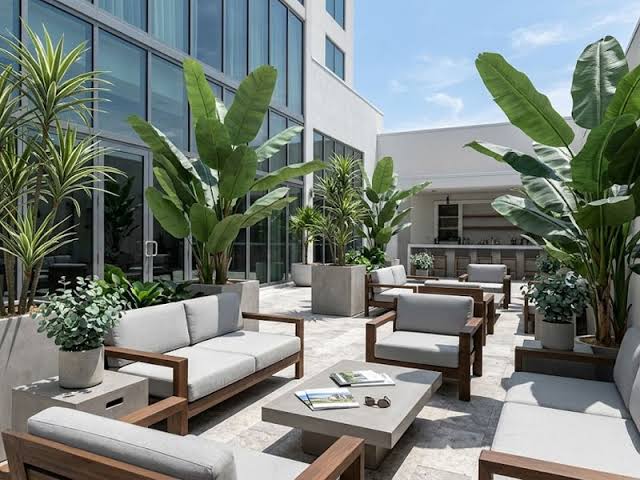
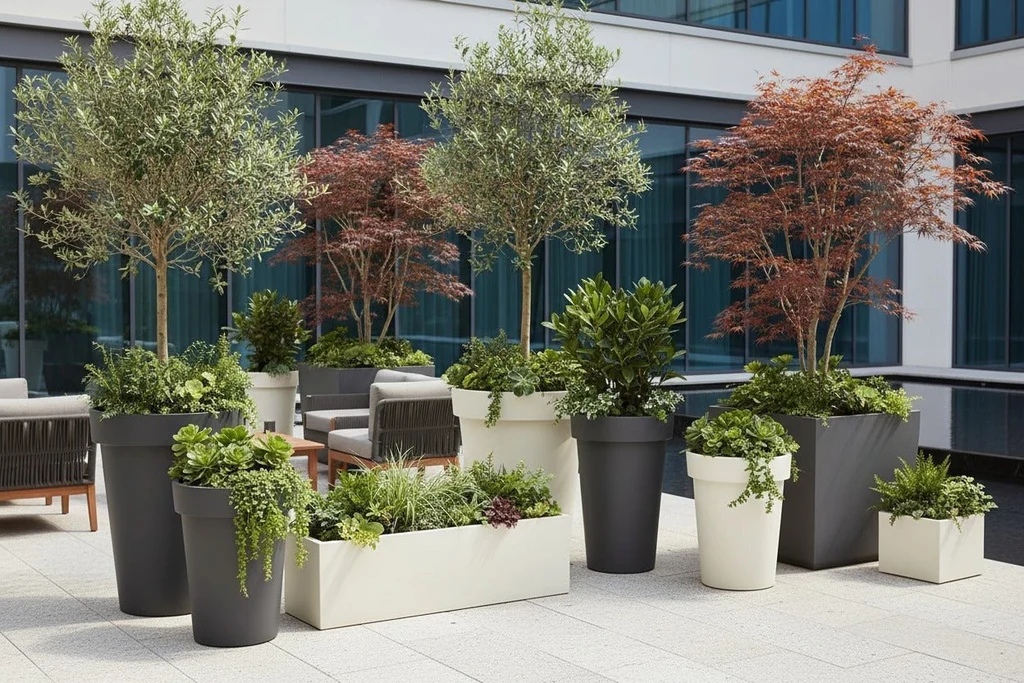
A hotel patio usually needs more than two large trees. The space needs several plant levels. I use tall plants for vertical structure, medium plants to divide zones, and low plants or trailing greenery to soften walls and planter edges.
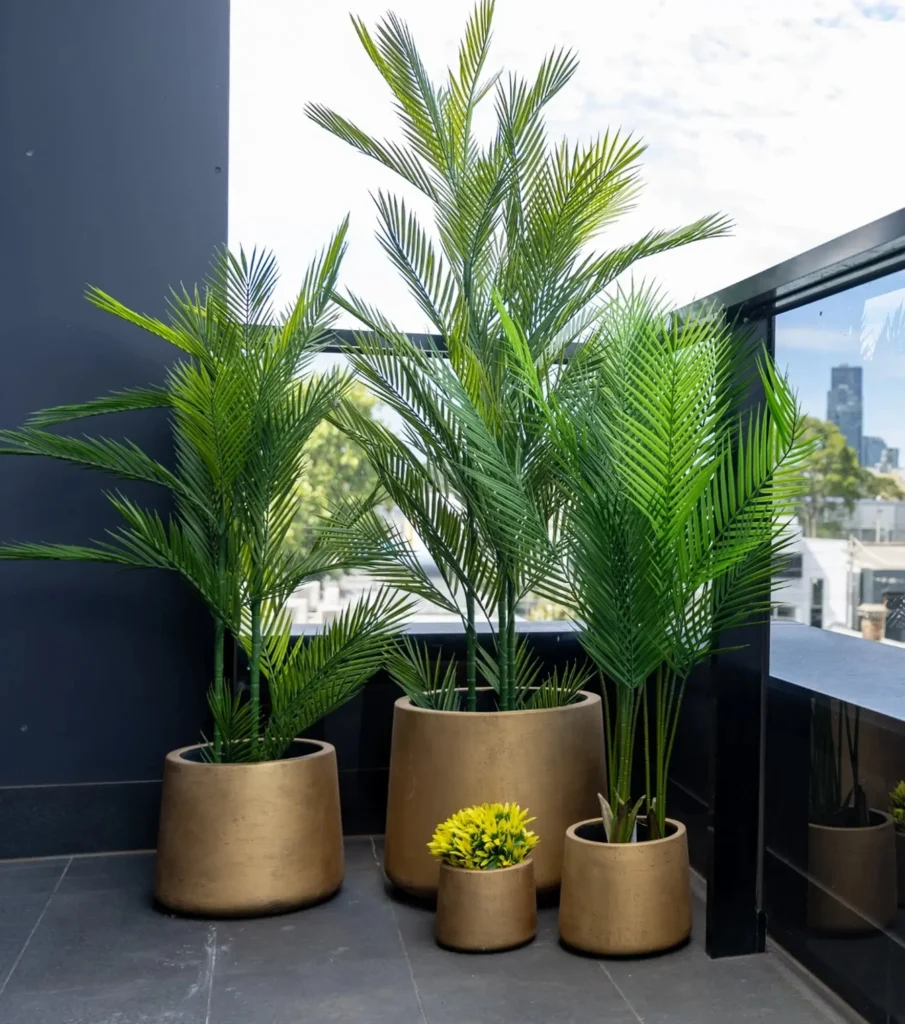
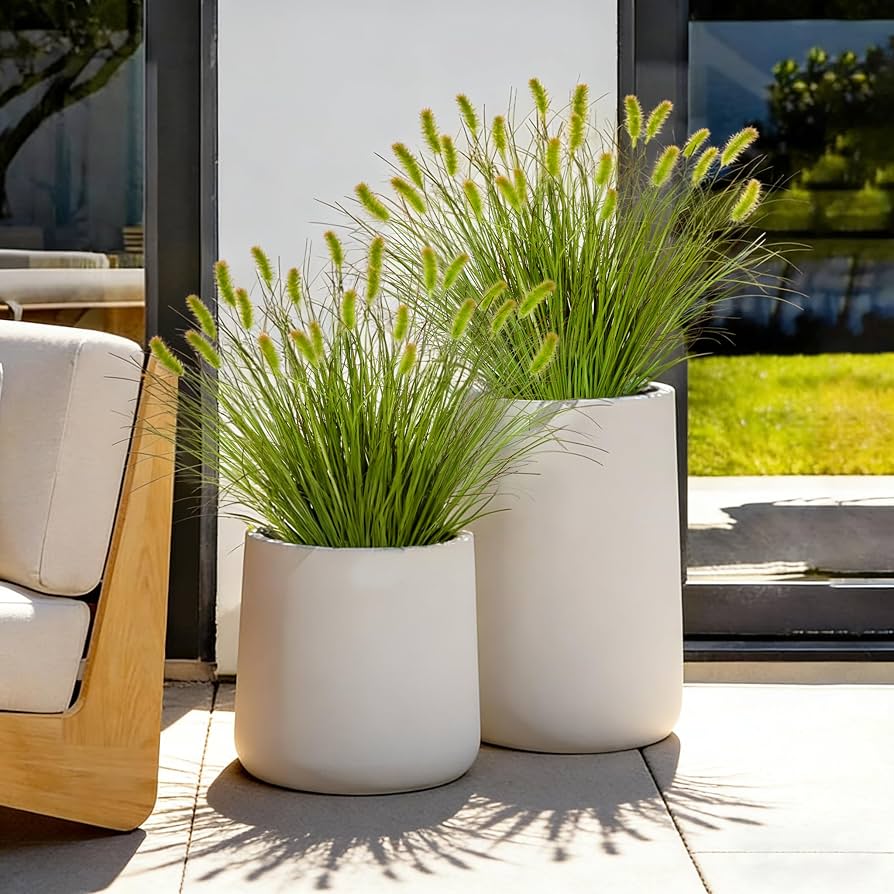
Artificial bamboo can create privacy. Olive trees can create a relaxed Mediterranean look. Palms can support a resort style. Agave and yucca can work well in modern or dry-climate designs. Boxwood can support formal spaces. Mixed planter inserts can add seasonal color without replacing the main plant structure.
One customer had a covered patio with deep shade and limited watering access. The team first considered live tropical plants, but the site conditions were not suitable. I suggested matte-finish artificial palms, mixed low greenery, and local stone topping. The final display looked full and natural without creating a daily care task for the hotel team.
I Match the Plants to the Hotel Brand
A luxury city hotel may need clean olive trees and dark planters. A coastal resort may need palms and loose grasses. A country property may need boxwood, ivy, and softer flowering inserts. I ask for brand colors, furniture photos, wall finishes, flooring, and evening lighting before I recommend outdoor artificial plants for business.
My View: Hotel Greenery Should Look Designed From the Start
I can usually see when plants were added after a space was finished. The scale feels wrong, the planters do not match, or the branches block signs and furniture. I prefer to review the floor plan early. I can then help the buyer choose height, width, quantity, planter style, and installation position as one complete system.
How Should Restaurants Use Outdoor Artificial Plants for Business on Terraces?
Restaurant terraces need privacy, atmosphere, clear service routes, and realistic greenery that still looks convincing when customers sit close to it.
I use outdoor artificial plants for business to divide seating, soften barriers, frame entrances, hide service areas, improve weak views, and create photo-friendly dining zones.
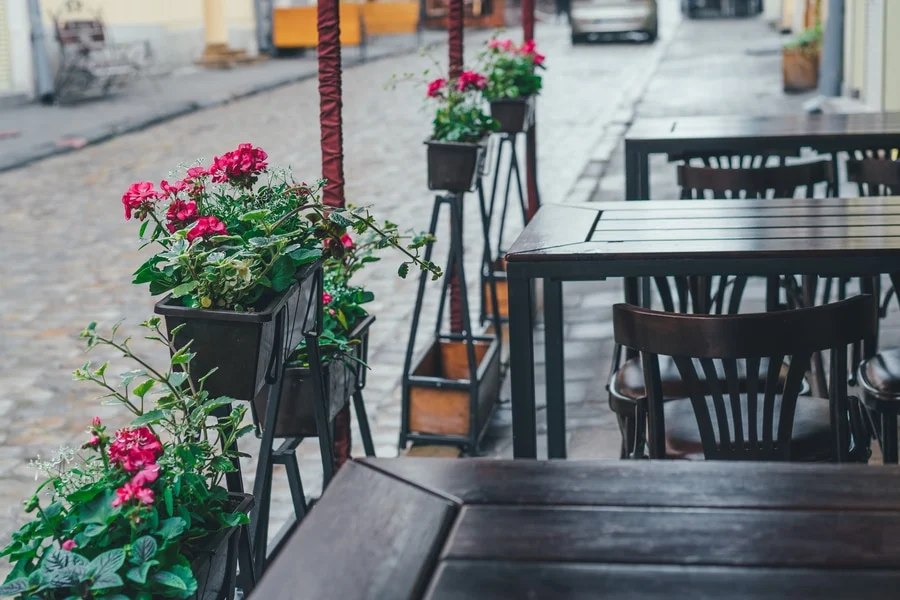
Customers like privacy, but they do not want to feel trapped. I use narrow bamboo, slim trees, boxwood screens, or long mixed planters between tables. I keep the lower area clear so staff can see the floor and move safely.
Wind is also important. A tall screen catches more wind than a single narrow tree. The planter needs enough weight, and the inner fixing must suit the product height. The display should not lean toward guests or service paths.
One restaurant buyer asked for a full green wall around a small terrace. After reviewing the layout, I recommended three planted dividers and two corner trees instead. The terrace stayed open, the buyer used fewer products, and the freight cost was lower. The space still felt private because the plants were placed where guests needed separation most.
I Choose Strong Close-Range Realism
Restaurant guests may sit directly beside the plants. They can see the leaf surface, stem color, joints, and planter base. I avoid strong shine, visible glue, repeated flowers, and overly bright green tones. I use green as the main base and add controlled flower colors that support the restaurant brand.
Outdoor artificial plants for business should also look good in customer photos. A balanced planter can become part of the restaurant’s visual identity. It can improve social media images, private event photos, and the street view of the property.
A good terrace should look full, but staff still need room to work. I check chair movement, tray routes, door swing, emergency access, cleaning access, storage areas, and nearby heat sources. I keep branches away from hot equipment and open flames.
One buyer shared a beautiful terrace layout that did not match the daily service route. I moved one long planter by only 30 centimeters and changed one wide palm to a narrow olive tree. The visual effect stayed strong, but the staff gained a clear route between the kitchen door and the tables.
My View: Restaurant Greenery Should Support Revenue
A terrace plant should do more than fill an empty corner. It can improve a low-demand table, create a private booking zone, hide an unattractive view, strengthen the entrance, or create a photo location.
I ask the buyer which seats are difficult to sell, where customers take photos, and where the street view feels weak. I then use outdoor artificial plants for business to solve these specific commercial problems.
Restaurant groups can also repeat the same brand look across several locations. I can prepare one approved product set, one specification sheet, one packing method, and one installation guide for the full program.
How Should Commercial Outdoor Artificial Plants Be Maintained?
Dust, wind, rain marks, loose leaves, unstable bases, and uneven exposure can slowly damage a commercial display if nobody checks it.
I use a simple routine for outdoor artificial plants for business: inspect weekly, dust when needed, wash gently when suitable, rotate exposed pieces, tighten fixings, reshape branches, and replace damaged parts early.
Applicable scenario: Hotel facilities teams, restaurant cleaning teams, property managers, and multi-site maintenance programs.
I Create a Simple Inspection Routine
I recommend a quick weekly check for busy commercial spaces. The team should look for loose leaves, leaning trunks, exposed fixings, blocked drainage, faded areas, cracked pots, damaged branches, and dirt around the base. The review can take only a few minutes.
I also recommend a deeper monthly check. The team can compare the display with an approved reference photo. This makes slow changes easier to notice.
One customer noticed that one side of a plant looked older than the other. The plant faced strong afternoon sun from one direction. I suggested rotating the inner plant position and moving the most exposed unit to a more protected area. The buyer avoided replacing the entire group.
I Use Gentle Cleaning Methods
I start with dry dusting. I use a soft brush, microfiber cloth, or low-pressure air. I test any wet method on a hidden area. I avoid strong chemicals, rough brushes, and high-pressure washing.
Some artificial flowers and fabric leaves should not be soaked. Molded PE greenery can often handle more moisture, but the buyer should still follow the supplier’s instructions. Water can enter trunks, pots, foam, glue points, or metal parts when the design is not sealed.
also explains shade, covers, rotation, sprays, and product selection.
I Keep Clear Records for Multi-Site Programs
Hotel groups and restaurant chains need simple records. I use product codes, site photos, installation dates, cleaning notes, damage records, and replacement dates. This information shows which outdoor artificial plants for business perform well in each climate and installation position.
I also recommend keeping spare leaves, branches, planter inserts, or complete replacement units for large programs. A small spare stock can solve a visible problem quickly.
One restaurant group needed the same terrace design for several locations. I suggested a site code on every carton and a photo guide for every planter. The installation teams could match each product to the correct location. The maintenance teams could also order the right replacement part later.
My View: Maintenance Starts Before the Order
The easiest plant to maintain is the plant that fits the site. A heavily textured plant can hold more dust. A light planter can move. A wide tree can be difficult to clean behind. A delicate flower may not suit a high-traffic restaurant terrace.
I design the maintenance process while I prepare the product list. I ask who will clean the plants, how often the team can reach them, and whether the products can be removed from the planter. This planning reduces future labor and helps outdoor artificial plants for business stay attractive for longer.
Ready to Upgrade Your Commercial Outdoor Space?
I can help you review your site photos, product style, climate, target quantity, packaging, installation needs, and delivery plan. Send basic dimensions and project details to receive a focused recommendation for outdoor artificial plants for business.
Frequently Asked Questions About Outdoor Artificial Plants for Business
Commercial buyers often ask about lifespan, UV protection, rain, wind, customization, samples, maintenance, and bulk order planning. I use clear answers to help buyers compare suppliers and reduce risk.
Applicable scenario: Procurement meetings, supplier comparisons, project proposals, and hotel or restaurant purchasing guides.
1. How Long Do Outdoor Artificial Plants for Business Last?
Product life depends on material, sunlight, heat, wind, cleaning, and placement. I recommend reviewing product-specific test information and using a planned inspection and replacement cycle.
2. Are UV-Resistant Artificial Plants Completely Fade-Proof?
No. UV protection can reduce fading and material damage, but no supplier should promise permanent color in every climate and exposure level.
3. Which Materials Work Best Outdoors?
I often use molded PE for durable outdoor greenery. The final choice depends on the plant type, finish, climate, realism target, and planned display period.
4. Can Artificial Plants Stay Outside in Rain?
Some commercial products can handle rain. The planter, trunk, metal parts, foam, glue, coating, and drainage must also suit outdoor use.
5. How Do I Secure Tall Artificial Plants in Windy Areas?
I use heavier planters, strong internal fixing, hidden anchors, and site-specific support. A wind review is important for rooftops, coastal properties, and open terraces.
6. Can Botanic Blossoms Customize Plant Size and Color?
Yes. I can review custom height, width, color, branch density, planter options, labels, packaging, and project-specific product combinations.
7. Can I Order Samples Before Bulk Production?
Yes. I recommend sample approval for color, realism, structure, packing recovery, fixing, and outdoor suitability before a large order.
8. What Information Do You Need for a Quotation?
I need product photos or style references, size, quantity, delivery country, target date, installation area, sunlight exposure, wind conditions, and packaging requirements.
9. How Often Should Commercial Artificial Plants Be Cleaned?
The schedule depends on traffic, dust, pollution, and weather. I usually suggest a quick weekly check and a more detailed monthly review.
10. Can One Product Set Be Used Across Several Locations?
Yes. I can create a repeatable product list, specification sheet, carton code, and installation guide for hotel groups, restaurant chains, and commercial property programs.
Conclusion
Applicable scenario: Final project review for hotel, restaurant, resort, and commercial procurement teams.
I select outdoor artificial plants for business as a complete system, so buyers gain stronger realism, safer installation, easier maintenance, and more consistent commercial spaces.
Occupational Safety and Health Administration.
Walking-Working Surfaces Guidance .
Buyers should also follow local building, fire, accessibility, and workplace safety requirements when positioning commercial planters. ↩
Artificial Plants for Living Room: 7 Powerful Styling Ideas for Stunning Interiors A living room can look expensive and still feel flat when the greenery ...
7 Best Outdoor Artificial Plants for Business: The Ultimate Hotel and Restaurant Guide Empty entrances, faded planters, and uneven greenery can quickly weaken a guest’s ...
Reach out now, and let's achieve greater success together
Don't Go Just Yet!
Unlock a special offer: Get a FREE sample of our premium artificial plants. Experience the quality firsthand before making a decision. Claim yours now!