
How to Secure Artificial Plants in Pots: 9 Practical Fixes That Stop Wobbling, Leaning, and Cheap-Looking Results
Artificial plants can look premium at first. Then they lean, wobble, or shift in the pot. That one problem can make the whole project look low value fast.
To secure artificial plants in pots, you need the right planter size, a stable inner base, firm filler materials, strong stem anchoring, a clean top finish, and proper weight balance. When you secure artificial plants in pots the right way, you get a more stable, realistic, and premium result for homes, hotels, retail displays, and commercial projects.
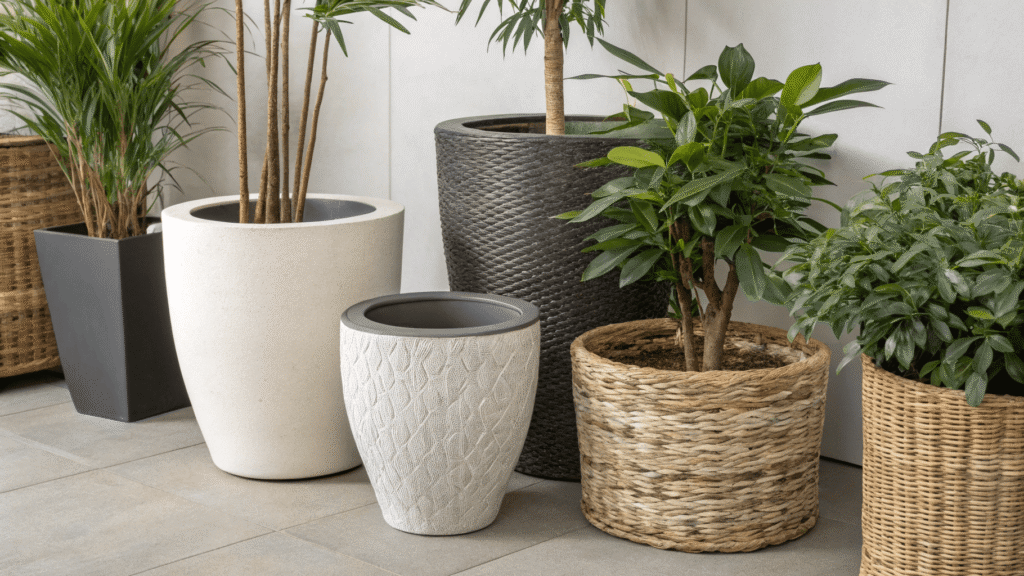
If you want a faux plant to look expensive, you cannot treat potting as a small finishing step. You need to secure artificial plants in pots with the same care you use for product quality, material selection, and final presentation. A beautiful faux plant can still look cheap if it tilts, shifts, or feels loose when touched. In B2B projects, that weak structure hurts the first impression immediately. That is why buyers, stylists, and sourcing teams need a repeatable method to secure artificial plants in pots before products go into retail, hotel, office, or event settings.
In this guide, you will see the exact methods used to secure artificial plants in pots for stronger stability, cleaner surface finishing, and better commercial presentation. If you also care about broader styling and display consistency, you can review our blog archive for related faux botanical articles.
Why You Must Secure Artificial Plants in Pots Before Display or Shipping
Artificial plants do not become unstable by accident. In most cases, the real problem is poor weight balance, weak inner support, soft filler, or the wrong planter-to-plant ratio.
If you do not secure artificial plants in pots correctly, the plant may lean, wobble, rotate, or loosen during handling, unpacking, shelf display, or commercial installation.
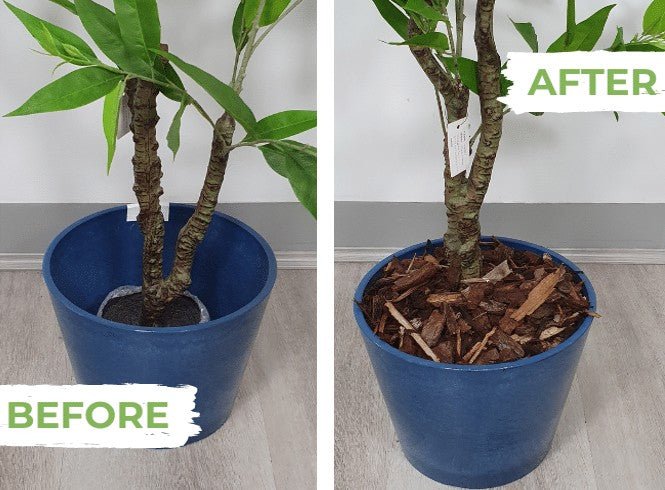
Many people assume faux plants are easy because they do not need watering, drainage, or living roots. That assumption creates poor potting quality. A faux plant still needs structure. The structure is simply different. When you secure artificial plants in pots properly, you control the center of gravity, stem position, filler compression, and top-layer finish. Those hidden details are what separate a project-ready product from a weak sample.
In one commercial sample review, the plant looked acceptable in photos but leaned slightly under project lighting. The outer planter looked clean, but the inner foam block was too small and the base was too narrow. The plant crown carried too much visual weight at the top. Once the inner support was upgraded and weight was added at the bottom, the same plant looked more stable and much more premium. Nothing changed on the outside. The improvement came from the inside.
Common reasons buyers fail to secure artificial plants in pots
- The planter opening is too wide, so the stem cluster moves.
- The planter is too light for the visible plant height.
- The filler material compresses too easily.
- The stems are inserted but not truly anchored.
- The crown is visually heavier on one side.
- The planter depth is too shallow for the stem structure.
A simple quality check to secure artificial plants in pots properly
- Check whether the planter feels heavy enough at the bottom.
- Rotate the pot slightly and see whether the stem cluster shifts.
- Apply light pressure and confirm the main stem returns upright.
- Review the plant from all sides to check crown balance.
If any answer fails, the plant is not ready. In commercial work, stability is not optional. You need to secure artificial plants in pots before photography, carton packing, showroom display, or final delivery.
Best Fillers to Secure Artificial Plants in Pots Without Wobbling
Not all fillers do the same job. Some add grip. Some add weight. Some improve the finish. The best result usually comes from a layered system, not a single filler.
The best way to secure artificial plants in pots is to combine a bottom weight layer, a firm middle holding layer, and a decorative top finish layer.
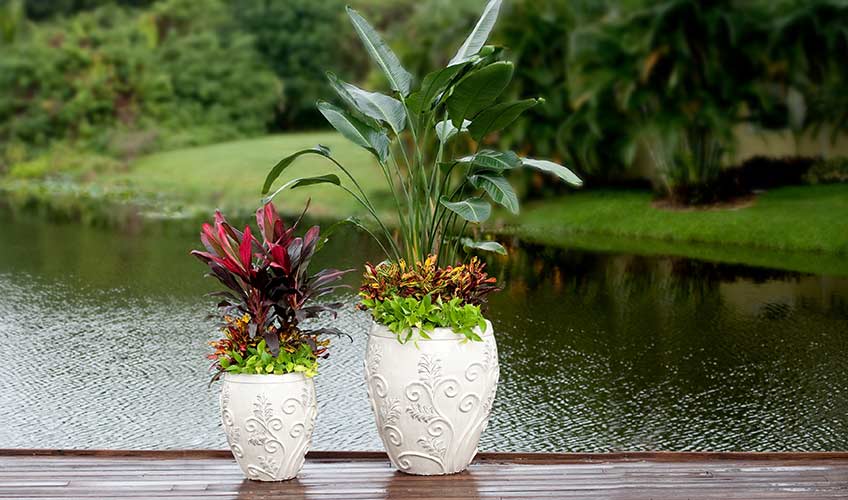
Many low-cost suppliers rely on soft foam only because it is fast and cheap. That can work for very small pieces, but it is rarely enough to secure artificial plants in pots for medium and tall designs. Once the plant is moved, packed, or touched in store, the structure loosens. That small movement changes the whole impression.
Dense floral foam to secure artificial plants in pots for light and medium stems
Dense floral foam is useful for fast sampling and controlled insertion. It works well for smaller faux plants, compact greenery, and lighter stem clusters. Still, if you need to secure artificial plants in pots for taller or wider designs, dense foam should usually be combined with extra support.
Dry cement or plaster to secure artificial plants in pots for stronger locking power
Dry cement or plaster provides stronger fixing strength and better long-term hold. This is a practical option when you need to secure artificial plants in pots for hotels, showrooms, public areas, or repeat commercial use. It improves firmness and reduces movement over time.
Gravel or sandbags to secure artificial plants in pots with bottom weight
Gravel, stones, or sealed sand packs are not the main holding layer. They are the weight layer. Their job is to lower the center of gravity so the planter resists tipping. If you want to secure artificial plants in pots with tall stems or narrow planters, bottom weight is critical.
Rigid inserts to secure artificial plants in pots with repeatable production quality
Resin blocks, molded inserts, or rigid support cores are useful when you need consistency across multiple units. They help you secure artificial plants in pots at the same depth, with the same stem position, and with better repeatability for wholesale or project orders.
Decorative top fillers to secure artificial plants in pots and improve the finish
Moss, bark, artificial soil covers, pebbles, and finish plates do not do the main structural work. Their job is to hide the engineering and improve the surface appearance. A clean top layer makes the whole piece look more custom and more realistic.
The most effective rule is simple: bottom for weight, middle for hold, top for finish. When you follow that order, it becomes much easier to secure artificial plants in pots with both stability and visual quality.
How to Secure Artificial Plants in Pots in Lightweight Planters
Lightweight planters are common in cross-border, e-commerce, and large-quantity decorative programs because they reduce shipping cost. But they need more internal control.
To secure artificial plants in pots in lightweight planters, you need hidden weight at the base, a tight inner chamber, and a strong central stem anchor.
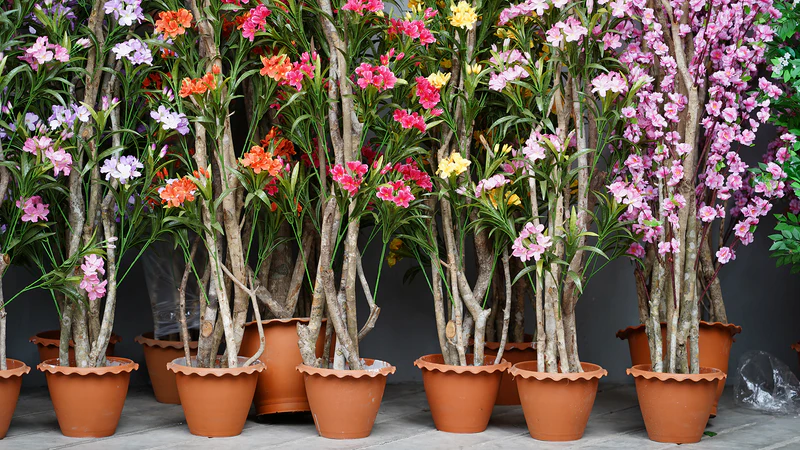
A lightweight planter is not automatically a bad choice. The real issue is whether the internal system has been built correctly. If you want to secure artificial plants in pots inside lighter decorative containers, you must lower the center of gravity and remove empty internal space that allows movement.
How to secure artificial plants in pots with hidden weight first
Use gravel packs, sealed sandbags, or other stable weight materials at the bottom. The purpose is to stop tipping and improve base resistance. This step matters most when the faux plant is tall or the crown is visually full.
How to secure artificial plants in pots by building a tight inner chamber
Do not leave open space inside the planter. Empty space creates wobbling. Fill the internal cavity in a controlled way so the stem structure cannot slide or twist.
How to secure artificial plants in pots by locking the main stem cluster
For larger faux plants, bind or group the internal stem points before fixing them into the support layer. This gives you a cleaner center line and reduces side movement.
When you secure artificial plants in pots in lightweight containers the right way, you can still achieve a premium look without the cost and shipping burden of heavy materials.
How to Secure Artificial Plants in Pots in Heavy Decorative Planters
Heavy planters solve only one part of the problem. They reduce tipping, but they do not automatically fix loose stems, off-center placement, or poor surface finishing.
To secure artificial plants in pots in heavy planters, focus on center alignment, stem locking, crown balance, and a clean visible top finish.
Many buyers assume a heavy planter guarantees stability. That is not true. You can still have a loose, cheap-looking artificial plant inside an expensive pot. To secure artificial plants in pots at a premium level, you need to control both structure and appearance.
How to secure artificial plants in pots by correcting the center line
Measure the visual center from the front and the side before final fixing. Heavy pots often hide structural mistakes because they do not tip easily, but the plant can still look off-balance.
How to secure artificial plants in pots by shaping after fixing
Shape the foliage after the main stem structure is secured, not before. That gives you a more accurate view of the final upright position and prevents one-sided visual weight.
How to secure artificial plants in pots with a cleaner top finish
Heavy planters are often used in hotel, office, showroom, and premium residential projects. A messy top layer will damage the perceived value even if the structure is strong. Clean finishing is part of how you secure artificial plants in pots for higher-end use.
How to Secure Artificial Plants in Pots and Hide Foam, Cement, and Filler
A faux plant can be structurally strong and still look cheap if the visible surface is not finished well. The hidden build should stay hidden.
To secure artificial plants in pots and still achieve a premium finish, use moss, bark, pebbles, artificial soil covers, preserved textures, or custom top disks that match the plant and planter style.
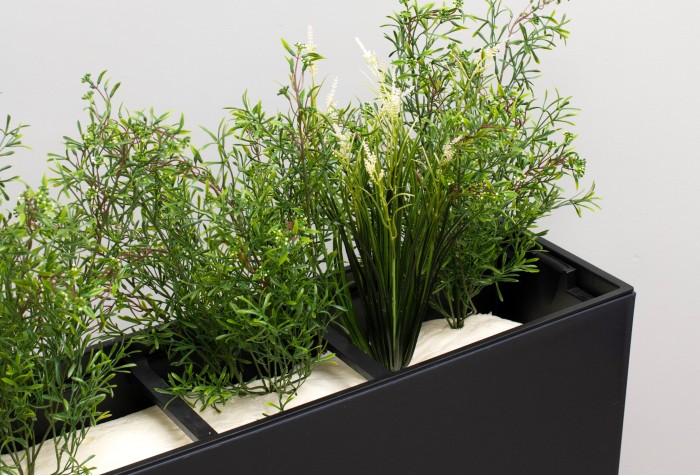
Buyers do not always describe construction problems in technical language, but they feel them immediately. If the foam is visible, the glue line shows, or the top looks flat and artificial, the whole product feels less custom. That is why you should secure artificial plants in pots with the finish in mind from the beginning, not as an afterthought.
How to secure artificial plants in pots for natural botanical looks
Use moss, bark chips, coco fiber, or artificial soil textures for olive trees, eucalyptus, ficus, and mixed greenery. These finishes help the plant feel softer and more believable.
How to secure artificial plants in pots for modern commercial looks
Use matte pebbles, clean stone, or minimal resin covers for office, showroom, and retail settings. These materials create a cleaner visual line and fit modern interiors better.
How to secure artificial plants in pots for luxury hospitality looks
Mix textures carefully. Too much rough bark may look casual. Too much bright moss may look artificial. Luxury projects need balanced texture, controlled color, and a more refined finish.
Finish checklist after you secure artificial plants in pots
- No exposed glue
- No visible cut foam edge
- No cracked plaster surface
- No oversized decorative stones
- No gap between stem base and surface layer
A realistic finish is one of the fastest ways to improve perceived value. When you secure artificial plants in pots and hide the working materials well, the final product looks more complete, more believable, and more suitable for premium B2B use.
How to Secure Artificial Plants in Pots for Homes, Hotels, and Commercial Projects
You should not use the same build standard for every environment. A home décor piece, a hotel lobby plant, and a retail display unit have different handling risks and different visual demands.
To secure artificial plants in pots for homes, hotels, and commercial projects, you need to match the potting standard to the real use environment, movement frequency, and finish expectation.

The real question is not only how to pot one plant. The real question is how to secure artificial plants in pots consistently across multiple units, multiple cartons, and multiple project locations. That is what protects repeat quality.
How to secure artificial plants in pots for home décor
- Balance cost and stability
- Keep the finish neat and realistic
- Make unpacking and reshaping easy
- Ensure normal household movement does not loosen the structure
How to secure artificial plants in pots for hotels
- Use stronger internal fixing
- Add better bottom weight
- Choose a cleaner and more premium top finish
- Build for repeated repositioning by staff
How to secure artificial plants in pots for commercial installations
- Use a repeatable assembly method
- Control visible plant height and crown spread
- Improve transport stability
- Maintain a consistent finish across the full program
If your client expects a showroom-ready, retail-ready, or hotel-ready result, you need to secure artificial plants in pots with repeatability in mind. That is the standard that supports long-term orders, fewer complaints, and better presentation.
Need stable, project-ready artificial plants in pots for retail, hotel, or event use?
Send your planter size, plant style, quantity, and reference photos. You can then match the right structure, filler system, and finish for a cleaner and more stable final result.
Conclusion: Secure Artificial Plants in Pots the Right Way for a Premium Result
If you want a faux plant to look stable, realistic, and project-ready, you need more than a decorative pot. You need the right hidden structure, the right visible finish, and the right build standard for the final environment. When you secure artificial plants in pots correctly, you improve stability, appearance, and commercial value at the same time.
FAQ About How to Secure Artificial Plants in Pots
What is the best way to secure artificial plants in pots?
The best way to secure artificial plants in pots is to use a layered system with bottom weight, a firm middle holding layer, and a clean decorative top finish.
Is floral foam enough to secure artificial plants in pots?
Floral foam can work for small and light stems, but it is usually not enough by itself for medium or tall faux plants that need better long-term stability.
How do you secure artificial plants in pots so they do not lean?
You need to center the main stem cluster, improve crown balance, add bottom weight, and use a firmer internal support material.
What can you use instead of soil to secure artificial plants in pots?
You can use dense foam, plaster, cement, gravel, resin inserts, moss, bark, or decorative pebbles depending on the plant size and required finish.
Do heavy planters automatically secure artificial plants in pots?
No. Heavy planters help reduce tipping, but the inner stem support and visible top finish still determine whether the product looks stable and premium.
How do hotels secure artificial plants in pots for public areas?
Hotels usually need stronger inner fixing, better bottom weight, and a cleaner surface finish because the plants may be moved or touched more often.
What should buyers confirm before ordering potted faux plants in bulk?
Buyers should confirm planter size, visible plant height, filler method, bottom weight, top finish, carton packing, and the stability standard used in production.
Footnotes
- For broader faux botanical styling and display ideas, see the Botanic Blossoms blog archive: https://botanicblossoms.com/blog/.
- Royal Horticultural Society container guidance is useful for understanding container proportion and stability principles that can also inspire faux planter structure planning: RHS container guidance.
- For related collection and styling references, you can also review older Botanic Blossoms content here: https://botanicblossoms.com/blog/page/18/.