
9 Best Large Artificial Trees for Business Interiors: A Complete Buying Guide
Large commercial rooms can feel cold and unfinished. The wrong tree can waste floor space, increase installation costs, and weaken the whole interior design.
The best large artificial trees for business interiors match the room scale, brand style, customer traffic, viewing distance, safety needs, and maintenance plan. Buyers should compare the trunk, leaves, canopy, pot, packing, installation method, and supplier support before placing a wholesale order.
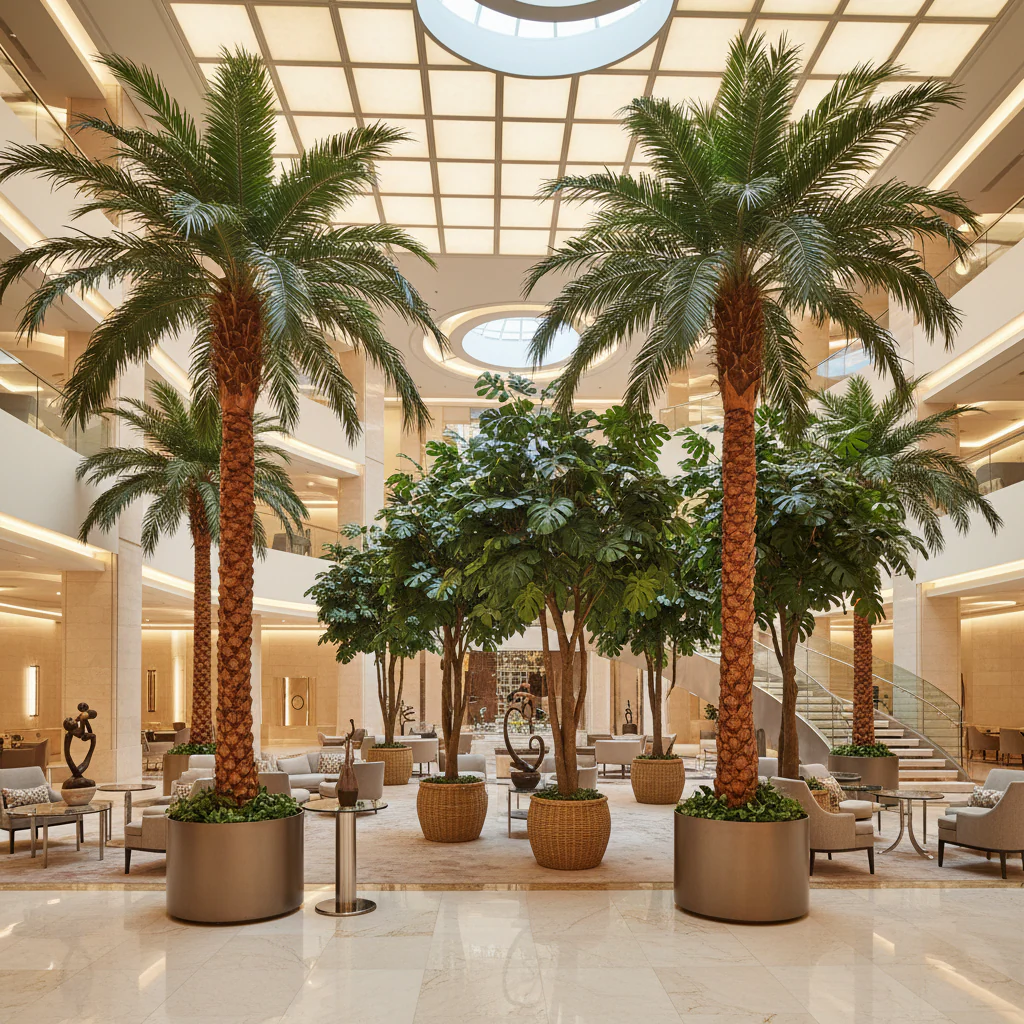
I have worked with artificial flowers, plants, and commercial décor products for more than ten years. During this time, I have learned that large artificial trees for business interiors should never be purchased as simple decorative accessories.
A large tree becomes part of the interior system. It affects walking space, customer sightlines, lighting, cleaning, fire planning, delivery access, pot stability, installation time, and the overall brand image.
I often see buyers choose a tree because it looks impressive in one supplier photo. However, a tree that looks beautiful against a white studio background may look too small in a hotel lobby. It may look too wide beside a restaurant table. It may also hide products inside a retail store.
My view is simple. The most successful large artificial trees for business interiors are not always the tallest, fullest, or most expensive models. The right product is the one that looks natural in the intended space, arrives safely, installs quickly, stays stable, and keeps a consistent appearance during daily commercial use.
This deeper buying guide explains how I select large artificial trees for business interiors for hotels, offices, restaurants, shopping malls, retail stores, and multi-location projects. I will also explain the quality checks, outdoor-use differences, wholesale sourcing risks, packing requirements, and supplier questions that can prevent expensive mistakes.
Why Do Businesses Choose Large Artificial Trees for Business Interiors?
Large rooms often contain glass, stone, metal, concrete, and straight furniture lines. Without natural shapes, the finished space can feel formal, empty, or uncomfortable.
Businesses choose large artificial trees for business interiors because they add height, softness, color, privacy, and a strong focal point without creating a daily watering or plant-care workload.
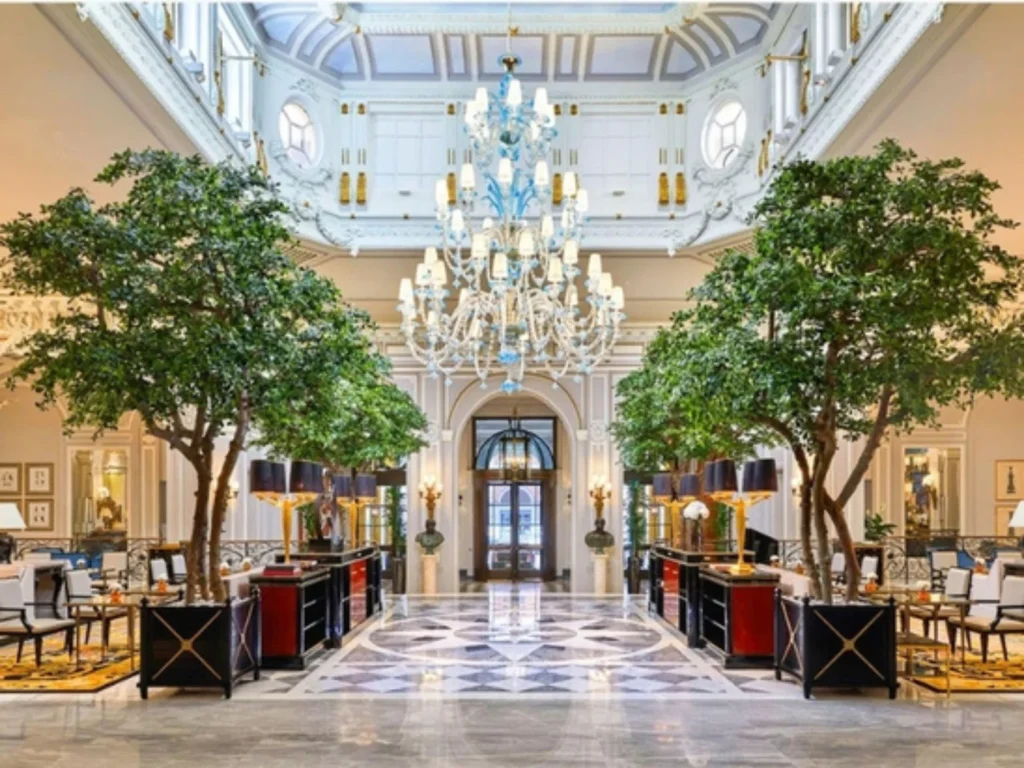
I First Identify the Visual Problem in the Space
When a buyer sends me a project image, I do not immediately recommend a product. I first ask what problem the tree must solve.
Some rooms need more height. Some rooms need a wider green background. Some restaurants need privacy between tables. Some hotel lobbies need a strong visual point near the entrance. Some retail stores only need a light natural frame around a product display.
Large artificial trees for business interiors can serve several practical design purposes:
- They fill empty vertical space under high ceilings.
- They soften hard materials such as glass, steel, stone, and concrete.
- They create privacy between tables, seats, or service zones.
- They guide customers toward an entrance, reception desk, or display.
- They create a more welcoming background for photos and social content.
- They help different branches of the same business maintain one visual style.
- They can support seasonal decorations without changing the main interior.
I always consider the empty space before I consider the tree species. A narrow artificial olive tree can work beside a reception desk. A wide ficus tree can fill a hotel lounge. A tall bamboo screen can divide office seating. A palm can strengthen a resort theme.
This process prevents the common mistake of selecting large artificial trees for business interiors only by height. Height matters, but canopy width, trunk position, branch direction, and floor area often have a greater effect on daily use.
Artificial Trees Create a Stable Brand Appearance
Real plants can change throughout the year. Leaves may fall. Growth may become uneven. Some plants may perform well while others decline because of light, temperature, watering, or staff care.
Artificial trees offer more visual consistency. This is useful for hotels, retail chains, restaurant groups, office branches, and businesses with several locations.
A buyer can approve one style, one pot, one height, and one shaping method. The same large artificial trees for business interiors can then be used across different sites with a more controlled appearance.
This consistency also supports photography. A hotel group may want similar lobby images across several properties. A retail brand may want the same visual background in each store. An artificial tree makes this easier because the shape and color do not change because of seasonal growth.
Artificial Trees Reduce Plant-Care Work but Still Need Maintenance
I never describe artificial trees as completely maintenance-free. They still collect dust. Branches may need reshaping. Pots and fixing points should be inspected in public areas.
However, buyers do not need to manage watering schedules, plant nutrition, soil, fallen leaves, insects, or replacement after poor growth.
When I compare the long-term cost of large artificial trees for business interiors, I ask buyers to consider:
- The original purchase price.
- Watering and plant-care labor.
- Replacement costs for damaged or unhealthy living plants.
- Cleaning caused by soil, water leakage, or fallen leaves.
- Lighting limitations inside the building.
- Staff responsibility during weekends and holidays.
- The cost of maintaining the same look across several locations.
For regular dust-control and maintenance ideas, buyers can read my guide on how to clean silk flowers. Many of the same gentle cleaning methods can be used for artificial foliage.
A Hotel Buyer Changed the Canopy Instead of Reducing the Height
I once worked on a lobby request where the buyer originally selected a full 250-centimeter artificial ficus tree. The product looked strong in the reference photo.
After the buyer sent the floor plan, I saw that the tree would stand beside the main guest path. The height was suitable, but the crown was too wide. Guests carrying luggage could touch the branches, and cleaning staff would have limited space around the planter.
I suggested a slimmer trunk structure and a narrower canopy. I then used a taller decorative planter to keep the same visual height.
The buyer did not need a smaller tree. The buyer needed a better proportion.
This project strengthened my belief that large artificial trees for business interiors must be selected for real customer movement, not only for still photographs.
My View: The Tree Must Support the Business Goal
I do not recommend artificial trees only because they look fashionable. Every commercial product should have a clear purpose.
In a hotel, the tree may create atmosphere. In an office, it may soften a formal reception area. In a restaurant, it may divide tables. In a store, it may frame a display without hiding merchandise.
Good large artificial trees for business interiors support the customer experience. Poorly selected trees compete with furniture, signs, products, and walking paths.
Commercial design teams can also review WELL guidance on biophilic design when exploring how natural forms, textures, patterns, and visual connections with nature can support interior design decisions.[1]
Which Large Artificial Trees for Business Interiors Work Best in Different Commercial Spaces?
A tree that works in a resort may look wrong in a legal office. A full ficus may suit a hotel lounge but block products in a small retail store.
I select large artificial trees for business interiors by matching the tree shape, leaf size, canopy density, trunk style, brand image, floor area, ceiling height, and viewing distance.
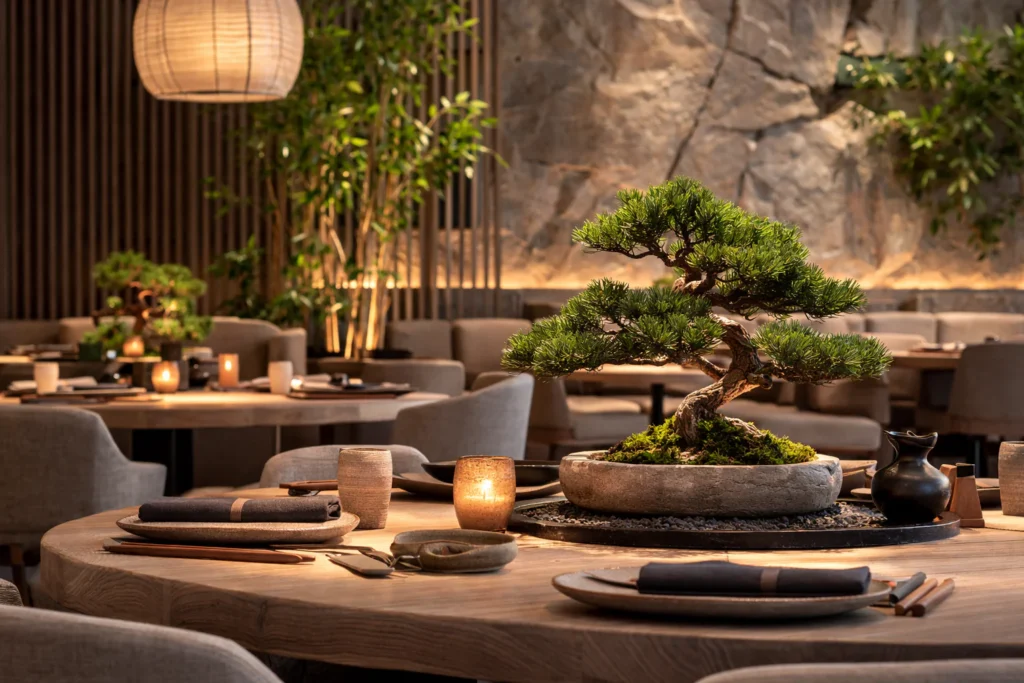
1. Artificial Olive Trees for Calm and Modern Interiors
Artificial olive trees are one of my first choices for neutral commercial interiors. Their narrow leaves and open branches add detail without making the room feel heavy.
I often recommend large artificial olive trees for:
- Boutique hotel rooms and lobby corners.
- Modern office reception areas.
- Mediterranean restaurants and cafés.
- Neutral fashion and home décor stores.
- Interior design showrooms.
- Residential-style commercial projects.
Olive trees work well with cream, white, grey, beige, stone, light wood, dark wood, and black metal.
I pay close attention to the leaf color. One flat dark-green shade can look artificial under commercial lights. I prefer a controlled mix of green, grey-green, and soft natural tones.
I also inspect the branch count. Some low-cost olive trees have the correct height but very little foliage. The buyer receives a tall tree, but the finished space still looks empty.
2. Artificial Ficus Trees for Fuller Green Volume
Artificial ficus trees usually have a fuller canopy. They can create a stronger green background and fill wider areas.
I recommend ficus trees for hotel lounges, shopping mall rest areas, reception halls, restaurant seating zones, wide office corridors, and commercial spaces that need visual privacy.
The leaf finish is important. Very glossy leaves can reflect ceiling lights and reveal the artificial material. I usually choose matte or lightly textured leaves for large artificial trees for business interiors that will be viewed from close range.
I also avoid perfectly round canopies. Natural trees have small gaps, irregular branch angles, and uneven areas. Controlled irregularity often makes an artificial ficus look more realistic.
3. Artificial Palms for Resorts and Leisure Spaces
Artificial palms create a clear tropical feeling. They work well in resorts, spas, pool areas, beach-style restaurants, holiday stores, and leisure venues.
However, I do not recommend palms only because the buyer likes the product image. The whole interior must support the tropical direction.
A palm can look excellent in a resort lobby. The same palm can look out of place in a formal office, a classic European restaurant, or a traditional luxury hotel.
Palm leaves also need careful export packing. Long leaves can bend, crack, or lose their natural curve. I ask the factory to protect the main leaf ribs and control pressure inside the carton.
4. Artificial Fiddle Leaf Fig Trees for Lifestyle Retail
Fiddle leaf fig trees have large leaves and a clear modern form. They often suit fashion stores, beauty studios, furniture shops, photography spaces, cafés, and creative offices.
The large leaves create strong visual impact, but they also expose quality problems.
I inspect:
- Whether the leaf edges look too thick.
- Whether the printed veins look natural.
- Whether the surface reflects too much light.
- Whether every leaf points in the same direction.
- Whether the trunk can support the leaf weight.
- Whether the canopy looks balanced from several sides.
This last point matters because large artificial trees for business interiors are often viewed from the front, side, and back. A tree that looks good from one camera angle may look empty in an open retail space.
5. Artificial Bamboo Trees for Screens and Narrow Areas
Artificial bamboo creates height without using a very wide canopy. It works beside walls, windows, booths, seating areas, office partitions, and restaurant dividers.
I suggest bamboo when a buyer wants more privacy but has limited floor space.
Tall bamboo can become top-heavy, so the pot must be stable. I usually recommend adding weight inside the outer planter or fixing the nursery pot securely.
6. Artificial Birch Trees for Light Scandinavian Interiors
Artificial birch trees can support Scandinavian, rustic, woodland, winter, and light hospitality themes. Their pale trunks create contrast against dark walls and natural wood furniture.
I check the trunk pattern carefully because repeated black markings can quickly make an artificial birch look printed. The branch structure should also remain open and light.
7. Artificial Maple Trees for Warm Seasonal Displays
Maple trees can work well in shopping malls, restaurants, event venues, and seasonal retail programs. Green maple trees suit general use, while orange and red versions can support autumn campaigns.
I often recommend removable or replaceable seasonal branches when the buyer wants to reuse the same trunk structure. This can reduce storage space and make future visual changes easier.
8. Artificial Banana Trees for Bold Tropical Styling
Banana trees have broad leaves and a stronger tropical look than many palms. They can create visual impact in resorts, cafés, wellness spaces, entertainment venues, and summer retail displays.
The leaves must have enough support. Very soft leaves may collapse after packing. Very rigid leaves may crack during shipping. I look for a balanced internal structure that allows reshaping without creating obvious folds.
9. Custom Artificial Feature Trees for High-Impact Projects
Some lobbies, shopping centers, restaurants, and event venues need a feature tree that standard products cannot provide.
A custom tree may include a wider canopy, several trunks, special foliage, integrated planters, floral branches, lights, moss, or a modular installation system.
Custom large artificial trees for business interiors need stronger project planning. The buyer must confirm the finished dimensions, doorway access, elevator size, installation equipment, fixing method, packing structure, and replacement parts before production.
A Retail Buyer Needed a Background Instead of a Centerpiece
A retail buyer once asked me for a large tree beside a product wall. The buyer first selected a full artificial ficus.
After I reviewed the store image, I saw that the ficus would cover part of the display and compete with the products.
I suggested an artificial olive tree with visible gaps between the branches. The tree still added height and greenery, but shoppers could see the merchandise through the canopy.
The first tree was attractive as a standalone decoration. It was not the best sales-support product.
This case shows why I choose large artificial trees for business interiors according to the purpose of the space. The product should improve the commercial environment without reducing product visibility or customer movement.
How Do I Check the Quality of Large Artificial Trees for Business Interiors?
Supplier photos can hide thin trunks, glossy leaves, exposed glue, unstable pots, and weak branch connections. These issues usually appear after the buyer receives the sample.
I evaluate large artificial trees for business interiors by checking trunk realism, leaf material, branch density, finished size, pot strength, stability, odor, assembly, packing recovery, and consistency between the sample and bulk order.
I Inspect the Trunk at Close Distance
The trunk is one of the first parts I check because a weak trunk can make good foliage look cheap.
I inspect whether:
- The trunk has natural color variation.
- The surface includes realistic lines, knots, and texture.
- Repeated molded patterns are easy to see.
- Glue, wire, tape, and connection points are visible.
- Branches enter the trunk in a natural way.
- The trunk stands straight after assembly.
- The internal metal support is strong enough.
- The lower trunk looks natural inside the planter.
Natural wood trunks can create strong realism. However, the wood must be dry, clean, stable, and suitable for export.
Molded trunks can offer better production consistency. However, a poor mold may look flat, plastic, or overly regular.
I do not choose between natural and molded trunks only by reading a product description. I compare close-up photos, samples, moisture control, construction, export treatment, and bulk consistency.
I Check Leaves Under Several Light Sources
Leaves can look different under factory lighting, daylight, warm hotel lights, cool office lights, and strong retail spotlights.
I ask for clear photos or videos under more than one lighting condition.
I check whether:
- The green color looks too bright or too blue.
- The leaves have an unrealistic plastic shine.
- The printed texture looks sharp and natural.
- The front and back colors suit the real plant type.
- The veins add natural depth.
- The leaf edges are clean.
- The leaves stay attached after shaping.
- Too many leaves have the same position.
- The foliage color remains consistent across the tree.
Polyester fabric, PE, PVC, PU, and mixed-material foliage create different levels of realism, flexibility, durability, and cost.
The best material depends on the buyer’s budget, touching frequency, viewing distance, and indoor or outdoor application. Large artificial trees for business interiors placed behind a reception desk may use a different leaf standard from trees placed directly beside restaurant seating.
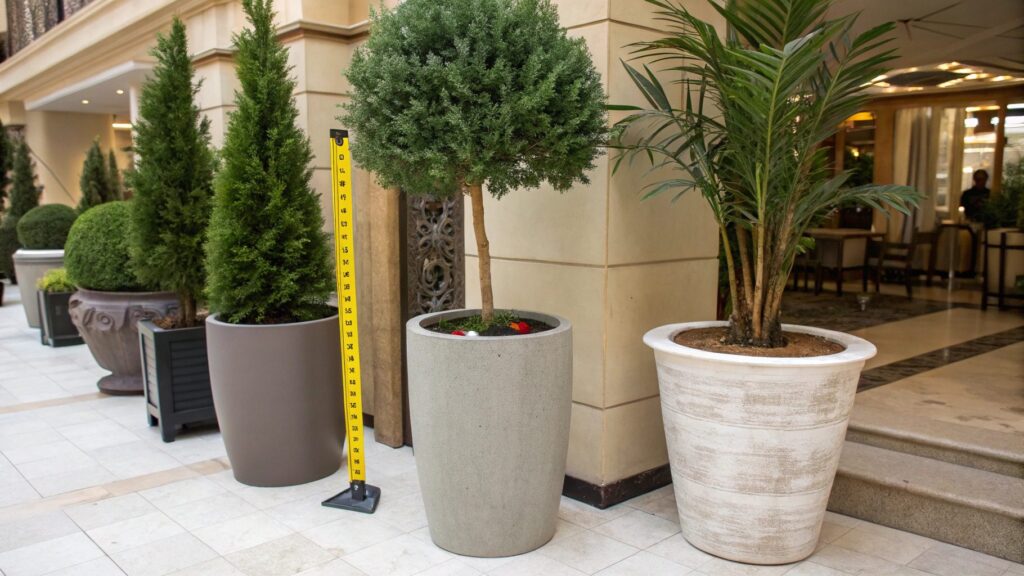
I Measure Height, Width, and Trunk Clearance After Shaping
Height descriptions can cause problems because suppliers may measure trees in different ways.
A supplier may measure from the bottom of the nursery pot to the highest flexible leaf. That top leaf may bend during packing and may not return to the same height after installation.
I confirm:
- The total height before packing.
- The expected height after full shaping.
- The widest canopy measurement.
- The width at normal viewing height.
- The trunk height before the first major branch.
- The pot height and diameter.
- The carton dimensions.
- Whether the product ships in one piece or several sections.
I also leave enough ceiling clearance. A 240-centimeter tree should not be installed directly under a 240-centimeter ceiling. The buyer needs space for shaping, lighting, ventilation, fire equipment, and visual balance.
When planning large artificial trees for business interiors, I often ask for a photo that includes the full wall and ceiling. A close image of the empty corner is not enough to judge the correct scale.
I Treat the Pot as a Safety Component
Many product images hide a small black nursery pot inside a decorative planter. Buyers often focus on the leaves and ignore the base.
I do not ignore it.
The inner pot must hold the trunk securely. The filling material must not crack during shipping. The finished tree should not lean after shaping.
For public areas, I may recommend:
- A larger decorative planter.
- Additional internal weight.
- A fixed liner or support frame.
- Foam or resin around the nursery pot.
- Decorative moss, bark, stones, or gravel above the support material.
- Floor protection under heavy planters.
- Hidden fixing points for high-traffic locations.
Buyers can read my practical guide on how to pot artificial flowers for more ideas about liners, fillers, weights, and stable installation methods.
I Test Assembly and Shaping Time
Large trees often ship in sections to reduce carton size. This can lower freight, but the assembly system must be clear.
I check whether branches are numbered, whether connections are hidden, whether the trunk sections lock firmly, and whether the buyer needs special tools.
I also record the time needed to assemble and shape one tree.
This information matters for multi-location projects. A store group ordering 100 large artificial trees for business interiors may need to train staff in many cities. A confusing installation system can create different results in every location.
I prefer simple connection points, clear labels, shaping photos, and short installation videos.
I Check Odor and Available Material Documents
A strong odor can come from glue, plastic, paint, packing, or insufficient ventilation after production.
I recommend inspecting odor during sample approval and allowing products to ventilate properly before final packing when needed.
Commercial buyers may also request material declarations, SDS documents, fire test reports, or other records. Requirements differ by country, building, client, and installation location.
The U.S. Environmental Protection Agency explains that indoor air quality can be affected by materials, furnishings, ventilation, and pollutant sources inside occupied buildings.[2]
I never assume that one general certificate meets every project. I ask the buyer to provide the required test method and acceptance standard before production.
An Office Sample Revealed a Weak Pot Connection
I once inspected a large artificial tree sample for an office project. The leaves and trunk looked good after shaping.
However, the whole tree moved too much when I pushed the trunk gently. The filling inside the pot did not hold the lower structure securely.
The problem looked small during the sample review, but it could become serious after installation. Cleaning staff might move the product. Visitors might touch it. The tree could begin to lean after repeated use.
I asked the production team to strengthen the trunk connection and improve the filling material before the bulk order.
This experience confirmed one of my strongest quality rules: large artificial trees for business interiors should pass a gentle movement test. A buyer should not approve a product only because the front photo looks attractive.
I Control the Bulk Order Against the Approved Sample
A good sample does not automatically guarantee a good bulk shipment.
I keep sample photos and measurement records. During production, I check trunk color, leaf shade, branch quantity, total height, pot position, glue marks, exposed wire, labels, cartons, and packing method.
For project orders, I may also approve a pre-production unit or inspect several random pieces before final packing.
This process helps ensure that all large artificial trees for business interiors arrive with a consistent shape and quality level.
What Is the Difference Between Indoor and Outdoor Large Artificial Trees for Business Interiors?
Indoor and outdoor artificial trees may look similar online, but they face very different conditions after installation.
Indoor large artificial trees for business interiors focus on realism and interior finish. Outdoor models also need suitable UV protection, stronger structures, water planning, wind stability, and realistic performance expectations.
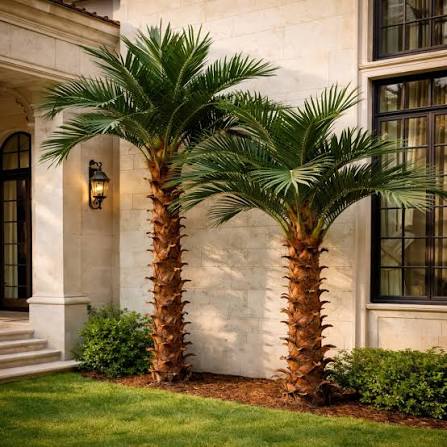
I Never Assume an Indoor Tree Can Be Placed Outside
An indoor tree may fade, become brittle, collect water, lose leaves, or develop weak branch connections when it is exposed to outdoor conditions.
Outdoor exposure may include:
- Direct sunlight.
- High temperatures.
- Large temperature changes.
- Rain and standing water.
- Wind and repeated movement.
- Dust and pollution.
- Salt air in coastal areas.
- Freezing conditions in some markets.
A product description that says “plastic tree” does not prove outdoor performance.
I ask where the tree will be installed. A covered hotel entrance is different from an open rooftop. A shaded restaurant patio is different from a sunny shopping center entrance.
I Divide Locations Into Three Exposure Levels
- Indoor use: A protected interior location without direct weather exposure.
- Covered outdoor use: A sheltered location that may still receive sunlight, heat, humidity, wind, or dust.
- Fully outdoor use: An open area exposed to sunlight, rain, temperature changes, and stronger wind.
This simple classification helps me select materials, foliage, trunk coatings, pot structures, packing, and fixing methods.
I Check Where the UV Protection Is Applied
Some outdoor products use UV-stabilized raw materials. Some use a surface coating. Some use both.
These methods are not the same.
I ask whether:
- The leaves contain UV-resistant material.
- The stems and visible plastic parts also have protection.
- The trunk coating is suitable for the location.
- The UV claim applies to the full tree or only selected parts.
- The tested sample matches the bulk material.
- The supplier can provide available test information.
- Replacement branches or foliage are available.
I avoid promising that any artificial tree will remain unchanged forever. Sunlight intensity, color, climate, exposure time, material, location, and cleaning all affect service life.
Buyers planning outdoor installations can read my guide to the best fake plants for outdoors for more UV and weather-exposure checks.
I Plan the Base for Wind and Water
An outdoor tree needs more than UV-resistant leaves.
The pot and fixing system must handle wind, water, and repeated movement. A lightweight nursery pot may not be safe by itself.
Depending on the project, I may recommend:
- A heavier outer planter.
- Hidden internal weights.
- A wider pot-to-canopy ratio.
- Mechanical fixing where the project allows it.
- Drainage holes.
- Water-resistant filling material.
- Placement away from strong wind tunnels.
- Regular inspection after storms or cleaning.
I also consider canopy density. A wide, full canopy catches more wind than an open olive tree.
The local project team must approve the final fixing method. A supplier can support planning, but local building and safety requirements control the installation.
I Check Fire Requirements Separately From UV Requirements
UV resistance and fire performance are different product requirements.
A UV-resistant tree is not automatically flame-retardant. A treated fire-retardant tree is not automatically suitable for long-term outdoor sunlight.
Before I quote large artificial trees for business interiors in hotels, malls, event venues, or public buildings, I ask whether the buyer needs a specific fire test standard.
The buyer should provide the country, project type, test method, report requirement, and installation location. This avoids vague claims such as “fireproof” when the product has not been tested under the required standard.
A Restaurant Buyer Originally Selected an Indoor Olive Tree for a Patio
A restaurant buyer once sent me a reference image of a soft artificial olive tree. The tree would stand beside outdoor tables.
The selected model was designed mainly for interior use. It had the right appearance, but it did not have the right outdoor material plan.
I asked whether the patio was covered. The buyer explained that the location received several hours of direct sunlight and occasional rain.
I suggested an outdoor-suitable foliage option, a stronger pot connection, and a heavier decorative planter. I also explained that the final leaf surface and green tone might look slightly different because outdoor materials can affect texture.
The buyer had to choose between maximum indoor realism and better outdoor suitability.
This is a common decision when sourcing large artificial trees for business interiors and connected outdoor areas. I prefer to explain the difference before production instead of handling a fading complaint later.
My View: Honest Performance Claims Protect Long-Term Relationships
I do not promise unlimited outdoor life. I explain the material, available test information, expected exposure, cleaning plan, and replacement options.
A reliable supplier should tell the buyer where the product can be used and where the risk becomes too high.
Clear performance communication protects the buyer’s project and helps create a stronger long-term supplier relationship.
Where Can Buyers Source Large Artificial Trees for Business Interiors Wholesale?
Wholesale sourcing involves more than finding a product photo and asking for the lowest price. Large trees create special challenges in sampling, packing, freight, installation, and quality control.
I source large artificial trees for business interiors by checking supplier experience, samples, customization, production control, packing, documentation, delivery planning, communication, and after-sales support.
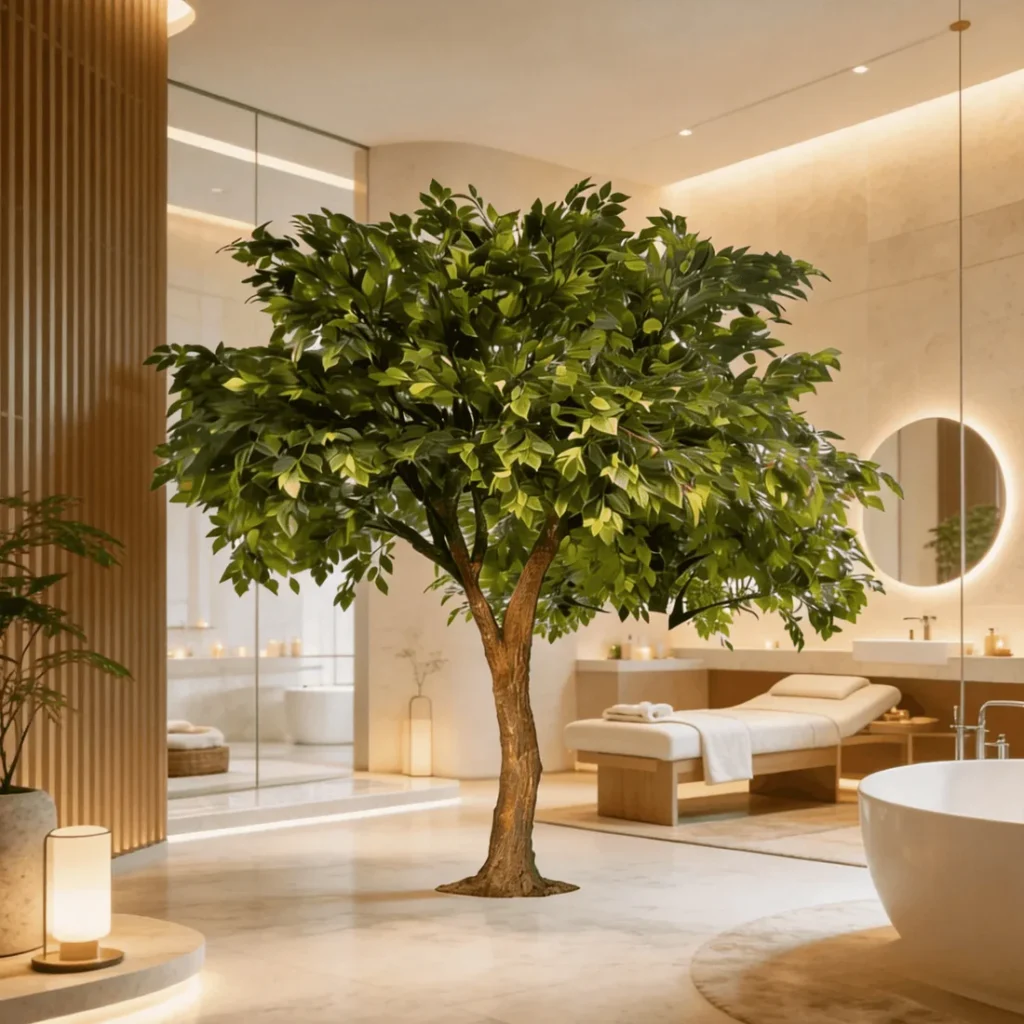
I Start With a Clear Commercial Project Brief
A supplier cannot prepare an accurate quotation from one sentence such as, “Please quote a large artificial tree.”
I ask buyers to provide:
- The preferred tree species or style.
- The required height.
- The target canopy width.
- The order quantity.
- The indoor, covered outdoor, or fully outdoor location.
- Reference images or design drawings.
- The target country and delivery location.
- The preferred pot or planter style.
- Any fire, material, or documentation requirements.
- The expected delivery date.
- Branding and packing needs.
- Doorway, elevator, or installation restrictions.
A detailed brief allows me to recommend suitable large artificial trees for business interiors and reduces quotation changes later.
Buyers who are still exploring products can review the Botanic Blossoms catalogue before requesting a focused proposal.
I Strongly Recommend Sample Approval
Photos and videos can help, but they cannot fully show trunk texture, leaf thickness, odor, branch movement, weight, pot stability, and real scale.
During sample approval, I check:
- Total height after shaping.
- Canopy width from several directions.
- Trunk color and texture.
- Leaf attachment.
- Branch flexibility.
- Pot stability.
- Assembly time.
- Shaping time.
- Packing recovery.
- Consistency with the quotation and specification.
When possible, I ask the buyer to view the sample inside the intended type of environment. A tree may look very different under hotel lighting, retail spotlights, or natural office light.
I Compare the Total Project Cost, Not Only the Unit Price
The lowest unit price does not always create the lowest final cost.
A cheaper tree may have:
- A weak carton that causes transport damage.
- A small pot that needs more local work.
- A long shaping time.
- Unstable branches.
- Inconsistent foliage colors.
- A short service life.
- A higher replacement rate.
- More customer complaints.
I compare product price, packing, carton volume, freight, import cost, decorative planters, installation labor, replacement risk, and expected service life.
Large artificial trees for business interiors can have high shipping volume. A smaller carton may reduce freight, but too much compression can permanently damage leaves and branches.
I work with buyers to find a balance. I do not support excessive packing that wastes container space. I also do not support unsafe compression that destroys the final appearance.
I Check the Supplier’s Customization Ability
Commercial projects often need more than a standard tree from a catalogue.
A buyer may need:
- A special height.
- A narrower or wider canopy.
- A different trunk structure.
- A custom leaf color.
- A weighted base.
- A custom decorative planter.
- Private labels or branded cartons.
- Mixed tree styles in one shipment.
- Replacement branches.
- Special packing for project installation.
At Botanic Blossoms, I support product development, sample adjustment, private branding, packing changes, and project communication.
I also explain that customization can affect MOQ, sample cost, production time, tooling, packing, freight, and delivery.
I Review Quality Control Across the Whole Order
A perfect approval sample does not guarantee that every unit in the bulk order will match.
I ask the production team to control:
- Trunk color and texture.
- Leaf color.
- Branch quantity.
- Finished height.
- Canopy width.
- Pot position.
- Visible glue.
- Exposed wire.
- Assembly parts.
- Product labels.
- Carton strength.
- Packing method.
I keep approved sample photos, videos, and measurements. For larger projects, I may check random units or approve a pre-production sample before full production.
Buyers can also use my artificial flowers supplier checklist when reviewing communication, samples, quality control, and supplier risk.
I Review Project Standards Before Confirming Materials
Commercial projects may follow local regulations, hotel group standards, internal purchasing rules, or green-building requirements.
The U.S. Green Building Council explains that material selection, sourcing, waste, and life-cycle considerations can influence commercial project planning.[3]
I do not claim that one artificial tree automatically meets every project standard.
I ask the buyer to provide the test method, report type, country, and installation location. I then confirm which documents are available and which requirements still need testing.
This approach avoids unsupported words such as “eco-friendly,” “fireproof,” and “certified.” Specific information builds more trust than broad marketing claims.
A Multi-Location Buyer Saved Time by Planning Installation Early
A project buyer once planned to order several large trees for different commercial locations.
The buyer first focused on tree style and unit price. I asked how each local team would receive and install the products.
Some locations had experienced visual merchandisers. Other locations only had general store staff.
I suggested a simple assembly system, numbered connections, clear shaping photos, and a short installation video. I also asked the factory to pack the branches in a logical order.
The visual product did not change very much, but the service system improved.
The buyer could send the same instructions to every location. This reduced confusion and helped all stores create a more consistent result.
This project reflects how I work. I believe communication and installation support are part of product quality when supplying large artificial trees for business interiors.
I Expect Clear After-Sales Support
Even a well-managed order can create questions after delivery.
The buyer may need support with:
- Branch shaping.
- Assembly.
- Damaged cartons.
- Missing parts.
- Replacement leaves or branches.
- Repeat orders.
- Matching an earlier production batch.
- Developing a new height or style.
I believe a supplier should respond quickly and explain practical solutions.
My business has grown through long-term customer relationships. I want buyers to feel that they have a reliable product-development and supply partner in China, not only a company that sends a price list.
Conclusion
The best large artificial trees for business interiors balance realism, scale, safety, durability, installation, packing, and supplier support. A smart buyer chooses the right system, not only the tallest tree.
Frequently Asked Questions About Large Artificial Trees for Business Interiors
1. What Height Should I Choose for a Commercial Artificial Tree?
I choose the height after checking the ceiling, furniture, lights, walking path, viewing distance, and decorative planter. Buyers should leave enough space above the tree for shaping, ventilation, lighting, and safe installation.
2. Which Large Artificial Trees for Business Interiors Look Most Realistic?
Olive, ficus, fiddle leaf fig, bamboo, birch, and custom natural-trunk trees can look very realistic. The final result depends on the leaf finish, trunk quality, branch direction, canopy density, pot, and shaping.
3. How Much Ceiling Clearance Does a Large Artificial Tree Need?
I normally recommend leaving visible space between the top of the tree and the ceiling. The exact clearance depends on the canopy, lighting, ventilation, fire equipment, and room scale.
4. Can Large Artificial Trees Be Customized for Commercial Projects?
Yes. I can discuss custom height, canopy width, trunk structure, leaf color, branch density, pot, branding, packing, and installation parts. MOQ and development costs depend on the requested changes.
5. Do Large Artificial Trees Need Maintenance?
Yes. I recommend regular dust removal, gentle cleaning, branch reshaping, pot inspection, and checks in high-traffic locations. Artificial trees do not need watering, but they still require basic care.
6. Can Indoor Artificial Trees Be Used Outside?
I do not recommend placing indoor trees outside unless the foliage, trunk, structure, pot, and fixing method are suitable for the real exposure conditions. Direct sunlight, rain, wind, and temperature changes can damage indoor products.
7. How Should Large Artificial Trees for Business Interiors Be Packed?
I use protected branches, secure trunk positioning, suitable cartons, clear assembly parts, and controlled compression. The packing should protect the tree without creating unnecessary shipping volume.
8. Should a Project Buyer Order a Sample First?
Yes. I strongly recommend sample approval before a large order. The sample allows the buyer to check size, color, trunk texture, leaf finish, stability, odor, assembly, shaping, and packing recovery.
9. Can Artificial Trees Be Supplied With Decorative Planters?
Yes. I can discuss nursery pots, decorative planters, weighted bases, surface materials, custom colors, and project-specific pot styles. The final planter affects appearance, freight, stability, and installation.
10. How Can I Find a Reliable Wholesale Artificial Tree Supplier?
I recommend checking samples, commercial project experience, communication speed, customization, quality control, packing, documents, delivery planning, installation support, and after-sales service before comparing final prices.
Ready to Source Large Artificial Trees for Your Commercial Project?
I can help you compare large artificial trees for business interiors, select suitable sizes, prepare samples, customize foliage and planters, plan export packing, and build a practical wholesale proposal.
Contact: Jasmine, Founder and CEO of Botanic Blossoms
Email: jasmine@cnhycrafts.com
Catalogue: View Artificial Flowers and Plants Catalogues
Footnotes
-
International WELL Building Institute, “Biophilia I – Qualitative,” guidance related to nature, natural patterns, and biophilic features in interior environments.
View source
↩ -
U.S. Environmental Protection Agency, “Indoor Air Quality,” information about indoor pollutant sources, materials, furnishings, ventilation, and occupied buildings.
View source
↩ -
U.S. Green Building Council, “Materials and Resources in LEED v4,” guidance related to material selection, sourcing, waste reduction, and life-cycle considerations.
View source
↩