
9 Stunning Commercial Artificial Flower Displays for Hotels That Impress Every Guest
Commercial artificial flower displays for hotels can turn a plain lobby into a polished guest experience, but poor scale, weak materials, and the wrong colors can quickly make a premium space look cheaper.
Commercial artificial flower displays for hotels work best when the design matches the lobby size, guest flow, lighting, hotel brand, maintenance plan, and purchasing budget. Strong projects use realistic materials, stable structures, easy-clean surfaces, and a clear sample approval process before wholesale production.
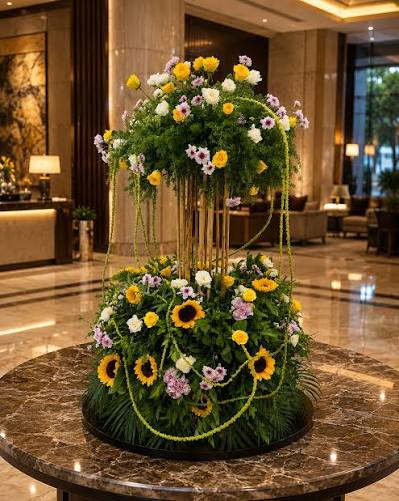
Well-planned commercial artificial flower displays for hotels can support both visual impact and daily hotel operations.
I have worked with artificial flowers, greenery, commercial décor, and custom production for more than ten years. During that time, I have learned that a hotel display cannot be judged only by one attractive photograph. It must look right from several distances. It must remain stable during daily operations. It must also arrive safely, install quickly, and stay easy for hotel staff to maintain.
In this guide, I explain how I develop commercial artificial flower displays for hotels from the first space review to sample approval and repeat wholesale orders.
Why Do Commercial Artificial Flower Displays for Hotels Matter?
A large lobby can feel empty when it has no clear focal point. A small lobby can feel crowded when the floral display is too wide, too bright, or badly positioned.
Commercial artificial flower displays for hotels help shape the guest’s first impression. They add color, movement, softness, and visual direction without the short replacement cycle of fresh flowers.
Well-positioned commercial artificial flower displays for hotels can also connect the entrance, reception, and lounge through one consistent visual theme.
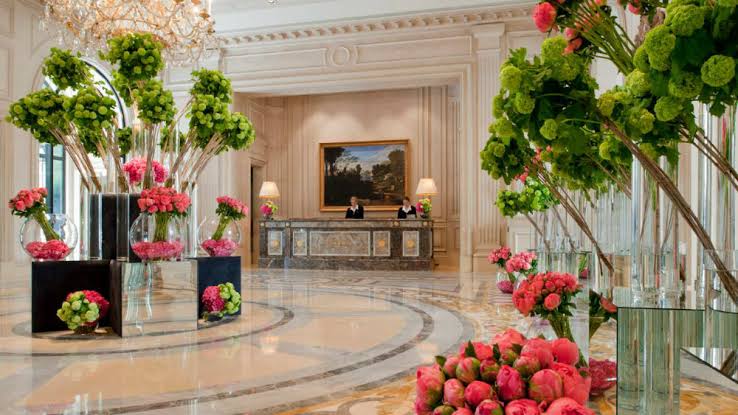
How I Design the First Ten Seconds of the Guest Experience
When I review a hotel lobby, I first identify what a guest sees during the first ten seconds. The main view may be the reception desk, a staircase, an artwork wall, a large window, or a lounge area. I then place the strongest arrangement where it supports that view instead of competing with it.
I never start by asking how many flowers can fit into a vase. I start by asking what the display needs to achieve. It may guide guests toward reception. It may soften stone, glass, or metal surfaces. It may create a photo point near the entrance. It may also connect several public areas with one clear visual style.
In one hospitality project, a buyer requested a very tall arrangement because the lobby had a high ceiling. The first sample looked impressive in a close photograph, but it looked too thin in the full room view.
I widened the lower greenery, added longer side branches, and reduced the number of tiny filler flowers. The finished piece looked larger even though the total flower count did not increase much. The buyer did not need more stems. The buyer needed better proportion.
I also avoid placing flowers on every empty surface. Too many arrangements can make a hotel lobby feel like a wedding venue. I normally create a visual hierarchy. The entrance arrangement receives the strongest scale. The reception display repeats the same flowers at a lower height. Lounge and corridor pieces use fewer flowers and more greenery.
This approach supports biophilic interior design, which uses natural forms, patterns, and references to nature to improve the visual experience of a space.[1]
I apply this idea through curved lines, uneven stem heights, layered leaves, and controlled color changes. This makes commercial artificial flower displays for hotels feel designed for the building rather than added as separate decoration.
Which Flowers Work Best for Luxury Hotel Floral Displays?
Many artificial flowers look realistic in product photos but lose quality under bright hotel lighting. Flat petals, plastic shine, repeated flower heads, and weak stems become easy to notice at close range.
The best hotel flowers use layered petals, natural color changes, clean edges, strong wired stems, and realistic leaves. Commercial artificial flower displays for hotels also need enough variation in flower size, stem height, and leaf texture to avoid a repeated factory-made appearance.
Orchids, hydrangeas, roses, magnolias, peonies, calla lilies, anthuriums, blossom branches, and quality greenery are dependable options.
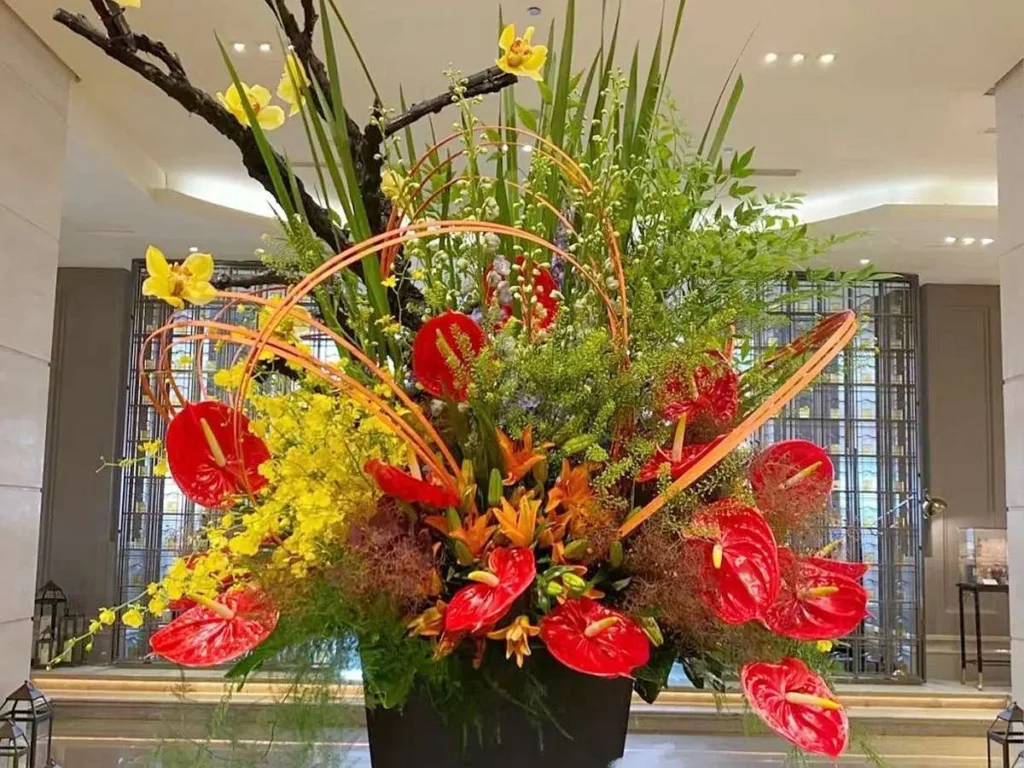
How I Choose Materials by Viewing Distance
Commercial artificial flower displays for hotels should use material grades that match the viewing distance and level of guest contact.
I do not use the same material grade for every part of a hotel project. I choose the material based on the viewing distance, lighting, guest contact, and maintenance needs.
A reception arrangement may sit less than one meter from guests. It needs realistic flower centers, soft petal edges, clean leaves, and controlled color variation. Real-touch orchids, tulips, roses, calla lilies, and anthuriums often work well in these close-view areas.
Large entrance displays are usually viewed from farther away. They need a strong outline, visible flower heads, long branches, and clear blocks of color. Small details matter less from a distance, but the overall shape becomes more important.
In one sample project, a buyer selected only pure white roses. The online selection looked clean, but the sample looked flat under cool LED lights.
I kept the white direction and added ivory roses, cream hydrangeas, pale green buds, and two different leaf finishes. The arrangement still looked white from a distance, but it gained depth when guests moved closer. The buyer approved the revised version because it looked more expensive without becoming more colorful.
I often mix PE, PU, PVC, and silk-touch polyester materials instead of using only one finish. My guide to the best materials for artificial flowers explains how each material performs. Mixed materials can create better texture and help control the project budget.
I also test stem recovery after packing. I compress the sample, reopen the petals, reshape the stems, and photograph the arrangement under direct and side lighting. A flower is not suitable for commercial use if it looks good before packing but cannot recover after transport.
Commercial artificial flower displays for hotels must survive assembly, carton packing, international shipping, installation, dusting, and seasonal movement. Realism matters, but commercial stability matters just as much.
How Should Hotels Style Entrances, Reception Desks, and Lounges?
One arrangement design cannot serve every hotel area. A tall entrance display can block the receptionist’s view, while a small desk arrangement can disappear inside a large lobby.
Each display should match the furniture size, ceiling height, viewing distance, staff tasks, guest movement, and number of visible sides. Commercial artificial flower displays for hotels cannot be scaled correctly without checking these details first.
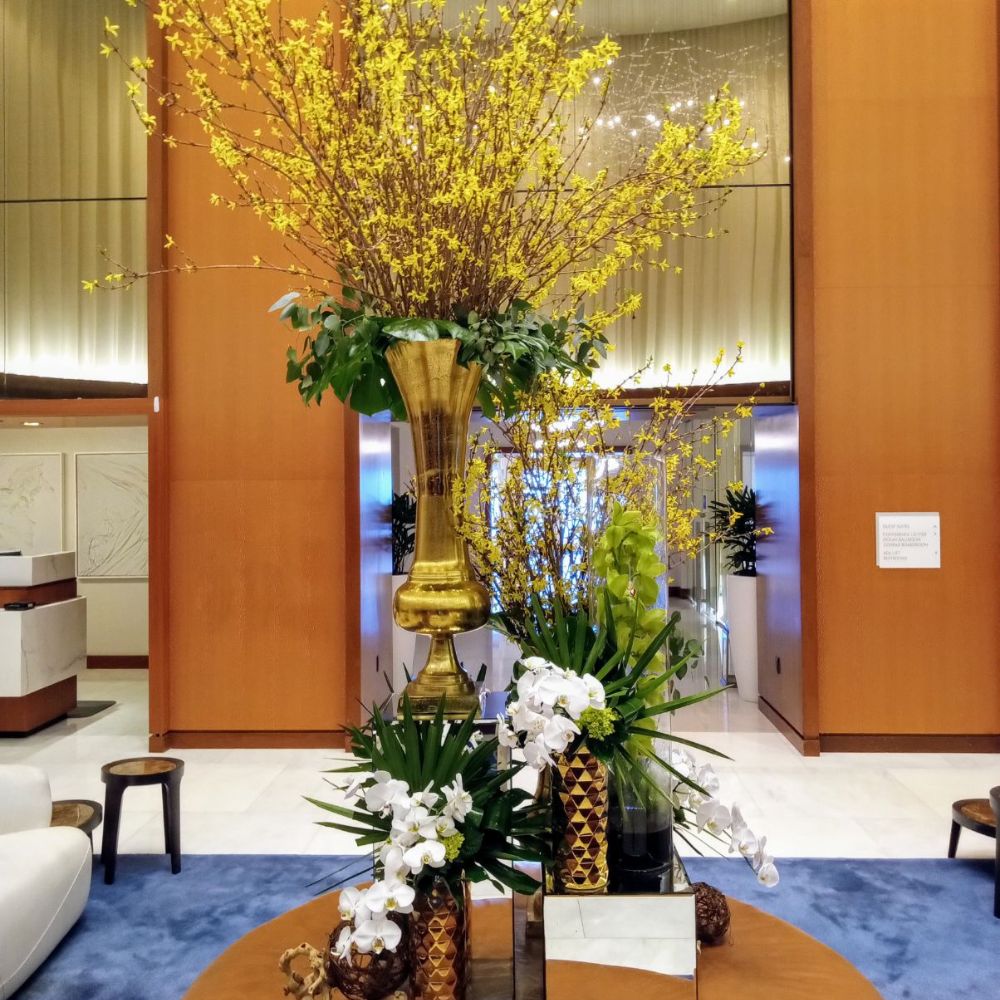
How I Match the Structure to the Hotel Zone
When I plan commercial artificial flower displays for hotels, I create a different structural rule for each public zone.
At the entrance, I often use tall floor vases, paired arrangements, large flowering branches, or two-sided structures. These pieces must look strong from several directions. I avoid designs that look full only from the front when guests will walk around them.
At reception, I normally lower the main flower line or move the height toward one end of the counter. Staff and guests still need clear eye contact. Payment terminals, signs, computers, and working areas must stay accessible.
A wide and low arrangement often works better than a very tall centerpiece on a long desk. A taller arrangement can still work when it is placed at one end and does not interrupt the main service area.
In one hotel discussion, a buyer wanted three identical arrangements for the entrance, reception, and lounge. I explained that the same design would create problems in at least two of those locations.
We kept the same flower family, color palette, and vessel finish, but we developed three structures. The entrance piece was tall and two-sided. The reception piece was lower and wider. The lounge piece had a softer and more open shape.
I also review circulation and accessibility. Large branches should not project into walking paths or create hazards for guests with limited vision.[2] Each hotel should confirm the local accessibility and building rules that apply to its property.
For lounge areas, I keep coffee-table arrangements low enough for conversation. I place taller pieces behind seating, beside columns, or on console tables. I also check whether housekeeping staff can lift, dust, and return each display without rebuilding it.
Commercial artificial flower displays for hotels can also use a permanent green base with removable seasonal flowers. The hotel can move from spring blossom to summer color, autumn foliage, or holiday décor without replacing the full structure. This system reduces storage volume and makes seasonal updates faster.
For more ideas on scale and placement, buyers can review my guide to artificial plants for hotels.
How Can Floral Displays Match a Hotel Brand Style?
High-priced flowers can still look wrong when they do not match the architecture, lighting, guest profile, or service position of the hotel.
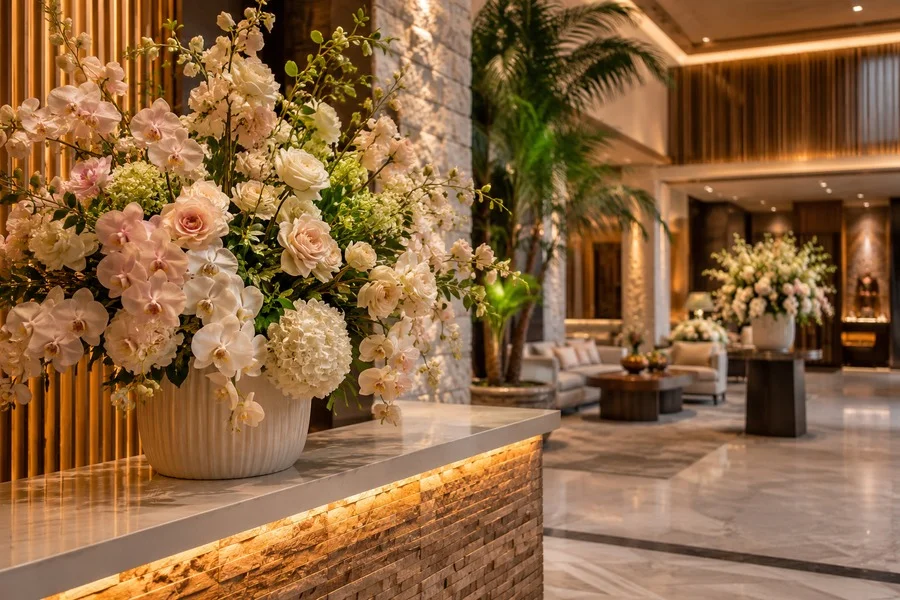
A strong display converts the hotel’s brand language into visible choices such as color, shape, texture, flower density, and vessel finish. Commercial artificial flower displays for hotels should look connected to the property before guests notice the individual flower types.
How I Turn Brand Words Into Design Rules
I use commercial artificial flower displays for hotels as part of the full brand environment, not as isolated decorative products.
I ask the hotel team for three to five brand words. These words may include calm, modern, coastal, warm, artistic, formal, local, natural, or playful. I then turn each word into a clear design rule.
A calm spa hotel may need white orchids, pale greenery, open spacing, soft grasses, and matte stone vessels. A modern city hotel may suit sculptural branches, anthuriums, calla lilies, deep foliage, and clean metal containers.
A heritage hotel may need garden roses, magnolias, trailing greenery, antique brass, and a less perfect shape. A coastal resort may use soft blue, sand, white, and sea-grass forms.
In one custom project, a buyer sent me lobby photos and only said, “Please make it look luxurious.” The room had warm wood, cream stone, black metal lines, and amber lighting.
I did not add bright gold or many flower colors. I used ivory magnolias, dark green foliage, muted burgundy accents, and a simple black vessel. The buyer first expected a larger flower count, but the cleaner color plan matched the room much better.
I also review the hotel website, staff uniforms, menus, guest rooms, restaurant style, and seasonal marketing. The floral display should look like part of the hotel identity. It should not feel like an independent decoration that arrived from a different design language.
For this reason, I do not finalize commercial artificial flower displays for hotels from screen images alone.
Screen colors are not enough for final approval. I ask for Pantone references, paint codes, fabric samples, stone samples, or clear photographs under natural light. I can then prepare a flower board or a smaller sample arrangement before full production.
For hotel groups, I record flower codes, color ratios, vase finishes, dimensions, viewing sides, and packing methods. This helps different properties reorder commercial artificial flower displays for hotels with a consistent result.
How Can Hotels Order Commercial Artificial Flower Displays Wholesale?
A hotel project can fail even when the first sample looks attractive. Weak packing, unclear measurements, color variation, difficult installation, and missing spare parts can create expensive delays.
A reliable wholesale order should include a clear project brief, product specification, sample approval record, packing plan, installation method, safety requirements, and reorder system.
Commercial artificial flower displays for hotels need this documentation because visual consistency must continue from the sample to the full order.
How I Control Risk Before Bulk Production
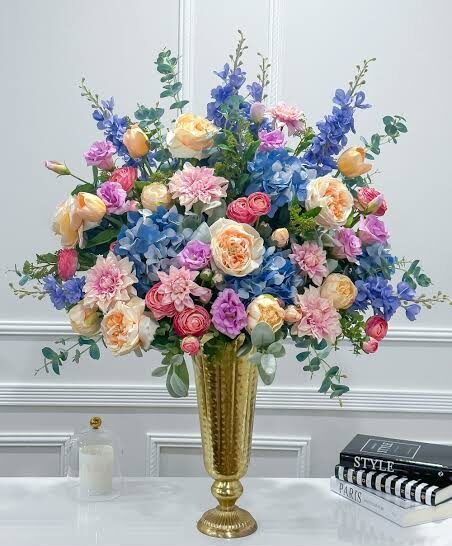
I begin with lobby photographs, floor plans, display locations, table or vase dimensions, ceiling height, preferred colors, target quantity, delivery date, and budget level. I also ask who will install and maintain the arrangements. These details change the structure and packing method.
I then create a product specification. It records the overall height and width, flower list, stem count, color ratios, base material, support frame, finished weight, viewing sides, removable parts, and carton dimensions.
If the hotel requests fire-performance documents, I confirm the required standard before sampling. NFPA 701 includes fire-test methods for the flame propagation of certain textiles and films used in decorative applications.[3]
However, the hotel must confirm the exact material category, local code, and approval method required for the project. A report for one textile or film does not automatically cover every flower, leaf, stem, foam, base, or complete arrangement.
Buyers can read my guide to fire-retardant artificial flowers before requesting test documents.
In one wholesale project, the buyer approved the front view but did not tell me that the arrangement would sit in the center of the lobby. I noticed the issue during the sample review and requested a short site video.
We changed the flat back into a complete second viewing side. We also separated the upper branch section from the base. The new structure improved the guest view and reduced the shipping carton size.
After sample approval, I keep photos, videos, measurements, flower codes, and color ratios as the production standard. This record helps commercial artificial flower displays for hotels remain consistent across production batches and future repeat orders.
I check color batches before assembly and inspect the final shape from every required viewing side. Large arrangements may include removable branches, numbered sections, cable ties, and simple installation instructions.
Commercial artificial flower displays for hotels need a practical replacement plan after installation.
I recommend keeping spare stems, leaves, connectors, touch-up materials, and one approved reference sample. This makes replacement and repeat orders easier.
Hotels can review product directions in the Botanic Blossoms catalogue. My guide on how to clean artificial flower arrangements can also help hotel teams plan routine care.
For commercial artificial flower displays for hotels, a detailed inquiry normally produces a faster and more accurate quotation.
You can email me at jasmine@cnhycrafts.com with your lobby photos, dimensions, target quantity, delivery country, and preferred completion date. I will use this information to recommend the correct scale, materials, structure, sample plan, and wholesale production method.
Conclusion
I create commercial artificial flower displays for hotels by balancing realism, proportion, brand style, guest flow, maintenance, packing, and repeat-order needs from the beginning.
Frequently Asked Questions
1. What information should a hotel send before requesting a quotation?
I need location photos, dimensions, quantity, preferred colors, budget level, delivery country, installation method, and required delivery date.
2. Can the flowers, vase, colors, and arrangement size be customized?
Yes. I can customize flower types, color ratios, height, width, viewing sides, vessel finish, structure, packaging, and branding.
3. What is the usual minimum order quantity?
The MOQ depends on the design, vase, materials, and customization level. I recommend a practical quantity after reviewing the project.
4. Can I approve a sample before bulk production?
Yes. I recommend sample approval for commercial artificial flower displays for hotels when color, scale, or structure is important.
5. How are large arrangements protected during shipping?
I use shaped inner support, secure fixing points, removable sections, labeled parts, strong cartons, and reshaping instructions.
6. Can damaged flowers be replaced without replacing the full arrangement?
Yes. I can design replaceable stem sections and supply spare flowers, leaves, connectors, and other key parts.
7. Are fire-retardant materials available?
Some materials and treatments are available. The hotel should provide its required standard and approval conditions before sampling.
8. How often should hotel staff clean artificial flower displays?
The schedule depends on dust, traffic, air conditioning, kitchen exposure, and materials. Weekly light dusting and regular inspection work well for many hotels.
9. Can one design be adapted for several hotel properties?
Yes. I can create one core design and adjust the size, flower density, vessel, and color for different property types.
10. How long does custom development take?
Timing depends on design complexity and material availability. Clear dimensions, reference images, quantity, and target dates help speed up development.
References and Footnotes
-
The WELL Building Standard discusses biophilic design and the use of nature, natural patterns, lighting, and space planning in interior environments.
See
WELL Building Standard: Biophilia
.
↩ -
The U.S. Access Board explains that projecting objects can create hazards for people with vision impairments and that protrusion limits apply to circulation paths.
See
U.S. Access Board: Protruding Objects
.
↩ -
NFPA 701 provides fire-test methods that assess flame propagation for certain textiles and films under specified test conditions.
See
NFPA 701 Standard Development
.
↩