
7 Proven Outdoor Artificial Plants Commercial Rules That Protect Premium Outdoor Projects
Outdoor greenery can look premium on day one. Then weak materials, harsh sunlight, wind, and poor cleaning can quickly damage the full project image.
Outdoor Artificial Plants Commercial buyers should check UV resistance, material strength, pot stability, cleaning method, wind exposure, packing protection, and repeat-order consistency before confirming any bulk project.
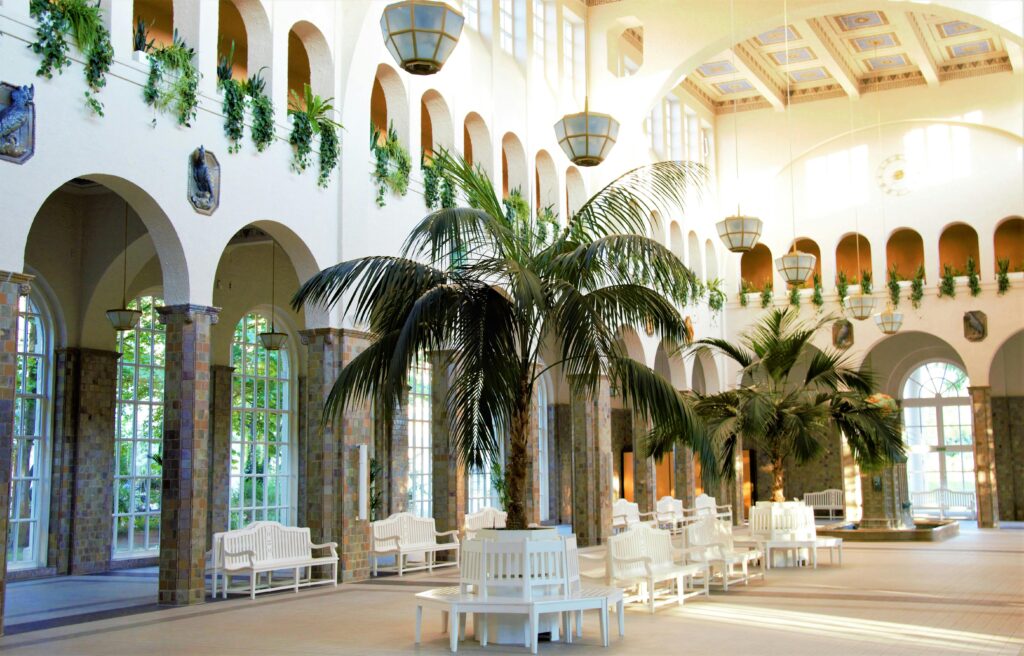
I often tell buyers that Outdoor Artificial Plants Commercial projects are not only about decoration. They are about brand image, guest experience, and long-term cost control. When a guest walks past a hotel door, a retail window, or an office entrance, the greenery becomes part of the first impression. If the leaves fade, curl, shine too much, or fall apart, the whole space can look poorly managed.
In my work with commercial buyers, I see one mistake again and again. Buyers choose outdoor faux greenery from photos only. The product looks full and fresh on screen. The sample may also look acceptable in the office. But the real test starts after installation. Direct sun, heat, wind, rain, dust, and daily cleaning can expose weak materials very fast.
That is why I treat Outdoor Artificial Plants Commercial buying as a project decision, not a simple product order. A buyer needs the right plant style, the right material, the right structure, and the right supplier process. If one part is weak, the project can lose value before the buyer gets enough return from it.
Why Do Outdoor Artificial Plants Commercial Projects Fail Faster Than Buyers Expect?
Outdoor plants fail faster when buyers only compare photos and prices. Sunlight, heat, wind, dust, rain, and cleaning can expose weak materials very quickly.
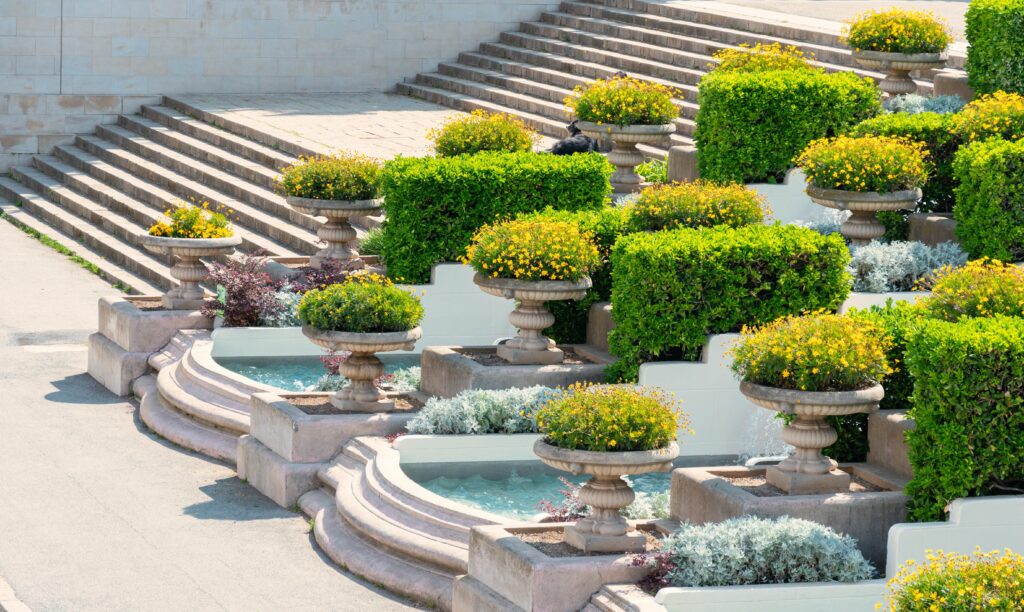
I once worked with a buyer who ordered outdoor greenery from another supplier because the sample photo looked very strong. The first shipment looked good in cartons. The installation also looked fresh during the first week. After three months, the front-facing leaves became pale. Some stems became loose. The buyer told me the project owner felt embarrassed because the hotel entrance looked older than the building itself.
That case stayed in my mind because the problem was not only product quality. The bigger problem was the buyer did not ask the right questions before ordering. For Outdoor Artificial Plants Commercial projects, the wrong question is “Does it look good?” The better question is “Will it still look good after sun, wind, cleaning, and daily traffic?”
Outdoor failure is usually a system problem
Outdoor Artificial Plants Commercial products do not fail for one single reason. They fail because several small risks add up. A leaf material may not be UV-ready. A stem may be too soft for wind. A pot may look heavy but have poor balance. The color may look premium indoors but turn too bright under direct sunlight. The supplier may show one sample but ship a weaker bulk version.
When I help a hotel, retail chain, or event company choose outdoor greenery, I first ask where the plant will sit. A shaded lobby entrance is not the same as a west-facing glass storefront. A rooftop bar is not the same as an indoor-outdoor mall corridor. A restaurant patio near the road is not the same as a private villa entrance. The product may need stronger PE leaves, better UV additives, heavier bases, or a more open branch shape so wind can pass through.
I also ask how the client plans to clean the plants. Some teams wipe leaves with a damp cloth. Some teams rinse them with water. Some teams use strong cleaners without checking material safety. That can damage coatings and speed up fading. A good Outdoor Artificial Plants Commercial product should come with simple care guidance, not only a beautiful photo.
For deeper outdoor buying standards, buyers can also read my related guide: Best Faux Plants for Outdoors: 7 Smart Buyer Standards. I also suggest checking basic UV testing concepts from Q-Lab’s ASTM G154 overview, especially when a project needs clearer weathering expectations.[1]
What Should Buyers Check Before Specifying Outdoor Artificial Plants Commercial Greenery?
Buyers should check material, UV claim, leaf finish, stem strength, pot weight, installation method, cleaning method, and bulk sample consistency before approval.
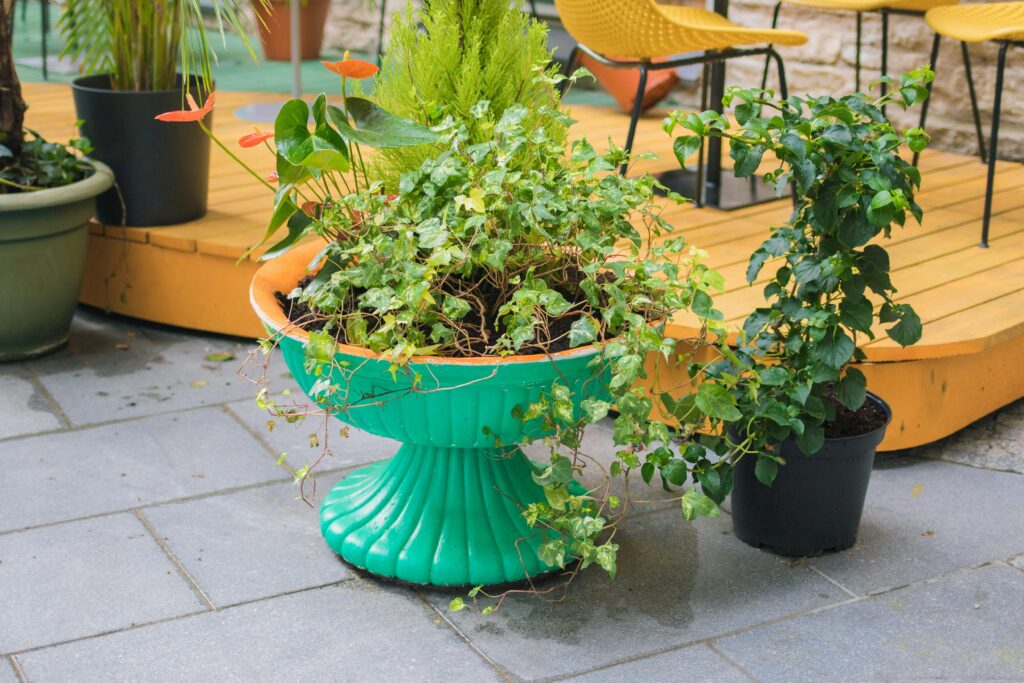
I once supported an interior design company that was preparing greenery for several retail fronts. The buyer first asked for the most realistic leaves. I agreed realism was important, but I asked one more question: “Will customers touch the plants, or will they only see them from three meters away?” The answer changed the whole product direction. For close-touch areas, we used better surface texture and more natural leaf edges. For distant storefront zones, we focused more on shape, volume, and UV performance.
This is how Outdoor Artificial Plants Commercial buying should work. The buyer does not need to use the most expensive product in every corner. The buyer needs to use the right product in the right position. This protects the budget and still keeps the project looking premium.
A strong specification protects the whole order
Before specifying outdoor faux greenery, I suggest buyers build a simple project sheet. The sheet should include the location, light exposure, wind level, expected use time, cleaning method, pot style, size range, carton limits, and replacement plan. This sounds basic, but it prevents many expensive mistakes.
Material is the first point. PE and plastic-based leaves usually perform better than soft fabric leaves in exposed outdoor spaces. Fabric can still work in shaded areas, but it needs careful selection. The buyer should not accept “outdoor use” as a loose phrase. I ask for the material type, UV treatment method, and the sample that matches the final bulk production.
Leaf finish is also important. Very glossy leaves can look cheap in strong sunlight. A matte or semi-matte surface often looks more natural. Color should not be too flat. Real greenery has tone changes. A good Outdoor Artificial Plants Commercial plant should show darker and lighter areas, but the color should still stay within a controlled range for repeat orders.
Structure matters as much as color. A beautiful plant with weak stems will look messy after wind exposure. For front doors and outdoor walkways, I like reinforced stems and stable branch angles. For tall trees, I check trunk strength and base balance. For hedge panels, I check backing grid strength and connection points.
I also look at the pot. Many buyers love beautiful pots, but outdoor projects need safe weight and stable balance. A tall plant in a light pot can become a safety risk. For offices, hotels, and retail fronts, I often suggest weighted bases or inner anchoring. The goal is simple. The display should look premium and stay where it belongs.
For buyers who want more product-level checks, my older guide Best Artificial Plants: 12 Buyer Checks for Realism and Bulk QC can support the sample review process.
How Do UV, Wind, Heat, and Cleaning Affect Outdoor Artificial Plants Commercial Performance?
UV affects color. Wind affects shape and stability. Heat affects plastic softness and surface aging. Cleaning affects coating life and long-term visual quality.
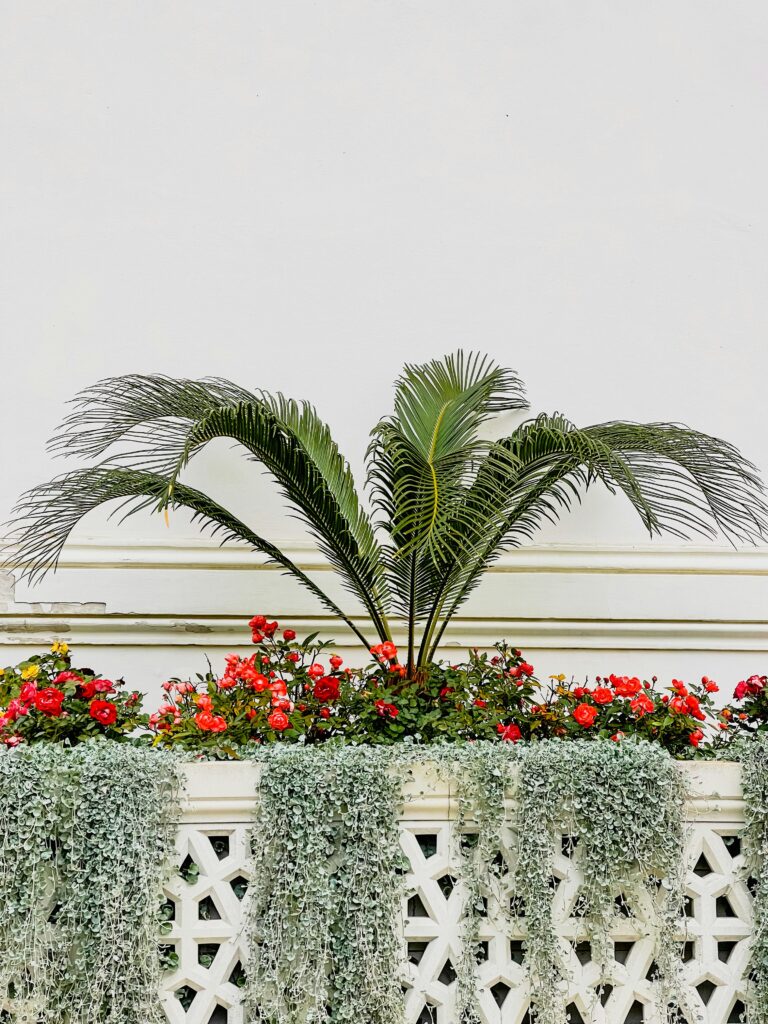
A client once showed me photos of faded greenery at a restaurant entrance. The leaves near the front were much lighter than the leaves near the wall. This told me the issue was not only age. The issue was uneven sun exposure. The same product aged differently because one side received direct UV for many hours each day. After that case, I started asking buyers to send photos of the installation direction before I recommend material and color.
This small step helps a lot. If I know the sun direction, I can help the buyer choose a safer material level. If I know the wind level, I can suggest a stronger structure. If I know the cleaning method, I can remind the buyer what type of surface finish may be easier to maintain. Outdoor Artificial Plants Commercial projects need this kind of early review.
UV exposure can turn a premium project into a complaint
UV is one of the biggest issues for Outdoor Artificial Plants Commercial buyers. A non-UV product may still look good indoors, but outdoor sunlight can expose weak pigment and weak surface treatment. Buyers should ask whether the product is UV-treated, whether the treatment is in the raw material or on the surface, and whether the supplier can support sample testing or outdoor exposure review.
A UV claim is useful only when it matches the final product material. If the sample has one material and the bulk order uses another material, the claim does not protect the buyer. If the leaves are treated but the stems are not strong enough, the project can still fail. If the pot looks good but becomes unstable in wind, the visual value is still at risk.
Wind and heat should be checked before the order
Wind is another hidden problem. Dense plants may look full in photos, but heavy wind can pull branches, loosen panels, or make tall pots unstable. For windy areas, I prefer flexible but reinforced structures. I also like designs that allow some airflow. A very dense wall can act like a sail if the backing and installation are weak.
Heat also changes performance. In hot locations, low-grade plastic may soften, warp, or lose shape. Dark pots can absorb heat. Metal parts can become hot. Glue points can weaken if the product is poorly assembled. This is why I check not only leaves but also stems, joints, backing, and pot material.
Cleaning can protect or damage the product
Cleaning is often ignored. Commercial sites need routine maintenance. Dust, road pollution, pollen, and rain marks can build up on leaves. If the staff uses harsh chemicals, the surface may lose its finish. I prefer products that can be cleaned with a soft cloth, light water rinse, or mild cleaning process. I also like to include a care note in bulk shipments because the maintenance team may not be the same team that purchased the goods.
For public spaces, buyers may also need fire-related documents. A greenery project near curtains, fabric canopies, or event décor may need extra checks. Buyers can review NFPA 701 information when flame testing for textiles and films is part of the project discussion.[2] For full outdoor landscape planning, water-saving ideas from EPA WaterSense can also help buyers compare real planting maintenance with long-life artificial greenery.[3]
Which Outdoor Artificial Plants Commercial Styles Look Best for Hotels, Offices, and Retail Fronts?
The best commercial outdoor plants are usually boxwood panels, faux olive trees, palms, ficus trees, eucalyptus, ferns, grasses, and mixed greenery planters.
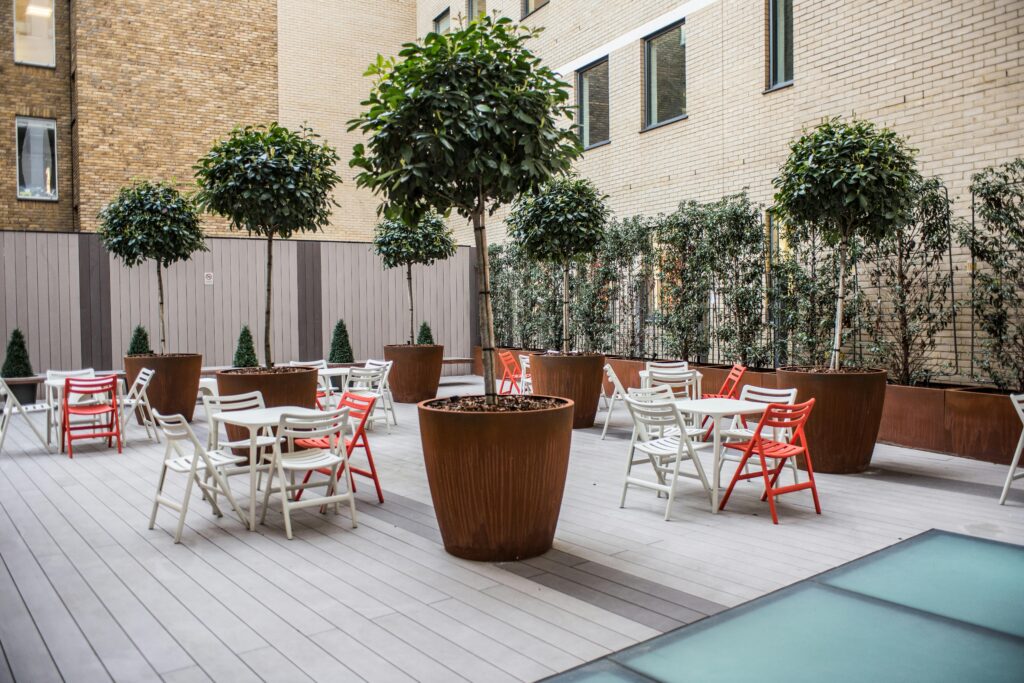
I once helped a buyer choose greenery for three different business scenes. The hotel wanted calm luxury. The office wanted clean structure. The retail front wanted stronger visual impact from the street. If we used the same plant style for all three places, the project would look lazy. So I separated the plant choices by brand feeling. The hotel used olive-style trees and soft green planters. The office used structured boxwood and tall grasses. The retail front used fuller mixed greenery with clear shape from a distance.
This is one reason I do not recommend one “best seller” for every Outdoor Artificial Plants Commercial project. The best choice depends on the space, the brand, and the distance from the viewer.
Hotels need calm luxury
Hotels usually need a premium and relaxing feeling. I like faux olive trees, ficus trees, soft palms, and mixed planter boxes for hotel entrances. These plants do not look too loud. They create a calm welcome. For luxury hotels, I avoid very bright green plastic leaves. I choose deeper, softer, layered green tones. I also pay attention to pot finish because the pot is part of the guest’s first impression.
Offices need order and stability
Offices need order and stability. For office building fronts, I often recommend structured hedges, tall grasses, bamboo-style plants, or clean potted greenery. These choices look professional and easy to maintain. They also match glass, concrete, metal, and neutral building materials. In this kind of project, I care about straight lines, pot alignment, and repeatable sizes across multiple entrances.
Retail fronts need stronger visual pull
Retail fronts need attention. A store must attract people quickly. For retail, I like mixed greenery panels, hanging vines, seasonal planter inserts, and fuller Outdoor Artificial Plants Commercial displays buyers can refresh by season. A beauty store may want soft eucalyptus and floral touches. A café may prefer olive, fern, or trailing greenery. A home décor store may need more texture so photos look better on social media.
Restaurants and cafés need both style and cleaning convenience. Outdoor dining areas collect dust and food-related air particles. I recommend leaves that are easy to wipe and planters that do not trap too much dirt. For high-traffic walkways, I also avoid sharp branch tips or unstable tall plants.
For more inspiration, buyers can review Best Artificial Outdoor Plants for Commercial Use and 21 Best Faux Plants for Commercial Spaces. These internal resources help buyers compare plant types, project scenes, and commercial use points before asking for a quotation.
How Do Buyers Balance Realism, Durability, and Budget in Outdoor Artificial Plants Commercial Projects?
Buyers balance realism, durability, and budget by separating close-view areas, distance-view areas, high-sun areas, and low-risk decorative areas before choosing products.
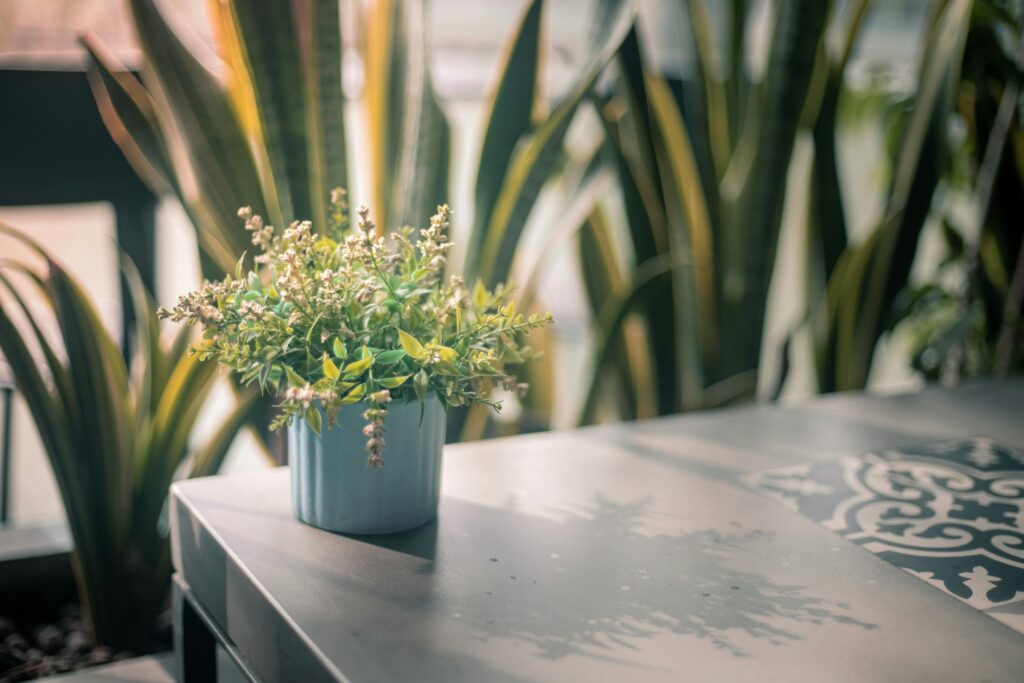
A buyer once asked me for the “best quality” outdoor greenery for every corner of a large commercial site. I told her this may waste money. Some areas were close to guests and needed premium detail. Some areas were far from people and only needed strong shape and color. Some areas were under shade and did not need the same UV level as the full-sun areas. After we divided the project by zones, the buyer saved budget and still kept the full project looking premium.
This is the smarter way to buy Outdoor Artificial Plants Commercial products. Buyers should not spend the same money everywhere. They should spend more where the product carries more brand value and more risk.
Realism matters most in close-view areas
Realism matters most where people stand close, take photos, or touch the leaves. Hotel reception doors, restaurant host stands, showroom entrances, and retail window displays need better leaf texture, color layering, and pot finish. These are brand contact points. Cheap-looking leaves in these areas can damage the full impression.
Durability matters most in harsh outdoor areas
Durability matters most where the plant faces harsh conditions. Rooftops, south-facing walls, sunny entrances, and windy patios need stronger material and structure. In these areas, I would rather reduce small decorative details and spend more on UV-ready leaves, reinforced stems, and stable bases. The plant may look slightly simpler close up, but it will protect the project longer.
Budget control matters most in large rollouts
Budget control matters most in large rollouts. A chain store may need hundreds of pieces across many branches. In that case, I build a product mix. I use premium pieces for main visual zones. I use mid-range durable greenery for secondary zones. I use simple filler plants for background volume. This helps the buyer keep a consistent look without pushing every SKU into the highest price level.
Repeat order consistency also affects budget. If the first order looks good but the second order has a different green tone, the buyer may face replacement cost. I suggest keeping approved samples, color references, material records, and packing standards. At Botanic Blossoms, I prefer to confirm photos and videos before shipment because Outdoor Artificial Plants Commercial buyers need consistency across seasons and locations.
Packing is also part of budget. A realistic plant can lose value if it arrives crushed. For tall trees, we need suitable carton height and branch protection. For panels, we need flat packing or controlled stacking. For potted plants, we need pot protection and stable inner support. A lower product price can become expensive if the packaging creates damage, complaints, or repacking labor.
For buyers who are planning long-term outdoor greenery, I also recommend reading UV Resistant Artificial Plants for Outdoors and Faux Plants Certifications: REACH, UV & Fire Retardant Guide. These guides help buyers ask better questions before the sample stage.
7 Proven Outdoor Artificial Plants Commercial Rules I Use Before Bulk Orders
After working with commercial buyers for many years, I use these seven rules before I recommend any Outdoor Artificial Plants Commercial product for a serious project.
Rule 1: Match the material to the exposure
A shaded entrance, a sunny patio, and a windy rooftop need different product choices. I always check the exposure first because material choice should follow the real use scene.
Rule 2: Never approve bulk orders from photos only
Photos can show shape and color, but they cannot show strength, flexibility, pot balance, or packing safety. I prefer sample review with photos, videos, and material details before bulk production.
Rule 3: Use premium detail only where buyers can see it
Close-view areas need better texture. Far-view areas need stronger volume and clean shape. This rule helps buyers protect both visual quality and margin.
Rule 4: Check pot stability before checking pot beauty
A beautiful pot is useful only when it is safe and stable. For hotel doors, office entrances, and retail fronts, I always consider base weight and installation safety.
Rule 5: Ask for repeat-order color control
Outdoor Artificial Plants Commercial projects often need repeat orders. If the green tone changes too much, the project can look mixed and unprofessional. Approved samples and production records help reduce this risk.
Rule 6: Treat packing as part of product quality
Weak packing can crush branches, damage pots, and create extra labor for buyers. I prefer safer cartons, proper inner support, and clear packing plans for commercial shipments.
Rule 7: Choose a supplier who can solve problems fast
Outdoor projects can change quickly. Buyers may adjust size, pot color, quantity, packing, or delivery timing. A reliable supplier should communicate clearly and solve problems before they become bigger losses.
Conclusion
Premium outdoor greenery is not only about looks. Outdoor Artificial Plants Commercial success comes from better material, structure, testing, packing, and supplier control.
Ready to Build a More Reliable Outdoor Greenery Program?
I help commercial buyers choose UV-ready faux greenery for hotels, offices, retail fronts, restaurants, and multi-site projects. If you need Outdoor Artificial Plants Commercial products with better realism, stronger durability, and clearer bulk order control, you can send your size, scene, quantity, and target budget.
Need a B2B quotation or sample plan?
Share your project photos, preferred size, and order quantity. I can help match suitable materials, packing, and commercial-grade options.
10 B2B FAQ About Outdoor Artificial Plants Commercial Projects
1. What are the best Outdoor Artificial Plants Commercial buyers usually choose?
Commercial buyers often choose boxwood panels, olive trees, palms, ficus trees, grasses, ferns, eucalyptus, and mixed planter greenery. The best choice depends on the location, sunlight, wind, and brand style.
2. Can Outdoor Artificial Plants Commercial products stay outside all year?
Yes, many outdoor artificial plants can stay outside all year if they use suitable UV-ready materials and stable structures. Full-sun and high-wind areas still need stronger specifications.
3. How long do UV-ready faux plants last outdoors?
The service life depends on UV level, material, climate, cleaning method, and exposure direction. In full sun, buyers should plan realistic replacement reviews instead of expecting every product to last forever.
4. What material is better for Outdoor Artificial Plants Commercial greenery?
PE and high-quality plastic-based materials are often stronger for outdoor use. Fabric leaves can work in shaded areas, but buyers should check UV treatment and cleaning needs carefully.
5. Do outdoor artificial plants need maintenance?
Yes. They need dust removal, light wiping, or gentle rinsing. Good maintenance helps keep color, shape, and surface finish looking better for longer.
6. Can I customize the size, pot, color, or packing?
Yes. For B2B orders, size, plant style, pot finish, carton marking, logo label, and packing method can usually be customized based on quantity and project needs.
7. Are Outdoor Artificial Plants Commercial products suitable for hotel and office entrances?
Yes. They are suitable for hotel and office entrances because they keep a stable look and reduce watering, trimming, and replacement work. The key is choosing premium materials and stable bases.
8. What should I check before bulk ordering?
You should check sample material, UV claim, leaf color, branch strength, pot weight, packing method, cleaning instructions, and whether the bulk order will match the approved sample.
9. Can Outdoor Artificial Plants Commercial greenery be used for retail chain rollouts?
Yes. It is a strong choice for retail chains because it supports consistent brand visuals across many locations. Buyers should keep clear SKU records and approved sample references.
10. How do I get a price for commercial outdoor plants?
You can send the plant type, size, quantity, use scene, packing request, and destination country. Clear project information helps the supplier quote faster and recommend the right material level.
Footnotes
- Q-Lab’s ASTM G154 overview can help buyers understand accelerated UV exposure concepts when discussing weathering expectations for outdoor décor materials. Source: Q-Lab ASTM G154 Overview.
- NFPA 701 is commonly discussed when flame propagation testing is needed for certain textiles and film materials in public or commercial spaces. Source: NFPA 701 Standard Information.
- EPA WaterSense provides useful public information about outdoor water efficiency, which can help buyers compare real planting maintenance with long-life artificial greenery in commercial projects. Source: EPA WaterSense.