
7 Smart Reasons Commercial Projects Need Flame Retardant Artificial Flowers
Fire inspection problems can stop a beautiful commercial décor project at the worst moment. One wrong material choice may delay opening, installation, and client approval.
Flame retardant artificial flowers are faux flowers made or treated to slow flame spread. They are important for hotels, restaurants, malls, events, exhibitions, and public commercial spaces where fire safety documents may be required.
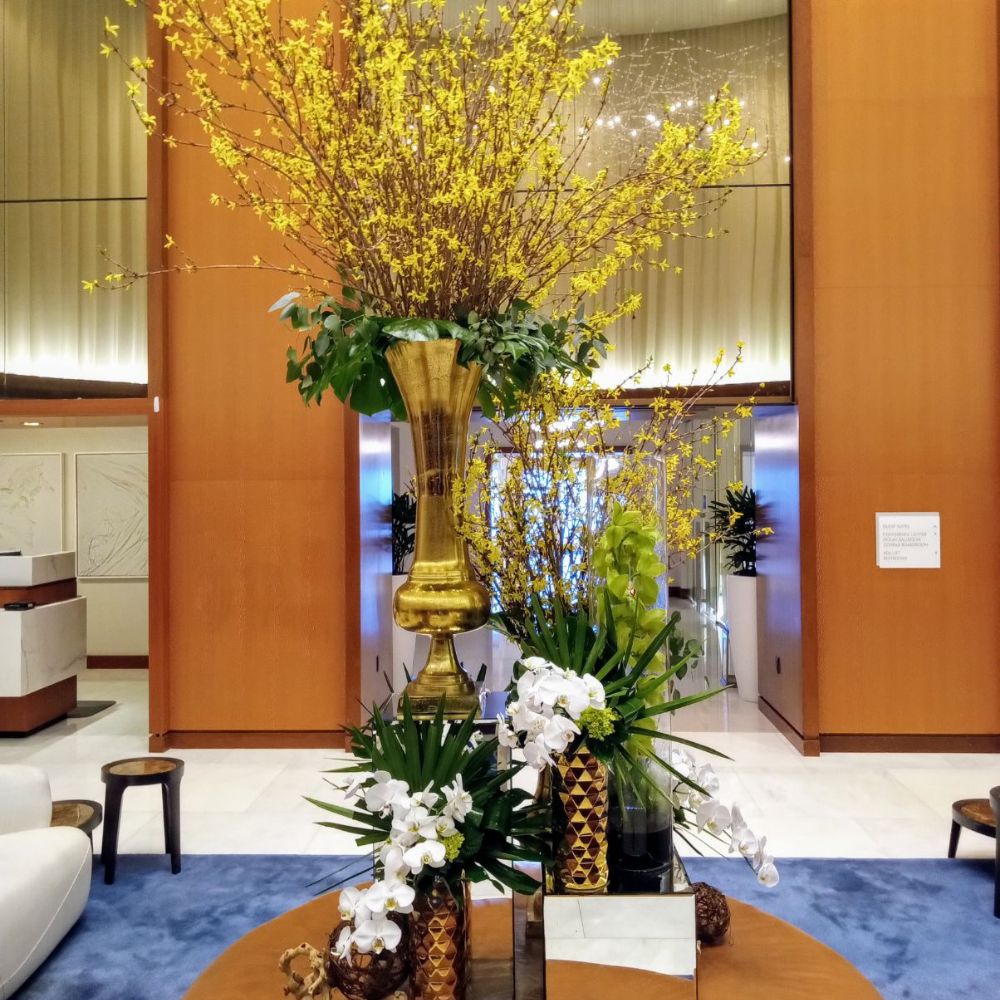
Applicable scene: Hotel lobby, shopping mall atrium, restaurant entrance, event venue, showroom wall, wedding hall, and other public commercial spaces.
For B2B buyers, artificial flowers are not only about color, shape, and price. In many commercial projects, buyers also need to consider fire safety, local rules, test reports, and the final inspection. This is why flame retardant artificial flowers are becoming a practical sourcing choice for large decorative installations.
When flowers are used in a private home, normal faux flowers may be enough. But when flowers are installed in a public space, the buying decision becomes different. A dense flower ceiling, large floral wall, greenery arch, or restaurant installation may need flame retardant artificial flowers to reduce project risk and support approval.
What Are Flame Retardant Artificial Flowers?
A flower wall can look perfect in a photo, but the real project question is simple: can the material pass the safety review?
Flame retardant artificial flowers are artificial flowers produced with flame-retardant materials or treated with flame-retardant coating to help reduce flame spread. They are mainly used in commercial décor projects where public safety and inspection approval matter.
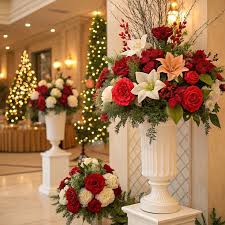
Applicable scene: Factory sample room, commercial project material review, hotel design approval, event decoration sourcing, and B2B buyer quality inspection.
Simple Meaning for B2B Buyers
Flame retardant artificial flowers do not mean the flowers can never burn. This is a common misunderstanding. The real meaning is that the material is designed or treated to slow flame spread, reduce burning speed, or meet a specific fire test requirement.
In commercial projects, this difference matters because inspectors usually care about documents and test results, not only visual quality. A product can look beautiful, but if the project requires fire safety proof and the supplier cannot provide it, the product may not be accepted.
There are usually two common options in the market. The first option is material-based flame retardant artificial flowers. The flame-retardant property is added during material production. The second option is treatment-based flowers, where the finished flowers are sprayed or coated after production.
For long-term commercial use, material-based flame retardant artificial flowers are usually more stable when the budget allows. Treated flowers may also work, but buyers should ask whether the treatment affects color, smell, texture, packaging, durability, or cleaning.
For large orders, buyers should not only ask, “Is it flame retardant?” A better question is, “Which material is flame retardant, which test standard is used, and does the report match this product?”
Where Are Flame Retardant Artificial Flowers Commonly Used?
Normal artificial flowers may work for home décor, but commercial spaces carry more responsibility. The installation location decides the material choice.
Flame retardant artificial flowers are commonly used in hotels, restaurants, shopping malls, cinemas, casinos, wedding venues, exhibition booths, office buildings, airports, schools, hospitals, and public event spaces.
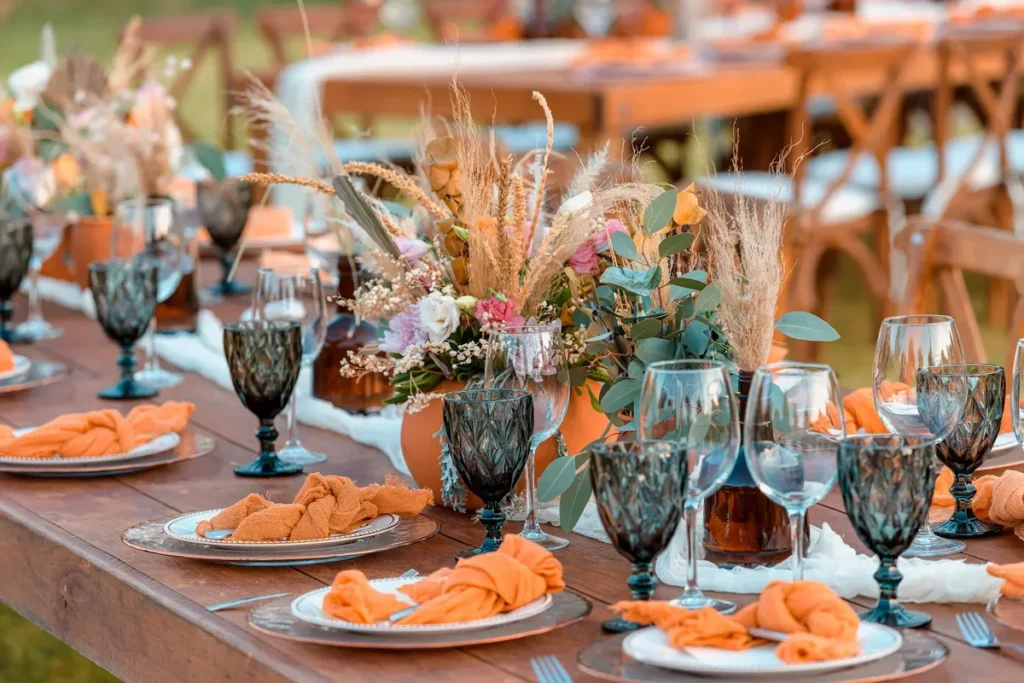
Applicable scene: Restaurant ceiling flowers, hotel corridor flower walls, wedding venue floral arches, mall seasonal displays, exhibition booth decoration, and event backdrops.
Why Project Location Matters
The first thing a buyer should check is not the flower name. The first thing is the installation scene. A small rose bouquet in a vase has a different risk level from a large floral ceiling above a dining area.
Hotels and restaurants often need more careful material selection because flowers may be close to lights, candles, kitchens, electrical wiring, or crowded guest areas. Shopping malls and airports may have stricter approval steps because they are high-traffic public spaces.
Exhibition booths can also require flame retardant artificial flowers. Many trade show organizers ask exhibitors to submit material information before booth opening. If the décor cannot pass the review, the booth may need to remove or replace the flowers quickly.
Wedding venues, banquet halls, and event companies should also pay attention. Large floral arches, hanging flowers, ceiling greenery, and stage backdrops often use dense materials. Dense decorative materials can create more inspection concern than small table arrangements.
For this reason, buyers do not always need flame retardant artificial flowers for every item. A smart sourcing method is to use them for higher-risk areas such as ceilings, walls, arches, corridors, entrances, and public installations, while using normal flowers for low-risk small arrangements when allowed.
For outdoor commercial greenery, buyers should also check UV resistance, waterproof performance, and installation stability. You can review this related guide on UV resistant artificial flowers for outdoor material planning.
Flame Retardant Artificial Flowers vs Normal Artificial Flowers: What Is the Difference?
Two flowers can look almost the same in photos, but their commercial value can be very different.
The main difference is safety performance and document support. Normal artificial flowers focus on appearance and cost. Flame retardant artificial flowers add fire-safety performance, testing support, and better project approval value for commercial spaces.
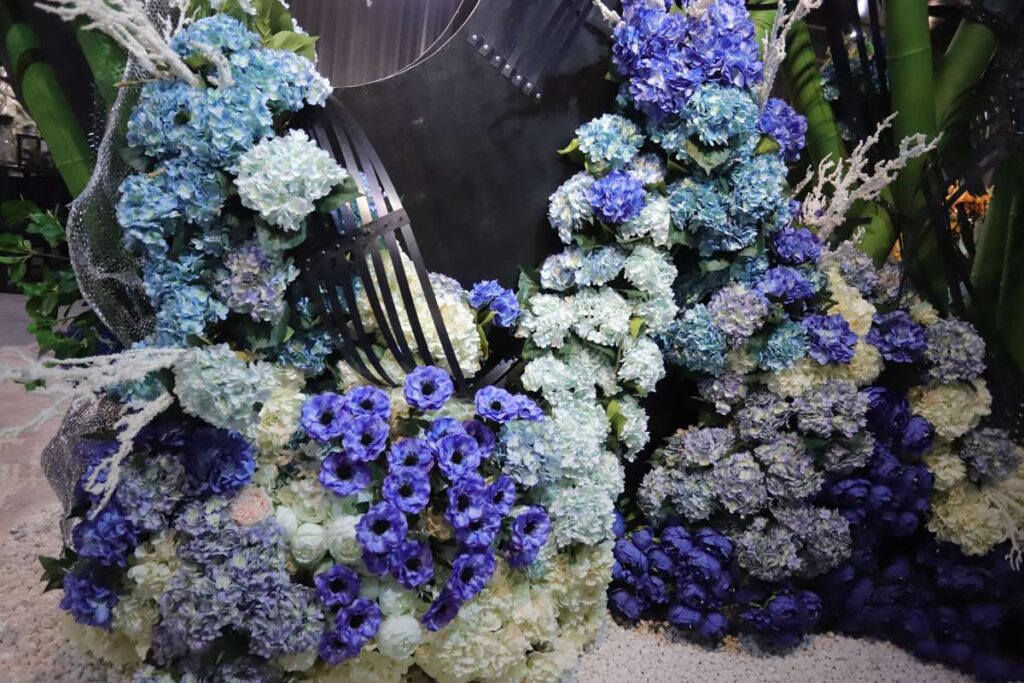
Applicable scene: Buyer sample comparison, hotel project approval meeting, wholesale showroom display, commercial décor planning, and bulk order confirmation.
The Real Difference Buyers Should Care About
Many buyers first ask whether flame retardant artificial flowers look different from normal artificial flowers. In many cases, the appearance can be very similar. The real difference is in material, production process, test support, cost, and project risk control.
Normal artificial flowers are mainly made for beauty, color, shape, texture, and affordable bulk supply. They are suitable for many home décor, retail, photography, and low-risk display uses.
Flame retardant artificial flowers need extra material control or treatment. They may also require test reports, product labels, supplier declarations, batch records, and clearer production notes.
From a buyer’s side, the biggest difference is not only fire performance. The biggest difference is project security. If a commercial project asks for fire safety documents, normal artificial flowers may become a problem even when the quality looks good.
A buyer may save money at the order stage by choosing normal flowers, but lose time and money during installation, inspection, or replacement. This is especially painful for hotels, restaurants, malls, and event companies because opening dates and installation schedules are often fixed.
There are also cost differences. Flame retardant artificial flowers are usually more expensive because the material, treatment, testing, and production control add cost. The MOQ may be higher. The lead time may also be longer if a specific test report or custom material is required.
Some soft-touch flowers may be harder to make flame retardant without affecting the natural hand feel. Some colors may also have fewer ready-stock options. This is why buyers should confirm flame-retardant requirements before sample approval, not after design approval.
Normal flowers are still useful when the project does not require fire safety proof. For home décor, retail bouquets, small centerpieces, and low-risk private use, normal artificial flowers can be a smart and cost-effective choice.
For public commercial décor, flame retardant artificial flowers give buyers more confidence and stronger project support. You can also compare general sourcing points in this guide about how to choose an artificial flowers supplier.
What Documents Should Buyers Ask for Before Bulk Orders?
A low price is not useful if the documents cannot support the final inspection. Buyers should check paperwork before confirming a big order.
Before bulk orders, buyers should ask for fire test reports, certificate copies, product photos, material details, batch information, supplier declarations, and written confirmation that the tested material matches the ordered product.
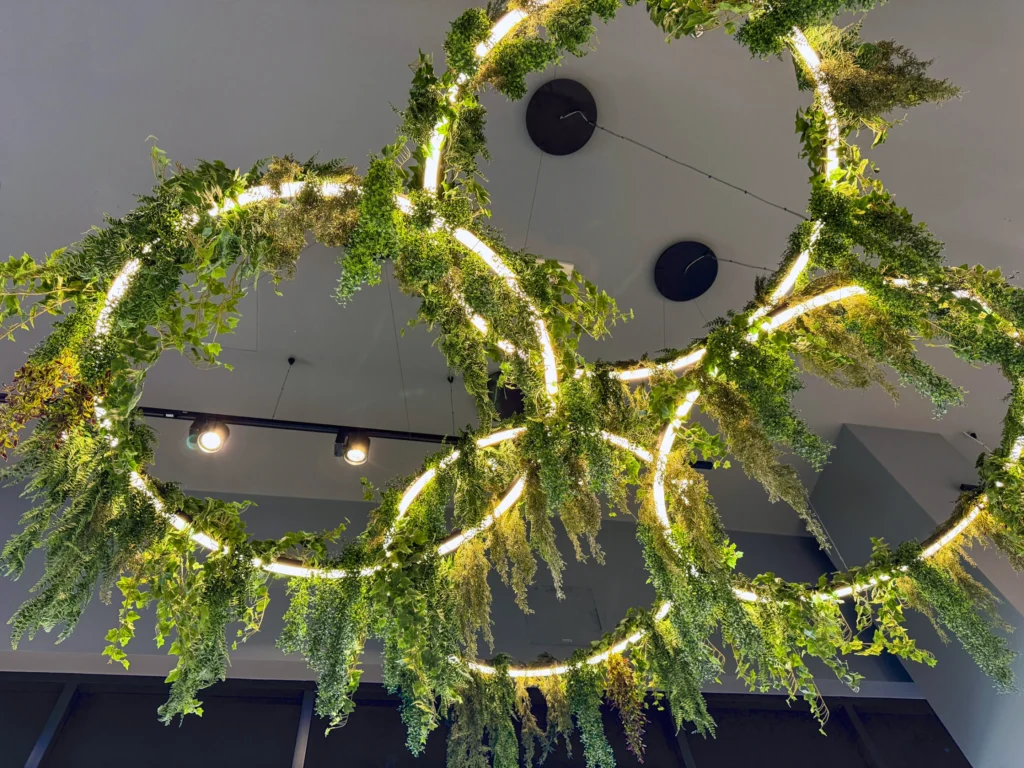
Applicable scene: B2B purchasing review, hotel project document submission, mall decoration approval, event venue compliance check, and contractor material approval.
Documents That Protect the Buyer
For commercial projects, buyers should not only ask, “Do you have a certificate?” That question is too general. A better question is, “Does the test report match the material, style, and batch I am ordering?”
This is where many problems happen. Some suppliers may show one old report for a different product. Some reports may cover fabric, while the actual ordered product includes plastic leaves, foam berries, paper wrapping, glue, wire, and plastic stems.
When buying flame retardant artificial flowers, buyers should check the full product structure. If the final product is a mixed flower wall, the buyer should know whether the petals, leaves, backing panel, greenery, glue, and accessories are covered by the same document or not.
The first important document is usually a fire test report. Depending on the market and project, buyers may see references such as NFPA 701, ASTM E84, EN 13501, BS 5852, or local fire requirements. One standard does not automatically work everywhere. The project location decides what is accepted.
A U.S. hotel project may request different proof from a European event venue or a Middle East shopping mall. Buyers should confirm with the project manager, venue, contractor, or local fire authority before ordering.
The second useful document is a supplier declaration. This document should include the product name, material description, order batch, flame-retardant type, supplier information, and production date if needed.
The third useful item is a sample record. Buyers should avoid approving one sample and receiving another material in bulk production. To reduce this risk, take photos or videos of the approved sample, keep a cutting sample, and write the sample code on the proforma invoice.
This is especially useful for custom flame retardant artificial flowers, flower walls, ceiling greenery, hanging vines, and mixed floral installations.
For large commercial projects, documents are not only paperwork. They are part of the product service. Sending the fire document package before production can help the project side check details early and avoid last-minute stress.
How to Source Flame Retardant Artificial Flowers for Commercial Projects?
A good supplier should not only sell flowers. A good supplier should help buyers reduce risk, save time, and protect the final project.
To source flame retardant artificial flowers, buyers should confirm project rules first, choose suitable materials, request matched documents, approve samples, check production consistency, and work with a supplier who understands commercial installation needs.
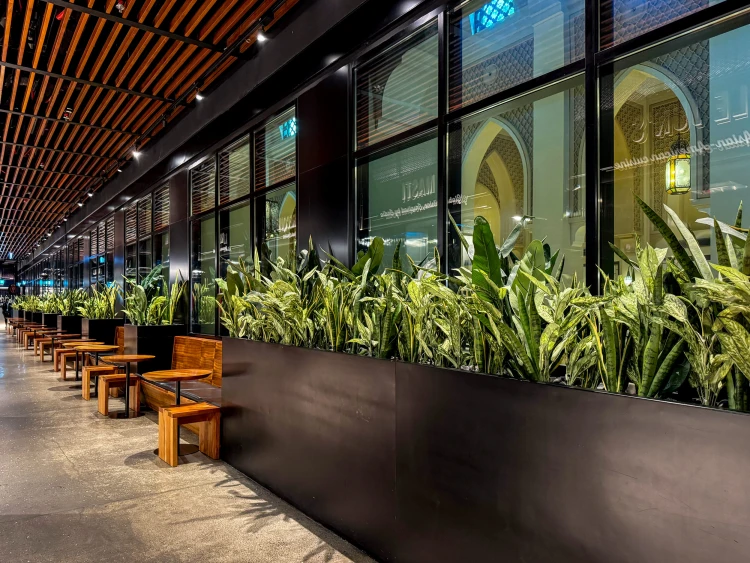
Applicable scene: Commercial project sourcing, hotel renovation, event company procurement, interior design material planning, wholesale flower wall production, and public venue decoration.
A Practical Sourcing Method for B2B Buyers
When sourcing flame retardant artificial flowers, buyers should not start with a catalog page only. Buyers should start with the project requirement.
First, confirm where the flowers will be used. Will they be installed indoors or outdoors? Will they be close to lights, candles, electrical equipment, kitchens, or ceilings? Will the project need a named fire standard? Will the venue ask for documents before installation?
Second, separate “must be flame retardant” items from “normal items are acceptable” items. This is a very practical way to control budget.
For example, a hotel project may need flame retardant artificial flowers for ceiling vines and flower walls, but it may not need every small vase bouquet to use the same material. A wedding venue may need flame-retardant entrance arches and hanging florals, while normal flowers may work for some table centerpieces.
Third, send the product plan to the venue before bulk production. Product images, material notes, available reports, and supplier declarations can help the project side approve the direction earlier.
Fourth, test the real product or real material when the project is large. A general report can help, but a project-specific test gives stronger confidence. For high-value projects, buyers should consider testing the final flower mix instead of only one fabric piece.
Mixed floral décor may include silk petals, polyester fabric, plastic leaves, PE greenery, foam flowers, glue, iron wire, plastic stems, and backing panels. These parts may behave differently during fire testing.
Fifth, choose a supplier who communicates clearly. Buying flame retardant artificial flowers is not only a material issue. It is also a service issue. Buyers need fast sample support, clear document handling, honest material limits, stable production, and practical installation advice.
What Should B2B Buyers Check Before Installation?
The safest project is not only produced correctly. It is also installed correctly.
Before installing flame retardant artificial flowers, buyers should check venue rules, lighting distance, product labels, approved samples, batch consistency, fixing method, and whether the final installation matches the approved design.

Applicable scene: Hotel lobby installation, restaurant ceiling decoration, mall display setup, event venue preparation, and contractor on-site inspection.
Installation Details That Reduce Risk
Even when buyers choose flame retardant artificial flowers, installation details still matter. Flowers should not be placed too close to heat sources, open flames, strong lights, or kitchen areas unless the venue confirms it is acceptable.
For ceiling installations, buyers should check fixing points, hanging height, electrical distance, sprinkler clearance, and maintenance access. For wall installations, buyers should check backing materials, glue, frames, panels, and how the décor will be removed or cleaned later.
For restaurants and hotels, buyers should also consider daily operation. Staff may clean the area, move furniture, change lighting, or add seasonal decoration later. These changes may affect the original safety plan.
For event companies, the biggest risk is time pressure. If the venue asks for proof on installation day and the team cannot provide the documents, the installation may stop. This is why buyers should prepare product photos, reports, supplier declarations, invoices, and sample records before the installation date.
For repeat buyers, it is smart to build two sourcing libraries. One library can include normal artificial flowers for retail, home décor, product photography, and low-risk displays. The other library can include flame retardant artificial flowers and greenery for hotels, malls, restaurants, public events, exhibitions, and commercial interiors.
This simple system helps sales teams respond faster, quote more accurately, and reduce project risk.
You can also review related installation and maintenance guides on how to clean silk flowers and how to pot artificial flowers.
My Practical Insight for Commercial Buyers
Do not treat flame retardant artificial flowers as only an extra product feature. Treat them as a project risk-control tool.
In commercial décor, the cheapest product can become expensive if it causes delay, rejection, rework, or replacement. The right product is the one that fits the design, budget, inspection need, delivery time, and installation scene.
For small private decoration, normal flowers may be enough. For public-facing spaces, flame retardant artificial flowers can give buyers a stronger position during approval and installation.
A serious supplier should tell buyers what can be done, what cannot be guaranteed, which documents are available, and whether the test report matches the actual product. This kind of honest communication is more valuable than a simple low price.
For B2B buyers, the best sourcing decision is not only about buying flowers. It is about protecting the project, the schedule, the client relationship, and the final commercial result.
Need Flame Retardant Artificial Flowers for a Commercial Project?
Botanic Blossoms can help buyers review product style, project scene, sample needs, material options, and document requirements before bulk order.
Conclusion
Flame retardant artificial flowers help commercial buyers protect design, approval, delivery, and client trust when public project safety matters. For hotels, restaurants, malls, exhibitions, and event venues, choosing the right material early can prevent costly delays and make the whole project smoother.
FAQ
1. Are flame retardant artificial flowers completely fireproof?
No. Flame retardant artificial flowers are not completely fireproof. They are designed or treated to slow flame spread or meet specific fire test requirements, depending on the material and standard.
2. When should buyers choose flame retardant artificial flowers?
Buyers should choose flame retardant artificial flowers for hotels, restaurants, shopping malls, public events, exhibition booths, schools, hospitals, airports, and any venue that asks for fire safety approval.
3. Do all artificial flowers need to be flame retardant?
No. Many home décor and small retail products do not need this feature. Commercial ceiling décor, floral walls, hanging vines, arches, and public venue installations need more attention.
4. Will flame-retardant treatment change the flower appearance?
It may change the smell, texture, color, or surface feel if applied after production. Material-based flame retardant artificial flowers are usually more stable when the budget allows.
5. What certificate should buyers ask for?
Buyers should ask for the fire test report required by the project. Common references may include NFPA 701, ASTM E84, EN 13501, BS 5852, or local fire requirements.
6. Can one certificate cover all artificial flowers?
Not always. The certificate should match the product material, structure, and batch as closely as possible. Buyers should not accept unrelated reports without checking.
7. Are flame retardant artificial flowers more expensive?
Yes. Flame retardant artificial flowers are usually more expensive because material control, treatment, testing, and production management add cost. They may still save money by reducing project risk.
8. Can buyers use normal artificial flowers and spray them later?
Sometimes yes, but buyers should check whether the spray is accepted by the venue. Buyers should also confirm durability, smell, color change, cleaning impact, and document support.
9. How early should fire requirements be confirmed?
Buyers should confirm fire requirements before sample approval. Early confirmation helps avoid changing materials, remaking samples, or delaying bulk production.
10. Can Botanic Blossoms support custom flame retardant artificial flower projects?
Yes. Botanic Blossoms can support style selection, sample preparation, bulk production planning, and document coordination for commercial artificial flower and greenery projects.
Footnotes
-
International Code Council. International Fire Code 2021, Chapter 8: Interior Finish, Decorative Materials and Furnishings. This section includes requirements related to decorative materials and artificial vegetation in commercial spaces.
Source
↩ -
National Fire Protection Association. NFPA 701: Standard Methods of Fire Tests for Flame Propagation of Textiles and Films. This standard is commonly referenced for evaluating flame propagation of decorative textile-related materials.
Source
↩ -
ASTM International. ASTM E84: Standard Test Method for Surface Burning Characteristics of Building Materials. This test method is often referenced for flame spread and smoke-developed values in building and interior material evaluations.
Source
↩