
How to Choose the Best Quality Faux Flowers for Commercial Projects?
Commercial décor can look beautiful online but weak in real projects. Poor flowers can damage your client’s trust, your project photos, and your repeat business.
The best quality faux flowers should look realistic, keep stable color, hold shape after shipping, and perform well in bulk orders. I check material, petal finish, stem strength, packaging, sample quality, and supplier service before I recommend faux flowers for weddings, hotels, retail stores, and event décor projects.
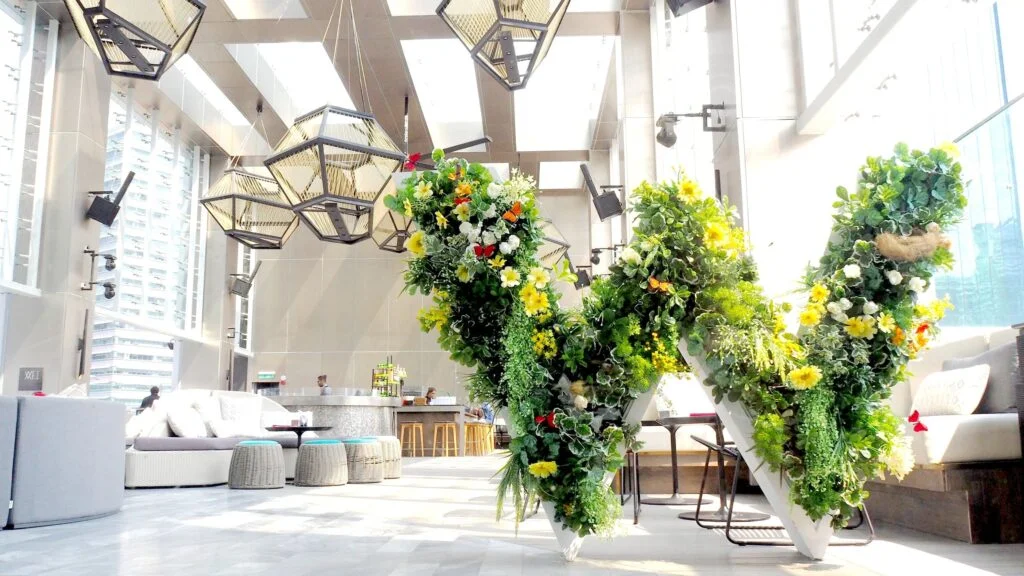
I have worked with many commercial buyers who care about one thing first: safety before bulk purchasing. They do not only want pretty flowers. They want best quality faux flowers that can protect their project image, reduce maintenance work, and help them win repeat clients. This is why I always check faux flowers from a B2B buyer’s point of view.
A product photo can make almost any flower look attractive. But a real commercial project is different. Your customer will see the flower under real light. Your team will install it, move it, store it, and sometimes reuse it. If the flower head is weak, if the stem bends badly, or if the color looks different from the sample, the whole project can look cheap. In my experience, choosing the best quality faux flowers is not about choosing the most expensive product. It is about choosing the right product for the right commercial use.
What Makes the Best Quality Faux Flowers Different?
Some faux flowers look good for one photo, but they fail when used in a real project. That is where many buyers lose money.
The best quality faux flowers are different because they have a natural shape, soft color, clean workmanship, strong stem structure, stable bulk quality, and safe packaging. They help commercial buyers create premium displays without the high cost and short life of fresh flowers.
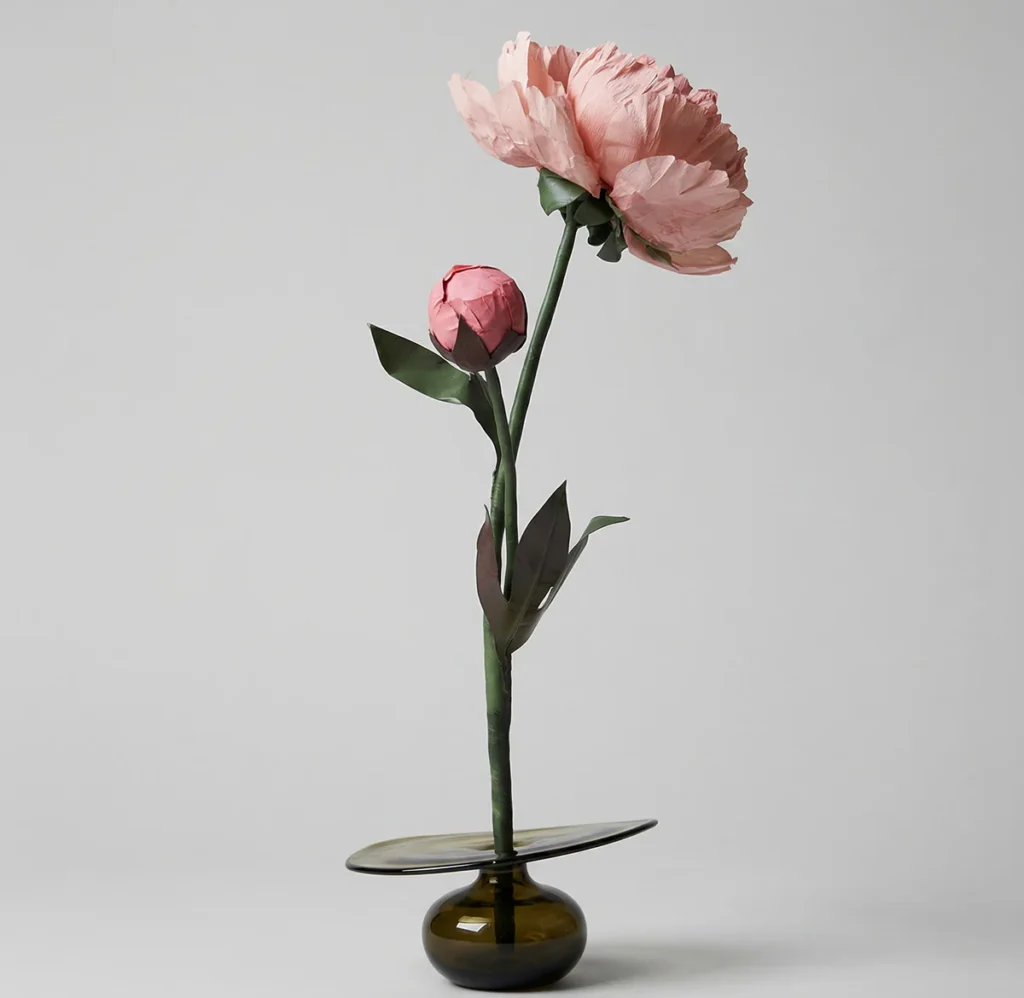
I Look at Faux Flowers Like a Buyer Who Must Protect a Project
When I help a customer choose best quality faux flowers, I never judge the product only by beauty. Beauty is important, but commercial use needs more than beauty. A wedding planner needs flowers that look soft in photos. A hotel buyer needs flowers that can stay in place for months. A retail buyer needs flowers that can survive shipping and still look good when customers open the box. These are different needs, so the quality standard should also be different.
I once worked with a wedding décor client who wanted white roses for a large ceremony arch. At first, she only focused on the flower head size. I asked her to check the petal edge, stem support, color tone, and packing method. We found that one cheaper sample had a beautiful front view, but the back side showed glue marks. The stem also bent too easily. For a small home vase, this may be acceptable. For a luxury wedding arch, it was risky. We changed to a better silk-touch rose with stronger inner wire and cleaner petal shaping. The final arch looked fuller, cleaner, and more expensive in photos.
This is why I believe the best quality faux flowers must pass both visual checking and practical checking. A good flower should look natural from the front, side, and back. It should not show obvious glue, rough cuts, or plastic shine. The flower head should not fall off easily. The stem should hold shape after bending. The color should not look too harsh under indoor light. These details may look small, but they decide whether your project looks premium or low-cost.
My Standard for Commercial Faux Flower Quality
I usually check five points before I call any item best quality faux flowers.
First, I check the flower shape. Real flowers have layers, movement, and small natural differences. Good faux flowers should not look flat or lifeless. The petals should open in a natural way. The flower center should not look like cheap plastic. The overall shape should be easy to arrange in bouquets, arches, vases, or wall panels.
Second, I check the color. Cheap faux flowers often use strong colors that look fake. Premium flowers use softer tones, shaded edges, and natural color changes. For weddings, ivory, white, blush, champagne, and dusty rose need special care. A small color mistake can affect the full design.
Third, I check the material feel. Some projects need silk flowers. Some need PU touch flowers. Some need PE greenery or UV-resistant outdoor stems. The best quality faux flowers should match the use, not only the buyer’s budget.
Fourth, I check the stem. A weak stem creates problems during installation. It may not hold well in floral foam, metal frames, bouquet holders, or wall panels. For wedding arches and hotel arrangements, a strong wired stem makes the work much easier.
Fifth, I check production consistency. A sample can look good, but the real question is whether 500, 1,000, or 5,000 pieces can stay stable. This is very important for wholesalers, retailers, and project buyers. If you need more care tips after purchase, you can also read my guide about how to clean silk flowers.
Which Materials Make Faux Flowers Look More Realistic?
Many buyers choose by product photo first. But photos can hide material problems. The wrong material can make even a good design look cheap.
Silk, PU, latex-touch, PE, and high-grade plastic can all be used for best quality faux flowers. The right choice depends on the project scene, budget, touch requirement, display time, and durability needs.
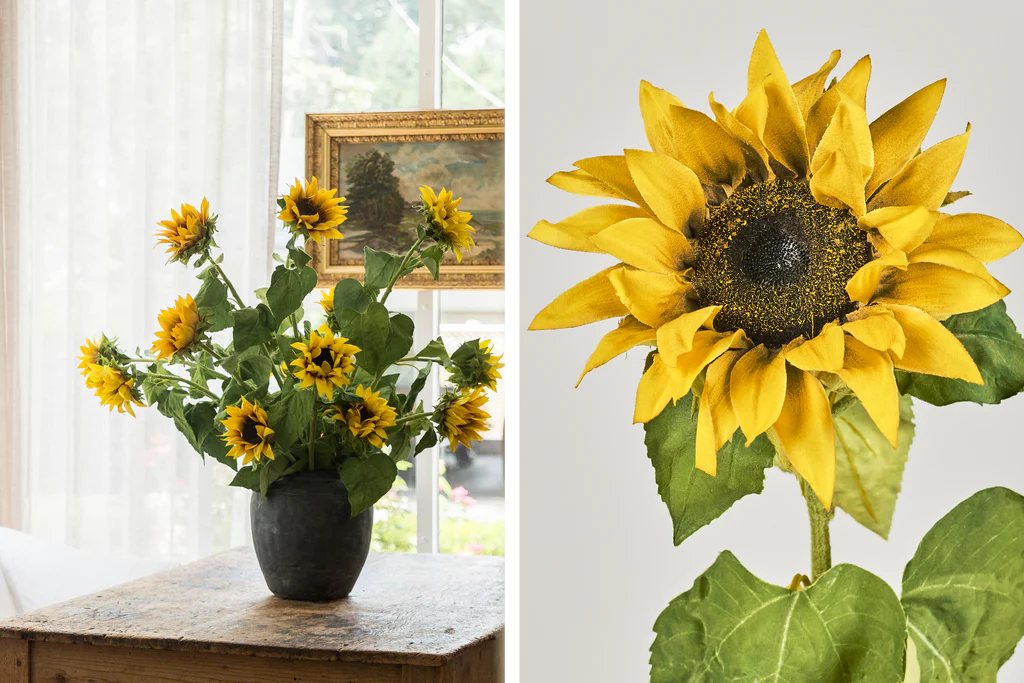
I Choose Materials Based on the Final Display Scene
I have learned one clear lesson from many commercial orders. There is no single best material for every buyer. The best quality faux flowers for a bridal bouquet may not be the best choice for an outdoor hotel entrance. The best product depends on how your customer will see it, touch it, move it, clean it, and store it.
For wedding planners, I often suggest silk flowers or high-grade fabric flowers because they photograph beautifully. Soft petals help the arrangement look romantic. They also create a rich layered look on arches, table runners, ceremony backdrops, and aisle décor. One client from the United States asked me for flowers for a white and green wedding setup. She wanted the design to look soft in natural light. I showed her two options. One was lower-cost polyester. One was premium silk-touch material. She chose the better fabric because the petal edge looked softer in close-up photos. This helped her present the design as a premium wedding package to her own clients.
For hotel and restaurant projects, I look at durability first. Guests may walk close to the flowers. Cleaning staff may move the arrangements. Air conditioning, lighting, dust, and sunlight can affect the look. In these scenes, strong stems and stable color matter more than soft touch only. I often suggest a mix of silk flower heads and PE greenery. This gives both softness and structure. It also helps the arrangement keep a fresh look for a longer time.
For retail stores, I focus on repeat sales. A retail buyer needs best quality faux flowers that can survive shipping, shelf display, customer handling, and repeat packing. The product must look attractive after unpacking. It should also have clear color options and stable SKU details. If a buyer sells online, the real product must match the product photo closely. Otherwise, returns and complaints may increase.
How I Compare Silk, PU, PE, and Latex-Touch Flowers
Silk flowers are often a good choice for premium visual projects. They look soft and elegant. They work well for wedding arches, bridal bouquets, hotel vases, restaurant tables, and photo scenes. But silk flowers need good packing because soft petals can be pressed during shipping.
PU flowers feel more real when customers touch them. They are useful for bridal bouquets, table centerpieces, showroom samples, and close-view displays. PU flowers usually cost more than normal fabric flowers, but the hand feel can create stronger value for premium buyers.
PE flowers and PE greenery are useful for durability. They work well in commercial greenery, hanging plants, outdoor-style displays, wall panels, and planter arrangements. If the project is outside, I suggest checking UV resistance. For outdoor projects, you can read my guide about best fake plants for outdoors UV guide.
Latex-touch flowers can look very realistic in close view. But buyers need to check smell, color stability, and surface feel. Some latex-touch materials may feel good at first but may not be the best choice for hot storage or long-distance shipping. I always suggest sample checking before large orders.
When buyers ask about eco-friendly claims, I also remind them to be careful. A supplier should explain the actual material instead of only using nice words. The FTC Green Guides explain how businesses should avoid misleading environmental marketing claims.1 If a supplier says a product is eco-friendly, I suggest asking for clear material details and proof.
How to Check Faux Flower Quality Before Bulk Orders?
Many bulk order problems start before payment. Buyers trust photos too much and do not check the small details that decide real quality.
Before bulk orders, I check best quality faux flowers through samples, material confirmation, color comparison, stem testing, size checking, packing review, production photos, and pre-shipment inspection. This helps reduce risk before the shipment leaves the factory.
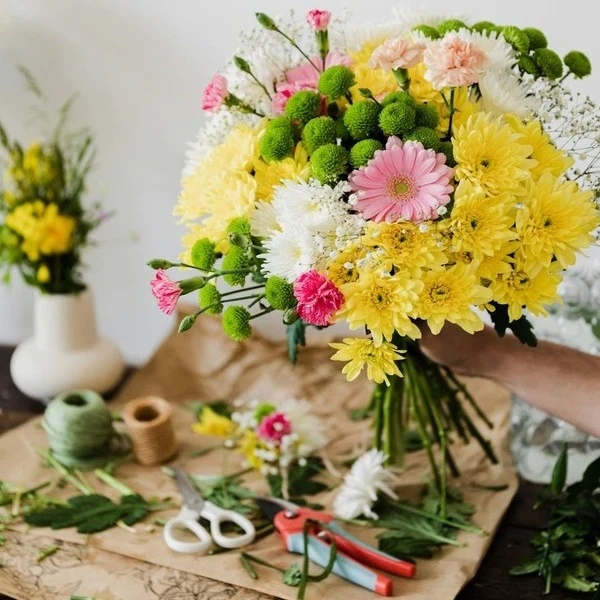
I Never Let a Client Rely Only on Product Photos
Photos are useful, but photos are not enough. A photo can show color and shape. It cannot show the real hand feel, stem strength, glue quality, petal thickness, flower head stability, or packing risk. This is why I always suggest sample checking before a serious commercial order. A buyer may feel the sample cost is extra, but one wrong bulk order costs much more.
I once had a retail client who wanted artificial hydrangea heads for store display and online sales. The product photo looked full and rich. When we checked the sample, the flower head looked good from the front, but the back connector was weak. If customers pulled the stem, the head could loosen. I told the client not to place the bulk order with that version. We changed the connector and adjusted the packing. This small change helped the final product survive shipping better.
For me, sample checking is not only about saying yes or no. It is about finding problems early. If the petal color is too bright, we can adjust it. If the flower head is too loose, we can improve the connection. If the carton is too tight, we can change the packing. If the stem is too soft, we can increase the wire strength. These checks help the buyer receive best quality faux flowers that are more suitable for real commercial use.
My Practical Sample Checking Method
When I check best quality faux flowers, I start with the front look. I ask whether the flower looks natural from a normal viewing distance. Then I check the close view. I look at petal texture, color layers, glue marks, edges, flower center details, and leaf veins. I also check whether the flower has a strong smell. A strong smell may create problems for indoor hotels, retail shops, and wedding venues.
Then I bend the stem. A commercial stem should have enough support. It should not break easily. It should also be easy to shape for floral design. For wedding arch flowers, strong wired stems are very useful because installers need to fix flowers onto frames. For retail bouquets, stems need to look neat and straight after unpacking.
Then I compare color. I usually ask the client to confirm color under natural light and indoor light. This matters because ivory, champagne, blush, and white can look very different in different lighting. A wedding client may reject the product if white looks too yellow or too blue.
Then I check size. Bulk products need clear size control. If the sample flower head is 10 cm, but the bulk order includes many 8 cm heads, the arrangement will look thin. I suggest writing key measurements clearly on the order sheet, including total length, flower head size, stem length, and packaging quantity.
Then I check packaging. Good packing protects the flower shape. For soft silk flowers, I prefer enough space in cartons. For loose flower heads, I prefer inner bags and carton support. For finished floral arrangements, I care more about shape protection. Packaging is not a small detail. It decides how the product looks when your client opens the box.
For buyers who want stronger quality control, the ISO 9001 quality management standard is a useful reference for understanding process-based quality systems.2 I do not suggest buyers only look for a certificate. I suggest they look for real process control, sample records, inspection photos, packing photos, and clear communication.
Best Quality Faux Flowers for Weddings, Hotels, and Retail Stores?
One flower cannot serve every commercial project well. A wedding flower, hotel flower, and retail flower should not always use the same quality standard.
The best quality faux flowers for weddings should look soft and romantic. Hotel flowers should be durable and easy to maintain. Retail flowers should be attractive, stable in packing, and easy to reorder with consistent quality.
I Match the Flower to the Buyer’s Business Model
When I talk with B2B buyers, I always ask where the flowers will be used. This one question can save many mistakes. A wedding planner wants emotional value. A hotel buyer wants long-term display value. A retailer wants product value and repeat sales. These buyers may all ask for best quality faux flowers, but their real needs are different.
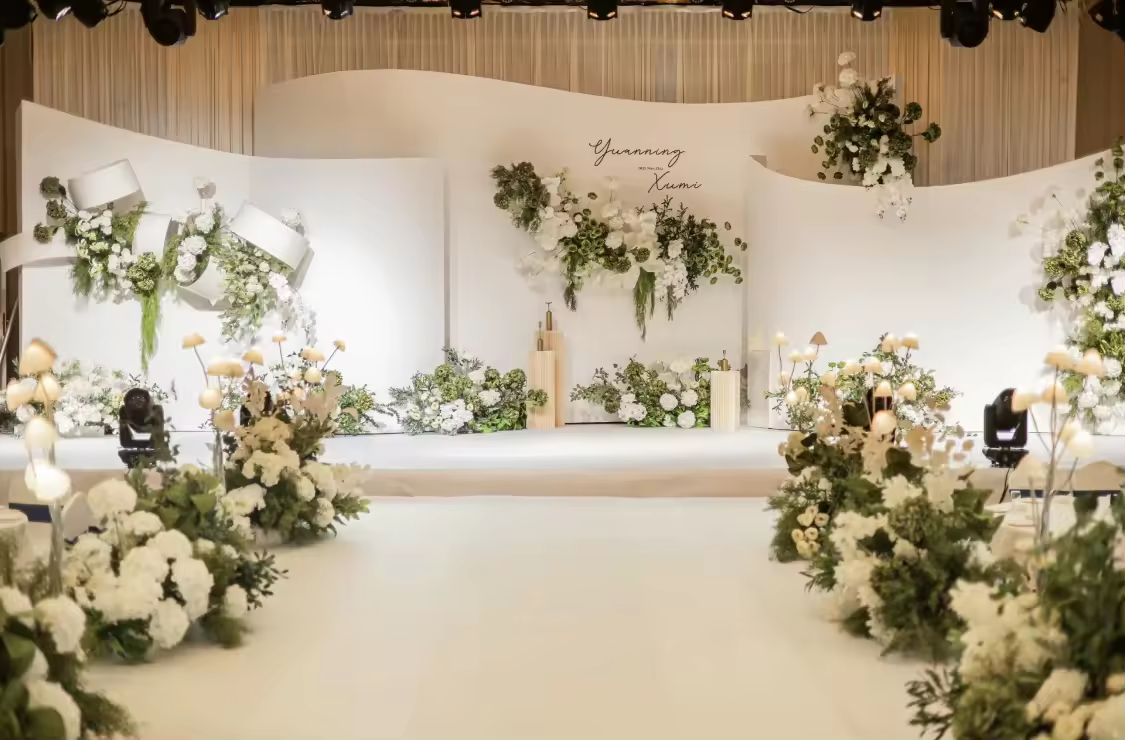
For wedding projects, I focus on photo effect. Weddings are judged by photos, videos, and guest experience. The flower must look soft, full, and high-end. I often recommend peonies, roses, hydrangeas, orchids, ranunculus, wisteria, and greenery fillers. I also check whether the colors match popular themes such as white green, blush champagne, terracotta, dusty rose, or classic ivory. One wedding client asked me to create a floral arch with white orchids and hydrangeas. I told her that the orchid line must hang naturally, or the whole arch would look stiff. We adjusted the stem curve and added greenery layers. The final design looked more expensive without using only expensive flowers.
For hotels, I care about structure and maintenance. Hotel flowers need to stay beautiful under lights, air conditioning, dust, and daily traffic. I often suggest larger flower heads, strong greenery, and stable stems. A hotel buyer once asked me for lobby flowers that could stay for one season. I suggested a mixed arrangement with durable greenery and premium flower heads. This helped the hotel reduce fresh flower replacement cost and still keep a luxury look.
For retail stores, I focus on display and packing. Retail buyers need products that look good in photos, in boxes, and on shelves. The product should have clear color options, stable SKU structure, and easy restock. I usually suggest retail buyers test several colors first instead of ordering too many styles at once. This makes the first order safer and helps the buyer find the best-selling colors faster.
How I Select Faux Flowers by Commercial Scene
For wedding arches, I like large roses, hydrangeas, peonies, orchids, wisteria, and eucalyptus. These flowers create volume quickly. They also make the design look full from a distance. For wedding planners, this is important because guests and photographers see the arch from many angles.
For table centerpieces, I like ranunculus, tulips, small roses, calla lilies, and mixed greenery. These flowers create detail without blocking guest sight lines. A good table arrangement should feel rich but not heavy. It should allow guests to talk easily across the table.
For hotel lobbies, I like magnolia, orchid, large hydrangea, tropical leaves, olive branches, and tall greenery stems. These products create height and a premium feeling. Hotel buyers often prefer arrangements that look stable, clean, and easy to maintain.
For retail stores, I like seasonal bouquets, single stems, small bundles, hanging greenery, and giftable flower bunches. These items are easier for customers to understand and buy. They also work well for online product pages because each item has a clear use scene.
For outdoor projects, I suggest UV-resistant greenery and stronger PE materials. If your project includes planters, you can also read my guide about how to pot artificial flowers because good potting improves the final look.
How to Find a Reliable Best Quality Faux Flowers Supplier?
A beautiful sample does not always mean a reliable supplier. Many real problems happen after the order starts.
A reliable best quality faux flowers supplier should offer stable samples, clear material details, fast communication, quality control, flexible customization, safe packaging, and real support after shipment. The supplier should help you solve problems, not create new problems.
I Believe a Supplier Must Be Tested by Problems
I have worked in this industry for many years, and I know one fact very clearly. A supplier is not only judged when everything is smooth. A supplier is judged when something goes wrong. Maybe the color is slightly different. Maybe the carton is too weak. Maybe the client changes the design. Maybe the shipping date becomes tight. At that moment, a reliable supplier must respond fast and solve the problem.
I once served a client who needed artificial flowers for a commercial event project. The client had a tight deadline and needed several samples quickly. We prepared sample photos, checked material options, and adjusted the packing plan before bulk production. The client was worried because her previous supplier had delayed shipment before. I gave her clear updates during production. I also sent photos before packing. This helped her feel safe. She later told me that fast communication was just as important as the product itself.
For me, a reliable supplier should understand more than product price. The supplier should understand how the product will be used. A wedding buyer may need soft colors and flexible stems. A hotel buyer may need strong structure and easy cleaning. A retail buyer may need stable packaging and barcode support. A good supplier should ask the right questions before production. This is how both sides avoid mistakes.
What I Check Before I Recommend a Supplier
First, I check whether the supplier understands commercial use. Some suppliers only sell products. A better supplier understands weddings, hotels, retail stores, online shops, interior projects, and event needs.
Second, I check whether the supplier can make samples fast. Fast sample work does not only save time. It also shows production control. At Botanic Blossoms, I care a lot about sample speed because many commercial buyers need to show options to their own clients before they confirm the project.
Third, I check whether the supplier gives real details. A good supplier should explain material, size, weight, color, packing, MOQ, production time, and shipping method. Vague answers create risk. Clear answers help the buyer make decisions faster.
Fourth, I check whether the supplier can customize. Many B2B buyers need special colors, logo tags, carton labels, mixed packing, private label support, or project-based arrangements. Custom ability is very important when your business wants to stand out from competitors.
Fifth, I check whether the supplier has quality control before shipment. Inspection photos, packing photos, and clear confirmation reduce disputes. They also give the buyer more confidence before the goods leave the factory.
Sixth, I check whether the supplier communicates in a simple and direct way. A buyer should not wait days for one answer. Good communication helps both sides move faster and avoid wrong assumptions.
You can also review my supplier page here: artificial flowers supplier. If you need a product list or project support, you can visit our catalog page or send details through our contact page.
For buyers who care about biobased or material-related claims, ASTM D6866 is often used to measure biobased carbon content in materials.3 I suggest buyers ask for proof when a supplier makes special material claims.
Why Do Best Quality Faux Flowers Save Money for Commercial Buyers?
Some buyers only compare unit price. But the lowest price can become expensive when flowers arrive damaged, faded, crushed, or hard to install.
Best quality faux flowers can save money because they reduce replacement cost, labor time, maintenance work, shipping damage, client complaints, and project risk. A better product can help B2B buyers protect profit and build long-term customer trust.
I Look at Total Cost, Not Only Unit Price
In commercial buying, the cheapest flower is not always the lowest-cost flower. I have seen buyers choose a lower-price option and later pay more in labor, returns, repacking, and client service. This usually happens when the buyer only compares product price and does not check the full project cost.
For example, one event buyer once asked me why two similar rose stems had different prices. The cheaper rose looked acceptable in the photo. But when we checked it closely, the stem was softer, the petals were thinner, and the flower head did not recover well after compression. I explained that if her team needed more time to shape every stem, the labor cost would increase. If the flowers looked weak in the final arch, her client may not be satisfied. She finally chose the better rose for the main wedding arch and used the lower-cost option only for filler areas. This helped her control the budget without lowering the full project look.
Best quality faux flowers save money because they perform better in real work. They unpack faster. They need less reshaping. They hold better on frames. They look better in photos. They can often be reused or restyled. For hotels and restaurants, this is even more important because fresh flowers require frequent replacement. Good artificial flowers can create a stable look with less maintenance.
Where Better Quality Creates Real Business Value
First, better quality reduces damage. If flowers arrive crushed or broken, the buyer needs to request replacement, spend time on photos, and delay the project. Stronger packing and better product structure reduce this risk.
Second, better quality reduces labor time. Installers can work faster when stems are strong, flower heads are stable, and greenery opens naturally. This matters for wedding companies and event teams because setup time is often limited.
Third, better quality improves customer reviews. A retail buyer may receive fewer complaints when the product matches photos and arrives in good condition. A wedding planner may receive better project photos when the flowers look natural and full.
Fourth, better quality supports repeat orders. If the first order performs well, the buyer can reorder with confidence. This helps wholesalers and retailers build stable product lines.
Fifth, better quality helps your brand look more professional. Many B2B buyers compete not only on price, but also on service and final visual effect. Best quality faux flowers help buyers deliver that better result.
Need Best Quality Faux Flowers for Your Next Commercial Project?
I can help you compare materials, prepare samples, customize colors, and plan bulk packing for weddings, hotels, retail stores, and event décor projects.
Conclusion
The best quality faux flowers protect your project image, reduce hidden costs, and help your business win more trust from commercial clients.
FAQ
1. What are the best quality faux flowers for wedding arches?
The best quality faux flowers for wedding arches are usually silk roses, peonies, hydrangeas, orchids, wisteria, ranunculus, and eucalyptus. They create volume, soft texture, and a premium photo effect.
2. How can I tell if faux flowers are high quality?
I check petal shape, color layers, stem strength, glue marks, material feel, smell, size consistency, and packaging. Good faux flowers should look natural from both close and normal viewing distance.
3. Are silk flowers better than PU flowers?
Silk flowers are better for soft visual effects and large wedding designs. PU flowers are better when customers will touch the flowers closely. The better choice depends on your project scene.
4. What material is best for outdoor faux flowers?
For outdoor use, I usually suggest UV-resistant PE greenery or treated artificial flowers. Regular silk flowers may fade faster if they stay under strong sunlight for a long time.
5. Should I order samples before bulk faux flower orders?
Yes. I always suggest ordering samples first. Samples help you check color, size, touch, stem strength, packing, and final visual effect before you place a large order.
6. Why do bulk faux flowers sometimes look different from samples?
This can happen because of material batches, color dyeing, hand assembly, flower shaping, or poor production control. A reliable supplier should confirm details and send production photos before shipment.
7. What faux flowers are good for hotel lobby decoration?
Magnolia, orchids, hydrangeas, roses, tropical leaves, olive branches, and tall greenery stems are good for hotel lobbies. They create height, structure, and a premium feeling.
8. How do I reduce damage during shipping?
You can reduce damage with stronger cartons, inner bags, enough carton space, flower head protection, and pre-shipment packing checks. Finished arrangements need even more shape protection.
9. Can faux flowers be customized for commercial projects?
Yes. Faux flowers can be customized by color, size, stem length, arrangement style, packaging, label, logo tag, and carton mark. Customization helps your brand offer unique designs.
10. How do I choose a reliable faux flower supplier?
I suggest checking sample quality, communication speed, material details, production time, customization ability, quality control process, packing method, and after-sales support before long-term cooperation.
11. Are best quality faux flowers worth the higher price?
Yes, they are worth it for commercial use. Better flowers can reduce damage, save labor time, improve project photos, lower complaints, and support repeat business.
12. What should I ask a supplier before placing a bulk order?
You should ask about material, size, color, MOQ, sample time, production time, packing method, carton size, customization options, quality control, and shipping support.
Footnotes
- FTC Green Guides help businesses understand how to avoid misleading environmental marketing claims. Source: FTC Environmental Marketing Guidance. ↩
- ISO 9001 is an international quality management standard that helps companies build process-based quality control systems. Source: ISO 9001 Quality Management. ↩
- ASTM D6866 is a standard test method often used to measure biobased carbon content in materials. Source: ASTM D6866 Standard. ↩