
Wedding decorators need flowers that look beautiful on camera and stay reliable through setup, transport, and long event days. Poor faux flowers can damage the whole design.
Wholesale artificial flowers for wedding decorators in the USA help event professionals create consistent, large-scale, and reusable floral designs for ceremonies, receptions, photo zones, and rental packages. The best wholesale products look realistic, ship safely, install quickly, and support popular wedding styles such as romantic, garden, modern, boho, and luxury decor.
Artificial wedding flowers are now more accepted because they look realistic, cost predictably, install flexibly, and can be prepared or reused for multiple wedding designs.
Why Should Wedding Decorators Buy Wholesale Artificial Flowers in the USA?
Buying small quantities from random retail shops can make wedding decor expensive and inconsistent. Colors may not match, stems may change, and the decorator may not have enough volume for large installations.
Wedding decorators should buy wholesale artificial flowers because wholesale sourcing gives better volume, more consistent colors, lower per-piece cost, and stronger inventory control. It also helps decorators build repeatable wedding packages for arches, centerpieces, aisle decor, backdrops, and reception styling.
Wholesale flowers protect design consistency
Wedding decorators work with visual trust. A client may approve one ivory rose sample, but the final wedding design may need hundreds of matching roses. If the decorator buys from many retail sources, the white may become cream, the blush may become peach, and the greenery may have different tones. Wholesale sourcing lowers this risk because decorators can order by collection, batch, color family, and product type.
This matters even more for wedding photos. A floral arch, bouquet, aisle marker, and centerpiece should look connected. The couple may not notice every stem, but they will notice if the whole wedding feels uneven. Wholesale artificial flowers help decorators keep the same design language across the ceremony and reception.
The U.S. wedding services market was valued at USD 64.93 billion in 2024 and is projected to grow at a 6.8% CAGR from 2025 to 2030. This supports strong demand for professional wedding vendors who can provide reliable decor solutions.
| Decorator Need | Why Wholesale Helps | Best Product Example |
|---|---|---|
| Large flower volume | Lower cost per stem or piece | Roses, hydrangeas, peonies |
| Color matching | Better batch control | Ivory, blush, sage, champagne sets |
| Faster setup | Pre-made pieces reduce labor | Garlands, swags, panels |
| Repeat bookings | Inventory can be reused | Arch flowers, aisle markers |
| Better client previews | Samples match final products | Sample boards and mini arrangements |
Artificial flowers help with timing
Fresh flowers need careful timing. They may arrive close to the wedding date, and decorators often have limited time to prepare them. Artificial flowers can be unpacked, shaped, grouped, labeled, and installed earlier. This is useful for decorators who handle multiple weddings in one weekend.
The Knot reports that the average cost of wedding flowers is $2,800, with cost influenced by flower-to-greenery ratio, flower quantity, seasonality, logistics, and preparation. Brides also reported that 2025 U.S. wedding flowers averaged about $2,200, with many couples spending between $500 and $3,500. Wholesale faux flowers give decorators another pricing path for clients who want visual impact without depending only on fresh floral budgets.
What Types of Artificial Flowers Work Best for Wedding Decorators?
Not every artificial flower belongs in a professional wedding inventory. Some stems look fine online but appear flat, shiny, or fake in person.
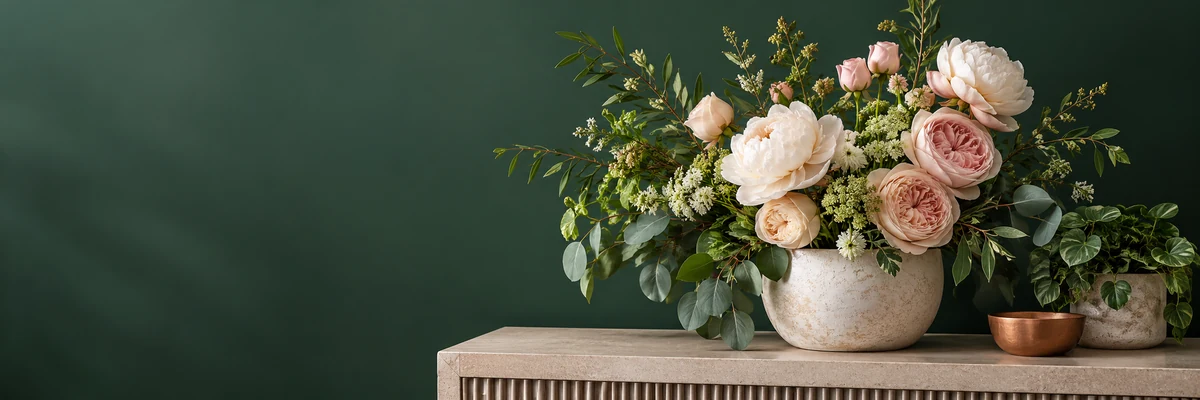
The best artificial flowers for wedding decorators include silk roses, peonies, hydrangeas, orchids, baby’s breath, ranunculus, wisteria, eucalyptus, olive branches, and greenery garlands. These flowers are versatile, photo-friendly, and useful across many wedding styles.
Start with classic wedding flowers
A strong wholesale inventory should begin with flowers that work for many clients. Roses, peonies, hydrangeas, orchids, and baby’s breath are safe base choices. They can support classic, romantic, garden, luxury, and modern weddings. Hydrangeas build volume quickly. Roses and peonies bring softness. Orchids add elegance. Baby’s breath gives lightness and texture.
Greenery is just as important as flowers. Eucalyptus, olive branches, ruscus, fern, ivy, and mixed greenery garlands help hide mechanics and make artificial arrangements look more natural. Greenery also stretches the budget because decorators can create fullness without using only large blooms.
Current wedding floral trends also support large and expressive floral design. The Knot’s 2026 wedding flower trends include sunken meadow centerpieces, sculptural flowers, monochrome floral moments, trailing bouquets, center-stage greenery, grounded ceremony arches, and suspended garlands. These trends are useful for artificial flower buyers because faux stems can be shaped and reused for dramatic installations.
| Flower Type | Best Wedding Use | Why Decorators Need It |
|---|---|---|
| Silk roses | Arches, bouquets, centerpieces | Classic and easy to sell |
| Peonies | Romantic weddings, bridal areas | Soft and full |
| Hydrangeas | Flower walls, large swags | Creates quick volume |
| Orchids | Luxury weddings, hotels, modern decor | Elegant and premium |
| Baby’s breath | Aisles, fillers, clouds | Light and airy |
| Wisteria | Hanging flowers, arches | Adds movement |
| Eucalyptus | Garlands, swags, table runners | Hides mechanics |
| Olive branches | Modern natural weddings | Works with neutral palettes |
Choose by product format, not only flower type
Wedding decorators should not only buy loose stems. A professional inventory should include many formats. Loose stems are useful for custom work. Pre-made garlands save time. Flower panels work for backdrops. Arch swags create ceremony focal points. Aisle markers and chair flowers help decorators sell complete packages.
A decorator can also mix formats. For example, a ceremony package may include two large arch swags, four ground floral pieces, twelve aisle markers, and a welcome sign floral cluster. This is easier to sell than a box of loose stems.
How Do Wedding Decorators Choose a Reliable Wholesale Supplier?
A cheap supplier can become expensive if the colors are wrong, the stems arrive crushed, or the products are not available for repeat orders.
Wedding decorators should choose a wholesale artificial flower supplier by checking sample quality, color consistency, material realism, MOQ terms, packaging, shipping reliability, customization options, and reorder stability. A good supplier should support both design needs and business operations.
Ask for samples before placing large orders
Samples protect the decorator from costly mistakes. A flower may look realistic in a product photo but too shiny under venue lighting. A blush rose may look pink online but peach in person. A greenery garland may look full in a close-up but thin when used on an arch.
Before a large wholesale order, decorators should test the flowers in real wedding conditions. Place them under warm light, daylight, and camera flash. Build a small arrangement. Bend the stems. Check whether petals fall off. Pack and unpack them once. This simple test shows whether the flowers can survive real use.
Wholesale options in the U.S. market often include products such as artificial garlands, flower panels, silk flowers, wreaths, stems, and event greenery. DirectFloral describes its artificial floral category as including silk bushes, garlands, wreaths, and stems for the retail floral industry, while Jamali Garden describes wholesale artificial flowers and bulk pricing for florists, event planners, and businesses.
| Supplier Check | What to Ask | Why It Matters |
|---|---|---|
| Sample policy | Can I order samples first? | Reduces quality risk |
| MOQ | What is the minimum order quantity? | Helps plan cash flow |
| Color stability | Will reorders match previous batches? | Protects package consistency |
| Packaging | How are flower heads protected? | Prevents crushing |
| Lead time | How long does production and delivery take? | Supports wedding schedules |
| Customization | Can colors or styles be adjusted? | Helps with client themes |
| Product photos | Are real photos and videos available? | Helps client presentations |
| Return terms | What happens if products arrive damaged? | Reduces business risk |
Packaging is part of quality
Wedding decorators should care about how the flowers are packed. Crushed petals, bent stems, and tangled vines create extra labor. Strong cartons, protected flower heads, labeled bundles, and separated product types make the decorator’s job easier.
For large orders, labels should be clear. A carton can be marked by color, product type, or wedding package. This is helpful when decorators manage many events. It also reduces mistakes during installation.
How Can Decorators Build Profitable Faux Floral Wedding Packages?
Buying wholesale flowers is only the first step. Profit comes from turning inventory into packages that clients can understand and rent or buy.
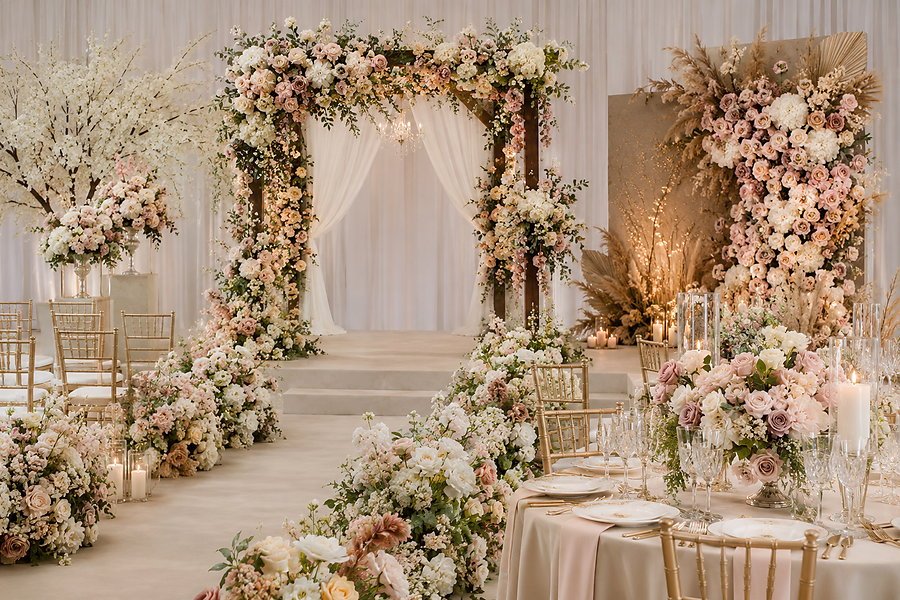
Wedding decorators can build profitable faux floral wedding packages by creating reusable collections around ceremony arches, aisle flowers, centerpieces, sweetheart tables, welcome signs, floral backdrops, and reception accents. Each package should have a clear style, color palette, and installation plan.**
Build collections around popular palettes
Most U.S. wedding decorators need timeless base palettes first. Ivory, white, blush, champagne, sage, dusty rose, and soft greenery are strong choices. They work across venues such as gardens, barns, hotels, churches, estates, and outdoor ceremony spaces.
After building base collections, decorators can add seasonal or trend colors. Burgundy, terracotta, mocha, butter yellow, chartreuse, and deep plum can work as accent sets. Business Insider reported that 2026 wedding decor trends include more drama, personal expression, chartreuse, burgundy, decorative drapery, and reception layouts that feel more customized. Faux floral inventory should support this demand without forcing decorators to rebuild everything for each client.
| Package Type | Included Products | Best Client |
|---|---|---|
| Simple Ceremony Package | Arch swag, two ground flowers, six aisle markers | Small weddings |
| Full Ceremony Package | Full arch, ground flowers, aisle decor, sign flowers | Outdoor and garden weddings |
| Reception Package | Centerpieces, sweetheart table swag, cake table flowers | Banquet receptions |
| Photo Zone Package | Flower wall, neon sign flowers, ground florals | Social-media-focused couples |
| Luxury Package | Orchid arch, hydrangea panels, cascading florals | Hotel and estate weddings |
Price packages by labor and reuse
Decorators should not price faux flower packages only by product cost. They should include design time, installation time, transportation, cleaning, repair, storage, and replacement. A floral arch that takes three hours to install should cost more than a small welcome sign cluster, even if the flowers are reusable.
Reusable floral pieces should also be tracked by event count. If an arch set costs $800 and rents 10 times, the product cost per event becomes much lower. But if the flowers are damaged after two events, the profit disappears. This is why wholesale quality matters.
My insights: How Should Wedding Decorators Source Wholesale Artificial Flowers in the USA
Many wedding decorators search for wholesale flowers only after a client asks for a big design. That creates stress, rushed buying, and mismatched products.
The best way for wedding decorators to source wholesale artificial flowers in the USA is to build a planned inventory system. The flowers should be realistic, reusable, easy to install, easy to clean, and flexible enough for multiple wedding styles, venues, and budgets.
Source like a decorator, not a shopper
My main insight is that wedding decorators should not buy flowers the way a DIY bride buys flowers. A decorator needs repeatable results. The flowers must fit a professional workflow. They need to arrive safely, match client samples, photograph well, and survive transport. They also need to work across many weddings, not just one design.
A good wholesale order should include four layers. The first layer is hero flowers, such as roses, peonies, hydrangeas, and orchids. The second layer is filler flowers, such as baby’s breath, ranunculus, and small accent blooms. The third layer is greenery, such as eucalyptus, olive, ivy, and ruscus. The fourth layer is pre-made mechanics, such as garlands, panels, swags, and aisle markers.
A practical sourcing framework
| Sourcing Step | Key Question | Best Decision |
|---|---|---|
| Client style | What wedding looks do I sell most? | Buy around proven palettes |
| Product quality | Does it look real under event lighting? | Test samples first |
| Inventory format | Do I need stems, swags, panels, or sets? | Mix loose and pre-made items |
| Reuse value | Can this item work for many weddings? | Choose timeless designs |
| Supplier support | Can I reorder the same color later? | Use stable wholesale sources |
| Profit plan | Can I package this into sellable offers? | Build ceremony and reception bundles |
The best inventory is flexible
The strongest wholesale artificial flower inventory should serve different levels of clients. A budget-conscious couple may rent a half arch and simple aisle markers. A premium client may book a full floral arch, meadow aisle, sweetheart table, and flower wall. A venue may need neutral pieces that can work for many couples.
This flexibility is where artificial flowers become useful for U.S. wedding decorators. They can support dramatic designs without the same timing pressure as fresh flowers. They can be prepared before the wedding day. They can be reused, reshaped, and restyled. They can also be mixed with fresh flowers when the client wants scent or natural detail.
The best wholesale flowers are not just pretty products. They are business assets. They help decorators sell stronger packages, protect margins, reduce setup stress, and deliver consistent wedding decor across many events.
Conclusion
Wholesale artificial flowers help U.S. wedding decorators create realistic, profitable, and reusable wedding designs when the products are high quality, well sourced, and package-ready.