
What Are the 15 Best Faux Flower Arranging Tips for Stunning Displays?
Poorly arranged artificial flowers can look flat, crowded, or obviously fake. The wrong stem angles, container size, or flower balance can quickly reduce the value of an otherwise attractive display.
The best faux flower arranging tips start with a clear shape, a stable base, natural stem direction, controlled color repetition, and a design that suits the final space. I build every arrangement in layers so it looks realistic, photographs well, and remains practical for commercial use.
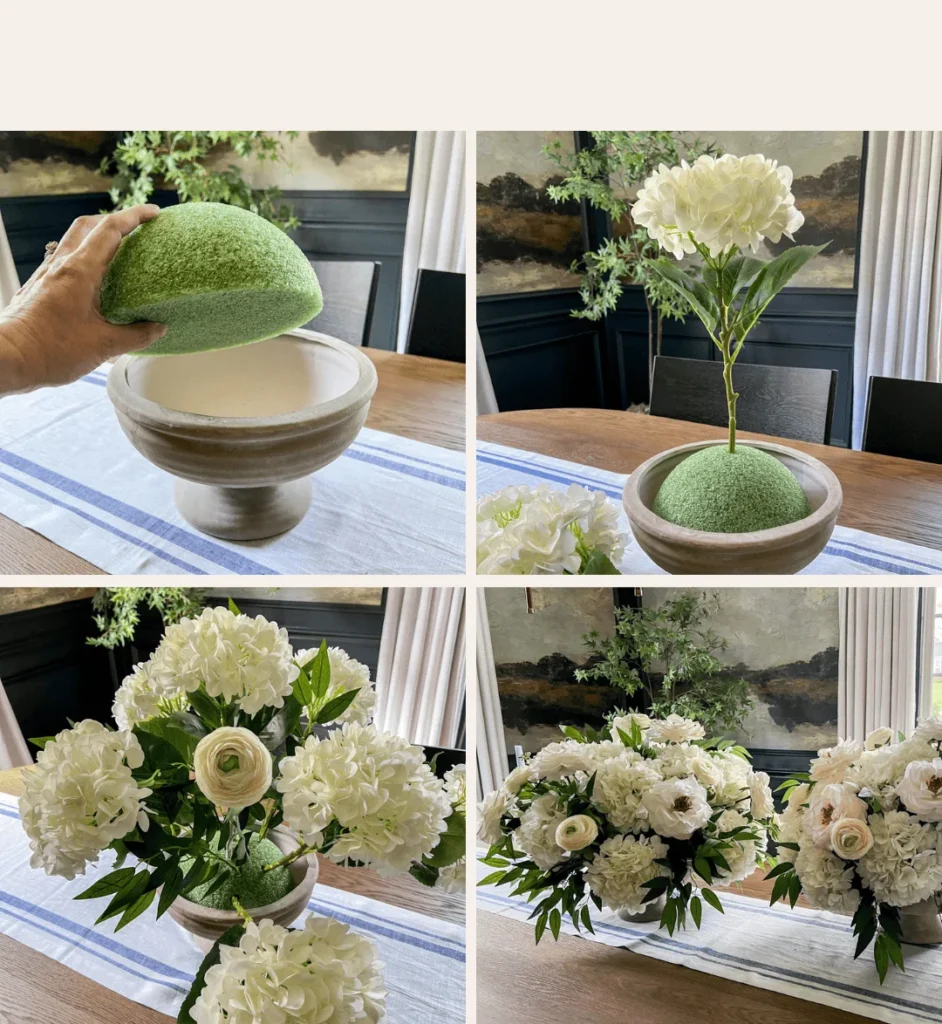
I have worked with artificial flowers and greenery for more than a decade. During this time, I have learned that a successful arrangement is not only about choosing beautiful flowers. The structure behind the flowers matters just as much.
A commercial display must survive packing, long-distance shipping, unpacking, installation, cleaning, storage, and repeated use. It must also suit the buyer’s budget, target customer, and operating model. A wedding rental company needs fast setup. A hotel needs easy maintenance. A retailer needs repeatable quality and efficient packaging.
In one Australian wedding project, the client needed soft floral columns that looked full in photographs. She also wanted each section to install quickly. I created separate upper and lower flower units with clear position labels. Her team could attach each part without rebuilding the display at the venue.
That project confirmed one of my most important faux flower arranging tips: I treat a professional display as a complete product system. The flower selection, hidden support, packaging, installation method, and future maintenance must work together.
Many buyers first focus on flower colors and varieties. I understand why. These are the most visible parts of the design. Still, I always ask where the arrangement will be used, how close people will stand, whether the display will be moved, and how much setup time is available.
These questions help me apply practical faux flower arranging tips to real hotels, offices, weddings, restaurants, retail stores, and event rental businesses. The result is not just a pretty sample. It is a display that can support long-term commercial use.
I use these faux flower arranging tips to connect creative styling with stable production, efficient shipping, and reliable installation.
What Essential Tools Do I Use for Arranging Artificial Flowers?
Weak tools slow down production and may damage stems, petals, or internal wires. I prepare the full working area before opening every flower carton.
My essential faux flower arranging tips for tools are simple. I use proper wire cutters, strong internal supports, floral wire, cable ties, floral tape, measuring tools, hot glue when suitable, and protective gloves.
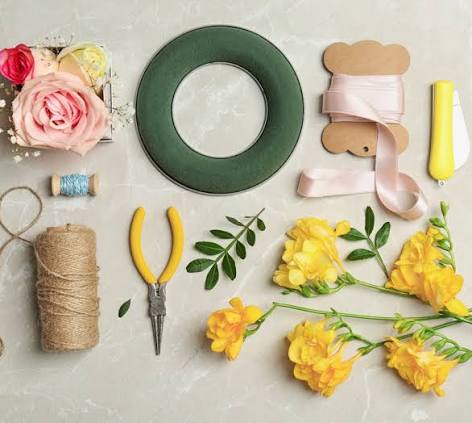
1. Use Wire Cutters Instead of Household Scissors
Many artificial flower stems contain iron wire. Normal scissors can become blunt or damaged after repeated cutting. I use small wire cutters for light stems and stronger cutters for thick branches.
I keep a separate pair of scissors for fabric petals, ribbon, paper, and packaging materials. I never use the same tool for fabric and metal. This simple habit protects the tools and keeps production moving smoothly.
For one wedding décor client, my team had to prepare several matching table arrangements. The buyer wanted every display to have the same height and width. I measured the approved sample and marked the cutting length for each main stem. The team could then repeat the design with much less variation.
This is one of the faux flower arranging tips that becomes more important during bulk production. A small cutting difference may not matter in one sample, but it becomes visible when ten or fifty arrangements stand together.
For wholesale orders, consistent faux flower arranging tips help every finished piece match the approved sample.
2. Choose an Internal Support That Matches the Weight
Floral foam works well for many small and medium arrangements. Still, I do not depend on soft foam alone for tall branches or heavy flower heads. Long stems create leverage and may loosen during transport or repeated handling.
For stronger displays, I may use dense floral foam, wood blocks, plastic grids, metal frames, weighted inserts, or a custom base. The correct choice depends on the container opening, arrangement height, shipping method, and expected service life.
I also consider whether the arrangement should be permanent or removable. A hotel floor arrangement may need a fixed base. A wedding rental arrangement may need removable flower sections so the client can reuse the supporting frame.
Buyers who need a more stable structure can read my guide on how to pot artificial flowers securely.
3. Use Floral Wire and Cable Ties for Modular Designs
Floral wire helps me control direction. I use it to lift flower heads, strengthen soft stems, and connect smaller flower clusters. Cable ties work well for wedding arches, flower walls, aisle meadows, floral columns, and event backdrops.
I select the tie color based on the frame and background. I hide each fastening point behind foliage or focal flowers. Visible ties can quickly reduce the perceived value of a premium display.
In one event project, the client needed six aisle meadow sections that looked full but remained easy to carry. I prepared separate flower units and secured the main clusters in advance. The client could place each section quickly and adjust only the final angles on site.
For large installations, these faux flower arranging tips reduce setup time and lower the risk of flowers being placed in the wrong position.
Clear installation photos also make the faux flower arranging tips easier for the buyer’s team to follow after delivery.
4. Prepare the Workspace Before Arranging
I separate focal flowers, supporting flowers, fillers, and foliage before I start. I place the container near eye level. An arrangement may look balanced from above but uneven from the customer’s normal viewing position.
I prepare measuring tape, wire cutters, spare wire, cable ties, floral tape, gloves, and a waste container before starting. A clear workstation reduces petal damage and prevents small flower parts from becoming mixed together.
One of the easiest faux flower arranging tips is to step back every few minutes. I check the display from the front, both sides, and the main walking direction. I also take a phone photo because a flat image often reveals heavy sections and empty gaps more clearly.
These simple faux flower arranging tips often improve the final result without adding more materials.
How Do I Choose the Right Container for an Arrangement?
A beautiful flower combination can still fail when the container is too light, too narrow, too fragile, or visually unrelated to the space.
My best faux flower arranging tips for containers focus on proportion, opening size, weight, material, viewing distance, packaging risk, and the buyer’s installation method.
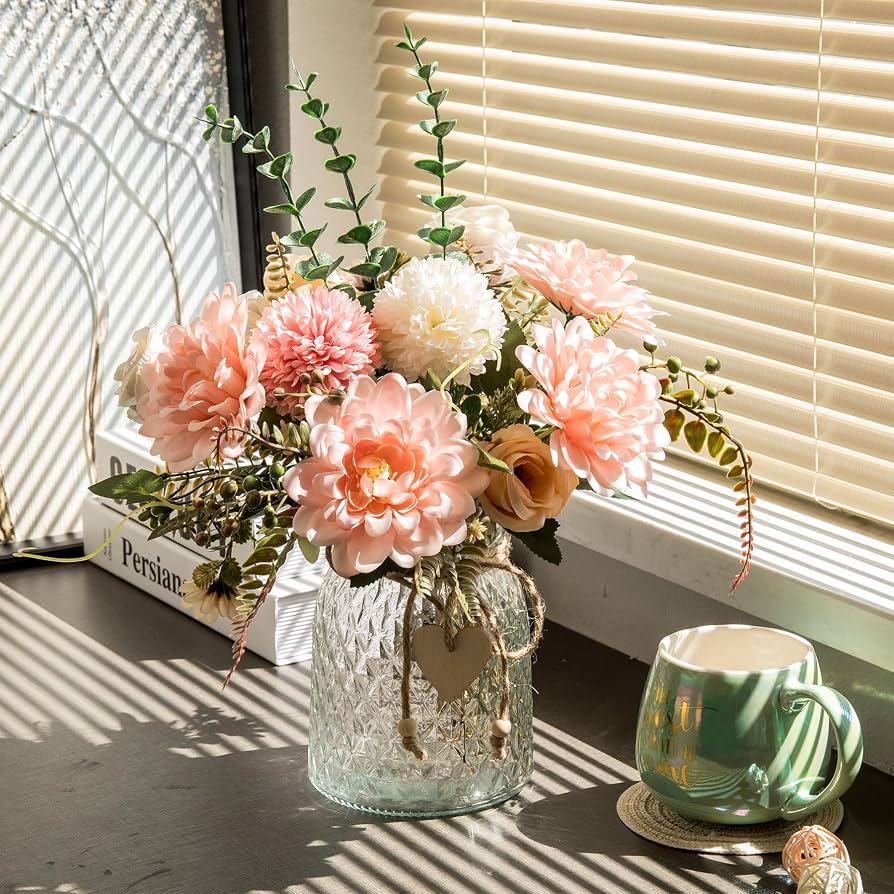
5. Match the Container to the Viewing Distance
A hotel lobby arrangement can be taller because guests often see it from several meters away. A restaurant centerpiece must stay lower so guests can see each other. A retail shelf display should fit the shelf height and leave space for pricing and product signs.
I do not use one fixed height ratio for every project. I ask where the arrangement will sit, how close customers will stand, and whether the display is front-facing or viewed from all sides.
For one hotel inquiry, the buyer needed arrangements for several public areas. I considered the surrounding furniture, guest movement, air-conditioning, cleaning routines, and the chance that people might touch the display. I recommended wider bases for floor arrangements and lower designs for service counters.
These location-based faux flower arranging tips help prevent a common mistake: choosing an arrangement that looks correct in a sample room but feels too small, too tall, or too wide in the final space.
I also use faux flower arranging tips based on viewing distance to decide where the strongest flower groups should sit.
6. Choose a Container Material That Supports the Business Model
Glass looks clean and premium. It works well for weddings, hotels, and high-end retail displays. Clear glass can expose foam or wires, so I cover the inside with decorative stones, moss, faux water, or leaf material.
Metal containers are strong and easy to customize. They work well for event rental, commercial interiors, and repeated use. Plastic, fiberglass, and resin can reduce breakage risk for export orders.
Ceramic containers can look attractive, but I review the shipping method before recommending them. Heavy and fragile containers increase protective packaging, freight costs, and after-sales risk. For some cross-border projects, I suggest shipping the floral section separately and sourcing the container locally.
Wooden containers work well for rustic weddings, seasonal displays, garden-style shops, and farmhouse collections. I check the surface treatment and moisture level before using them in export orders.
7. Test the Center of Gravity
Tall stems and wide side branches can pull an arrangement away from the center. I test each sample by gently pushing the upper branches from several directions. If the base moves too easily, I add weight or improve the hidden structure.
For one retail buyer, the original vase looked attractive but was too narrow for the selected branches. The arrangement leaned after the stems were fully opened. I widened the hidden support and added a removable weighted insert. The visible design stayed the same, but the final product became safer for store use.
One of the most practical faux flower arranging tips is to test stability after the arrangement reaches its full display width. A compressed sample may seem stable, but the center of gravity changes when every branch is opened.
For floor displays, these faux flower arranging tips can reduce tipping risk in busy public areas.
8. Confirm the Container Before Final Stem Cutting
The insertion depth changes the visible stem length. I request the container’s internal height, opening size, base width, material, and clear photos before final sampling.
When the project requires an exact fit, I may ask the buyer to send one container sample. A difference of only a few centimeters can change the outline of a bulk order.
I also confirm whether the stems should be permanently fixed or removable. Removable stems offer more flexibility. Fixed stems provide better stability during transport.
These faux flower arranging tips are especially useful when the buyer already owns a vase, planter, metal stand, arch, or display structure. Buyers can also review product options through the Botanic Blossoms artificial flower catalog.
How Do I Use the Rule of Threes to Create Visual Balance?
Random placement often creates a stiff, round, or confusing result. Groups of three help me build rhythm without making the arrangement look perfectly repeated.
The rule of threes is one of the most reliable faux flower arranging tips because it can guide flower heights, focal areas, color repetition, leaf direction, and spacing.
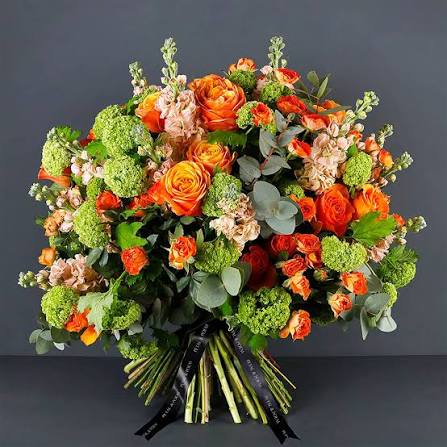
9. Create Three Main Height Levels
I often divide the arrangement into three visual levels. The tallest branches establish direction. The middle level carries the main focal flowers. The lower level connects the flowers to the container.
This method prevents every flower head from sitting on one flat line. Equal heights can make artificial flowers look like a solid wall instead of a natural arrangement.
In one ivory and green wedding sample, many flower heads originally sat at the same level. The shape looked too round and heavy. I raised several light branches, lowered a few large flowers, and let soft foliage move below the main flower line. The same materials then looked more open and more expensive.
This is why I include height control in my core faux flower arranging tips. The buyer does not always need more flowers. The buyer may only need better vertical separation.
Good faux flower arranging tips should improve the visual value before increasing the material cost.
10. Build One Main Focal Area and Two Supporting Areas
The main focal area may contain the largest bloom, the strongest color, or the highest concentration of flowers. The two smaller areas guide the viewer’s eye across the design.
I do not make all three areas equally strong. Equal visual weight can make the arrangement feel mechanical. A clear hierarchy gives the display direction.
For a front-facing arrangement, I often place the main focal point slightly away from the exact center. For a display viewed from all sides, I rotate the container while working and create balanced interest around the full shape.
These faux flower arranging tips help a display look intentional without looking rigid. The arrangement should have order, but the viewer should not immediately see the formula.
I use the same faux flower arranging tips for centerpieces, floral columns, and large lobby arrangements.
11. Repeat an Accent Color Three Times
I avoid placing a strong color in only one area. A single isolated color can look accidental. I repeat a smaller amount of the accent color in two additional positions.
An Australian event client once asked me to add a soft yellow tone to a white and green sample. I created one clear yellow focal area and two lighter yellow touches. The arrangement kept its calm style but gained warmth and movement.
A buyer can apply these faux flower arranging tips to color, flower variety, leaf shape, branch direction, or texture. Repetition connects the display, while variation keeps it natural.
12. Keep Every Group Slightly Different
The rule of threes does not mean using three identical flowers at equal distances. I may combine one large bloom, one medium flower, and one small filler. I also change their directions.
One flower may face forward. Another may face slightly upward. The third may turn toward the side. Real flowers do not all face the same direction, so artificial flowers should not either.
I also avoid bending every stem at the same point. Different stem angles create depth and make the arrangement feel less manufactured.
One of my favorite faux flower arranging tips is to leave a few controlled gaps. Open space gives important flowers room to breathe and helps the full display photograph with more depth.
How Do I Mix Flowers, Foliage, and Fillers?
Too many focal flowers can make an arrangement heavy and expensive. Too much foliage can hide the flowers. Too many fillers can make the design look busy.
My faux flower arranging tips for material balance are based on four roles. Focal flowers attract attention, supporting flowers build shape, fillers connect small gaps, and foliage creates movement and depth.
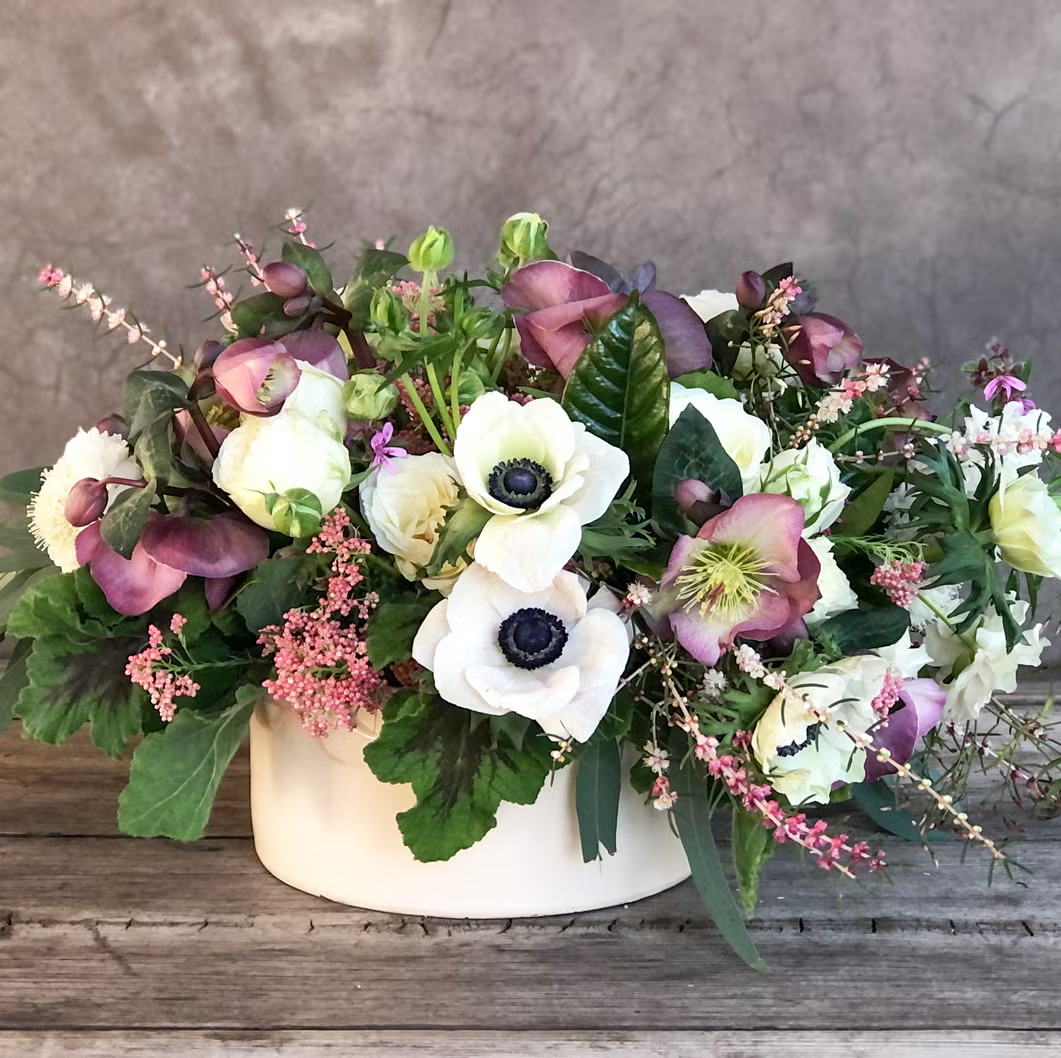
13. Begin With the Focal Flowers
I select the focal flowers before choosing fillers. Large roses, peonies, hydrangeas, orchids, dahlias, and magnolias can control the style, scale, and price level of the full design.
For a bridal and event client, I developed a group of arrangements with hydrangeas as the main volume flower. The client wanted a full result but also had a clear target budget. I placed hydrangeas in the main visible areas and used smaller flowers and greenery in the supporting zones.
The arrangement still looked full from the customer’s viewing angle, but the material cost remained under better control.
This example shows why commercial faux flower arranging tips must consider both visual impact and cost structure. Adding more premium flowers is not always the best way to create a richer appearance.
14. Add Supporting Flowers and Fillers With Restraint
Supporting flowers connect the focal areas. They may have smaller heads, softer colors, or more flexible stems. I use them to create curves and fill medium-sized spaces.
Fillers may include baby’s breath, berries, seed sprays, small blossoms, thin branches, and light leaf stems. I use them to soften edges and cover small gaps.
I do not use fillers to hide a weak structure. Too much filler creates visual noise and can cause tangling during packing.
One U.S. décor buyer wanted arrangements suitable for online retail and small commercial spaces. I reduced the number of fragile filler stems and replaced some with stronger small-leaf branches. The collection remained soft, but the packaging became easier and the unpacking result became more stable.
These faux flower arranging tips help protect both appearance and logistics. A design should still look good after it leaves the sample room.
For export orders, practical faux flower arranging tips should also reduce tangling, crushing, and difficult reshaping.
15. Use Foliage to Create Direction and Control Color
Foliage is not only background material. Eucalyptus creates a light and modern look. Ferns create soft movement. Olive leaves create a calm Mediterranean style. Monstera and palm leaves create stronger tropical shapes.
I place some foliage behind the flowers to create depth. I place other leaves between similar flower colors to create separation. I also allow a few branches to extend beyond the main outline.
One of my most useful faux flower arranging tips is to avoid trimming every leaf into a perfect shape. A few uneven edges and varied directions make the arrangement feel less manufactured.
I normally use one main color family, one supporting color, and one neutral color. White, soft green, and pale yellow can feel fresh and warm. Burgundy, blush, and deep green can feel rich and romantic. Cream, brown, and olive can support autumn retail displays.
When a client needs a defined seasonal or branded color direction, I may review recognized color references through Pantone.[1] Wedding planners can also review flower presentation ideas through The Knot’s wedding flower resources.[2]
For outdoor projects, I also review sunlight, rain, temperature, color fading, and expected service life. Buyers can read my guide on choosing UV-resistant artificial plants for outdoor use.
What Arrangement Ideas Work for Hotels, Offices, and Events?
Commercial spaces have different traffic levels, viewing distances, maintenance routines, safety concerns, and installation limits. I adjust the design around the actual business use.
The most practical faux flower arranging tips for commercial buyers are based on function. Hotels need impact and durability. Offices need controlled proportions. Events need fast installation. Retailers need flexible seasonal systems and efficient packaging.
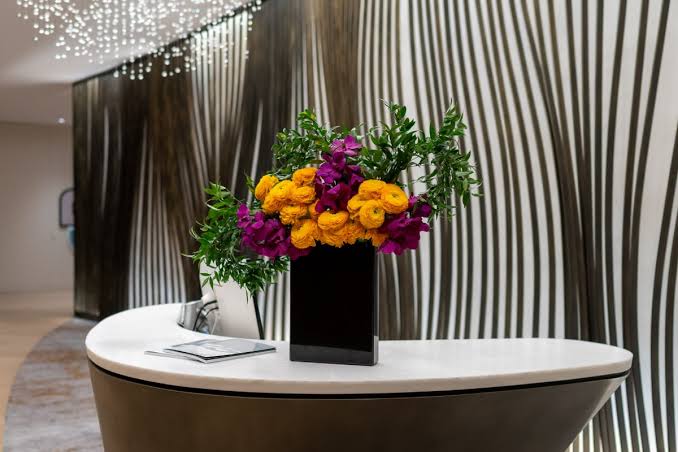
Create Scale and Easy Maintenance for Hotels
A small arrangement can disappear in a large hotel lobby. I often use tall branches, orchids, magnolias, foliage sprays, or large hydrangeas to match the surrounding architecture and furniture.
I also consider cleaning access. Hotel teams need to remove dust without rebuilding the full display. I avoid too many delicate parts in high-touch areas and may create removable flower clusters.
In one hospitality project discussion, the buyer needed long-lasting public-area decorations. I recommended separate flower groups that staff could remove for cleaning or replacement. The hotel could maintain the display without changing the whole arrangement.
For hospitality buyers, faux flower arranging tips should always include maintenance access. A display that looks beautiful but takes too long to clean may not remain beautiful for long.
I use these faux flower arranging tips to keep removable sections hidden from guests but accessible to hotel staff.
Artificial flowers still need regular care. I explain practical methods in my guide on how to clean silk flowers.
Keep Office Arrangements Clean and Controlled
Office arrangements should support the brand image without blocking signs, screens, sightlines, or conversations.
I use narrow arrangements for reception desks, lower designs for meeting tables, and taller floor arrangements for corners or spaces beside company signage.
For one office buyer, the first design was too wide for the reception counter. I changed the round arrangement into a vertical oval shape. The flowers still looked full from the front, but the final product used less counter space.
These faux flower arranging tips help office buyers create visual interest without reducing the practical use of reception areas, desks, and meeting spaces.
Interior designers can review broader professional resources through the American Society of Interior Designers.[3]
Build Event Arrangements for Fast Installation
Event flowers must create visual impact within a short setup period. They must also move through doors, elevators, loading areas, vehicles, and storage spaces.
I divide large designs into modular parts. I label the connection points and test every section before packing.
For an Australian wedding rental client, I created floral columns with separate sections. The client wanted a high-end visual result, but she also needed a practical rental product. Her team could install the flowers quickly and reuse the base for future events.
I also consider photography. I place stronger flower groups near eye level and in the main camera direction. I keep some open areas because complete flower coverage can lose depth in photos.
One of the strongest faux flower arranging tips for events is to design for both the camera and the installation team. A display should look impressive without creating unnecessary setup pressure.
Modular faux flower arranging tips also help rental companies reuse the same frame across different themes.
Create Flexible Seasonal Systems for Retail
Retailers often need to update displays without replacing the full structure. I can create a stable greenery base with removable flower groups.
A buyer can keep the same base and change the main flowers for spring, summer, autumn, Christmas, or a branded promotion. This method can reduce storage pressure and replacement cost.
For one product development project, the buyer needed a collection suitable for online and physical retail. I reduced fragile side branches, controlled the carton size, and created a shape that recovered quickly after unpacking.
Retail-focused faux flower arranging tips should also consider product photography, shelf size, carton dimensions, breakage risk, and repeat order consistency.
The best faux flower arranging tips for retail also make seasonal updates faster and easier to control.
Match the Arrangement to the Buyer’s Revenue Model
A wedding rental company needs reusable structures. A hotel needs durable displays. A retailer needs consistent production and compact packaging. An interior designer needs exact size and color control.
I ask buyers about the final location, target price, order quantity, packaging method, installation time, delivery schedule, and expected service life before recommending materials.
These business-focused faux flower arranging tips help me turn a visual idea into a product that supports the buyer’s service model and profit goals.
Botanic Blossoms provides flower selection, color matching, sample development, structural design, private labeling, packaging support, and bulk production. Buyers can learn more about working with an experienced artificial flowers supplier.
My View: A Beautiful Arrangement Must Also Work as a Product
I do not judge a commercial arrangement only by the sample photo. I test whether the product can be packed, shipped, opened, installed, cleaned, stored, and ordered again with stable quality.
A display may look impressive in the sample room but fail after transport. A design may use too many fragile fillers, take too long to install, or require a container that is too heavy for export.
My professional faux flower arranging tips protect the final visual effect while solving these problems early. This is where product development creates more value than simple flower styling.
I also believe fast sample communication is important. When a buyer shares comments about color, fullness, height, or budget, I adjust the sample using clear photos and videos. This reduces misunderstandings before bulk production.
In one wedding project, the client wanted less green and a softer yellow tone. I changed the color balance in the focal areas instead of replacing every flower. The updated sample stayed close to the original concept and reached the buyer’s preferred mood faster.
This experience reinforced another one of my core faux flower arranging tips: solve the buyer’s main visual concern with the smallest effective change. A full redesign is not always necessary.
I use these faux flower arranging tips to shorten the approval process and keep the sample close to the buyer’s budget.
Conclusion
These faux flower arranging tips help me create displays that look natural, stay stable, install efficiently, and support the real needs of hotels, offices, retailers, event companies, and interior designers.
Ready to Develop a Custom Artificial Flower Collection?
I can help you develop artificial flower arrangements for hotels, weddings, offices, retail stores, events, and branded décor collections.
My team can support flower selection, color matching, rapid sample development, structural design, private labeling, packaging, and bulk production.
Contact: Jasmine
Position: Founder and CEO
Brand: Botanic Blossoms
Email: jasmine@cnhycrafts.com
Frequently Asked Questions
1. Can Artificial Flower Arrangements Be Customized?
Yes. I can customize flower types, colors, dimensions, containers, structures, packaging, labels, and overall design styles for commercial buyers.
2. What Information Should a Buyer Provide Before Sampling?
I recommend sending reference photos, target dimensions, colors, order quantity, budget range, application, packaging needs, and delivery schedule.
3. How Long Does Sample Development Usually Take?
A standard sample often takes three to five working days. Complex structures, custom molds, or special materials may require more time.
4. Can Large Arrangements Be Divided for Shipping?
Yes. I often create modular sections for floral columns, arches, flower walls, centerpieces, aisle meadows, and large floor arrangements.
5. How Can Buyers Reduce Shipping Volume?
I can use removable branches, foldable stems, separate flower clusters, compact frames, and optimized carton dimensions.
6. How Should Artificial Flowers Be Reshaped After Delivery?
Buyers can gently open the branches, adjust the wired stems, smooth the petals by hand, and use low-temperature air when the material allows it.
7. Can the Same Base Be Used for Different Seasons?
Yes. I can create removable flower sections so buyers can change the main colors and flowers while keeping the original base.
8. Are Faux Flower Arrangements Suitable for Outdoor Use?
They can be suitable when the materials have proper UV resistance and weather protection. I recommend confirming the outdoor conditions before production.
9. How Do You Keep Bulk Arrangements Consistent?
I use approved samples, measurement records, material lists, position photos, production instructions, and quality checks to control consistency.
10. What Is the Best Way to Request a Quotation?
You can send reference images, quantities, dimensions, materials, packaging needs, destination country, and target delivery date to jasmine@cnhycrafts.com.
References and Footnotes
-
Pantone provides widely used color systems and color communication resources for designers, brands, and product developers.
Visit Pantone
↩ -
The Knot publishes wedding flower planning and presentation resources that can support early visual research for event projects.
View The Knot wedding flower resources
↩ -
The American Society of Interior Designers provides professional resources related to interior environments and design practice.
Visit ASID
↩