
9 Easy Ways to Clean Faux Flowers Fast (Without Damaging Petals)?
Dust makes faux flowers look cheap. Guests notice. Photos look dull. Staff panic-clean and still leave gray lines in petal folds.
To learn how to clean faux flowers fast, you start with dry tools, you spot-clean only when needed, and you follow a simple weekly rhythm so petals keep shape and color stays even.
If your team keeps asking how to clean faux flowers faster, you can print this page and use it as a shift checklist.
In high-traffic lobbies, how to clean faux flowers works best when you always go dry-first and you never start with wet wipes.
For retail entrances, how to clean faux flowers should be a weekly habit, because dust and hand oils build up every day.
For event kits, how to clean faux flowers must be consistent, because rushed cleaning causes frayed edges and curl marks.
When managers train new hires, how to clean faux flowers becomes easier when you teach one motion and one tool order.
If your displays still look dull after you follow how to clean faux flowers step by step, rotation is usually the smarter fix than more scrubbing.
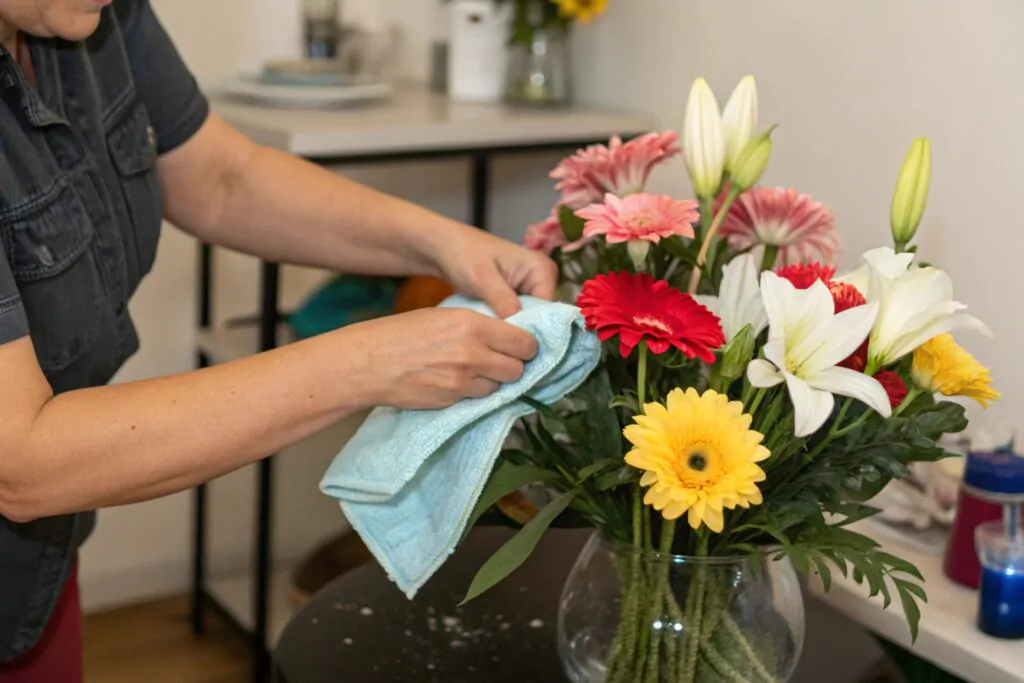
Use for: hotel lobby SOP, retail opening checklist, event rental returns.
A client once told you, “The flowers are new, but they look tired.” The real problem was not the product. The real problem was the routine. When you clean the right way, your display looks premium again in minutes.
Here are the 9 fast methods you can run in real commercial spaces:
- Dry microfiber wipe (top to bottom)
- Soft makeup brush for folds and centers
- Cool air blower (hair dryer on cool)
- Short-burst compressed air for tight creases
- Low-suction vacuum with brush head (sturdy pieces only)
- Lint roller for sturdy petals (test first)
- Mild soap spot-wipe for stains (no soaking)
- Light vinegar-water wipe for greasy film (test first, control it)
- Hand reshape + cool air set to restore petal form
When you standardize how to clean faux flowers, your team stops guessing and your displays stay photo-ready every day.
You can get a one-page cleaning checklist and tool list that matches your materials and traffic zones.
What Makes Faux Flowers Look “Old” in Commercial Spaces?
Your display can be “new,” but it can still look old. Dust builds up fast. Oils build up faster. Lighting makes every flaw louder.
Most faux flowers look old because dust sits in petal folds, greasy film builds near food and hands, and colors lose contrast under lights when your team skips a repeatable dry-first routine.
In my audits, how to clean faux flowers starts with finding the real aging trigger, not blaming the stems.
If you keep repeating how to clean faux flowers the wrong way in the wrong zone, the same dirt pattern returns in days.
Once your team understands how to clean faux flowers by zone, you stop wasting labor on displays that will look dirty again tomorrow.
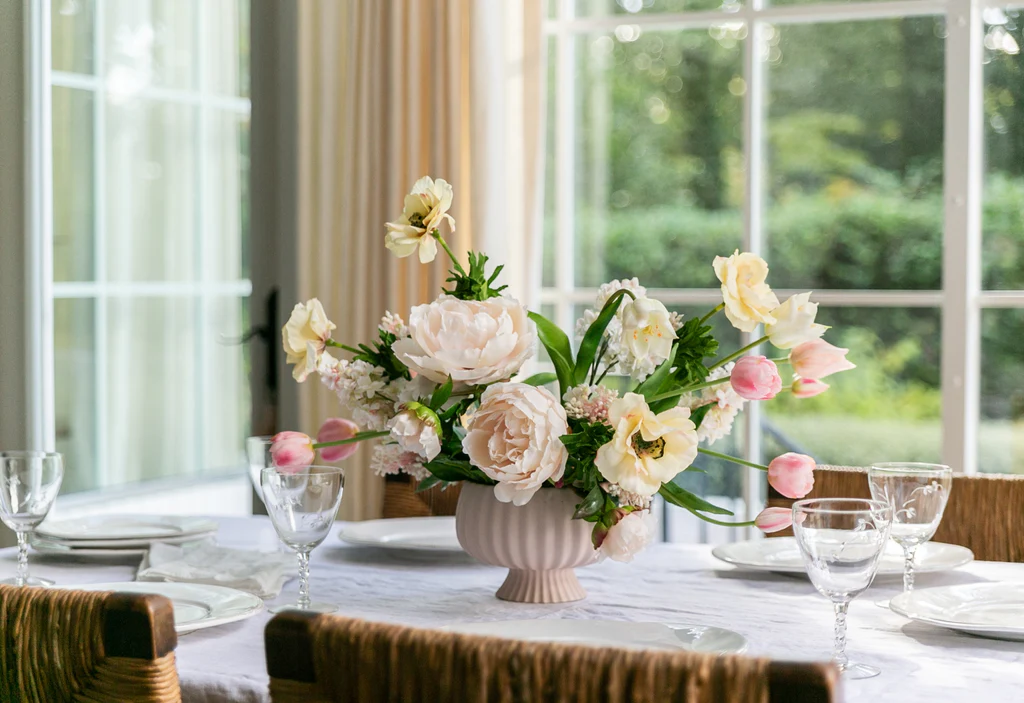
Use for: retail VM audits, hotel housekeeping training, showroom quality checks.
The 5 triggers that age faux flowers fast
When you ask how to clean faux flowers, you need to know what is making them look old first. These triggers show up again and again in hotels, retail, and event kits:
- Fold dust: Dust hides between layers. It shows under spotlights.
- Finger oils: Staff touch blooms with bare hands. Oil stays on light petals.
- Food film: Coffee bars and restaurants leave a sticky layer. Dust sticks to it.
- Static: Dry air makes petals pull dust back right after cleaning.
- Wrong tool marks: Rough cloth and wet wipes snag fabric and dull texture.
A simple 3-minute diagnosis you can use
A good routine starts with a fast check. You do not guess. You test:
- Swipe test: You swipe one hidden petal with dry microfiber. You check the cloth.
- Fold check: You open one layered petal section. You look for gray lines.
- Zone check: You check placement near vents, doors, kitchens, and sprays.
A hotel client once blamed “fading” after only a month. The petals were not fading. The petals were coated. When the team changed to a dry-first SOP, the color looked clear again. The replacement order stopped. The labor time dropped.
Field insight from Botanic Blossoms projects
If your flowers look old fast, the fastest fix is often not “clean harder.” The fastest fix is clean earlier, and move the arrangement out of the worst airflow or grease zone. For a ready-to-train workflow, you can plug your team into this internal guide on how to dust artificial flowers so the same standard is followed at every location.
In high-traffic areas, how to clean faux flowers works best when you fix the zone trigger first, then you clean.
Dry Cleaning SOP: Dust Tools That Don’t Snag Fabric?
Most damage comes from the wrong tool. A rough towel pulls threads. A fast drag bends stems. A wet wipe turns dust into paste.
Your safest SOP for how to clean faux flowers is dry microfiber first, soft brush second, and cool air last, so dust lifts off without dragging across petal edges.
If your staff learns how to clean faux flowers with dry tools first, you reduce snags and frayed edges right away.
When you standardize how to clean faux flowers on the floor, your displays look the same across all locations.
I only change the tool pressure after I confirm how to clean faux flowers for that material type.

Use for: hotel daily opening checks, retail floor maintenance, showroom display care.
Your basic tool kit (small and realistic)
You do not need a big kit. You need a kit staff will actually use:
- Tight-weave microfiber cloth for top-to-bottom wipe
- Soft makeup brush for folds, centers, and tight seams
- Hair dryer on COOL for intricate clusters and filler
- Compressed air only for short bursts (optional)
- Thin gloves to reduce oil transfer (optional)
A retail chain once used paper towels because they were “quick.” Petal edges started to fuzz. The team thought the product was low grade. It was not. The tool choice caused it. When the team switched to microfiber and brush, the damage stopped.
The 4-step dry cleaning motion your staff can repeat
- Move it first: You move the arrangement to a low-traffic corner.
- Wipe top to bottom: You wipe in one direction with light pressure.
- Brush the folds: You brush inside overlaps in small circles.
- Cool air finish: You blow cool air for 10–20 seconds to clear loose dust.
Simple “do not do” rules that protect petals
- You do not use paper towels. They snag fabric edges.
- You do not spray cleaner on petals. Spray spreads dirt and leaves residue.
- You do not shake hard. Shaking bends wire and loosens glue points.
- You do not start wet. Wet makes dry dust stick.
Your material check in plain language
- If petals feel soft and fabric-like, you stay dry-first and gentle.
- If petals feel smooth plastic, you can wipe a bit firmer, but you still start dry.
- If petals feel foam-like, you avoid soaking because foam can deform.
If you want an extra reference that matches this SOP, you can link staff to how to clean artificial flowers with a simple method list so the tool order stays consistent.
If you want fewer snags and fewer returns, how to clean faux flowers must stay dry-first and tool-controlled.
Spot Cleaning SOP: Safe Soap, Safe Water, Safe Drying?
Spot cleaning saves timelines. It also ruins petals when staff soak, scrub hard, or dry under heat. Stains are common in event kits and retail floors.
When you need how to clean faux flowers with stains, you spot-wipe with mild soap and cool water, you rinse-wipe once, and you shade-dry with airflow so petals keep shape and color stays stable.
Spot work is where most teams fail at how to clean faux flowers, because they rush and they use too much water.
If you document how to clean faux flowers for stain returns, you cut replacement requests and you protect margins.
I always teach how to clean faux flowers with a wipe, rinse-wipe, shade-dry rule so staff does not improvise.
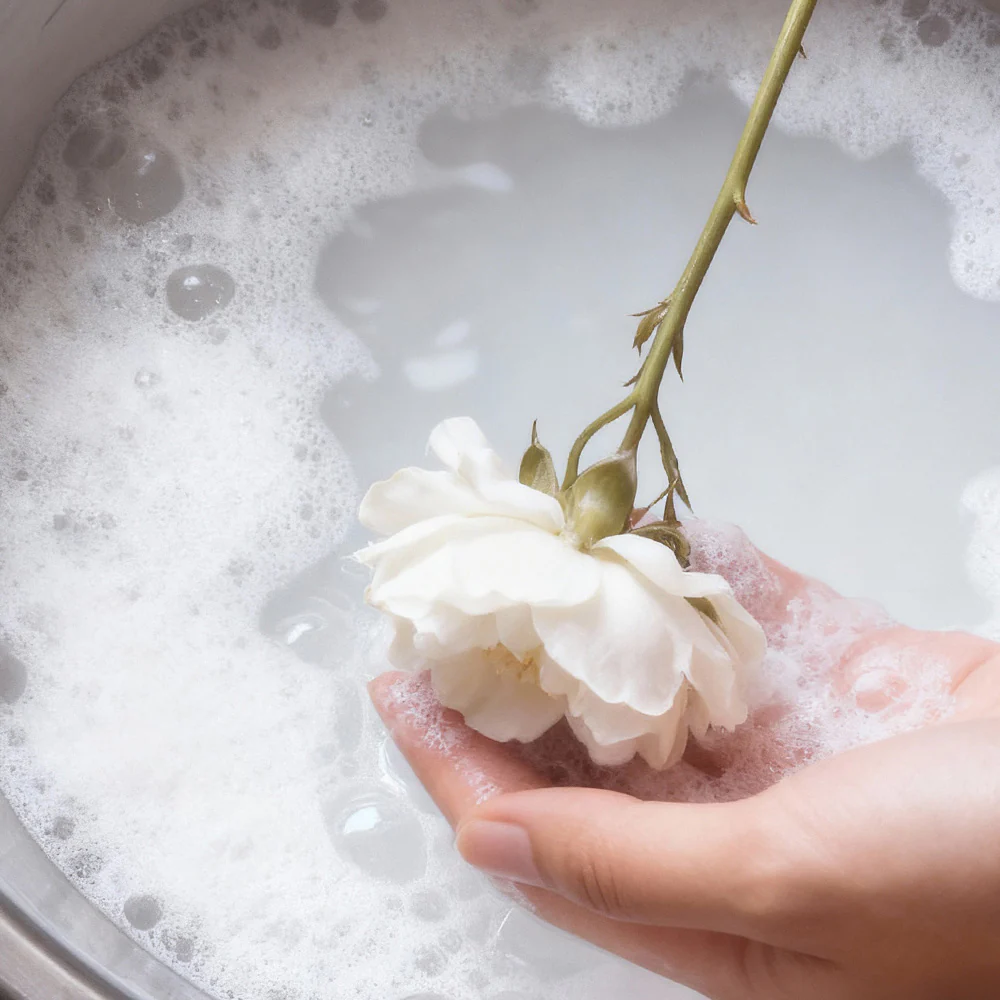
Use for: wedding rental returns, hotel banquet resets, retail customer return processing.
When you should spot clean (and when you should not)
Spot cleaning works best for:
- Makeup marks on light petals
- Coffee splashes on outer petals
- Finger oil shine on dark petals
- Sticky film near food zones
- Shipping scuffs on plastic leaves
Spot cleaning is risky when:
- Petals are foam-touch and absorb water
- Petals already show frayed edges
- Glue points look weak in the center
A wedding planner once sent a message two days before a big event. A guest spilled a sweet drink on a blush rose cluster. The team wanted a full replacement. The smart move was spot cleaning only the outer petals, then reshaping. The set looked clean again, and the event stayed on schedule.
The exact setup your staff can copy
- Water: cool or room temperature
- Soap: mild dish soap, low fragrance
- Cloths: two microfibers (one for soap wipe, one for rinse wipe)
- Cotton swab: for edges and tight centers
- Dry rack or towel: for shade drying
The 6-step spot cleaning process (fast and controlled)
- Test first: You test one hidden petal. You wait 3 minutes.
- Wipe, do not soak: You wipe gently in one direction.
- Edges last: You wipe petal edges last because edges fray first.
- Rinse wipe once: You use the second cloth and wipe once.
- Shade-dry: You dry away from sun and away from heaters.
- Reshape + cool air: You reshape by hand, then you set with cool air.
A simple rule that protects your margins
If staff start soaking, your return rate rises. If staff use heat, curling shows up. A hotel team once dried damp petals under a warm backroom vent. Petals curled. The buyer blamed the product. The fix was free. The fix was shade drying plus cool air only.
If you have silk-touch materials in your program, you can reinforce the no soak rule by linking staff to how to wash silk flowers without ruining them so the same logic is repeated across your SOP library.
For multi-location teams, how to clean faux flowers should be trained like a simple SOP, not treated like personal experience.
Hotel / Retail Routine: Weekly, Monthly, Seasonal Cleaning Plan?
If cleaning is random, dust wins. If cleaning is only “before VIP visits,” staff burn out. Your display looks good for one day, then it drops again.
The best routine for how to clean faux flowers in hotels and retail is a light weekly dry pass, a monthly spot-clean in problem zones, and a seasonal rotation plan so your best displays stay in the hero locations with less labor.
Your team follows how to clean faux flowers faster when the plan is weekly, monthly, and seasonal, not whenever someone complains.
If you scale locations, how to clean faux flowers must be a calendar habit, not a personal skill.

Use for: hotel SOP binders, chain store playbooks, facilities maintenance calendars.
Weekly routine (light, fast, repeatable)
- You run a dry microfiber wipe top to bottom.
- You brush folds with a soft brush.
- You finish with cool air for tight clusters.
- You take one quick photo for done standard.
A hotel group once asked for a routine that new hires could follow in one shift. The weekly routine fixed the problem because it removed dust before it became a sticky layer.
Monthly routine (targeted, not heavy)
- You spot clean only stains and greasy film.
- You clean vase rims and exposed stems.
- You check stem stability and tilt.
- You replace crushed filler and small loose parts.
Retail teams often over-clean. Over-cleaning causes damage. When you keep monthly targeted, your displays last longer.
Seasonal routine (rotation that keeps you looking premium)
- You swap hero blooms to match the season.
- You move older sets to low-traffic zones.
- You repack with a photo guide for next use.
- You track which sets belong to which zone.
If you want to systemize this across locations, you can link your managers to a seasonal faux flower decor rotation plan so your fresh look is predictable and not dependent on last-minute resets.
Your cleaning plan gets stronger when shipping gets safer
Many cleaning problems are actually shipping damage problems. Bent stems collect dust. Crushed petals trap dust. If you ship between sites, you can reduce rework by using a damage-proof packing method for artificial flowers so displays arrive clean, stable, and ready to place.
You can get a routine based on your traffic zones, labor limits, and material type so your team cleans faster and damages less.
When Cleaning Fails: Signs You Need Rotation Instead?
Some displays do not need more cleaning. Some displays need a reset. If staff keep cleaning the wrong problem, you lose time and you still lose the look.
Cleaning fails when edges fray, glue points loosen, shapes stay crushed, or colors look uneven after a proper dry pass, so rotation becomes the faster way to keep your displays premium.
When you see these failure signals, how to clean faux flowers is no longer the best question, because rotation is the smarter move.

Use for: replacement planning, rental kit lifecycle rules, procurement refresh decisions.
The signs you should rotate instead of clean
- Frayed edges on fabric petals
- Loose centers where glue points are weak
- Permanent crush lines that reshaping cannot fix
- Sticky film that comes back fast in a high-grease zone
- Uneven color in a set under strong light
A hotel lobby display once sat under a direct vent. Dust returned every three days. The team cleaned weekly and still felt behind. The fix was rotation. The tight-petal set went into the vent zone. The textured set moved to a quieter corner. The lobby looked clean longer, and labor dropped.
Rotation is also a buying strategy
- You keep hero sets for entrances and photo zones.
- You use support sets for hallways and side tables.
- You keep backup sets packed clean for emergencies.
Storage decides whether rotation works
- You store sets in boxes that match height.
- You separate heads with tissue.
- You label top and do not crush.
- You keep cartons away from windows and humidity.
If your teams see crush lines after storage or transport, you can link them to how to fix squashed artificial flowers so repairs stay quick and consistent.
Conclusion
When you follow a dry-first SOP and a simple rotation plan, you master how to clean faux flowers fast, protect petals, and keep every display looking premium with less labor.
FAQ (B2B)
- What is the safest daily method for how to clean faux flowers?
A dry microfiber wipe plus a soft brush for folds is the safest daily method for most displays. - Can you use a hair dryer to clean faux flowers?
Yes. You should use cool air only. Hot air can curl edges and weaken glue points. - How often should hotels clean faux flower lobby displays?
You can run a light dry pass weekly, then spot-clean monthly in problem zones. - What is the fastest way to remove dust in tight petal layers?
You can use a soft makeup brush, then cool air to push dust out. - How do you clean faux flowers near coffee bars and food areas?
You should start dry, then spot-wipe sticky film with mild soap and cool water, and shade-dry. - When should you avoid wet cleaning?
You should avoid wet cleaning when petals are foam-touch, when edges are frayed, or when glue points look weak. - How do you prevent damage during cleaning?
You should avoid paper towels, avoid harsh sprays, avoid hard shaking, and avoid heat drying. - When is rotation better than cleaning?
Rotation is better when petals stay crushed, edges fray, centers loosen, or sticky film returns too fast. - Do you support bulk programs and replacement planning?
Yes. You can align stable SKUs, rotation sets, and fast samples for repeat programs. - How do you request an SOP, samples, or a catalog?
You can contact the team here: https://botanicblossoms.com/contact/ and view catalogs here: https://botanicblossoms.com/catalogue/