
10 Best Tips for Choosing Large Artificial Trees for Commercial Spaces
Large commercial interiors can look empty, cold, or unfinished. Real trees need daily care. Poor artificial trees make the whole project look cheap.
Large artificial trees for commercial spaces help hotels, malls, offices, restaurants, and retail projects create a natural look without watering, pruning, or seasonal replacement. The best choice depends on style, height, trunk quality, leaf material, pot stability, indoor or outdoor use, and wholesale supplier reliability.
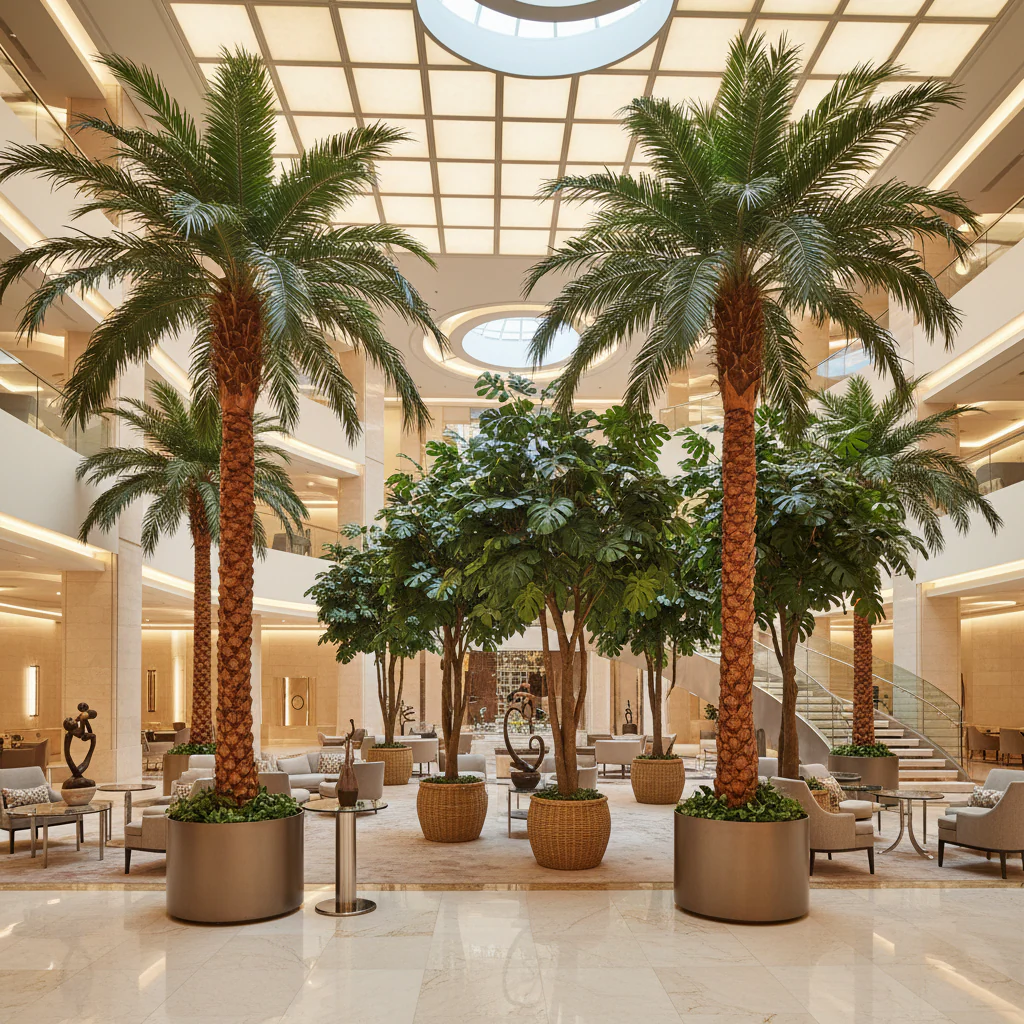
Large artificial trees for commercial spaces are not just decoration now. They are part of commercial design, customer experience, and brand presentation. I have worked with hotel buyers, retail store owners, event contractors, office designers, and importers for many years. Most of them ask the same question before ordering. They want to know which tree style will look real, match the project, ship safely, and stay beautiful for years.
I always tell buyers that the right artificial tree is not only about the leaf shape. A good project tree needs the right scale, trunk finish, canopy density, pot structure, packaging plan, and supplier communication. If one detail is wrong, the installation can look unbalanced. If all details work together, large artificial trees for commercial spaces can make a lobby, showroom, or restaurant feel warm, premium, and finished.
Why Are Large Artificial Trees for Commercial Spaces So Popular?
Many commercial spaces need greenery, but real plants bring hidden costs. Artificial trees solve this problem and keep the design stable all year.
Large artificial trees for commercial spaces are popular because they create visual impact, reduce maintenance work, support brand style, and keep the same fresh look in high-traffic environments.
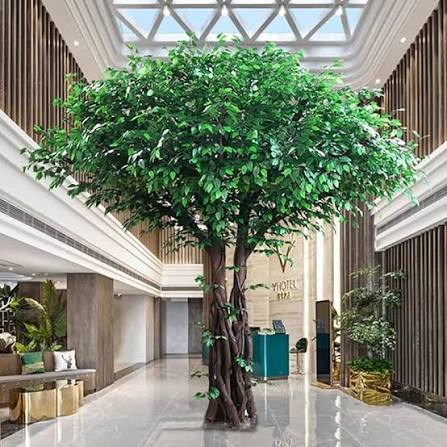
They Make Big Spaces Feel Warmer
Large buildings often use stone, glass, metal, and high ceilings. These materials look modern, but they can also feel cold. A large artificial tree can soften the space at once. It adds height, texture, and a natural feeling. This is very useful in hotel lobbies, office receptions, shopping malls, and commercial showrooms.
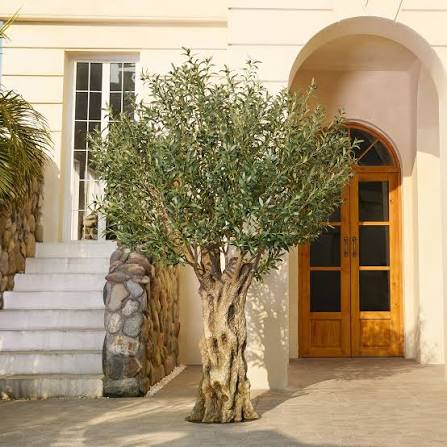
I once worked with a hotel renovation project. The lobby had a beautiful marble floor, but the space felt too empty after the furniture was installed. The buyer first wanted live olive trees. After checking the lighting, watering needs, and maintenance cost, the buyer changed the plan. We supplied premium artificial olive trees with realistic trunks and dense leaves. After installation, the hotel team told me that many guests thought the trees were real. This is why I often recommend large artificial trees for commercial spaces when the project needs beauty and control at the same time.
They Reduce Maintenance Pressure
Real trees look beautiful, but they need water, soil care, pruning, pest control, light control, and regular replacement. A hotel, mall, or office usually does not want extra daily plant work. In some projects, the plant care cost becomes higher than the product cost over time.
Large artificial trees for commercial spaces remove most of that pressure. The cleaning team only needs to remove dust from time to time. The tree does not drop leaves. It does not die in poor lighting. It does not attract insects. This makes it a practical choice for busy commercial teams.
They Keep the Same Look Every Season
Commercial buyers need consistency. A hotel lobby must look good every day. A retail store needs stable display quality. A restaurant cannot change its plant plan every few weeks. Real trees may change color, lose leaves, or grow in a way that does not match the original design.
Artificial trees keep the same shape and color. This is very important for branded spaces. When the same chain store opens in different cities, the buyer can use the same artificial tree model to keep one consistent visual identity.
They Support Better Project ROI
For B2B buyers, product value is not just the purchase price. Buyers also need to think about labor, maintenance, replacement, storage, transport, installation, and customer experience. A lower-priced tree can become expensive if it fades, breaks, leans, or looks fake after a short time.
One retail chain I supplied installed more than 80 artificial ficus trees across several stores. Their previous live plant program required regular care and replacement. After switching to large artificial trees for commercial spaces, their store team saved time and kept the same green look across all locations. This kind of practical return is one reason commercial buyers continue to choose artificial greenery.
For more ideas about business greenery, you can read Artificial Plants for Office Decoration and Artificial Green Wall Panels. For broader commercial building inspiration, buyers can also review green building ideas from the U.S. Green Building Council.1
Best Large Artificial Trees for Commercial Spaces in Hotels, Malls, Offices, and Restaurants
A beautiful tree can still look wrong if it does not match the space. Different commercial projects need different tree styles, heights, and shapes.
The best large artificial trees for commercial spaces depend on the project type. Olive trees suit hotels and restaurants, ficus trees suit offices, palms suit resorts, and blossom trees suit malls and event spaces.
Hotel Lobbies Need Elegant and Timeless Trees
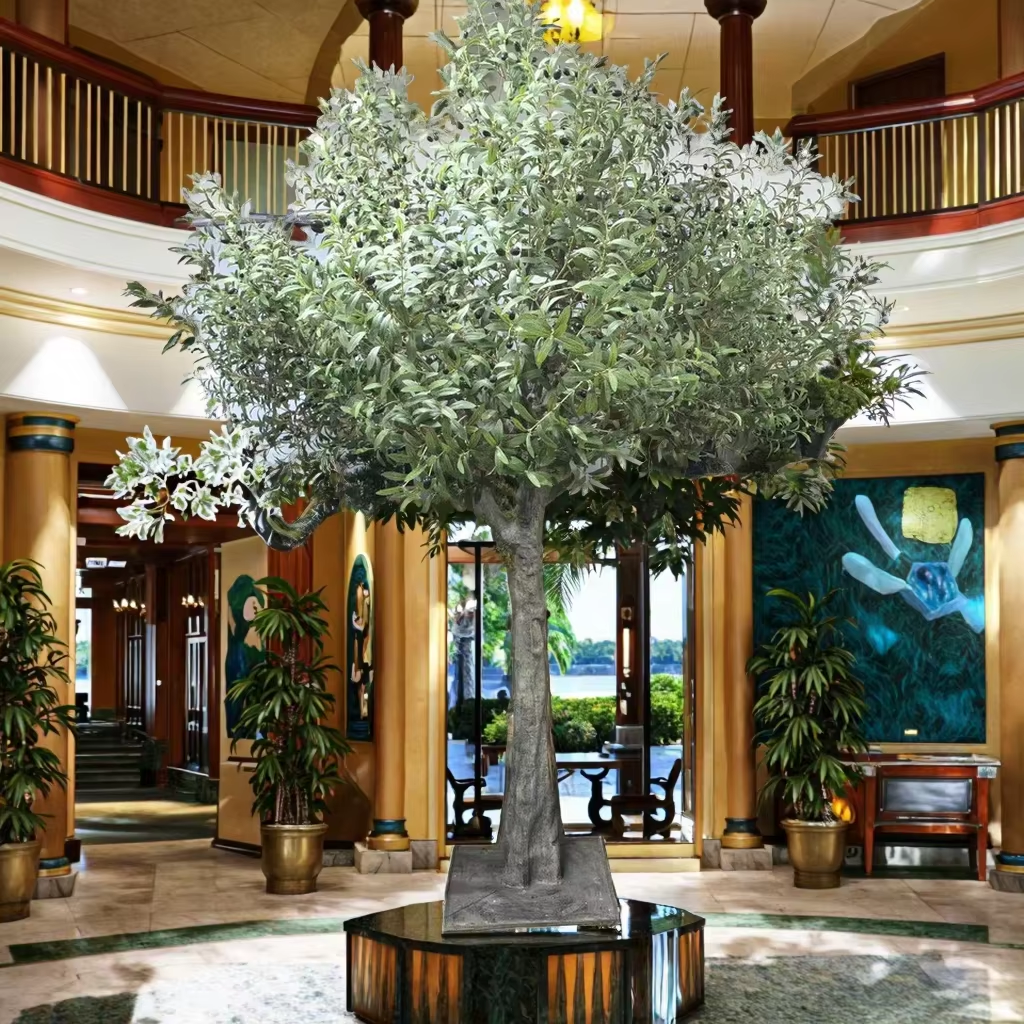
Hotels usually need a calm, premium, and welcoming style. Olive trees, ficus trees, magnolia trees, and large green canopy trees work well in hotel lobbies. These trees do not feel too busy. They create a luxury look without taking too much attention away from the reception desk, lighting, furniture, or wall design.
I worked with one hotel design team that wanted a soft Mediterranean feeling. The designer selected large artificial olive trees because the natural trunk texture worked well with stone, cream walls, and warm lighting. I suggested a slightly irregular canopy instead of a perfectly round shape. A real tree never looks too perfect. That small detail helped the whole lobby feel more natural.
Shopping Malls Need Strong Visual Impact
Shopping malls have large open areas, high ceilings, and many visitors. Small plants may disappear in this kind of space. Large artificial trees for commercial spaces can create anchor points, photo corners, seasonal zones, and rest areas. Cherry blossom trees, maple trees, banyan trees, and large ficus trees are common choices for malls.
One mall contractor asked me for a tree that could be used near a seating area. The space was large, but the buyer did not want the tree to block the walking path. We adjusted the trunk height and canopy width so people could walk around it easily. The final result looked full from a distance and still kept the traffic flow clear.
Offices Need Clean and Professional Greenery
Modern offices usually prefer clean lines and calm colors. Ficus trees, olive trees, rubber trees, and areca palms are safe choices. They match glass partitions, meeting rooms, reception counters, and lounge areas. Office buyers often care about easy cleaning, stable pots, and a professional look.
A technology company once asked me for several large artificial trees for commercial spaces because their office operated day and night. Live plants did not survive well under artificial lighting. We supplied artificial ficus trees with natural trunks and dark green leaves. The buyer placed them near the waiting area and meeting rooms. The trees gave the space a softer look without adding work for the office team.
Restaurants Need Trees That Match the Dining Theme
Restaurants often use trees to build a mood. Olive trees create a Mediterranean feeling. Lemon trees create a fresh and warm style. Palms support tropical, resort, or café themes. Blossom trees can work for romantic dining spaces or photo-friendly areas.
I always ask restaurant buyers about the customer experience they want to create. A fine dining restaurant may need a quiet and elegant tree. A casual café may need a brighter and more relaxed look. A themed restaurant may need something stronger and more memorable. Large artificial trees for commercial spaces help restaurant owners create that mood without leaf drop, watering problems, or pest issues.
Project Scale Must Match Tree Scale
Before choosing a tree, buyers should check the ceiling height, viewing distance, lighting, furniture size, and traffic flow. A 2-meter tree may look perfect in a small office, but it can look too small in a hotel lobby. A 5-meter tree may look impressive in a mall, but it may feel too heavy in a restaurant entrance.
My advice is simple. The tree must look natural in the space. It should not feel like an afterthought. It should not fight with the architecture. When large artificial trees for commercial spaces are chosen with the right scale, they can improve the full project design.
You can also get more product styling ideas from Artificial Flowers in Planter. For international commercial design inspiration, ArchDaily is also a useful external resource for architects, designers, and project buyers.2
How to Inspect Large Artificial Trees for Commercial Spaces Before Buying
Many trees look good in supplier photos. The real quality appears when buyers check the trunk, leaves, branches, pot, packaging, and assembly details.
Buyers should inspect the trunk texture, leaf realism, branch strength, total height, inner frame, pot weight, and packaging before ordering large artificial trees for commercial spaces.
Check the Trunk First
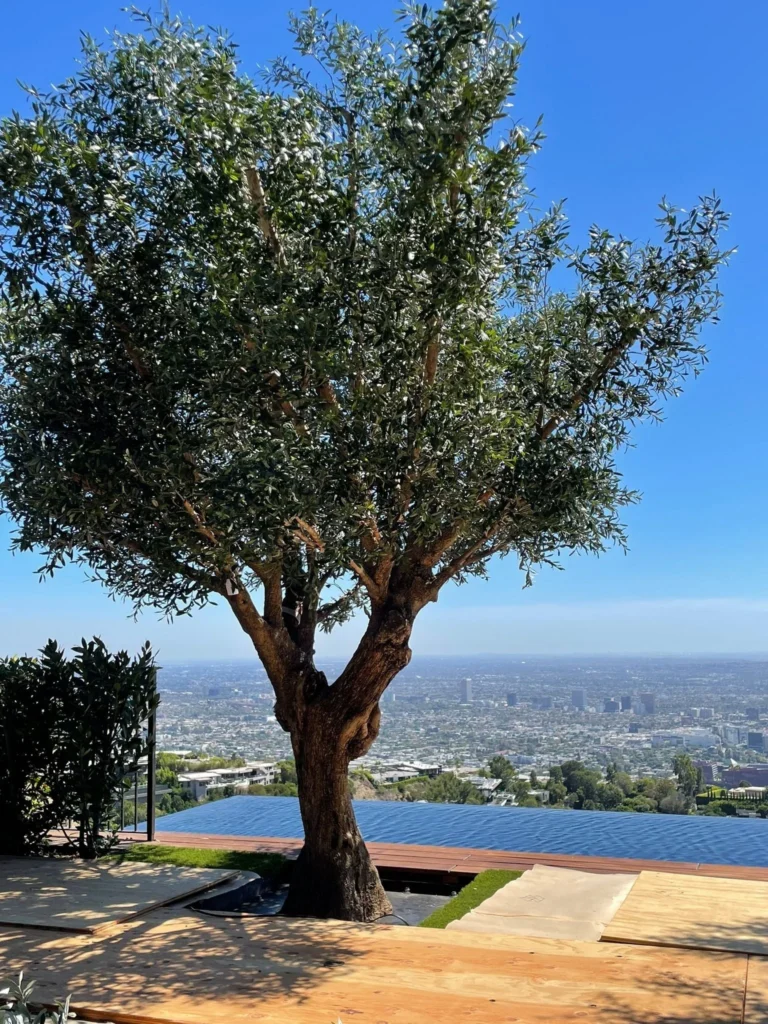
The trunk is one of the most important parts of a large artificial tree. Leaves may catch attention first, but the trunk decides whether the tree looks real from close distance. A good trunk should have natural texture, color variation, and a strong internal structure. It should not look flat, shiny, or overly plastic.
In many projects, guests or customers pass very close to the tree. This is common in hotel entrances, restaurant corners, office receptions, and mall seating zones. If the trunk looks fake, the whole tree looks fake. For large artificial trees for commercial spaces, I prefer trunks that have hand-finished details, natural curves, and stable inner support.
Check the Leaf Material and Color
Leaves should not all have one flat color. Real leaves have slight color changes. Some leaves are darker. Some leaves are lighter. Good artificial leaves use these small changes to create a natural look. Buyers should also check whether the leaf material is suitable for indoor or outdoor use.
One buyer once sent me a sample from another supplier. The tree looked bright green in the product photo, but the leaves looked plastic under hotel lighting. We changed the design to softer green leaves with better veins and a more natural matte surface. The buyer later ordered the full project. This taught me again that photos are not enough. For large artificial trees for commercial spaces, sample checking is very important.
Check the Branch Structure
Branches should be flexible enough for shaping, but strong enough to hold the canopy. If the branches are too weak, the tree will collapse visually after installation. If they are too stiff, the installer cannot adjust the shape. Good branch structure makes the tree easier to open, shape, and maintain.
I recommend asking the supplier for close-up photos or short videos. A video can show how the branches move. It can also show whether the leaves are firmly attached. For bulk wholesale orders, this simple step can prevent many future problems.
Check the Real Height
Height can create confusion. Some suppliers measure the tree after all leaves are stretched upward. Some measure only the trunk and pot. Some include the pot height. This creates problems when the buyer installs the tree under a fixed ceiling.
I always confirm the total height, trunk height, canopy width, pot size, and final opened shape with buyers. If the project has a strict height limit, I suggest leaving enough space between the tree top and the ceiling. Large artificial trees for commercial spaces should look relaxed, not squeezed.
Check the Pot and Base Stability
The pot is not only a container. It is part of the safety and installation system. A commercial tree must stand firmly. It should not lean when people walk nearby. It should not fall easily in high-traffic areas. Buyers should check pot weight, base diameter, inner cement, fixing points, and whether a decorative planter will be used outside.
One office developer came to me after receiving unstable trees from another supplier. The trees leaned after installation. We redesigned the inner steel base and added more weight to the pot. After that, the problem was solved. This is why I always remind buyers that pot quality matters as much as leaf beauty.
Check Packaging Before Shipment
Large trees are easy to damage if packaging is weak. Branches can bend. Leaves can fall. Trunks can scratch. Pots can crack. For export orders, packaging must be strong enough for long-distance shipping, warehouse handling, and final delivery.
At Botanic Blossoms, I ask my team to review packaging before mass shipment. We consider carton thickness, inner protection, branch arrangement, pot protection, and assembly instructions. Buyers who import large artificial trees for commercial spaces should always ask for packaging photos before shipment.
For cleaning and long-term care, you can read How to Clean Silk Flowers. For product testing and material reference, buyers can also review general standards information from ASTM International.3
Indoor vs Outdoor Large Artificial Trees for Commercial Spaces
Not every artificial tree can be used outdoors. Wrong material can fade, crack, or become weak under sunlight, rain, and wind.
Outdoor large artificial trees for commercial spaces need UV-resistant leaves, stronger frames, weather-resistant materials, and stable bases. Indoor trees focus more on detail, softness, and visual realism.
Indoor Trees Focus on Realistic Details
Indoor artificial trees are usually placed in hotels, offices, showrooms, restaurants, and retail stores. These spaces have controlled lighting and stable temperature. The tree does not need to fight heavy rain or strong sunlight. This allows the supplier to focus more on fine details, soft leaves, natural color, and beautiful branch shape.
For indoor large artificial trees for commercial spaces, I usually suggest buyers pay more attention to close-distance realism. In a lobby or restaurant, customers may stand beside the tree, take photos, or sit near it. The tree must look good from both far and near distance.
Outdoor Trees Need Stronger Materials
Outdoor artificial trees face a harder environment. Sunlight can fade leaves. Rain can affect glue and coatings. Wind can damage branches. Temperature changes can make poor materials crack. This is why outdoor trees must use stronger materials and better construction.
For outdoor large artificial trees for commercial spaces, I normally ask where the tree will be installed. A hotel entrance in Dubai has different needs from a café terrace in the United Kingdom. A resort near the ocean may need stronger anti-rust parts because of salty air. A shopping street with strong wind needs a more stable base.
UV Resistance Is Very Important
UV protection is one of the first things buyers should confirm for outdoor trees. A tree without UV-resistant material may look good when it arrives, but it can fade quickly after long sunlight exposure. This creates complaints and replacement costs.
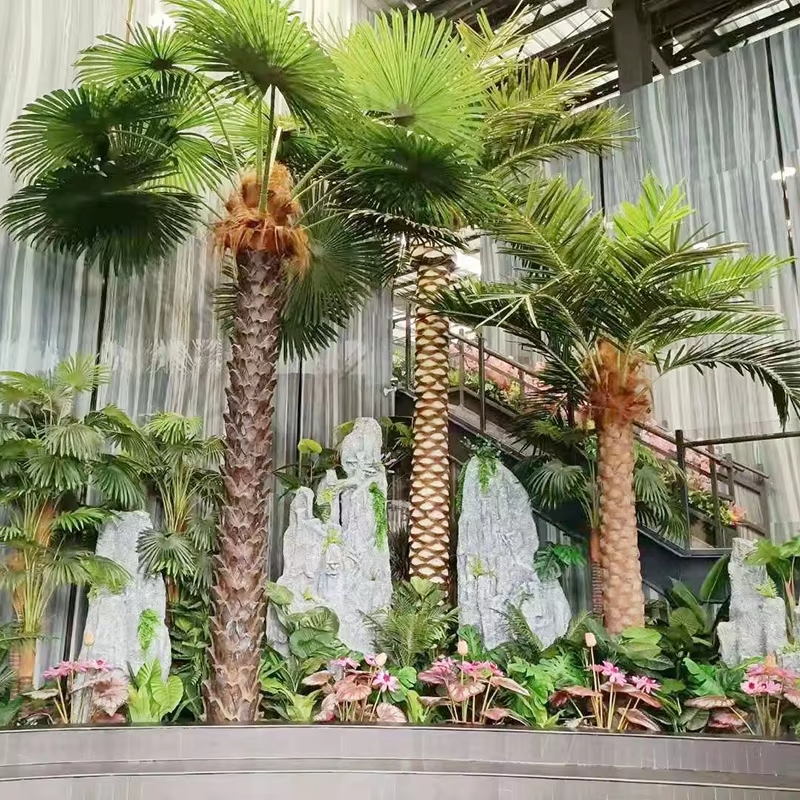
One resort buyer asked us for artificial palm trees near a swimming pool. The area had strong sunlight for many hours each day. We suggested UV-resistant PE leaves and a stronger inner structure. The buyer later told me the trees kept their look well after long outdoor use. This project became a good example of why material selection matters.
Fire-Retardant Requirements May Apply
Some public commercial spaces have fire safety requirements. Hotels, airports, shopping centers, exhibition halls, and convention centers may ask for fire-retardant artificial greenery. These rules may change by country, building type, and project regulation. Buyers should confirm local requirements before placing orders.
When a client asks for large artificial trees for commercial spaces in a public building, I always ask whether fire-retardant material is required. It is better to confirm this early. If the buyer waits until after production, it may cause delays, extra cost, or product changes.
Installation Method Should Match the Location
Indoor trees may only need a stable pot and decorative planter. Outdoor trees may need extra fixing, heavier base design, or ground installation support. For large trees, especially above 3 meters, installation should be planned before production.
I like to confirm the site details with the buyer. I ask about the floor, wind, ceiling, entrance size, delivery access, and final planter style. This helps my team recommend the right base and packing method. Large artificial trees for commercial spaces are much easier to install when all these details are confirmed before production.
If your project also needs fire-retardant greenery, you can read Fire Retardant Artificial Flowers.
How to Buy Large Artificial Trees for Commercial Spaces Wholesale
Wholesale buying is not only about price. Project buyers need stable quality, clear communication, safe packaging, and support after the order.
To buy large artificial trees for commercial spaces wholesale, buyers should check factory capability, customization options, sample quality, packaging, lead time, certifications, and after-sales support.
Choose a Supplier With Project Experience
A supplier who understands commercial projects will ask better questions. They will ask about ceiling height, country, indoor or outdoor use, project deadline, packaging needs, and installation method. These questions may seem small, but they protect the buyer from mistakes.
I have seen many buyers compare only product photos and unit prices. That is risky. Large artificial trees for commercial spaces need more control than small home decorations. A project tree must be safe, stable, realistic, and easy to install. A good supplier should help buyers think through these details before production.
Ask for Samples or Detailed Confirmation
Samples help buyers check leaf quality, trunk texture, color, and structure. If the tree is too large to ship as a full sample, the supplier can provide material samples, branch samples, trunk close-up photos, videos, and production details. For B2B orders, this step can save a lot of trouble.
One importer once asked me to match a tree style from a hotel project photo. The buyer did not need an exact copy, but they needed the same feeling. We sent leaf samples, trunk texture options, and height suggestions. After that, the buyer confirmed the full order with more confidence.
Confirm Customization Options Early
Commercial buyers often need custom height, custom canopy size, special trunk color, branded tags, special pots, UV materials, or fire-retardant material. These changes should be confirmed early because they may affect production time, packaging size, and cost.
At Botanic Blossoms, I always prefer to discuss customization before quoting the final price. This gives the buyer a clearer picture. It also avoids later changes that slow down production. Large artificial trees for commercial spaces are much better when the product is planned around the project, not forced into the project after arrival.
Review Packaging and Shipping Plan
Large trees can take more space than buyers expect. Sometimes the tree must be packed in sections. Sometimes the canopy needs compression. Sometimes the trunk and pot need extra protection. A good supplier should explain the packing method before shipment.
I once worked with a shopping mall contractor who had a very tight installation date. Their previous supplier stopped replying during production, and the project became urgent. We confirmed the tree details quickly, prepared production updates, and arranged export packaging carefully. The order arrived in time for installation. That project reminded me again that communication is a real part of product value.
Do Not Choose Only the Cheapest Price
The cheapest tree is not always the best business decision. If the tree fades, leans, breaks, or looks fake, the buyer may lose more money later. For commercial projects, buyers should think about total value. This includes product life, customer experience, installation time, supplier support, and repeat order stability.
After more than ten years in the artificial flower and greenery industry, I have learned one clear lesson. Buyers who choose quality and communication usually build better long-term results. Large artificial trees for commercial spaces can bring strong value when the supplier understands design, production, packaging, and export service.
For more sourcing support, you can visit Artificial Flowers Supplier or contact us through Botanic Blossoms Contact.
Ready to Source Premium Large Artificial Trees for Commercial Spaces?
Botanic Blossoms supports hotels, malls, offices, restaurants, event companies, importers, and project contractors with realistic artificial trees, fast sampling, customization, export packaging, and wholesale supply.
Available support includes OEM design, custom height, UV material, fire-retardant options, project packaging, and global shipping.
Conclusion
Large artificial trees for commercial spaces work best when realism, scale, safety, packaging, and supplier service are planned together from the beginning.
Frequently Asked Questions About Large Artificial Trees for Commercial Spaces
1. What are large artificial trees for commercial spaces?
Large artificial trees for commercial spaces are realistic decorative trees designed for hotels, malls, offices, restaurants, showrooms, and public buildings.
2. Why do hotels use large artificial trees for commercial spaces?
Hotels use them to create a premium natural look without watering, pruning, pest control, or regular plant replacement.
3. What height is best for large artificial trees for commercial spaces?
Most projects choose 2.5-meter to 5-meter trees. The best height depends on ceiling height, viewing distance, and furniture scale.
4. Can large artificial trees for commercial spaces be customized?
Yes. Buyers can customize height, canopy width, trunk style, pot size, leaf color, UV material, and fire-retardant options.
5. Are large artificial trees for commercial spaces suitable for outdoor use?
Yes, if they use UV-resistant leaves, stronger internal frames, weather-resistant materials, and stable bases.
6. How do buyers check the quality of large artificial trees for commercial spaces?
Buyers should check trunk realism, leaf material, branch strength, height accuracy, pot stability, packaging, and supplier experience.
7. Do large artificial trees for commercial spaces need maintenance?
They need very little maintenance. Most buyers only need regular dust cleaning and simple branch reshaping after unpacking.
8. Can large artificial trees for commercial spaces be fire-retardant?
Yes. Fire-retardant materials are available for hotels, airports, malls, exhibitions, and other public commercial projects.
9. How are large artificial trees for commercial spaces shipped?
Large trees are usually packed in sections or compressed carefully to reduce shipping size and protect branches, trunks, leaves, and pots.
10. How can I buy large artificial trees for commercial spaces wholesale?
You can send your project size, style, quantity, country, and installation location to Botanic Blossoms. We can recommend suitable wholesale options and prepare a quote.
Footnotes
- The U.S. Green Building Council shares useful information about sustainable and healthy commercial building practices. Buyers can use this as a general reference when planning commercial interiors.
- ArchDaily provides global architecture and commercial interior inspiration. It is useful for buyers who want to compare lobby, retail, office, and hospitality design ideas.
- ASTM International provides standards and testing references for many materials and products. Commercial buyers can use it as a general resource when discussing material performance and project requirements.