
Outdoor Artificial Hanging Plants: How Can Buyers Choose Ones That Do Not Fade Fast?
Outdoor greenery can look fresh at first, but weak materials fade fast, disappoint customers, and create replacement costs for wholesale buyers.
Outdoor artificial hanging plants should be chosen by UV resistance, leaf material, color stability, stem strength, outdoor placement, and supplier testing. I always suggest buyers test samples under real sun before bulk orders.
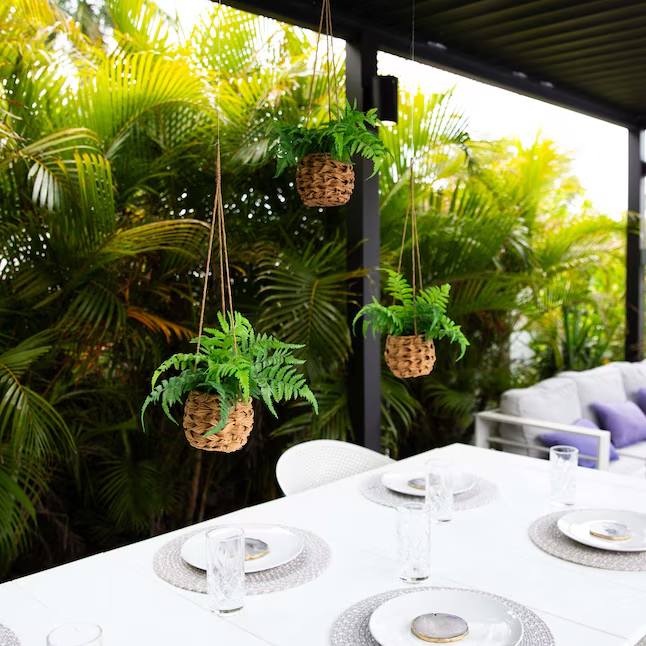
I have worked with many buyers who care less about a cheap first quote and more about stable outdoor performance. For outdoor artificial hanging plants, the real question is not only how they look in a photo. The real question is how they look after sun, rain, wind, dust, shipping, and repeated installation.
In my own work at Botanic Blossoms, I see this problem often. A buyer may receive a beautiful sample, but the bulk goods may fade after one season if the material is not right. This is why I always guide buyers to check use case, material, UV treatment, packing, and supplier communication before placing a large order.
If you are building a long-term outdoor greenery line, you can also read my older guide about UV outdoor artificial greenery. It explains more about outdoor plant material, sun exposure, and fade control.
Why Are Outdoor Artificial Hanging Plants Popular?
Outdoor spaces need soft greenery, but real plants need water, care, trimming, and seasonal replacement. That creates daily work for commercial buyers.
Outdoor artificial hanging plants are popular because they give instant greenery, reduce maintenance, and work well for patios, balconies, restaurants, event spaces, retail displays, and rental décor projects.
Buyers Need Fast Visual Results
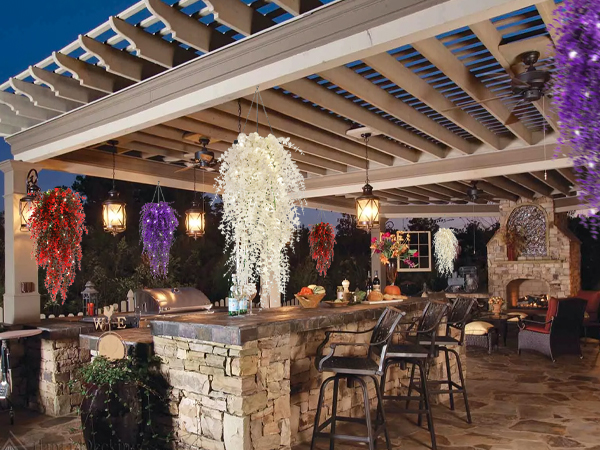
I see one clear reason again and again. Buyers want outdoor spaces to look alive without adding daily work. A restaurant owner may have a beautiful patio, but the staff may not have time to water hanging baskets every morning. A wedding rental company may need a green ceiling effect, but it cannot carry fresh hanging plants for every event. A retail buyer may want a full seasonal display, but live plants may not survive storage, shipping, and store handling.
This is where outdoor artificial hanging plants become useful. They create a finished look quickly. They can cover empty corners, plain railings, old fences, high beams, pergolas, and balcony edges. They also help a space look better in photos. This matters for hotels, cafés, Airbnb properties, event planners, garden centers, and home décor retailers.
I once worked with a buyer who supplied décor to small hospitality businesses. She told me that her customers loved green outdoor corners, but they kept losing real plants during hot seasons. She did not want to sell products that created complaints after two months. I suggested that she test outdoor artificial hanging plants with thicker leaves, mixed green tones, and stronger hanging stems. She placed the samples in a patio display first. Her customers liked that the space looked finished without watering, trimming, or replacing dead leaves.
Hanging Greenery Fits Many B2B Sales Channels
For B2B buyers, one hanging greenery line can serve many sales channels. Outdoor artificial hanging plants can be sold as home décor, garden décor, commercial greenery, restaurant décor, event props, and seasonal display products. I like this category because it is flexible. A buyer can start with a small SKU range, then expand into matching garlands, bushes, wall panels, and potted greenery.
A buyer who already sells artificial plants can add hanging styles to increase order value. A buyer who sells event flowers can use hanging plants to build ceiling installations and arch details. A buyer who sells to hotels can combine them with commercial artificial flowers and outdoor greenery to create a full project package.
The key point is simple. Popularity does not mean every product is good. Outdoor artificial hanging plants sell well because they solve a real problem. But buyers still need to choose the right material, color, structure, and supplier before placing a large order.
What Materials Work Better for Sun and Rain Exposure?
Cheap leaves can become brittle, pale, or warped outside. This creates return risk and weakens customer trust in the buyer’s product line.
For outdoor artificial hanging plants, PE, PVC, and higher-grade plastic blends usually perform better than thin fabric leaves under sun and rain. Thicker leaves, stronger stems, and UV additives improve outdoor stability.
I Check Leaf Material Before I Check Price
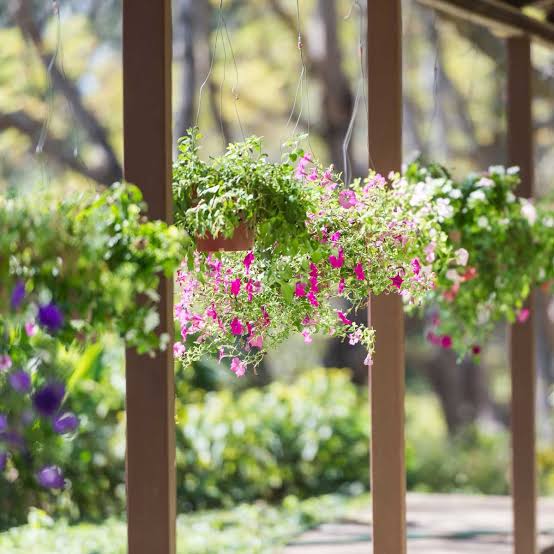
When a buyer asks me about outdoor artificial hanging plants, I do not start with the lowest price. I start with the material. The reason is simple. Outdoor products face stronger pressure than indoor products. Sunlight can fade color. Rain can test joint points. Wind can pull stems. Dust can sit on the leaf surface. If the material is too thin, the product may look fine in a photo but fail in real use.
In my own production work, I check a few points first. I check whether the leaf has enough thickness. I check whether the color is sprayed too lightly. I check whether the stem wire is too soft. I check whether the plastic smell is strong. I check whether the hanging point can hold weight after repeated use. These details matter more than a small price gap.
I once helped a buyer compare two outdoor hanging greenery samples. The cheaper sample looked brighter in the first photo. But when I touched it, the leaves were very thin, and the green color was too flat. I knew it could fade fast under direct sun. The second sample cost a little more, but it had deeper color, stronger leaf shape, and better stem recovery after bending. I suggested the second one for her outdoor line. She later used it for balcony and patio customers because it gave her fewer quality concerns.
PE, PVC, Fabric, and Mixed Materials Need Different Use Cases
I do not say one material is perfect for every buyer. I always match material to the use case. PE leaves often work well for outdoor greenery because they can be molded with a clear shape and a stable touch. PVC leaves can also be useful, especially for hanging vines and fuller greenery. Fabric leaves can look soft and realistic, but they are often better for indoor or covered spaces unless they receive proper coating and testing.
Mixed materials can be a smart choice when buyers need both realism and cost control. A buyer may use molded PE leaves for the main outdoor layer and add softer leaves only in protected areas. This can make the product look rich without exposing delicate parts to full sun and rain.
For sun and rain exposure, I prefer thicker plastic leaves for direct outdoor use. I avoid very thin silk-style leaves for open-air spaces unless the buyer accepts a shorter use life. I check whether the stem connection is strong enough. I also suggest darker and mixed green tones because they hide minor fading better than one flat bright green.
For buyers who want deeper outdoor aging references, ASTM G154 is often used as a material weathering test practice for exposure to UV light and moisture.1 I do not use this as a sales slogan. I use it as a reminder that outdoor performance should be checked with real samples, clear test language, and honest supplier communication.
What Is the Difference Between UV Treated and Normal Hanging Plants?
Many buyers hear “UV” and think the product will never fade. That is not true, and this misunderstanding causes bad buying decisions.
UV treated outdoor artificial hanging plants are made or finished to resist sunlight better than normal products. They can slow fading, but they still need correct material, color, installation, and market testing.
UV Treatment Helps, But It Is Not Magic
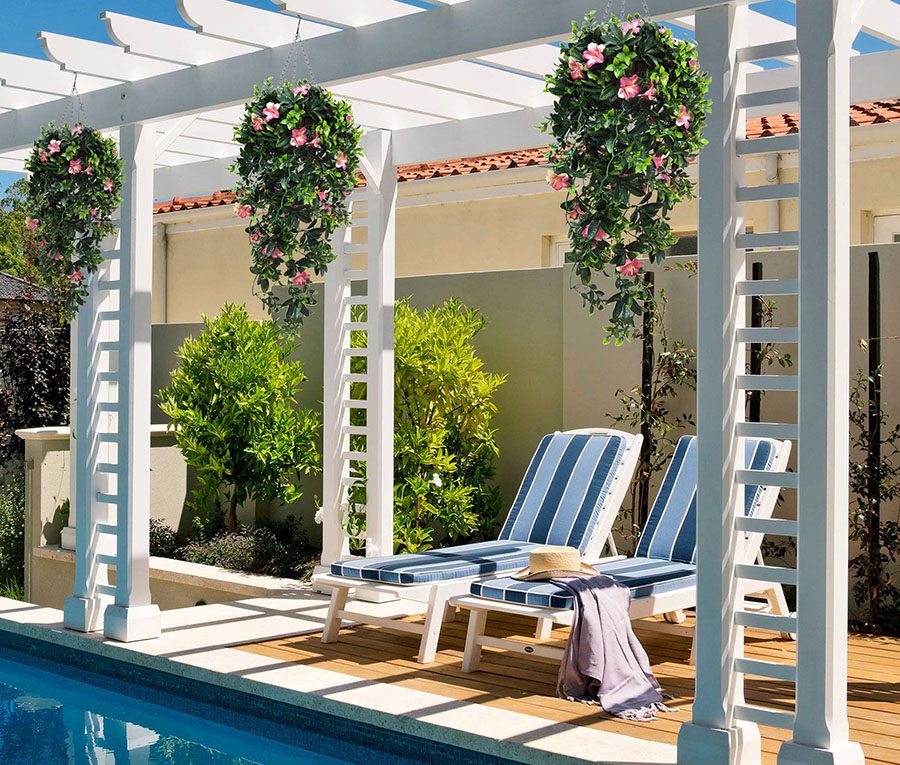
I always explain UV treatment in a simple way. UV treatment helps outdoor artificial hanging plants resist sun damage for a longer time. But it does not make a product impossible to fade. No supplier should promise that outdoor greenery will stay perfect forever under strong sun. Different countries have different sunlight strength. A product used in Northern Europe may age slower than the same product used in Australia, the Middle East, South Africa, or a high-sun U.S. state.
A buyer once asked me why one normal hanging plant sample looked almost the same as a UV treated sample. My answer was direct. In the showroom, they may look similar. After outdoor exposure, the difference becomes clearer. That is why I never ask buyers to judge outdoor artificial hanging plants only by the first photo. I suggest a sun test, even if it is simple. Place the sample near a sunny window, on a patio, or in a real outdoor display area. Check it after several weeks. Look at the leaf tips, top surface, and color difference between covered and exposed parts.
The UV Index gives buyers a simple way to understand that sunlight exposure is not the same in every market.2 I do not ask buyers to become material engineers. But I do ask them to respect the climate of their market. A buyer selling outdoor artificial hanging plants in a very sunny area should not use the same quality level as a buyer selling indoor or shaded balcony décor.
Normal Hanging Plants Still Have a Place
Normal hanging plants are not always useless. They can work for covered balconies, shaded patios, indoor-outdoor transition areas, photo studios, shop interiors, and short-term events. But buyers should not position normal products as long-term direct sun products. That creates wrong expectations and increases complaints.
For wholesale buyers, I suggest a clear product structure. Use UV treated outdoor artificial hanging plants for direct sun or long-term outdoor use. Use normal hanging plants for indoor, shaded, or short-term display use. Use better product labels to separate “outdoor suitable,” “covered outdoor,” and “indoor only.” Ask the supplier for honest use guidance before placing bulk orders. Keep sample records from different sunlight markets.
In one service case, a buyer wanted to sell the same hanging plant to all customers. I advised her to split the product page into two options. One option was standard for covered spaces. The second option was UV treated for outdoor use. This helped her explain value better and reduce price comparison. It also made her product line look more professional.
This is also why I suggest buyers read supplier guides like our artificial flowers supplier checklist. Outdoor performance is not only about one product. It is about supplier honesty, material control, packaging, sample testing, and after-sales responsibility.
Where Are the Best Places to Use Outdoor Hanging Plants?
Wrong placement can make even good greenery age faster. Buyers need to think about sun, wind, height, fixing points, and customer touch.
Outdoor artificial hanging plants work best on covered patios, balconies, pergolas, garden fences, storefronts, hotel walkways, event arches, and retail displays where greenery adds softness without daily care.
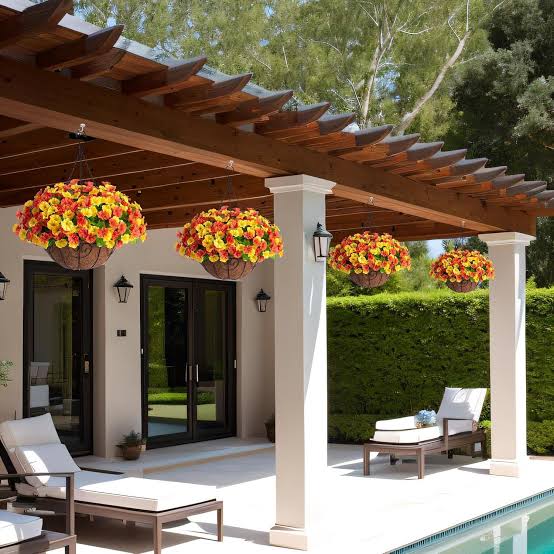
Placement Decides Product Life
I often tell buyers that the same product can perform very differently in two locations. If outdoor artificial hanging plants are placed under a shaded pergola, they may stay beautiful much longer. If they are placed on a west-facing wall with strong afternoon sun, the color may fade faster. If they are placed where wind pulls them every day, weak stems may loosen. If they are placed too low in a public area, customers may touch or pull them often.
For commercial projects, I ask simple questions before recommending products. Will the plants face direct sun every day? Will rain hit the leaves directly? Will wind pull the hanging stems? Will the product be installed high or low? Will the customer need to remove and reuse it? Will the product be photographed often?
A buyer from a hospitality project once asked me for outdoor greenery for a permanent photo area. The design needed to stay in place for a long time. The buyer cared about water resistance, outdoor durability, and visual fullness. I suggested using stronger outdoor artificial greenery instead of soft indoor flower pieces. I also suggested building the installation with layers. The inner layer used stronger green base material. The front layer used more realistic leaves and floral accents. This made the display look full, but it also protected the delicate parts from heavy outdoor stress.
Best Commercial Use Scenarios
Outdoor artificial hanging plants are very useful in places where live plants are hard to manage. I see strong demand from restaurants, hotels, event rental companies, garden centers, home décor retailers, and commercial designers.
For restaurants, hanging greenery can soften hard walls and create a more welcoming patio. For hotels, it can improve balconies, pool areas, and outdoor walkways. For event companies, hanging plants can support arches, ceiling frames, and photo backdrops. For retail stores, outdoor artificial hanging plants can be used as shelf décor, seasonal displays, and entrance styling. For garden centers, they can help customers see how products look in real use.
I also suggest buyers combine hanging plants with related care content. For example, a buyer can link outdoor greenery products to how to clean silk flowers because even artificial greenery needs dust removal and basic maintenance. A buyer can also connect hanging greenery with how to pot artificial flowers when customers want a full patio or balcony set.
The best place is not always the brightest place. The best place is the one that balances beauty, protection, fixing safety, and customer expectations.
How Can Wholesale Buyers Choose Better Outdoor Hanging Greenery?
Wholesale buyers lose money when they only compare price. Better selection starts with samples, use cases, packaging, and clear quality rules.
Wholesale buyers should choose outdoor artificial hanging plants by checking UV treatment, leaf thickness, color depth, stem strength, hanging structure, packaging protection, sample testing, and supplier communication.
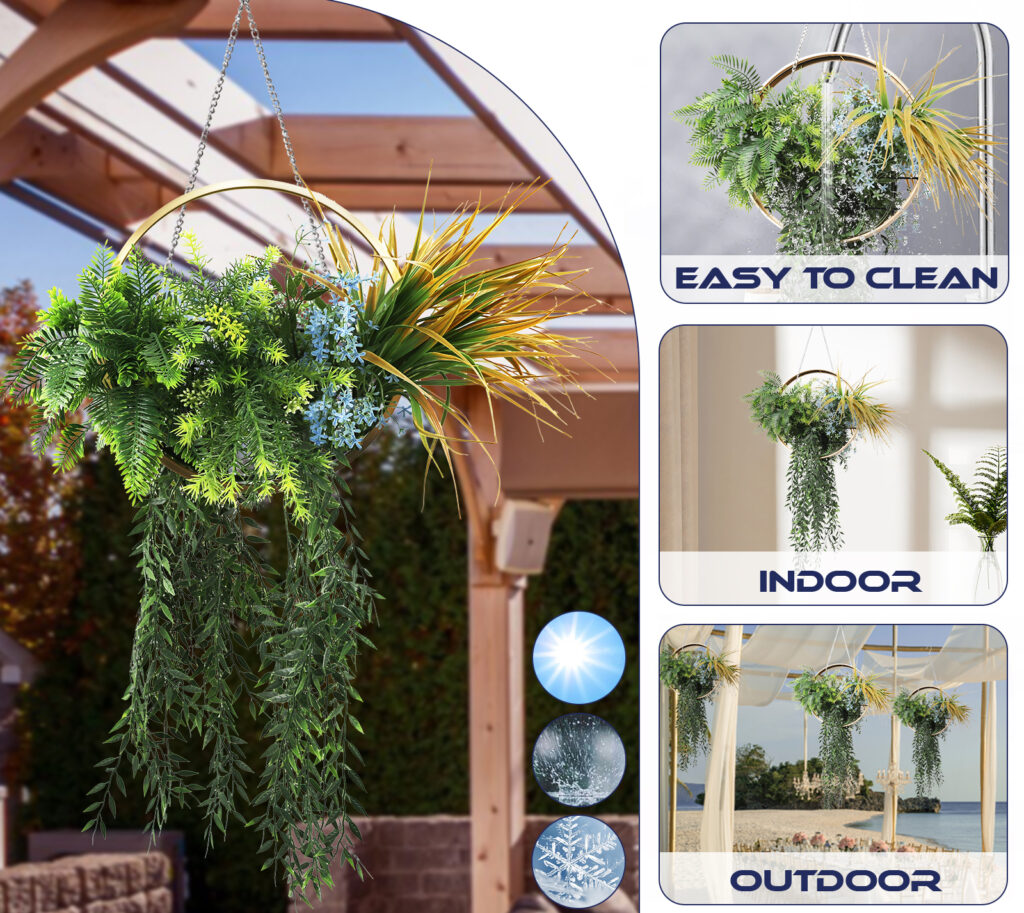
I Build the Product Around the Buyer’s Market
When I help buyers choose outdoor artificial hanging plants, I first ask where the products will be sold. A U.S. home décor seller may need strong retail packaging and lifestyle photos. An Australian event rental company may care more about UV resistance and reusability. A Middle East hotel supplier may need higher sun resistance and stable color. A European garden center may care about natural green tones, clean labels, and chemical compliance language.
I do not believe buyers should order one random style only because it is popular online. I prefer a product plan. A good wholesale plan may include three levels. The first level is a basic covered-outdoor hanging plant. The second level is a better UV treated style for patios and balconies. The third level is a premium mixed greenery style for commercial projects and event use. This structure helps buyers serve different price points without lowering the whole brand image.
One buyer once wanted to order many styles at once. I suggested that she start with fewer styles but deeper quality control. We picked a few shapes, tested the color, checked the hanging length, improved the packaging, and made sure the carton protected the leaves during shipping. This gave her a cleaner launch. She did not waste budget on weak SKUs.
My Practical Buying Checklist
I use a simple checklist when I review outdoor artificial hanging plants for wholesale buyers. First, I check the material. The leaf should not feel too thin, oily, or easy to tear. Second, I check the color. I prefer mixed green tones because real plants are not one flat green. Third, I check the UV claim. If the product is for direct sun, the supplier should explain the UV treatment or material choice clearly.
Fourth, I check the stem and hanging structure. The product should not fall apart when shaken or bent. Fifth, I check the package. Compressed packing can save freight, but it should not crush the product beyond recovery. Sixth, I check the market language. If the buyer sells in Europe, REACH-related material communication may also matter for chemicals and articles entering the EU market.3
I also suggest buyers ask for clear product photos. A white background photo is useful for product pages. A real scene photo is useful for customer trust. A detail photo is useful for quality judgment. A size photo is useful for reducing disputes.
For B2B buyers, supplier communication is also part of quality. If a supplier cannot explain material, use case, sample options, packaging, and lead time clearly, the buyer should be careful. At Botanic Blossoms, I try to help buyers choose products based on their market, not only based on one cheap quote.
If you need a full outdoor greenery range, you can review our catalogue or contact us through our Botanic Blossoms contact page. I can help match outdoor artificial hanging plants with your country, sales channel, and customer use case.
Need Fade-Resistant Outdoor Hanging Greenery for Your Market?
I can help you compare materials, UV options, hanging length, packaging, and sample plans before you place a bulk order.
Conclusion
I choose outdoor artificial hanging plants by real use, not only by price, because better material protects your brand, customers, and repeat orders.
FAQ
1. Are outdoor artificial hanging plants suitable for direct sunlight?
Yes. Outdoor artificial hanging plants can be suitable for direct sunlight if they use outdoor-grade material and UV treatment. I still suggest sample testing before bulk orders.
2. Do UV treated hanging plants never fade?
No. UV treated hanging plants resist fading better than normal products, but they can still fade over time under strong sun and harsh weather.
3. What material is best for outdoor artificial hanging plants?
PE, PVC, and strong plastic blends are often better for outdoor use than thin fabric leaves. The best choice depends on sun exposure, budget, and target market.
4. Can normal artificial hanging plants be used outside?
Yes. Normal artificial hanging plants can be used in covered outdoor spaces or short-term events. I do not suggest them for long-term direct sun exposure.
5. How can wholesale buyers test outdoor hanging greenery?
Wholesale buyers can place samples in real sun, rain, and wind conditions for several weeks. Buyers should check fading, brittleness, stem strength, and hanging points.
6. What colors last better for outdoor artificial greenery?
Mixed green tones often look better for longer because they hide small color changes. Very bright flat green may show fading more clearly.
7. Are outdoor artificial hanging plants good for restaurants?
Yes. They are useful for restaurant patios, outdoor walls, café entrances, and balcony décor because they add greenery without daily watering or plant care.
8. Can outdoor artificial hanging plants be customized?
Yes. Botanic Blossoms can support custom length, leaf mix, color tone, packaging, labels, and product combinations for B2B buyers.
9. What should buyers check before placing a bulk order?
Buyers should check material, UV treatment, color depth, leaf thickness, stem strength, hanging hook, packaging, carton size, lead time, and sample performance.
10. How do I request outdoor artificial hanging plant samples?
You can contact Botanic Blossoms through our website or email jasmine@cnhycrafts.com. I can suggest sample styles based on your market and use case.
Footnotes
- ASTM G154 is commonly used as a reference practice for exposing materials to fluorescent UV light and moisture in accelerated weathering tests. Source: Q-Lab ASTM G154 overview.
- The UV Index helps describe expected ultraviolet radiation strength, which is useful when buyers compare outdoor exposure between different markets. Source: U.S. EPA UV Index Scale.
- REACH is the EU framework for chemical registration, evaluation, authorisation, and restriction. It can affect material communication for products entering EU markets. Source: European Commission REACH Regulation.