
Quality Control Is Not One Inspection at the End.
Artificial flowers and decorative products combine color, material, handwork, shape, assembly, finish and packaging. Quality becomes more reliable when the approved standard is controlled throughout production instead of checked only before shipment.
At Botanicblossoms, quality control is integrated from material selection and product manufacturing through inspection, protective packaging and shipment, with OEM/ODM requirements incorporated into the production reference.

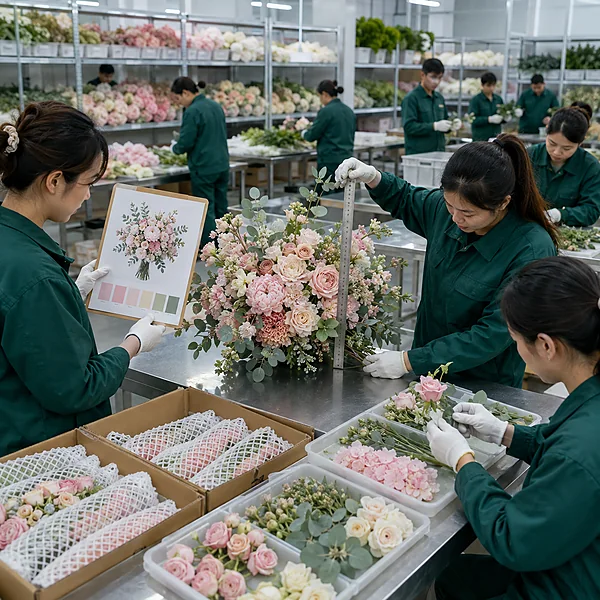
Color · Size · Shape · Assembly · Finish · Packing
Small Variations Become Big Quality Problems When They Repeat Across a Bulk Order.
A single flower may look acceptable. A full display, retail shelf or hotel installation makes differences in shade, height, density, shape and finish much easier to see.
One Batch Looks Warmer Than the Approved Sample.
Fabric, plastic, real-touch surfaces, coatings and decorative finishes can display the same target color differently. The actual material needs to be compared with the approved reference.
The Height Is Correct, but the Product Still Looks Different.
Foliage density, branch angle, bloom opening and canopy width can change the visual result even when one overall dimension matches.
A Leaf, Stem or Decorative Part Becomes Loose After Handling.
Assembly points need product-specific checks. The critical point for a flower stem is different from the critical point for a large artificial tree or decorative planter.
The Product Passes Inspection but Arrives Crushed.
Packaging is part of quality control because excessive compression, friction and uncontrolled movement can damage an otherwise acceptable product during transport.
Quality Starts Before Production and Continues Until Shipment.
Select a stage to see what should be controlled, what can go wrong and what reference is most useful.
Define What “Good Quality” Means for This Product.
Before production, the buyer and factory need a clear reference for the product, color, dimensions, materials, visible appearance, construction, packaging and any project-specific quality requirement.
Product specification, visual expectation and buyer-specific requirements.
“Same as sample” is used without defining which dimensions, colors or details actually matter.
Approved sample plus written specification.
Different Product Families Need Different Quality Checkpoints.
Select a product family to see the quality variables that usually matter most. Final inspection criteria should still be confirmed for the actual SKU and buyer requirement.
Close-View Products Need Strong Visual Consistency.
Artificial flowers are often evaluated at close range, so shade, flower opening, petal shape, stem proportion and visible assembly can be more important than one single dimension.
Color Approval Should Happen on the Actual Material.
Pantone, a physical swatch, an approved sample or another agreed reference can guide color development. The final judgment still needs to consider the real material, texture, translucency, coating and lighting condition.
One digital image should not become the only color authority for a product made from multiple physical materials.
Which Reference Controls Approval?
Confirm whether the buyer is approving against Pantone, a physical swatch, a previous product or the final approved sample.
The Same Target Can Look Different on Different Surfaces.
Fabric, plastic, real-touch finishes, resin, concrete-style surfaces and coatings respond differently to color.
Judge Color Together with Texture and Shape.
A flower petal, leaf or decorative finish can appear lighter or darker because of shape, reflectivity or texture.
Connect the Approved Color to the Golden Sample.
Production and inspection should follow one agreed color direction instead of multiple uncontrolled screenshots or comments.
Correct the Variable — Not Just the Finished Product.
When something does not match, the useful question is “which controlled variable changed?” Select a problem type to see the corrective logic.
Compare the Material and Reference Before Reworking the Product.
First identify whether the difference comes from the color reference, material change, coating, surface texture or production batch. A correct diagnosis prevents repeated color adjustment without solving the cause.
Reference, material, shade and lighting difference.
Adjust the relevant material or color process.
Compare the corrected product to the approved reference again.
QC Needs a Controlled Target Before It Can Judge a Deviation.
The final approved sample, together with written production details, gives the production and inspection teams a shared reference for material, color, size, shape, handwork, finish and packaging.
If the buyer changes a critical product detail after approval, that change should be incorporated into the controlled production reference.
What the Approved Product Should Look Like.
Overall appearance, visible color, foliage or flower density, surface finish and approved handwork.
What Cannot Be Reliably Judged by Eye Alone.
Dimensions, material, SKU, packaging, label and project-specific order details.
The Workshop Builds Toward One Target.
A controlled reference reduces subjective interpretation during bulk production.
QC Compares Bulk Back to the Approved Standard.
This connects sample approval with in-process checks and final inspection.
Passing Inspection Is Not Enough If the Product Cannot Survive Delivery.
Finished-product checks and protective packaging work together. The first verifies the approved order. The second protects that approved condition during handling and transportation.
The buyer receives the packed product, so transport protection is part of the final quality result.
Review the Product the Buyer Will See.
Color, shape, density, finish and the overall appearance relevant to the actual SKU.
Check the Correct SKU, Quantity and Labels.
Private-label and multi-SKU orders need accurate product, label, carton and packing identification.
Prevent Permanent Compression.
Flower heads, foliage, tree canopies and branches may require different methods of support and recovery.
Protect Planter and Decorative Finishes.
Resin, concrete-style and metal decorative surfaces can require protection from abrasion, impact and component contact.
Customization Creates New Quality Variables — So They Must Be Added to the Standard.
Custom colors, materials, dimensions, molds, finishes, private labels and packaging should be included in the approved production reference before bulk manufacturing.
Lock the Color on the Final Material.
The approved color needs to reflect the actual flower, foliage, planter or decorative material.
Define Which Dimensions Are Critical.
Overall size and component dimensions can both affect buyer fit and visual proportion.
Approve the Actual Surface Treatment.
Texture, coating, paint and decorative effects should be reviewed on the final product construction.
Treat Packaging Accuracy as a QC Requirement.
Labels, barcodes, branded packaging and carton marks need the same controlled review as the product.
Quality Control and Compliance Should Be Based on the Actual Product Requirement.
If a buyer requires material declarations, restricted-substance limits, fire performance, UV performance, packaging tests, labeling rules or another inspection standard, the exact requirement should be provided before final approval.
Send the Buyer’s Actual Checkpoints.
Product-specific dimensions, visible standards and packing requirements can then be incorporated into the order review.
Define the Restricted Material or Substance Requirement.
The relevant material can then be reviewed against the specific customer requirement.
Define the Test Method and Acceptance Criteria.
One generic “UV” or “fire-retardant” statement should not automatically be applied to every product construction.
Use Evidence for the Product It Actually Covers.
Do not assume an unrelated certificate, test report or material result automatically supports another SKU or construction.
Quality Control Has to Work at the Same Scale as Production.
Botanicblossoms operates an approximately 3,500 m² production facility in Jinhua, Zhejiang, with 51–100 employees, including 5–10 R&D personnel, and overall monthly production capacity of around 500,000 units.
The combination of product development, production capability, integrated QC and protective packing supports wholesale, private-label and commercial decoration projects across a broad artificial botanical and decorative product range.
Questions Buyers Should Resolve Before Final Inspection.
Clear answers before production make quality control more objective and reduce disputes after the order is complete.
The final approved sample should be connected with written production details covering the relevant materials, color, dimensions, structure, visible appearance, finish, packaging and buyer-specific requirements.
First define the controlling color reference, then review that target on the actual product material. The approved color should be connected to the final sample used for production and inspection.
No. Artificial flowers, plants, trees, planters and decorative products have different critical dimensions, visual risks, assembly points, finishes and packing requirements.
The mismatch should be identified by variable — for example color, size, density, material, assembly or finish — then the relevant process or component is corrected and checked again against the approved reference.
Yes. Send the actual buyer inspection criteria, critical dimensions, labeling rules, packaging requirements, material restrictions, test methods or documentation needs early so they can be reviewed against the relevant product.
Because the buyer receives the packed product. Compression, abrasion and uncontrolled movement during transport can damage product shape or decorative finishes even when factory inspection was passed.
No. Any material, performance, test or compliance requirement should be reviewed for the actual product construction and the specific evidence that applies to it.
Send the Quality Standard Before We Inspect the Order.
Share the product, quantity, color reference, critical dimensions, materials, appearance requirement, private-label details, packaging, inspection criteria and any required test or documentation. We can then build a clearer quality-control reference for the project.