
Many people consider cake decorations to be single-use items, especially after they have been in contact with food. This often leads to questions about their practicality and whether they can be safely repurposed for future events.
Yes, artificial flowers used for cake decoration can be reused, provided they are properly cleaned and handled. Careful sanitization and storage ensure these decorative elements remain hygienic and aesthetically pleasing for multiple applications, offering both economic and environmental benefits.
Understanding the correct procedures for maintaining and repurposing artificial flowers is crucial for event planners and individuals seeking sustainable decoration options. This guide explores the best practices for reusing faux floral elements.
How to sanitize fake flowers for cake?
The cleanliness of any item placed on or near food is a primary concern for event organizers and home bakers alike. Ensuring artificial flowers are safe for cake contact is essential to prevent contamination.
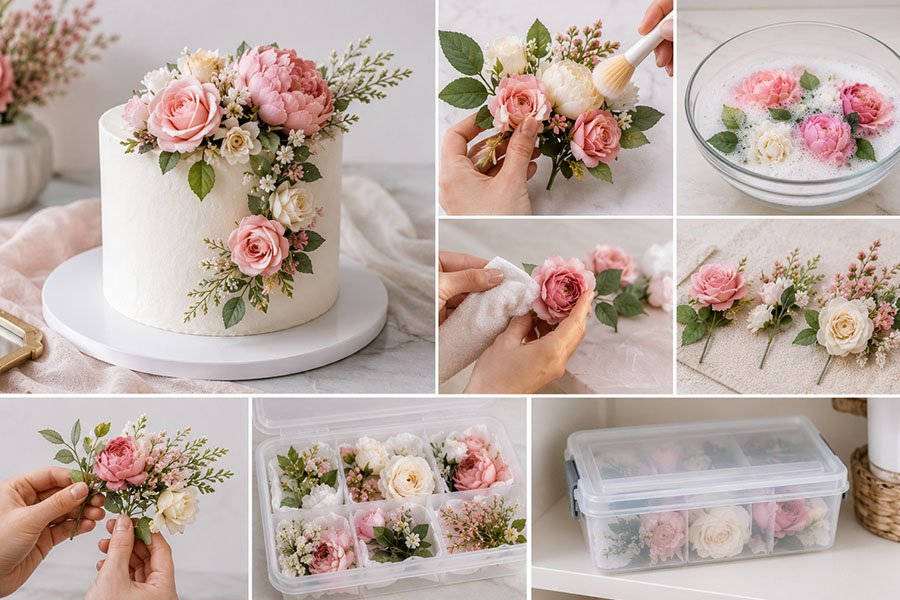
To sanitize fake flowers for cake use, gently wipe them with a food-safe disinfectant solution, such as diluted white vinegar or an appropriate alcohol-based spray. It is important to focus on areas that touch the cake and ensure the flowers are completely dry before reuse to maintain their integrity and hygiene.
Proper sanitization is key to extending the life of artificial flowers and ensuring they meet food safety standards for subsequent uses. This process helps preserve their appearance and prevents the transfer of unwanted residues.
Importance of Sanitization:
- Food Safety Assurance: Eliminates potential bacteria or contaminants from food contact.
- Aesthetic Maintenance: Removes frosting, crumbs, and other residues, keeping flowers pristine.
- Longevity Extension: Prevents the accumulation of sticky substances that attract dust and dirt, prolonging the product’s usable life.
Effective Sanitization Steps:
Here is a guide for effectively sanitizing artificial flowers:
| Step | Description |
|---|---|
| Initial Cleaning | Carefully remove any visible frosting or food particles using a soft brush or a dry cloth. Avoid vigorous pulling on petals. |
| Solution Selection | Prepare a food-safe sanitizing solution. A common choice is a 50/50 mixture of white vinegar and water. Alternatively, a small amount of edible alcohol (e.g., grain alcohol) on a cloth can target stubborn residues. Harsh chemicals should be avoided to prevent damage and ensure food safety. |
| Wiping Procedure | Dampen a clean, soft cloth or sponge with the chosen solution. Gently wipe all surfaces of each flower, paying particular attention to parts that contacted the cake. Submerging flowers is generally not recommended as it can affect their structure or color. |
| Optional Rinse | If a vinegar solution was used, a light wipe with a clean, water-dampened cloth can remove any residual odor. For alcohol-based solutions, rinsing is typically unnecessary due to rapid evaporation. |
| Thorough Drying | Place the cleaned flowers on a clean, dry towel in a well-ventilated area, or hang them. Complete drying is critical to prevent mold or mildew growth. This process may take several hours. |
| Final Inspection | Once dry, inspect each flower closely for any remaining residue. If necessary, repeat the cleaning process to ensure complete cleanliness before storage. |
Best Practice Tip:
It is advisable to designate specific cleaning tools, such as soft brushes and cloths, solely for artificial floral decorations. This practice minimizes cross-contamination and ensures the delicate materials are handled appropriately.
What to do with leftover faux flowers?
After an event, many artificial flowers often remain in excellent condition, prompting questions about their potential for further use. Discarding them can seem wasteful given their durability and aesthetic appeal.
Leftover faux flowers can be effectively repurposed in numerous ways, transforming them into versatile decorative assets. These include enhancing existing home decor, creating new arrangements for various events, or incorporating them into DIY craft projects, offering both sustainable and cost-effective benefits.
Repurposing artificial flowers extends their value beyond a single event, allowing for continuous enjoyment and creative application in diverse settings. This approach supports sustainable decorating practices.
Creative Repurposing Ideas:
- Home Decor Integration: Use individual blossoms or small clusters to refresh existing floral displays, create mini bouquets for shelves, or adorn decorative items like photo frames.
- Event Design Versatility: Assemble curated sets of reusable floral elements for different event themes, allowing for quick adaptation to various client needs without constant new purchases.
- DIY Craft Projects: Utilize flowers for crafting wreaths, garlands, decorative embellishments for gifts, or even unique costume accessories.
- Seasonal Adaptations: Easily update seasonal displays by swapping out colors and types of artificial flowers, providing flexible decor solutions throughout the year.
Transforming Faux Flowers into Assets:
| Application | Suggestion |
|---|---|
| New Floral Displays | Combine various artificial flowers and greenery to design fresh bouquets or centerpieces. This allows for extensive customization and distinct aesthetics for different occasions. |
| Wreaths and Garlands | Secure flowers onto a base to construct decorative wreaths for entryways or walls. String them together to form garlands suitable for adorning staircases, mantels, or event arches, especially effective for holiday decor. |
| Gift Enhancement | Employ single blossoms or small groups to embellish gift packaging, tie around beverage bottles, or add a refined touch to handmade cards, elevating the overall presentation. |
| 3D Wall Art | Arrange and affix artificial flowers onto a canvas or within a shadow box to produce distinctive three-dimensional floral artwork, introducing texture and color to interior spaces. |
| Hair Accessories | Attach smaller flowers to hair clips, headbands, or combs to craft custom hair adornments for weddings, parties, or daily wear, a popular choice for themed events or bridal parties. |
| Table Setting Accents | Place individual flowers at each place setting or tuck them into napkins for an elegant detail. Scattering them loosely across tables can also add color and texture without large arrangements. |
| Candle Decorations | Wrap artificial flowers around candle holders or bases to create a soft, romantic ambiance. Ensure proper distance from the flame to prevent any heat-related damage. |
| Space Dividers | For larger areas or commercial environments, develop hanging floral screens or integrate flowers into existing room dividers, introducing natural elements and visual softness. |
Repurposing Perspective:
Even items considered "leftovers" can become foundational elements for new and striking decorative schemes. A creative approach allows these durable items to serve multiple functions, reducing waste and maximizing aesthetic impact.
Are artificial flowers safe for cakes?
A common question arises regarding the safety of placing non-edible artificial flowers directly onto edible cakes. Ensuring the well-being of consumers is paramount when incorporating decorative elements.
Artificial flowers can be safely used on cakes if specific precautions are observed. It is critical to establish barriers between the flower material and the cake, select non-toxic components, and ensure all decorative elements are thoroughly cleaned prior to placement, minimizing any potential risks.
Adhering to safety guidelines is essential for creating visually appealing cakes without compromising food safety. This involves careful selection of materials and diligent preparation.
Potential Safety Concerns:
- Material Toxicity: Dyes, glues, or components in some artificial flowers may not be food-safe.
- Hygiene Risks: Dust, manufacturing residues, or environmental debris can transfer to the cake.
- Physical Hazards: Small, detachable parts like plastic stamens or wires could pose a choking risk.
Safety Best Practices for Cake Decoration:
| Practice | Implementation Details |
|---|---|
| Use Physical Barriers | This is a fundamental step. Avoid inserting artificial flower stems directly into cake. Instead, use food-safe floral picks, spikes, or wrap stems with food-safe floral tape before insertion. For flowers resting on the cake surface, place a small piece of parchment paper or food-grade cling film underneath to create a separation layer. |
| Pre-Use Cleaning | Always clean artificial flowers as previously described (sanitizing with food-safe solutions and thoroughly drying) before they come into contact with a cake. This removes dust, debris, and potential processing residues. |
| Material Selection | Opt for high-quality artificial flowers from reputable sources. These products are typically made with more durable and generally non-toxic materials. Lower-quality flowers may contain questionable dyes or adhesives that could leach. |
| Secure Small Elements | If artificial flowers contain small, detachable components like plastic stamens or glitter, ensure they are firmly secured or remove them. Only edible glitter should be used directly on cake surfaces. |
| Client Communication | For professionals, it is important to advise clients on the safe use and removal of artificial flowers from cakes. Emphasize that these are decorative and not intended for consumption. |
| Strategic Placement | Position flowers to minimize direct contact with the cake’s edible body. Placing them on top of a stable fondant layer or a firm frosting design can help reduce contact. |
| Dedicated Storage | Store artificial flowers intended for cake decoration separately from general craft supplies. Keep them in a clean, airtight container to prevent dust accumulation and potential contamination, maintaining their readiness for food contact. |
Key Safety Principle:
The primary principle is to ensure no direct contact between non-food-safe parts of the artificial flower and the edible portions of the cake. Utilizing effective barriers and rigorous cleaning protocols mitigates virtually all safety concerns.
How to make old fake flowers look new again?
Over time, artificial flowers can accumulate dust, fade, and lose their original shape, diminishing their aesthetic appeal. Restoring their vibrant appearance can maximize their decorative potential.
To refresh old artificial flowers, begin with thorough cleaning to remove dust and dirt. Reshape any bent elements, and consider using light steaming or a specialized conditioning spray to revive their original form and color. These steps can significantly enhance their appearance and extend their decorative life.
Maintaining the appearance of artificial flowers ensures they continue to provide lasting beauty for various applications. Simple restoration techniques can transform dull items into fresh-looking decor.
Common Deterioration Factors:
- Dust Accumulation: The most frequent issue, leading to a dull and dirty appearance.
- Color Fading: Prolonged exposure to sunlight can cause dyes to diminish in vibrancy.
- Shape Distortion: Improper storage or handling can result in bent or crushed petals and leaves.
- Residue Buildup: Environmental factors such as hairspray, grease, or smoke can leave residues.
Revitalization Techniques:
Here are methods to restore the appearance of artificial flowers:
| Technique | Description |
|---|---|
| Cleaning and Dusting | Gentle Shaking: Shake flowers outdoors to dislodge loose dust. Cool Air Blow: Use a hairdryer on a cool setting to blow away dust. Soft Wiping: For persistent dust, gently wipe with a soft, dry brush or a microfiber cloth. Damp Cleaning: For heavier dirt, a slightly damp cloth with a mild soap solution can be used, but avoid saturation and always test a hidden area first. For silk flowers, a vacuum cleaner with a delicate brush attachment can also be effective. |
| Reshaping Methods | Manual Adjustment: Carefully reshape bent petals and leaves by hand, avoiding harsh creases. Steaming: Hold flowers over a boiling water pot or use a garment steamer. The steam relaxes materials, allowing for gentle reshaping back to their original form. This method is particularly effective for silk flowers. Maintain a safe distance and brief exposure to prevent water damage or material deformation. |
| Color Restoration | Controlled Sunlight Exposure: For certain plastic flowers, very brief, indirect sunlight exposure might slightly brighten colors, though prolonged exposure causes fading. Fabric Dyeing: Silk flowers can be carefully re-dyed with fabric dyes, requiring precision and experience. Protective Sprays: Craft stores offer floral color sprays or UV protective sprays that can refresh hues and guard against future fading from light exposure. |
| Grease Removal | For flowers exposed to grease or odors (e.g., from a kitchen environment), a very mild solution of dish soap and water, applied with a soft brush, followed by careful rinsing (if material permits) and thorough drying, can be beneficial. This process requires caution and is not suitable for all materials. |
| Stem Refurbishment | Gently straighten any internal wires in bent stems. If stem wrapping is damaged, re-wrap it with floral tape to restore its appearance and integrity. |
| Improved Storage | To prevent future damage, store artificial flowers properly. Use airtight containers or boxes to protect them from dust and crushing. Lay them flat or hang them to help maintain their shape and condition. |
Maintenance Perspective:
Treating artificial flowers as durable investments that require occasional maintenance ensures their prolonged beauty. Consistent cleaning and care can keep them looking fresh and realistic for many years, enhancing their overall value.
My insights:Can Artificial Flowers for Cake Decoration Be Reused?
Reusing cake flowers can save money, but poor cleaning or direct frosting contact may create hygiene risks. The key is safe handling and proper storage.
Yes, artificial flowers for cake decoration can be reused if they are clean, undamaged, and made from durable materials such as silk or plastic. Flowers should not be reused if they absorbed frosting, oil, moisture, or contamination. Using wrapped stems or flower picks helps improve food-safe reuse.
How to Reuse Artificial Cake Flowers Safely
Artificial flowers are reusable only when their material, condition, and cake contact method support safe repeated use.
| Reuse Factor | Safe to Reuse | Better to Replace |
|---|---|---|
| Material | Plastic, silk, washable flowers | Frayed fabric, shedding foam |
| Cake Contact | Used with wrapped stems or picks | Pressed directly into frosting |
| Cleanliness | Gently cleaned and dried | Sticky, oily, stained, or dusty |
| Condition | Shape and color remain stable | Bent, faded, broken, or loose parts |
| Storage | Airtight clean container | Open storage with dust exposure |
For best results, remove flowers carefully after the event, wipe or wash them according to material type, dry completely, and store them separately from craft sprays or harsh cleaners. If the flowers were used on food surfaces directly, repurpose them for non-food décor instead of another cake.
Conclusion
Artificial flowers are reusable for cake decoration when sanitized, repurposed, and maintained correctly. Implementing proper cleaning protocols, exploring diverse applications, and utilizing revitalization techniques ensures these decorative elements remain beautiful and functional for numerous occasions.