
Are you considering using artificial flowers for your next wreath project, but wondering if they are a suitable choice? Many believe natural flowers are the only option for beautiful wreaths, but artificial options provide significant benefits. They offer distinct advantages for diverse crafting needs.
Yes, artificial flowers are suitable for wreath-making projects. They provide durability, versatility, and a wide range of aesthetic options. This allows for the creation of long-lasting, attractive wreaths that need minimal upkeep. Artificial flowers offer creative freedom for any decor style. They are a practical choice for many projects.
Using artificial flowers for wreaths opens up many design possibilities. It enables the creation of lasting decorations that can be enjoyed repeatedly. These flowers can transform spaces by adding consistent beauty without the demands of real flora. They are a practical alternative.
How Do You Make a Wreath with Fake Flowers?
Have you ever wanted to create a durable and attractive wreath but felt uncertain about the process? Crafting a beautiful wreath using artificial flowers is straightforward. The outcomes are often impressive and long-lasting. This section outlines the simple steps to achieve such a project.
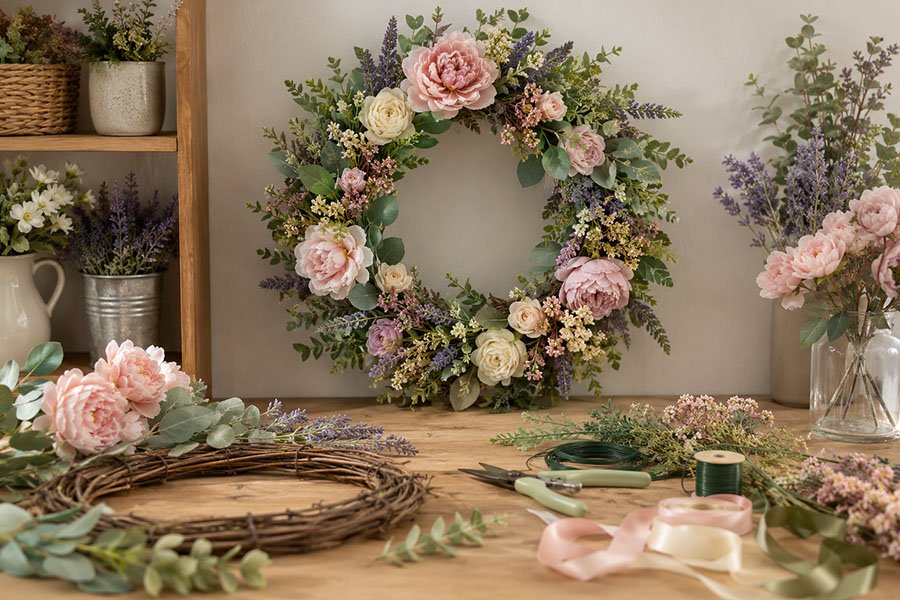
Making a wreath with artificial flowers involves selecting a base, arranging the chosen flowers, and securely attaching them. Necessary tools include wire cutters, floral wire, and hot glue. Begin by preparing all materials. Then, position larger elements first. Follow by filling in spaces with smaller blooms and greenery.
Creating a wreath with artificial flowers is a rewarding and creative activity. It allows for personal expression and the development of unique items. Each step, from choosing materials to adding final touches, builds upon the previous one. Here is a guide to constructing an artificial flower wreath.
Choosing Your Wreath Base
The wreath base forms the structure and determines the overall size and shape of the finished piece. Various types of bases are available.
- Grapevine Wreaths: These offer a rustic, natural appearance. Flowers can be woven or tucked directly into the vines.
- Wire Frames: These provide a robust framework. They are useful for intricate designs. Adding moss or mesh can help with flower attachment.
- Foam Wreaths: These are lightweight and easy to use. Flower stems can be inserted directly into the foam.
Consider the desired aesthetic for the final wreath when selecting a base.
Selecting Your Artificial Flowers and Greenery
This stage involves choosing the decorative elements. Select flowers that complement each other in terms of color, size, and texture.
| Flower Type | Description | Best For |
|---|---|---|
| Roses | Classic and elegant, available in many colors | Formal, romantic, or traditional wreaths |
| Peonies | Full and lush, adding significant volume | Luxurious, abundant wreaths |
| Eucalyptus | Greenery, providing texture and filler | Natural, rustic, or modern wreaths |
| Berries | Small accents, adding color pops | Seasonal or festive wreaths |
Focus on artificial flowers that exhibit high realism. These closely mimic natural flowers in appearance and feel. This contributes to a professional-looking wreath.
Assembling Your Wreath
Once materials are ready, assembly begins. Work in layers to create a full and cohesive design.
- Attach Greenery First: Start by securing base greenery to the wreath form using floral wire. This establishes a foundational background.
- Add Larger Flowers: Next, place the largest flowers, distributing them evenly. Secure with hot glue or floral wire.
- Fill in with Smaller Blooms: Use medium and small flowers to fill any gaps. Group them for visual interest.
- Add Embellishments: Incorporate elements like berries, ribbons, or other decorative items. These personalize the wreath.
Periodically step back to review the design’s progress. Adjustments can be made as needed to ensure a balanced look. This layering technique is effective for creating intricate designs.
Are Fake Flowers Tacky for Home Decor?
Is there a concern that incorporating artificial flowers into home decor might appear unsophisticated or outdated? This worry is common for many individuals. However, the current state of artificial flowers is very different. They now offer elegance and refinement.
No, artificial flowers are not inherently tacky for home decor. Modern artificial flowers are often high-quality and designed for realism. They provide lasting aesthetic appeal without the need for upkeep. Selecting realistic designs and arranging them artfully ensures an elegant display. They adapt to various decor styles, enhancing any interior space.
Historically, artificial flowers sometimes had a reputation for being inferior or obviously fake. This perception has significantly changed. The quality of artificial flowers has advanced considerably. They are now considered a stylish option for home decoration.
The Evolution of Artificial Flowers
Contemporary artificial flowers differ greatly from those of past decades. Manufacturers now employ advanced production techniques and superior materials.
- High Realism: Modern artificial flowers are designed to closely resemble natural blooms. This includes attention to texture, color variations, and subtle imperfections.
- Quality Materials: Materials like silk, latex, and premium plastics are used. These contribute to a lifelike appearance and tactile quality.
- Attention to Detail: Each component, such as petals and leaves, is carefully crafted. This process ensures a natural and realistic presentation.
The intricate details contribute significantly to the overall realistic effect. When examining high-quality artificial flowers, distinguishing them from natural ones can be challenging.
How to Style Fake Flowers Elegantly
The way artificial flowers are used determines their elegance in decor. Thoughtful placement and arrangement are key.
- Choose High-Quality Pieces: Select artificial flowers that appear realistic. Avoid items made from overly shiny or bright plastic.
- Mix Textures: Combine different types of artificial flowers and greenery. This adds depth and visual interest to arrangements.
- Use Appropriate Vases: Opt for realistic containers made of glass or ceramic. Avoid plastic vases.
- Rotate Arrangements: Change floral displays periodically to match seasons or refresh the decor. This maintains a fresh look.
- Clean Regularly: Dust accumulation can make artificial flowers look old. Regular cleaning helps maintain their new appearance.
A project for a hotel lobby required a grand floral arrangement. The client initially had reservations about using artificial flowers. After viewing high-realism artificial peonies and hydrangeas, the client was impressed. Guests frequently complimented the arrangements, assuming they were fresh. This illustrates how quality artificial flowers can elevate a space.
Dispelling the "Tacky" Myth
The notion that artificial flowers are tacky often stems from older products. It is important to consider the current advancements in the market.
| Old Perception | New Reality |
|---|---|
| Obviously Plastic | High-realism silk, latex, and fabric materials |
| Dust Collectors | Easy to clean and durable for long-term display |
| Limited Styles | Wide variety of styles, with customization available |
| Only for "Frugal" Decor | Used in sophisticated homes and commercial settings |
The aim is to offer products that meet high aesthetic standards. This helps to change older perceptions. The focus is on providing lasting beauty without compromise.
Can You Use Dried Flowers with Faux Flowers Together on a Wreath?
Have you considered combining the delicate appearance of dried flowers with the durability of artificial flowers on a wreath? Many creators wonder if these distinct materials can be successfully integrated. It is indeed possible to use both effectively.
Yes, dried flowers and artificial flowers can be combined on a wreath. This pairing creates a rich, textured appearance that blends natural elements with long-lasting qualities. Key aspects include selecting complementary colors and textures. Ensure both types of flowers are securely attached. This results in an aesthetically pleasing and durable design.
Combining dried and artificial flowers on a wreath offers a unique aesthetic. It merges the best characteristics of both: the natural appeal of dried elements and the longevity of artificial ones. This blend can produce visually striking and dynamic wreaths.
Why Combine Dried and Faux Flowers?
There are several strong reasons to integrate these two types of floral materials.
- Textural Contrast: Dried flowers introduce a distinct, rustic texture. Artificial flowers often provide softer textures and more vibrant colors.
- Enhanced Realism: Incorporating real dried elements can make artificial flowers appear more authentic.
- Extended Life: The presence of artificial flowers helps the wreath maintain its fullness and color over time. This happens even as dried elements age.
- Sustainable Decor: This approach allows for the creative reuse of dried flowers from various sources.
This combination enables a rich, layered look that is often challenging to achieve with a single type of flower.
Tips for a Successful Combination
To ensure a cohesive and attractive mixed wreath, consider these practical suggestions.
- Color Palette: Establish a harmonious color scheme. This ensures that different textures blend well together.
- Focal Points: Decide whether artificial or dried flowers will be the main attraction. Use them as central elements.
- Layering: Begin by attaching artificial greenery and larger artificial blooms. Then, weave in the dried elements.
- Secure Attachment: Dried flowers can be fragile. Use hot glue or thin floral wire to fasten them firmly to the wreath.
| Material Type | Pros | Cons | Best Use in Mixed Wreaths |
|---|---|---|---|
| Artificial Flowers | Durable, vibrant, long-lasting, versatile | Can appear artificial if of low quality | Providing structure, vibrant color, filler |
| Dried Flowers | Natural texture, earthy tones, unique | Fragile, prone to fading, collects dust | Adding accent, natural elements, texture |
A design for a fall wreath incorporated deep red artificial maple leaves as the foundation. Bunches of dried wheat and small artificial pumpkins were then added. The outcome was a rich, autumnal display. It possessed both a natural feel and a luxurious appeal. The dried elements provided authenticity, while the artificial components ensured durability throughout the season.
Achieving a Balanced Look
Balance is crucial for a harmonious mixed wreath. Neither type of flower should dominate the other.
- Distribute Evenly: Spread both types of flowers around the wreath. Avoid clustering them in one area.
- Vary Sizes: Use a mix of large and small elements. This creates visual interest and depth.
- Consider the Season: Certain dried flowers, such as lavender or eucalyptus, are suitable year-round. Others, like dried oranges, are more seasonal.
When designing custom arrangements, consider how different materials interact. This helps ensure a visually appealing final product.
What Holds Fake Flowers in Place?
Have you ever wondered about the methods used to secure artificial flowers firmly in wreaths or other arrangements? This is a common query. Fortunately, several reliable techniques exist. Understanding these methods helps in creating durable floral displays.
Various tools and methods are used to secure artificial flowers. Hot glue provides strong, quick bonds for many elements. Floral wire offers flexible and secure attachment for stems, especially heavier ones. Zip ties are effective for bulkier items on robust bases. Floral foam provides a stable medium for inserting stems. Each method serves specific purposes in different projects.
Properly securing artificial flowers is essential for any long-lasting arrangement. Whether creating a wreath, centerpiece, or larger display, robust fastening ensures longevity. Many techniques have been developed over years in the floral industry. The correct tools significantly impact the final result.
Essential Tools for Securing Fake Flowers
Having the appropriate tools simplifies the process and enhances effectiveness.
- Hot Glue Gun: A primary tool for strong, rapid adhesion. It works well for individual petals, small flowers, and leaves.
- Floral Wire: Thin and pliable wire. It is ideal for wrapping around stems and attaching them to various bases. It is available in different thicknesses.
- Wire Cutters: Necessary for precisely cutting floral wire and trimming artificial flower stems. Quality cutters ensure clean cuts.
- Floral Tape: A sticky, green tape used to bundle stems together. It also helps conceal wires for a cleaner finish.
- Zip Ties: Durable plastic ties. These are effective for securing larger or heavier components, particularly on wireframes.
Using good quality tools is recommended. They contribute to a smoother process and more professional outcomes.
Techniques for Different Applications
The method of attachment varies depending on the specific project and type of flower.
-
For Wreaths:
- Hot Glue: Apply a small amount of glue to the base of the flower stem. Press it firmly onto the wreath base.
- Floral Wire: Wrap the wire around the stem. Then, pass it through the wreath base. Twist the ends to secure. This method is effective for heavier flowers.
- Tucking: For grapevine wreaths, stems can sometimes be tucked directly into the vines. Adding glue provides extra security.
-
For Vases and Arrangements:
- Floral Foam: Place foam in the vase. Insert stems directly into the foam. The foam provides stability.
- Pebbles or Marbles: Fill the vase with these materials for weight and stability. Insert stems between them.
- Water (for realism): Some high-quality artificial flowers are designed to be submerged in water. This enhances their lifelike appearance.
| Securing Method | Best For | Advantages | Disadvantages |
|---|---|---|---|
| Hot Glue | Small flowers, leaves, quick adhesion | Fast, strong, straightforward to use | Can be messy, generally permanent |
| Floral Wire | Stems, heavier flowers, attaching to frames | Flexible, secure, allows adjustments | May be visible if not concealed |
| Floral Foam | Vase arrangements, providing a stable base | Offers structure, holds stems upright | Not suitable for all container types |
| Zip Ties | Large, bulky items, strong attachment | Very strong, durable | Can be noticeable, less adaptable |
For a large corporate event, numerous floral displays were required. Efficiency and durability were critical. Hot glue and floral foam were used for centerpieces. For larger wall installations, floral wire and zip ties provided robust attachment. This ensured all elements remained secure throughout the event. Artificial flowers, when properly secured, maintain their intended design.
Ensuring Long-Lasting Security
Beyond the initial attachment, consider these points for enhanced durability.
- Test Attachments: Gently tug on flowers after securing them. Confirm they are firmly in place.
- Reinforce: For outdoor wreaths, use additional glue or wire. Environmental factors can loosen attachments.
- Check Periodically: For permanent arrangements, inspect them every few months. Re-secure any loose components.
High-quality artificial products are designed for durability and longevity. Proper securing methods further enhance their lifespan and stability.
My insights: Unlock Your Creativity: Crafting Wreaths with Faux Flowers
Dreaming of a beautiful wreath that lasts? Fake flowers are your secret weapon! They offer endless design possibilities without the hassle of wilting, making your wreath-making projects a breeze.
Yes, artificial flowers are an excellent choice for wreath-making projects, offering significant advantages over fresh blooms. Their durability, consistent appearance, year-round availability, and ease of use make them ideal for creating long-lasting, weather-resistant, and cost-effective decorative wreaths for any season or occasion.
The Undeniable Appeal of Faux Florals for Wreaths
Using artificial flowers for wreath making is not just possible, it’s often the preferred method for DIY enthusiasts and professional crafters alike. Their inherent qualities address many challenges associated with fresh flowers, providing a superior and sustainable solution for decorative wreaths.
Why Choose Artificial Flowers?
The benefits of using fake flowers for wreaths are extensive, impacting both the creative process and the longevity of the final product.
| Benefit | Impact on Wreath Making |
|---|---|
| Durability & Longevity | Wreaths won’t wilt, fade, or die; can be reused season after season. |
| Consistent Appearance | Maintain uniform color and shape, ensuring a polished and professional finish. |
| Weather Resistance | High-quality, UV-resistant faux flowers can withstand outdoor elements, preventing fading. |
| Design Flexibility | Stems can be easily cut, bent, shaped, and rearranged to fit any design vision. |
| Year-Round Availability | Access to any flower type, regardless of the natural growing season, for diverse designs. |
| Cost-Effectiveness | Initial investment can be higher, but reusability makes them more economical over time. |
| Ease of Use | Wire stems simplify attachment to various wreath bases (grapevine, foam, wire frames). |
Expert Tips for a Stunning Faux Flower Wreath
To maximize the impact and realism of your artificial flower wreath, consider these practical tips:
- Fluff and Shape: Gently open up petals and leaves with your hands, or use a low-heat hair dryer or steamer to give them a fuller, more natural appearance.
- Strategic Cutting: Employ sharp wire cutters to trim stems to the desired length. This allows for precise placement and avoids overcrowding.
- Mix Textures and Greens: Combine different types of flowers (e.g., peonies with hydrangeas) and integrate various artificial greeneries like eucalyptus or ivy to add depth, dimension, and realism.
- Secure Attachment: Utilize hot glue for a strong hold on stems, or simply wedge wire stems directly into natural grapevine wreath bases for a firm grip.
- Balanced Placement: Distribute flowers and greenery evenly around the wreath, alternating placement to create a balanced, organic, and full aesthetic.
With artificial flowers, your wreath-making projects are limited only by your imagination, allowing you to create beautiful, lasting decor for any occasion.
Conclusion
Artificial flowers are an excellent choice for wreath-making projects. They offer significant durability, versatility, and realistic aesthetics. Modern artificial flowers are a practical and stylish option, providing enduring beauty without the need for constant maintenance.