
Custom Artificial Berry Stems: Why We Sampled the Stem Three Times
A berry branch can look convincing in a catalog. Once a buyer picks it up or sets it in a clear vase, the exposed stem gets a closer look.
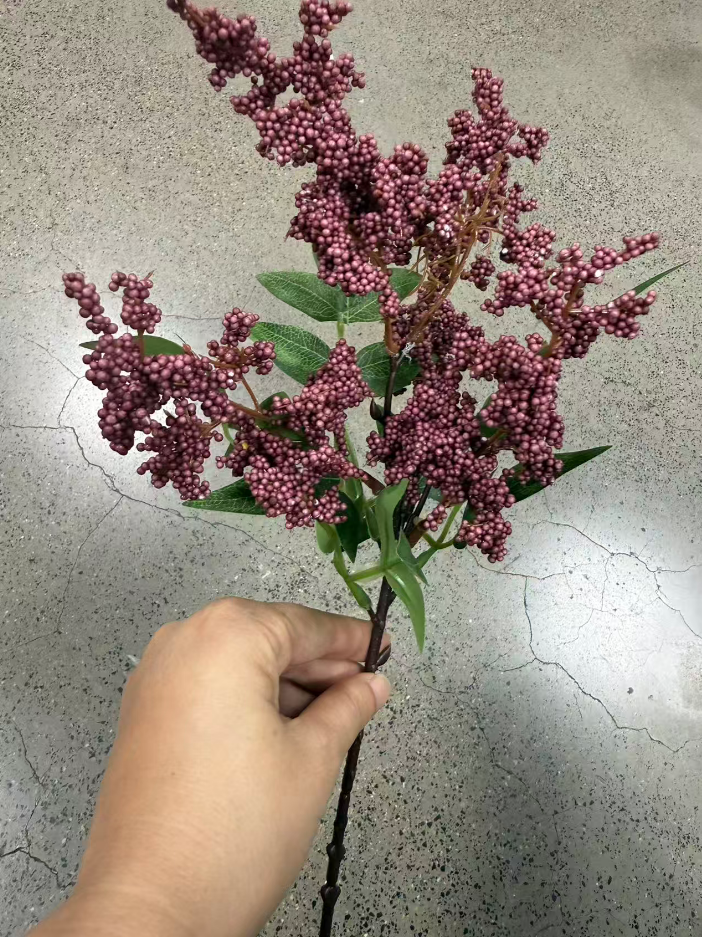
A buyer sent us a reference branch for custom artificial berry stems. They were flexible about the color and berries, but wanted the stem to look like a real twig. We made three rounds of stem samples, added a weathered finish at their request, and reached a result they were happy with.
The assembled branch shows how much of the main stem stays visible below the leaves.
If you’re developing a branch for a retail range or floral collection, this project gives you a practical way to brief your supplier and decide what to check when a sample arrives.
What Did the Buyer Want Us to Match?
The buyer sent us a physical reference. The berry clusters stood out at first glance, but the buyer’s main concern was how realistic the stem looked.
We focused the sampling work on the main stem. The buyer gave us more flexibility on the berry color and the berries themselves, so we could use the stem as the starting point for the review.
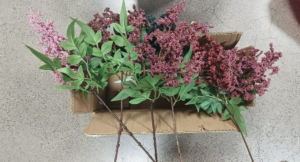
Viewed together, the branches show how much of the brown stem is exposed beneath the foliage.
Tell your supplier what will decide sample approval
When a buyer sends me a reference, one question helps set the direction: which detail will you look at first when you receive the sample? A single branch can show the supplier its overall shape, the spacing of the foliage, the fullness of the fruit, and the stem finish. The reference alone leaves room for interpretation about which of those features matters most to your business.
Think about how the product will be seen. If you sell loose stems in a retail display, shoppers can pick up the branch and turn it over. They may see the lower stem, the back of the leaves, and the point where the first side branch starts. If you’re buying for a clear vase collection, place your reference in the vase and photograph the exposed section. That shows the supplier exactly where you’ll see the finish in use. For a mixed arrangement, step back and check how much of the branch remains visible among the other stems.
Then put your priority into one sentence. For example: “Please match the look of the exposed brown stem as closely as possible. We’re open to discussing the berry shade.” Add a close-up of the area you mean. If your buying and design teams review samples separately, give both teams the same photo and note. That way, they can agree whether the first sample meets the brief before spending time on details that are still open for discussion.
Why Did These Custom Artificial Berry Stems Take Three Sampling Rounds?
The feel of a real twig comes from several small details: the shape of the main stem, the raised nodes, the buds, and the bark finish.
We made three rounds of stem samples before the buyer was satisfied. The buyer also asked for a weathered finish to give the stem the look of an older twig.
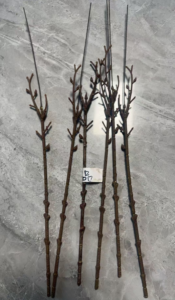
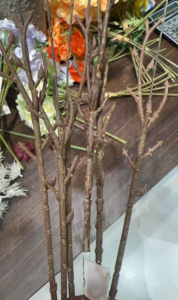
The bare stems let you compare the branching shape before the leaves and berries are added.
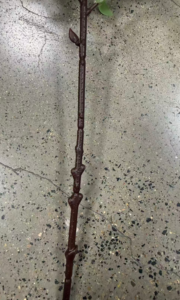
The close-up shows the raised nodes and bud that remain visible on the assembled branch.
Brown artificial stems with bark-like texture and lighter speckles
Use a close-up like this to point out the texture and color variation you want in a weathered finish.
Review the shape, surface, and assembled look
Start with the bare stem. Follow the main shaft from the base to the first fork and look at where the smaller branches meet it. Turn the stem to see the same junction from the side. Check whether the nodes and buds give you the look you want at the distance a shopper or florist would normally view the branch. A close-up helps you discuss a specific detail. The assembled branch then shows how much that detail contributes to the finished product.
If you want a weathered stem finish, share a reference for what “weathered” means to you. One buyer may picture a dry twig with soft brown tones. Another may want more visible texture and lighter patches around the nodes. Photograph the part of your reference that best shows the effect. On a review call, point to the exact section, such as the shaft below the first fork or the area around a raised bud. This gives your supplier a specific place to work on.
When comparing revisions, use the same lighting and angle. A change in light can make the same stem look glossier or darker, which makes it hard to tell what changed. Photograph the samples beside each other and label the versions. Once you’re happy with a sample, keep the physical branch or a clear set of reference photos. If you move to a bulk order, use that reference to explain which finish and details the buying and inspection teams should review.
How Do You Choose Berry Colors for a Wholesale Range?
This buyer could be flexible on color. If you’re matching a seasonal palette or extending an existing collection, shade may be one of your main approval points.
Use the numbered photo to shortlist colors. Then compare physical samples under your usual lighting and next to the vases, greenery, or other products they’ll be sold with.
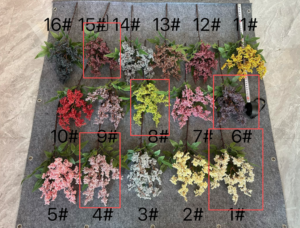
The numbered photo gives your team a shared reference when comparing berry shades.
Use the photo to shortlist and the sample to decide
When several people are reviewing a color range, share the same image and write down the sample numbers. “The darker pink” can mean different things to two people, especially when there are several pink and burgundy shades in the same photo. A sample number gives your supplier a clear reference. It also helps you keep track of which shades you want to compare together.
Next, place the physical samples next to the materials in your range. Look at a berry stem beside the vase you expect customers to use, or add it to an arrangement with the foliage you already buy. Start at normal viewing distance so you can see whether the color stands out or blends in. Then move closer and look at how the shade works with the green leaves and brown shaft. If you plan to sell the stems online, take a comparison photo under your normal product lighting as well.
It also helps to decide what the berry branch needs to do in the assortment. A feature stem may need enough color contrast to stand out in a display. A supporting stem may work best when it picks up a shade already present in the collection. Try swapping one stem at a time in the same arrangement. When you share your shortlist, include the sample number and a photo of what the shade needs to work with. That gives your supplier something more useful than a color name alone.
How Can You Check Whether the Berries Are Securely Attached?
You handle a berry stem when you unpack it, spread out the small branches, and position it in a vase. Those steps give you a useful sample check.
Look closely at where the berries and clusters meet the smaller branches. Then handle the sample the way your team would during setup and check the surface for loose berries.
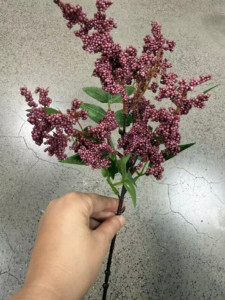
The close-up shows the small branches and berry clusters you can inspect while unpacking and arranging a sample.
Watch the artificial berry stem handling demo
I turn the sample by hand and briefly shake it so you can see how the clusters move with the branch.
Check the branch as your team would use it
Berry attachment is a detail we pay attention to when developing this type of branch. In the video, I hold one assembled sample, turn it, and briefly move it back and forth. The video shows how that sample moves in the hand. The photo gives you a closer view of the points where the clusters meet the smaller branches. When you review your own sample, start by looking at those areas from several angles.
Unpack the branch over a clean, light surface. Check the packaging as you open it so you can tell whether anything was already loose. Then arrange the smaller branches the way your display team normally would. Put the stem in the intended vase or arrangement and look at it from the front and side. Afterward, check the surface again and inspect the parts you handled. If you find a loose berry or a cluster that has shifted, take a photo and note when you saw it. That gives the supplier a specific area and handling step to review.
If you’re preparing for a bulk purchase, ask how the stems will sit inside the carton. Get a packing photo or review a packed sample if you want to see where the clusters may touch or press against one another. You can then judge both how the branches arrive and how they handle during setup. Those checks are especially helpful when your team needs to unpack and arrange many stems at once.
What Should You Send for a Custom Berry Stem Sample?
You can start a sampling discussion with a physical branch or clear photos. The most useful detail is what you need the new sample to match.
Share the overall branch, a close-up of the feature that matters most, and the intended use. Add the target length or a color sample number if you already have one.
A reference photo like this can show the overall shape. Add a ruler and a close-up when preparing your own sample brief.
Give your supplier a reference they can act on
If you’re starting with photos, take one of the full branch beside a ruler. Add a close-up of the part you most want to match. A side view helps if the branch needs a certain spread or silhouette. If the finish is the priority, use lighting that shows the texture and take one photo of the branch at normal viewing distance too. If you’re sending a physical reference, label it with a code your team and supplier can both use.
Next, describe how the branch will fit into your range. A retail loose stem may need a convincing finish along the whole shaft. A branch meant for a particular vase may need a specific exposed length. An event florist may care more about how the upper branches fill out an arrangement. If you have a target length, an estimated quantity, or a numbered color sample you want to compare, share it so your supplier can discuss the brief with you.
When the first sample arrives, go back to the feature you marked in your brief. Review that feature on its own and then in the assembled branch. If you need a change, point it out on a photo and say what result you’re looking for. Once you’re happy with the sample, keep the version number, color reference, and approved finish together. That gives your team and supplier a shared reference for the quote, packing discussion, and bulk order review.
Conclusion
Tell your supplier which detail matters most. Then use a physical sample to review the stem finish, berry color, and attachment before placing a bulk order.
B2B FAQ
1. Can I send a physical berry branch as a reference?
Yes. Include a note showing which features you want matched closely and where you have flexibility.
2. Can we start with photos?
Yes. Send a full-length photo, a detail photo, and a measurement for scale. A physical reference is helpful for judging texture and finish.
3. Can I request a weathered stem finish?
Share a reference showing the effect you want. We can discuss where the finish should be most visible and what to review during sampling.
4. Can I choose berry colors by sample number?
Use the numbered photo to shortlist colors for discussion. Review a physical sample before approving the shade.
5. Will my branch also take three rounds of sampling?
The number of rounds depends on your reference and what you need to approve. This project took three rounds of stem sampling.
6. How can I check if berries come loose during handling?
Unpack and arrange the sample over a clean surface. Then look for loose berries and inspect the clusters you handled.
7. What should I confirm about bulk packing?
Ask how stems are placed in the carton and what separates or protects the clusters. A packed sample can help you judge how your team will unpack them.
8. Can I use the branch outdoors?
Tell us where it will be used, for how long, and what exposure you expect. We can discuss suitability for the sample you’re considering.
9. How should I care for the branch?
Ask for care guidance for the selected sample. If you plan to use a cleaning product, check how it affects a small area first.
10. What do you need to prepare a wholesale quote?
Share your reference or sample code, estimated quantity, and any packing requirements. Include the destination if you’d like to discuss shipping.
Discuss Your Custom Berry Stem Sample
Have a berry branch you’d like to develop for your range? Send us a physical sample or a few clear photos and point out the detail you care about most. If you have a color in mind, include its sample number. We can help you decide what to focus on in your first sample and what to review before ordering in bulk.