
Struggling with outdoor decor that fades or deteriorates quickly? Many find it challenging to maintain vibrant outdoor spaces without constant effort. There is an effective solution for durable, beautiful outdoor displays.
Making artificial flowers look good outside involves selecting high-quality, UV-resistant materials and securing them properly. Thoughtful arrangement mimicking natural growth ensures a lifelike appearance. This approach maintains aesthetic appeal through various seasons, reducing maintenance needs.
Achieving beautiful and lasting outdoor displays is possible. This guide explores methods to create stunning outdoor artificial flower arrangements, transforming any exterior area into a welcoming space.
How do you make fake flowers look good outside?
Do outdoor artificial flowers often appear unconvincing? This common issue can detract from the ambiance of any outdoor setting. The desire for a fresh, natural aesthetic, even with artificial blooms, is widespread.
To enhance the appearance of artificial flowers outdoors, prioritize realistic, high-quality options, integrate varied textures, and include natural elements. Utilizing appropriate containers and diverse heights in arrangements creates dynamic and believable displays, seamlessly blending with the outdoor environment.
Extensive experience in the floral industry highlights the impact of meticulous selection on artificial arrangements. The goal is to create an authentic visual. High-quality items often feature subtle color variations and realistic textures that closely replicate natural blooms. This allows for vibrant, enduring displays suitable for various outdoor events.
Choosing the Right Artificial Flowers
Selecting appropriate products is fundamental. Focus on durability and realism.
-
Material Composition:
- Treated Silk: Some silk flowers are specially treated for outdoor durability, though general silk is better for indoor use.
- Plastic/Polyethylene: These materials are highly effective for outdoor use due to their durability and resistance to weather. They retain color well over time.
- UV-Resistant Fabrics: Fabrics treated to resist fading from sun exposure are crucial. Always confirm this feature.
-
Realistic Characteristics:
- Color Gradation: Natural flowers exhibit varied hues. Look for subtle color shifts and imperfections.
- Tactile Texture: Petals should possess a soft, natural feel, not a rigid, artificial one.
- Stem Details: Stems with realistic leaves, buds, or other natural features enhance authenticity.
Arranging for Natural Beauty
Design considerations should mimic horticultural practices.
-
Varying Heights and Textures:
- Combine tall and short floral elements.
- Mix broad foliage with delicate petals.
- Incorporate diverse types of greenery to add depth.
- Utilize various flower types, such as roses, hydrangeas, and diverse greens, for a comprehensive look.
-
Integrating Natural Components:
- Real Soil/Moss: Placing real soil or moss on top of artificial arrangements in pots helps conceal bases and gives the appearance of genuine growth. This technique is especially effective for artificial flowers in pots for outside.
- Stones/Pebbles: These can be used to add weight to the base of large planters.
- Branches/Twigs: Adding natural branches can provide an organic touch to arrangements.
-
Strategic Placement:
- Position arrangements in locations with suitable light exposure, similar to natural plants.
- Consider the background; a lush green hedge can enhance the realism of artificial blooms.
- How to plant fake flowers outside in the ground involves using stakes or burying stems slightly for a seamless integration.
What to Fill Fake Plant Pots With Outdoor
The choice of filler is essential for both stability and aesthetic appeal.
| Filler Type | Advantages | Disadvantages | Optimal Use Case |
|---|---|---|---|
| Sand | Heavy, good stability, economical | Can compact, may impede drainage | Small to medium pots, areas prone to wind |
| Gravel/Pebbles | Excellent drainage, heavy, stable | Potentially costly for large volumes | Medium to large pots, for added weight |
| Styrofoam/Floral Foam | Lightweight, easy to shape | Lacks significant weight, may degrade over time | Securing individual stems, lighter arrangements |
| Soil/Potting Mix | Most natural appearance, adds weight | Can become muddy, may attract insects | Topping off arrangements, concealing bases |
| Rocks | Very heavy, highly stable | Can be difficult to reposition, expensive | Large outdoor artificial flowers in pots |
When determining what to fill fake plant pots with outdoor, prioritize weight for wind resistance and realism for visual appeal. For how to secure artificial plants in pots outdoors, embedding stems into floral foam, then layering with heavier materials like sand or gravel, provides optimal results.
How to preserve artificial flowers outdoors?
Concerned about outdoor arrangements fading or deteriorating under environmental stress? The rapid loss of vibrancy in outdoor decor can be disappointing. The goal is to maintain the visual integrity of artificial flowers for extended periods.
To preserve artificial flowers outdoors, select items made from UV-resistant materials and apply UV protection sprays annually. Ensuring arrangements are securely anchored against wind and weather is also vital. Regular cleaning and careful placement away from intense, direct sunlight will significantly prolong their appearance and freshness.
Initial experiences with client projects underscored the importance of proactive preservation. For instance, artificial hanging baskets initially looked vibrant but quickly faded under strong sun exposure. This highlighted the necessity of emphasizing quality materials and protective measures, ensuring prolonged visual appeal even in challenging weather conditions.
Protecting Against UV Damage
Sunlight is a primary factor in the degradation of outdoor artificial flowers.
-
UV-Resistant Products:
- Always seek products explicitly labeled as UV-resistant. These are formulated with specialized dyes and materials to resist fading.
- Large outdoor artificial flowers in pots particularly benefit from inherent UV resistance due to their consistent exposure.
-
UV Protection Sprays:
- Application Method: Apply a clear UV protectant spray specifically designed for outdoor fabrics and plastics.
- Application Frequency: Reapply annually, especially prior to seasons with high sun exposure.
- Benefits: These sprays form a protective layer that mitigates the effects of damaging UV rays, thereby preserving color vibrancy.
Securing Against Wind and Weather
Wind can easily dislodge or damage outdoor arrangements.
-
Weighting Containers:
- Fill pots with heavy materials such as sand, gravel, or rocks. This prevents them from overturning in strong winds.
- For artificial flowers in pots for outside, combining sand at the base for weight with floral foam on top for stem stability is effective.
- How to secure artificial plants in pots outdoors frequently involves embedding stems deeply into these heavy fillers.
-
Staking Arrangements:
- For ground-level arrangements, use garden stakes or rebar. Insert them into the ground and secure the artificial stems with floral wire or zip ties.
- This method is crucial for how to plant fake flowers outside in the ground to prevent displacement by wind.
-
Strategic Positioning:
- Place arrangements in locations that offer some natural shelter from severe winds, such as against a wall or beneath an overhang.
- Avoid placing delicate arrangements in highly exposed, open areas if possible.
Cleaning and Maintenance
Regular care is essential for maintaining a fresh appearance.
-
Dusting:
- Perform light, regular dusting with a soft cloth or feather duster.
- For inaccessible areas, use compressed air.
-
Washing:
- For thorough cleaning, gently rinse with water, using a low-pressure hose setting.
- Apply a mild soap solution for stubborn dirt, followed by a thorough rinse.
- Allow items to air dry completely before returning them to their display location.
Material-Specific Care Recommendations
Different materials require tailored care for optimal longevity.
| Material Type | Recommended Cleaning Method | UV Protection Level | Wind Resistance | Additional Notes |
|---|---|---|---|---|
| Plastic/PE | Hose rinse, mild soap | Excellent (inherent) | Very durable | Highly resilient, suitable for prolonged outdoor use |
| Treated Silk | Damp cloth, light rinse | Good (with treatment) | Moderate | Verify specific outdoor treatment |
| Fabric (UV-treated) | Gentle rinse, air dry | Excellent | Moderate | May show wear over time if not secured |
| Foam/Rubber | Wipe clean with damp cloth | Fair | Can be brittle | Assess flexibility and overall durability |
Can I use artificial flowers outdoors?
Is the durability of artificial flowers in outdoor settings a concern? Many question their ability to withstand external conditions without quickly appearing worn or artificial. With proper selection, their outdoor performance can be impressive.
Yes, artificial flowers can be used outdoors, provided high-quality, weather-resistant products specifically designed for exterior applications are chosen. Look for materials that are UV-protected to resist fading and can endure diverse weather conditions, ensuring long-lasting aesthetic appeal for gardens, patios, or event venues.
The option of using artificial flowers for outdoor events, particularly when real flowers are impractical due to cost or fragility in certain climates, is highly beneficial. Premium, UV-resistant collections can offer a vibrant and lasting alternative, demonstrating that artificial flowers can be a superior choice for various outdoor settings.
The Advantages of Outdoor Artificial Flowers
Artificial blooms offer several benefits over natural ones.
-
Durability and Extended Lifespan:
- Unlike real flowers that wilt, artificial varieties maintain a fresh appearance for extended periods, often years.
- They are impervious to pests and diseases common to live plants.
- Extreme temperatures or lack of water do not affect them, making them suitable for diverse climates.
-
Minimal Maintenance:
- No watering, pruning, or fertilizing is required.
- Simple dusting or rinsing is generally sufficient for upkeep.
- This significantly reduces the time and effort needed for maintenance.
-
Economic Efficiency:
- While the initial expenditure may be higher, their longevity leads to long-term cost savings compared to continuous replacement of live flowers.
- Reduced maintenance contributes to overall financial benefits.
-
Adaptability:
- Arrangements can be designed well in advance, irrespective of seasonal availability.
- They are easily movable and can be repurposed for different events or occasions.
- Extensive customization options are available.
Essential Considerations for Outdoor Use
Informed choices prevent potential dissatisfaction.
-
Material Quality:
- Prioritize UV-resistant plastic or specially treated fabric.
- Inferior materials will rapidly fade and degrade.
- How to make artificial flowers with paper is a craft best suited for indoor applications, as paper flowers are vulnerable to water damage outdoors.
-
Structural Integrity:
- Inspect for sturdy stems and securely attached petals and leaves.
- Wire stems typically offer greater durability and flexibility for arrangement.
-
Weight and Stability:
- Ensure containers are sufficiently weighted to prevent tipping.
- Account for the wind exposure of the location when planning arrangements.
- How to secure artificial plants in pots outdoors involves using heavy fillers and potentially anchoring the container itself.
Selection for Specific Outdoor Settings
Different outdoor areas have distinct requirements.
| Outdoor Setting | Optimal Artificial Flower Type | Key Selection Criterion |
|---|---|---|
| Garden Beds | Staked individual blooms, dense bushes | UV-resistance, seamless integration with soil, proper "planting" |
| Patios/Balconies | Potted arrangements, hanging baskets, climbing vines | Weight for wind resistance, realistic fillers, secure attachments |
| Entryways/Porches | Large planters, topiary trees, decorative wreaths | High realism, impactful size, protection against wind and theft |
| Event Spaces | Custom arrangements, themed flowers, backdrop elements | Versatility, ease of transport, significant visual impact |
When considering how to plant fake flowers outside in the ground, firm securing and natural blending with the surroundings are critical for successful integration. For containers, particularly large outdoor artificial flowers in pots, the robustness and weight of the pot itself are important factors.
How to make an outdoor artificial flower arrangement?
Is crafting outdoor artificial flower arrangements that look professionally designed and authentically natural a challenge? Uncertainty about combining elements to achieve a cohesive, attractive display is common. The goal is to create something visually impressive, not merely a collection of artificial flowers.
To create an outdoor artificial flower arrangement, begin with a sturdy, weighted container, then layer various UV-resistant flowers and greenery. Vary heights and textures for a natural appearance. Secure stems firmly into floral foam or dense filler, and complete the arrangement by adding natural elements like moss or soil to conceal any artificial bases.
Designing effective artificial flower arrangements involves an artistic approach. It requires careful selection of components, achieving visual balance, and ensuring each element contributes to a unified, natural aesthetic. The objective is to create a fresh and inviting display, akin to a real garden.
Step-by-Step Arrangement Guide
Follow these steps for a polished outcome.
-
Step 1: Container and Filler Selection
- Choose a durable, weather-resistant pot, such as terracotta, ceramic, or robust plastic.
- What to fill fake plant pots with outdoor is crucial. Use heavy materials like sand, gravel, or rocks at the bottom for stability. Top with floral foam for easy stem insertion. For how to secure artificial plants in pots outdoors, embedding stems into this foam is essential.
-
Step 2: Establish Greenery Base
- Begin by adding foundational greenery to define the arrangement’s overall shape and size.
- Place taller greens in the center or rear, and shorter ones around the perimeter.
- Incorporate diverse shades of green for a more natural effect.
-
Step 3: Introduce "Thriller" Flowers
- These are the focal points—the tallest or most visually impactful flowers.
- Position them strategically to attract attention, typically in the center or slightly off-center.
- Consider color and form to make a strong visual statement.
-
Step 4: Incorporate "Filler" Flowers
- These are smaller, often clustered flowers used to fill voids and add volume.
- Distribute them evenly around the "thriller" flowers.
- Examples include hydrangeas, small roses, or delicate sprigs.
-
Step 5: Add "Spiller" Elements
- These are trailing plants that gracefully drape over the container’s edge.
- They soften the lines of the arrangement and contribute to an abundant, natural look.
- Ivy, wisteria, or petunia-like vines are suitable choices.
-
Step 6: Final Touches for Realism
- Adjust stems and leaves to create a natural flow, gently bending them to avoid stiffness.
- Apply a layer of real soil, pebbles, or preserved moss over the filler to conceal any artificial bases, giving the impression of natural growth.
- Consider adding small natural elements like branches or pinecones for additional texture.
Design Principles for Outdoor Arrangements
Applying these principles will enhance the overall design.
-
Balance and Proportion:
- Ensure the arrangement is proportionate to its container and the surrounding space.
- Distribute colors and textures uniformly for visual balance.
- For large outdoor artificial flowers in pots, match the scale of the blooms to the size of the container.
-
Color Harmony:
- Select colors that complement the outdoor environment and any existing decor.
- Consider a monochromatic scheme for sophistication or contrasting colors for vibrancy.
- Evaluate how colors will appear under varying lighting conditions throughout the day.
-
Texture and Form:
- Combine different textures, such as smooth petals with ruffled ones, and broad leaves with delicate ferns.
- Vary the shapes of flowers—round, spiky, airy—to create visual interest.
- This variety mimics the natural diversity found in actual gardens.
Addressing Common Issues
Even experienced designers encounter challenges.
| Issue | Primary Cause | Resolution |
|---|---|---|
| Appears artificial | Low-quality materials, unnatural design | Use UV-resistant, realistic flowers; vary heights/textures |
| Prone to tipping | Insufficient weight in container | Add sand, gravel, or rocks to the base of the pot |
| Fades rapidly | Not UV-resistant, direct sun exposure | Use UV-treated flowers; apply UV protectant spray |
| Unstable stems | Inadequate filler security | Embed stems deeply into floral foam, pack fillers tightly |
| Poor drainage | Absence of drainage holes | Drill drainage holes; use permeable fillers like gravel |
When considering how to plant fake flowers outside in the ground, ensuring firm anchoring and seamless integration with the natural environment is crucial for success.
My Insights: How to Make Flowers Out of Artificial Flowers for Outside
Tired of outdoor flowers wilting or high-maintenance décor? Learn how to create weather-resistant artificial flower displays that withstand the elements while adding lasting beauty to your outdoor spaces.
To make artificial flowers suitable for the outdoors, use UV-resistant blooms, secure them in weighted bases, and incorporate foliage for a natural look. Add a protective spray sealant, floral foam, and decorative stones for durability and realism. These arrangements are low-maintenance and weatherproof for lasting outdoor charm.
Crafting Weatherproof Outdoor Arrangements
Artificial flowers can elevate outdoor spaces with vibrant, low-maintenance décor. To ensure longevity and visual appeal, follow these steps:
1. Key Steps for Outdoor Artificial Flower Displays
Begin with a weighted base to secure the arrangement against wind or tipping. Pots filled with gravel, bricks, or sand provide stability. Insert artificial stems into a layer of floral foam for a strong foundation and arrange blooms in a deliberate sequence.
| Step | Materials Needed | Purpose |
|---|---|---|
| Weigh the Base | Gravel, sand, or heavy items | Prevents tips in wind |
| Anchor Stems | Floral foam, zip ties, waterproof adhesive | Keeps flowers secure |
| Add UV-Resistant Blooms | Outdoor-safe faux flowers | Prevents fading in sunlight |
| Create Realistic Layers | Greenery, trailing ivy, moss | Adds texture and natural aesthetics |
| Cover Exposed Foam | Soil, pebbles, or decorative stones | Enhances realism and disguises artificial base |
2. Materials That Ensure Durability
Choosing the right materials is critical for outdoor use. Opt for UV-resistant artificial flowers to minimize fading and wear. Plastic or PU flowers hold up well in rainy environments, while PVC stems offer superior sturdiness. Excessively lightweight pots should be avoided; instead, choose heavyweight ceramic, concrete, or metal containers. Alternatively, secure your arrangements with outdoor-safe zip ties or stakes for windy conditions.
3. Designing Natural-Looking Displays
To ensure the arrangement appears lifelike, mix layers and heights of greenery and flowers. Start with taller blooms as a focal point in the center, surround with medium-height flowers, and finish with low greenery or trailing accents like ivy or ferns. Choosing faux flowers with subtle color variations or slightly imperfect petal shapes enhances the natural aesthetic.
Tips for Long-Lasting Faux Flowers Outdoors
1. Planters, Boxes, and Creative Uses
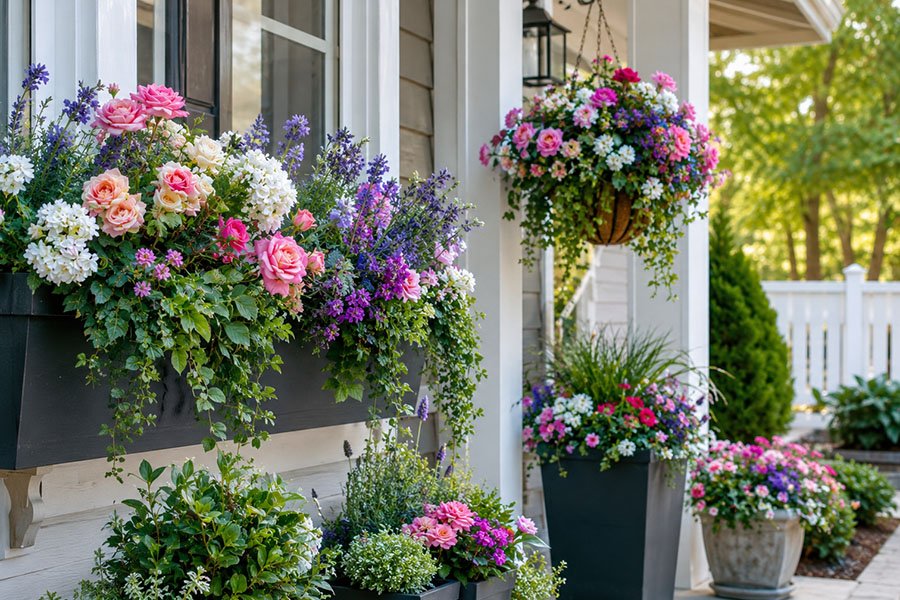
- Planters: Fill ceramic pots with faux flowers and trailing greenery for porch accents.
- Hanging Baskets: Secure trailing blooms like bougainvillea or wisteria to create cascading elegance.
- Window Boxes: Combine UV-resistant flowers with faux greenery like boxwood for a “just planted” look.
2. Maintenance Tips for Artificial Flowers Outside
Apply a weatherproof sealant spray to new artificial arrangements for added protection against rain and dust. Clean flowers occasionally with a damp cloth to maintain vibrancy, especially after extended exposure to the elements. Regularly secure loose stems or materials to keep the displays looking fresh.
Artificial flowers for outdoor use are the perfect blend of practicality and beauty, transforming patios, porches, or gardens into vibrant, worry-free environments.
Conclusion
Creating impressive outdoor artificial flower arrangements is achievable with a systematic approach. By selecting UV-resistant materials, securing them effectively, and arranging them thoughtfully, outdoor spaces can display enduring beauty. Leveraging the durability and low maintenance of artificial blooms allows for consistently vibrant decor.