
Outdoor artificial plants often lose their vibrant color and become brittle due to sun exposure and harsh weather. This ruins your decor and wastes the money you spent on your landscaping.
To protect artificial plants outside, apply a UV-protection spray every few months to block sun damage. Secure plants in heavy pots with rocks to prevent wind damage. Regularly rinse them with water to remove dust. Choosing products made from UV-rated polyethylene ensures the best resistance to fading and rain.
I have worked in the floral and décor industry for over ten years. I see many people buy beautiful faux greenery only to watch it turn blue or grey in the sun. If you do not use the right protection, your outdoor space will look cheap and neglected very quickly. I want to share the exact methods I use to keep artificial plants looking real and fresh for years.
How to protect outdoor fake plants?
Many people put fake plants outside and expect them to stay perfect without any help. The sun and rain are very strong and will break down low-quality plastic in just one season.
You can protect outdoor fake plants by using a clear UV-resistant spray that acts like sunscreen for the leaves. Place the plants in shaded areas to reduce direct light. You must also weight the pots with heavy stones so the wind does not blow them away. Keeping them clean from dust also prevents the material from breaking down.
Use UV-Resistant Clear Sprays
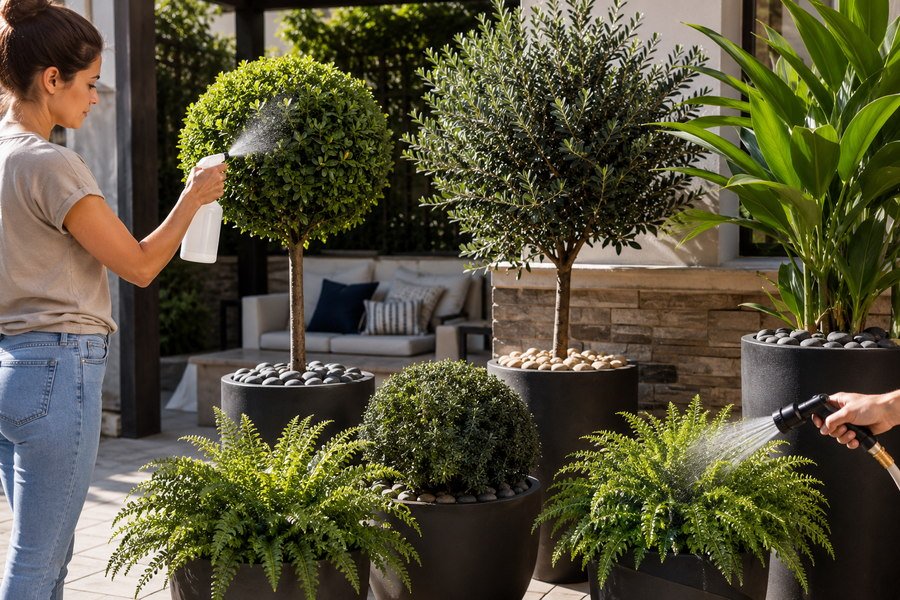
The most important step is blocking the sun. I always use a UV-resistant spray on all my outdoor projects. These sprays create a thin layer that blocks harmful rays. You should spray the plants before you put them outside. Make sure you cover both the tops and bottoms of the leaves. I have found that doing this twice a year is enough for most climates. It keeps the greens green and the reds from turning pink.
Secure Your Plants Against Wind
Wind is a major problem for artificial decor. Because these plants are light, they can blow over or even fly away in a storm. I suggest placing your fake plant inside a much larger, heavier ceramic or stone pot. Fill the bottom with bricks or heavy gravel. This keeps the plant stable. It also makes the plant look more realistic because it has a solid base. I once saw a beautiful hedge wall get ruined because the wind knocked it over. Proper weighting would have saved it.
Routine Cleaning and Rinsing
Dust and salt in the air can build up on the leaves. This dirt can actually trap heat and make the sun damage worse. It also makes the plants look dull and fake. I recommend a simple water rinse once a month. You do not need soap or hard brushes. A light spray with a garden hose is perfect. This keeps the texture of the leaves looking like real plants.
| Protection Method | Purpose | Frequency |
|---|---|---|
| UV Spray | Stops color fading | Every 3 to 6 months |
| Heavy Base | Prevents wind damage | Once during setup |
| Water Rinse | Removes dirt and dust | Once a month |
| Shade Placement | Reduces sun heat | Permanent |
Does WD-40 protect artificial flowers?
There is a common myth that WD-40 can make fake plants look shiny and protect them from the rain. While it might look good for a few minutes, this is actually a bad idea for your decor.
WD-40 does not protect artificial flowers and can actually damage them. It is a petroleum-based lubricant that can melt certain types of plastic or cause fabric dyes to bleed. It also leaves a sticky residue that attracts a lot of dust and hair. This makes your plants look dirty very quickly and makes them much harder to clean later.
The Chemical Risk to Plastic
Most artificial plants are made of plastic or polyester. WD-40 contains chemicals meant for metal, not for delicate decor. When I first started in this industry, I saw someone try this trick. The oil actually made the leaves soft and sticky. After a few days in the sun, the leaves started to warp and smell like a garage. It is much safer to use products specifically made for silk or plastic plants. These are designed to be gentle and dry completely.
The Problem with Sticky Surfaces
Dust is the enemy of a clean garden. If you use WD-40, you are coating your plants in a thin layer of glue. Every bit of dirt or pollen in the air will stick to the leaves. You cannot just hose this off because the oil holds onto the dirt. You would need to use strong soap to get the oil off, and that soap can damage the plant’s color even more. It creates a cycle of cleaning that is not worth the effort.
Better Alternatives for a Healthy Shine
If you want your plants to have a natural glow, use a specialized leaf shine spray. These are water-based and safe for the environment. They provide a nice look without the oily mess. I always tell my clients to focus on products that dry to a "matte" finish for outdoor use. This looks the most realistic under the bright sun.
| Feature | WD-40 | UV Floral Spray |
|---|---|---|
| Protects from Sun | No | Yes |
| Finish | Oily and Sticky | Dry and Clear |
| Safe for Plastic | No (Can melt) | Yes |
| Attracts Dust | Yes | No |
Can you keep artificial plants outdoor?
Many homeowners worry that artificial plants are only meant for the living room. They think the rain or the cold will make them fall apart in a few weeks.
You can keep artificial plants outdoors as long as they are "outdoor-rated." These products are made from high-grade materials like UV-protected polyethylene (PE). Unlike indoor silk flowers, outdoor-rated plants are designed to handle rain, snow, and heat. They do not soak up water and are built with stronger frames to survive the weather.
Why Material Choice Is Key
The main difference between indoor and outdoor plants is the material. Indoor plants often use "silk," which is actually polyester fabric. This fabric fades fast and can grow mold if it stays wet. For my brand, I always choose PE plastic for outdoor items. This material is waterproof and very tough. It looks very realistic because we use molds from real plants. If you buy the right material, your plants can stay outside all year long.
Understanding UV-Rated Products
When you look for outdoor plants, check if they are "UV-rated." This means the protection is mixed into the plastic while it is being made. It is not just a spray on the surface. This is the best way to ensure the plant stays green. I have tested many types of greenery in different climates. The plants with built-in protection last three to five times longer than regular ones. It is worth paying a little more for this quality.
Commercial vs. Residential Use
In commercial settings like hotels or weddings, durability is everything. I often help clients set up large outdoor event spaces. We use high-quality faux boxwoods and trees because they look perfect every day. You do not have to worry about the plants dying or looking brown. This saves a lot of money on maintenance and replacement. Even in cold winters, these plants keep your space looking full of life.
Benefits of Outdoor Faux Plants
- No Watering: Great for dry areas or busy people.
- Weather Resistant: They do not care about frost or high heat.
- Instant Privacy: Use tall hedges to block views immediately.
- No Pests: You won’t have to deal with bugs or diseases.
What to spray on fake flowers for outside?
Choosing the right spray is the final step in making your artificial garden last. If you use the wrong product, you might end up with white spots or a fake, shiny look that screams "plastic."
You should use a UV-resistant clear coat spray designed for outdoor fabrics or artificial plants. Look for brands that offer a matte finish to keep the plants looking natural. These sprays create a barrier that reflects UV rays and prevents the chemical bonds in the plastic from breaking. Reapply this spray once every three to six months for the best results.
How to Apply the Spray Correctly
I have a specific way I spray all my decor to ensure it looks good. First, I make sure the plant is totally clean. Any dust trapped under the spray will be there forever. I move the plants to a flat area outside on a calm day. I hold the can about 10 inches away and use short bursts. Do not soak the plant. Two light coats are much better than one thick coat. Let the first coat dry for an hour before adding the second one.
Matte vs. Glossy Finishes
This is a very important tip. Most people make the mistake of buying a glossy spray. In the sun, shiny leaves look very fake. Real leaves usually have a soft, matte texture. I always use a "Matte Clear" spray. It is invisible once it dries. It protects the plant but does not change how it looks. If you are unsure, spray a tiny leaf at the bottom of the plant first to see how it looks when it dries.
When to Re-treat Your Plants
How often you spray depends on where you live. If you live in a place with very strong sun, like a desert or a beach, you should spray every three months. If your plants are in a shaded porch, once a year might be enough. I tell my clients to check their plants at the start of every season. If the water stops beading off the leaves, it is time for a new coat of protection.
Recommended Application Steps
- Clean: Rinse the plant with water and let it dry completely.
- Location: Choose a shaded spot with no wind to avoid overspray.
- Shake: Shake the UV spray can for at least one minute.
- Spray: Apply a light, even coat to all visible surfaces.
- Dry: Let it dry for 24 hours before putting it back in the sun.
My insights: The Ultimate Strategy for Weatherproofing Outdoor Faux Greenery
Want lush greenery without the maintenance, but fear sun-bleached, brittle leaves? Outdoor exposure destroys untreated faux plants. Master these protection techniques to ensure your artificial garden stays vibrant and secure.
To protect artificial plants outside, purchase UV-rated products made of polyethylene or PVC. Apply a UV-protective spray every 6–12 months, secure them in weighted pots with drainage to prevent wind damage, and store them indoors during extreme weather. Regular cleaning and shaded placement significantly extend their lifespan and realism.
Maximizing Longevity Through Material Science and Maintenance
Protecting faux plants requires a multi-layered approach beyond just "set it and forget it." While UV sprays offer a temporary shield, true durability starts with material selection. Polyethylene (PE) and polyblends are inherently more stable than silk or polyester, which disintegrate quickly under intense UV rays.
Critical thinking reveals that "maintenance-free" is a myth; regular rinsing is essential because abrasive dust and pollution create micro-scratches that accelerate material breakdown. Furthermore, mechanical stability is vital—wind acts as a lever, making weighted bases and proper drainage non-negotiable to prevent both physical breakage and water-logging.
Strategic Protection Framework
| Protection Factor | Recommended Action | Key Benefit |
|---|---|---|
| UV Defense | Apply UV-inhibitor spray every 6 months | Prevents color fading and leaf brittleness |
| Wind Stability | Use heavy planters (sand/stones) & anchors | Prevents tipping and structural limb damage |
| Moisture Care | Ensure pot drainage; store during frost | Avoids mold growth and freeze-thaw cracking |
| Material Choice | Opt for PVC/Polyethylene over silk | Superior resistance to heat, rain, and humidity |
Essential Maintenance Categories
- Environmental Placement: Position plants in North-facing or shaded areas to reduce total UV load.
- Physical Security: Use zip-ties or landscape stakes for hedges and topiary trees to combat high winds.
- Seasonal Rotation: Treat faux plants like patio furniture; bring them inside during extreme winter or peak summer heatwaves to double their usable life.
Conclusion
You can keep artificial plants looking new by using UV sprays, securing them in heavy pots, and choosing UV-rated materials. These simple steps protect your investment and keep your garden beautiful.