
Wrought iron once became associated with heavy Tuscan interiors and ornate patio furniture. In 2026, designers are bringing it back with a cleaner and more intentional look.
Yes, wrought iron is coming back in style in 2026. The new look favors slim railings, sculptural lighting, simple gates, vintage-inspired furniture, and restrained iron accents paired with warm wood, stone, plaster, linen, and earthy colors. Heavy scrollwork is not returning unchanged; modern applications are lighter, simpler, and more architectural.
Wrought iron is returning in 2026 through sleeker, modern forms. The trend favors craftsmanship, aged finishes, natural materials, warm textures, and collected interiors with character.
Is Wrought Iron Good for Outdoor Furniture?
Wrought-iron-style furniture remains useful outdoors because its weight, strength, and decorative character work particularly well for patios, gardens, terraces, and wind-exposed locations.
Wrought iron can be an excellent outdoor furniture choice when durability, weight, and classic character matter, but the finish must be maintained. Modern products marketed as wrought iron are often mild steel rather than historic wrought iron, so corrosion resistance depends heavily on surface preparation, paint or powder coating, and prompt repair of damaged finishes.
First, Understand What “Wrought Iron” Means Today
The term is used loosely in the furniture and décor market.
Historic wrought iron is a specific iron material with a fibrous structure created through older production methods.
Historic England notes that true historic wrought iron is different from the modern steel used for many products currently sold under the “wrought iron” name. Large-scale historic wrought-iron production largely disappeared during the twentieth century, so many contemporary railings, gates, tables, and chairs are actually fabricated from mild steel while using traditional wrought-iron forms.
That distinction matters because buyers should evaluate:
- Metal type
- Weld quality
- Surface preparation
- Primer
- Powder coating
- Drainage points
- Fasteners
- Rust protection
rather than relying only on a product title.
Why Wrought-Iron-Style Furniture Is Returning
The material fits several current trends at the same time.
2026 interiors and exteriors increasingly favor:
- Vintage references
- Craftsmanship
- Aged metals
- Earth tones
- Mediterranean influences
- Collected interiors
- Natural stone
- Warm wood
- Handmade-looking details
Real Simple’s reporting on Houzz’s 2026 fall trends highlights growing interest in aged metals, natural materials, and a collected-over-time appearance.
Iron works naturally within that direction.
Weight Is an Advantage Outdoors
One practical benefit of iron furniture is weight.
A lightweight aluminum chair may be convenient to move, but it can also move more easily in strong wind.
Iron provides:
- Stability
- Strong visual presence
- Resistance to casual movement
- A permanent garden feeling
This is useful for:
- Restaurant patios
- Hotel courtyards
- Rooftop terraces
- Windy gardens
- Outdoor dining areas
The Best 2026 Iron Furniture Looks Lighter
The style shift matters.
Older look:
- Heavy scroll arms
- Dense ornament
- Large decorative curls
- Dark brown finishes
- Matching furniture sets
- Mediterranean theme everywhere
2026 look:
- Thin profiles
- Cleaner lines
- Black or aged finishes
- Simplified curves
- Mixed materials
- One or two vintage references
The Spruce describes the current revival specifically as wrought-iron elements returning with sleeker contemporary lines, rather than simply repeating older decorative styles.
Pair Iron With Softer Materials
Wrought iron becomes easier to use in contemporary settings when balanced with materials that add warmth.
Good pairings include:
| Iron Element | Pair With |
|---|---|
| Black iron chair | Linen cushion |
| Iron table base | Travertine top |
| Iron railing | Oak handrail |
| Iron console | Marble |
| Iron bed | Natural linen |
| Iron gate | Warm stucco |
| Iron light fixture | Plaster wall |
| Iron bench | Terracotta |
This prevents a room or patio from feeling overly hard.
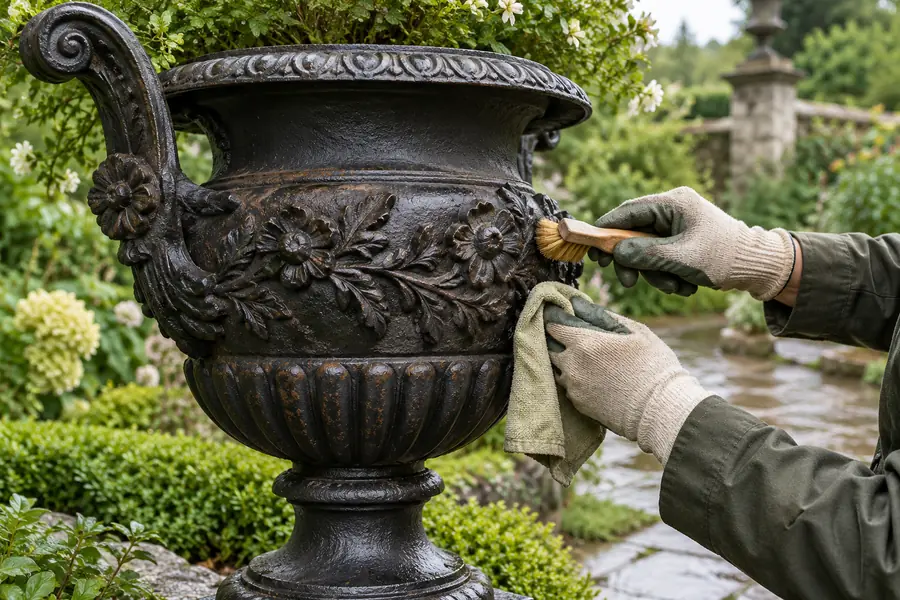
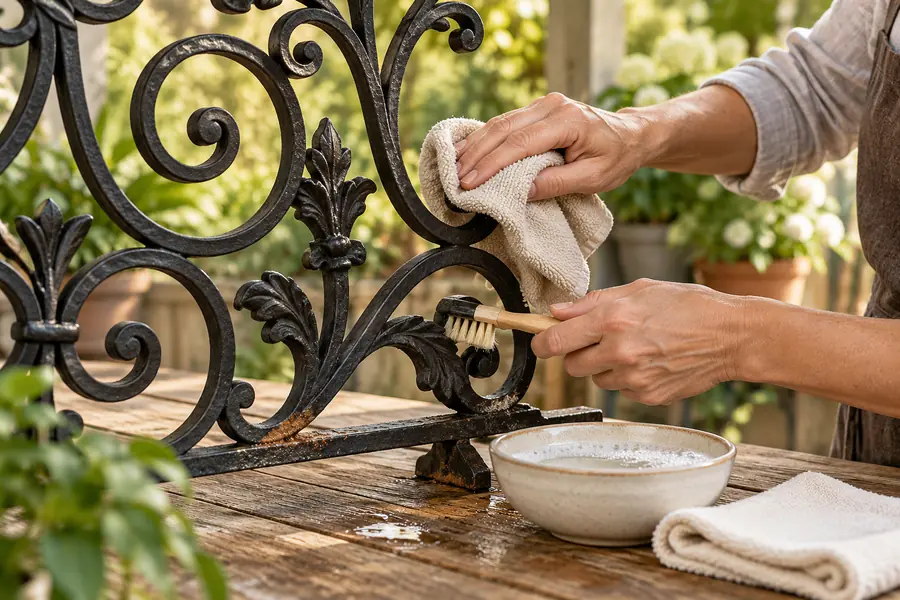
Rust Protection Still Matters
Lowe’s describes wrought iron as strong and durable but susceptible to rust if protective finishes become damaged. It recommends keeping the material clean and addressing damaged coatings or rust rather than ignoring them.
For outdoor pieces:
- Inspect the coating.
- Check welds and joints.
- Clean dirt and salts.
- Repair chips quickly.
- Avoid standing water.
- Use suitable covers where needed.
Coastal Locations Need More Caution
Salt and moisture increase corrosion risk.
A wrought-iron-style table can still work near the coast, but the finish specification becomes more important.
For coastal commercial projects, ask the manufacturer about:
- Galvanizing
- Exterior powder coating
- Primer system
- Stainless fasteners
- Coating thickness
- Warranty
- Maintenance requirements
The decorative style alone tells you nothing about corrosion performance.
How Do You Modernize Wrought Iron?
Modernizing wrought iron usually requires simplification rather than removal. Keep the metal’s architectural character while reducing visual heaviness.
To make wrought iron look modern, simplify ornate patterns, use slim black or aged-metal profiles, combine iron with warm wood, glass, stone, or plaster, and limit it to one strong feature. Avoid filling a room with matching iron furniture. In 2026, wrought iron works best as contrast rather than as an entire decorating theme.
1. Simplify the Scrollwork
Highly ornate iron can immediately suggest an older Tuscan or Mediterranean decorating period.
That does not mean every curve needs to disappear.
Reduce:
- Repeated curls
- Grape motifs
- Dense floral patterns
- Decorative cages
- Oversized finials
Keep:
- One elegant curve
- Fine vertical lines
- Simple arches
- Hand-forged texture
- Minimal geometric details
A guide to modernizing iron railings similarly recommends simplifying excessive ornamental work when a more contemporary result is desired.
2. Use Iron as a Line, Not a Mass
Modern interiors benefit from visual breathing space.
Iron works beautifully because it can create a strong outline without becoming a solid wall.
Use it for:
- Stair balusters
- Shelving frames
- Console bases
- Bed frames
- Door details
- Pendant lights
- Candle sconces
The eye sees structure while light passes through.
3. Combine Iron and Wood
Wood removes some of iron’s visual coldness.
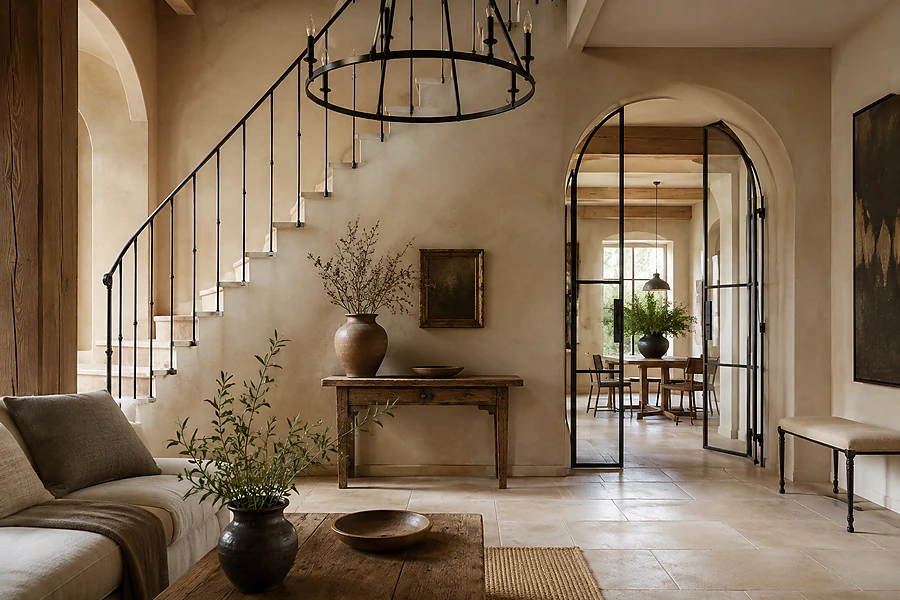
A black iron stair railing with an oak handrail works because it balances:
- Hard + soft
- Dark + warm
- Industrial + natural
This combination also fits 2026’s interest in warm woods and organic materials.
4. Combine Iron and Stone
Iron and natural stone create a particularly strong 2026 combination.
Try:
- Iron console + travertine
- Iron table + marble
- Iron lantern + limestone wall
- Iron bench + terracotta flooring
Who What Wear’s 2026 trend coverage places wrought iron in the same broader material direction as marble, travertine, burl wood, and natural colors.
5. Change the Finish
Wrought iron does not need to be glossy black.
Current options include:
- Matte black
- Soft charcoal
- Antique bronze
- Aged iron
- Dark brown-black
- Off-black
- Patinated finishes
High-gloss black can feel harsher and more formal.
A softer matte finish usually integrates more easily into warm interiors.
6. Modernize Iron Lighting
Lighting is one of the easiest places to introduce the trend.
Architectural Digest’s spring 2026 High Point Market coverage included a classic wrought-iron chandelier within a new collection, showing that contemporary furniture brands are again exploring the material.
Try:
- Thin iron chandelier
- Sculptural wall sconce
- Linear pendant
- Candle-style wall fixture
Vogue’s coverage of the 2026 monastic interior trend also recommends wrought-iron, brass, and bronze sconces as ways to bring historic character into layered contemporary rooms.
7. Do Not Buy a Complete Matching Set
A room containing:
- Iron bed
- Iron nightstand
- Iron lamp
- Iron mirror
- Iron chair
can quickly feel themed.
A stronger formula is:
one iron hero piece + several softer materials
For example:
- Iron bed
- Oak nightstands
- Linen curtains
- Wool rug
- Ceramic lamp
The iron provides contrast rather than domination.
What Looks Modern?
| More Current | More Dated-Looking |
|---|---|
| Thin black railing | Dense scroll railing |
| Iron + oak | All-iron furniture |
| Matte finish | Glossy black finish |
| Sculptural sconce | Oversized Tuscan chandelier |
| Simple gate | Heavy decorative gate |
| Iron + travertine | Iron + faux distressed paint |
| One vintage piece | Matching iron set |
| Subtle curves | Repeated ornate curls |
Does Wrought Iron Suit Both Vintage and Modern Interiors?
Wrought iron works across several design styles because the same material can be shaped into either decorative historical forms or extremely simple contemporary lines.
Yes, wrought iron can suit both vintage and modern interiors. Ornate iron naturally supports Spanish, Mediterranean, French, Western, and traditional rooms, while simplified black iron works with contemporary, transitional, industrial, and minimalist interiors. The key is matching the level of ornament, finish, scale, and surrounding materials to the architecture.
Wrought Iron and Vintage Interiors
Iron naturally fits spaces inspired by:
- Spanish Revival
- Mediterranean
- French country
- Italian villas
- Western interiors
- Historic European interiors
These styles already use:
- Wood beams
- Plaster walls
- Terracotta
- Stone
- Antique furniture
- Handmade details
Iron feels native to that material language.
Spanish and Mediterranean Design Are Helping the Revival
Homes & Gardens recently described renewed interest in Spanish farmhouse design, including softened wrought-iron reinterpretations alongside ceramics, wicker, and warm Mediterranean materials.
The distinction is important.
Modern Spanish styling does not require recreating an entire early-2000s Tuscan kitchen.
Instead use:
- One iron light
- One railing
- One vintage table
- One gate
- One mirror
then surround it with lighter materials.
Wrought Iron and Modern Interiors
Modern design needs restraint.
Use iron as geometry.
For example:
Modern staircase
- Slim vertical balusters
- Black matte finish
- Warm oak handrail
Modern dining room
- Travertine table
- Linen chairs
- One sculptural iron chandelier
Modern living room
- Plaster walls
- Linen sofa
- Iron-and-stone console
The material is historic.
The composition is modern.
Wrought Iron and the Collected Look
One of the strongest 2026 design ideas is the move away from rooms that appear purchased at one time.
Real Simple’s coverage of Houzz’s 2026 trends describes growing demand for interiors that feel collected over time, using vintage pieces, aged metals, stone, and other materials with character.
Wrought iron fits naturally into this approach.
A vintage iron table can sit beside:
- Contemporary sofa
- Antique rug
- Modern ceramic lamp
- Oak cabinet
The room does not need to follow one historical style.
Wrought Iron and Monastic Interiors
Vogue identifies a monastic interior aesthetic as one of 2026’s notable directions.
The look relies on:
- Simple materials
- Historic references
- Restrained decoration
- Candlelight
- Aged surfaces
- Natural texture
Wrought-iron candle sconces and decorative pieces fit this aesthetic particularly well.
Wrought Iron and Western Style
Iron also works in Western-inspired interiors.
Pair it with:
- Reclaimed oak
- Leather
- Stone
- Wool
- Natural textiles
Avoid turning every object into a Western symbol.
Material is usually more sophisticated than theme.
Match the Iron to the Architecture
| Interior Style | Best Iron Direction |
|---|---|
| Modern | Thin geometric lines |
| Transitional | Simple curves |
| Mediterranean | Restrained forged details |
| Spanish Revival | Traditional but edited |
| Industrial | Straight steel-like profiles |
| French country | Aged iron |
| Western | Hand-forged character |
| Minimalist | One sculptural piece |
| Rustic | Textured dark iron |
| Contemporary luxury | Iron + stone or wood |
The 2026 Rule Is Restraint
Iron is returning because it adds:
- Character
- Contrast
- History
- Texture
- Craftsmanship
Using too much removes those qualities.
The material becomes background noise.
One excellent iron railing can be more effective than twenty decorative iron accessories.
What Are the Disadvantages of Wrought Iron?
The same qualities that make iron attractive—weight, strength, and permanence—also create practical disadvantages.
The main drawbacks of wrought-iron-style furniture and décor are weight, rust risk, maintenance, heat retention outdoors, difficult relocation, and potentially dated styling when ornament is excessive. Outdoor pieces need protective finishes and periodic inspection, while interior pieces need careful scale so the dark metal does not overpower lighter contemporary rooms.
1. Iron Can Rust
This is the primary outdoor concern.
Protective coatings matter because moisture reaching exposed ferrous metal can start corrosion.
Historic England also emphasizes that regular maintenance is important for iron gates and railings.
Check:
- Welds
- Feet
- Bolts
- Edges
- Scratches
- Drain holes
Those are common points where coatings become damaged.
2. It Is Heavy
Weight is excellent for wind resistance.
It is less convenient when:
- Moving furniture
- Cleaning patios
- Rearranging dining layouts
- Storing pieces
- Shipping furniture
A restaurant that rearranges its terrace every evening may prefer aluminum.
A hotel courtyard that rarely moves furniture may value the extra weight.
3. Dark Metal Gets Hot Outdoors
Iron furniture exposed to direct sun can become uncomfortable to touch.
Use:
- Cushions
- Shade
- Umbrellas
- Covered terraces
where necessary.
4. It Needs Maintenance
“Durable” does not mean “maintenance-free.”
Lowe’s recommends cleaning wrought-iron furniture and repairing rust or damaged protective finishes rather than allowing deterioration to continue.
Maintenance may include:
- Washing
- Drying
- Rust inspection
- Sanding damaged areas
- Primer
- Touch-up paint
- Protective coating
5. Ornate Designs Can Date Quickly
The material itself is not the problem.
The motif may be.
A simple forged railing can remain timeless.
A railing containing:
- Grapes
- Leaves
- Multiple curls
- Gold highlights
- Heavy faux-aging
may strongly identify a specific decorating era.
6. Cheap Iron-Look Products Can Miss the Trend Entirely
The return of craftsmanship does not automatically benefit every mass-produced black metal product.
2026 design is moving toward objects that show:
- Quality
- Texture
- Individuality
- History
- Material honesty
A thin stamped-metal decoration designed to imitate traditional forging may provide the opposite impression.
7. True Wrought Iron Is Rare
Another purchasing issue is terminology.
Historic England specifically notes that much modern material sold as wrought iron is actually steel.
This matters when buying:
- Restoration components
- Heritage gates
- Antique furniture
- Architectural metalwork
For decorative contemporary products, the distinction may be less important visually.
For historical conservation, it is critical.
My Insights: Is Wrought Iron Coming Back in Style
Yes. The evidence from current 2026 design coverage shows a clear renewed interest in wrought iron, aged metals, historical references, and crafted decorative details.
Wrought iron is coming back in style in 2026, but the revival is edited rather than nostalgic. The strongest applications use slim profiles, restrained ornament, matte or aged finishes, and combinations with wood, stone, plaster, linen, and earthy colors. Modern wrought iron should add architectural character without recreating the heavy Tuscan look of earlier decades.
My First Insight: Wrought Iron Is Part of a Bigger Heritage Revival
The comeback is not happening in isolation.
2026 interiors increasingly favor:
- Vintage furniture
- Craftsmanship
- Historic references
- Natural materials
- Aged finishes
- Collected objects
That larger movement makes wrought iron feel relevant again.
My Second Insight: Tuscan Is Returning, but Not the Old Tuscan
A 2026 designer trend forecast specifically notes that iron details and deeper wood tones are creating a refined echo of older Tuscan interiors while avoiding literal reproductions of the earlier look.
That means:
Keep
- Iron
- Wood
- Stone
- Terracotta
- Earthy colors
Remove
- Faux-finished orange walls
- Grape decorations
- Excess scrollwork
- Matching dark furniture
- Heavy themed accessories
The material remains.
The styling becomes cleaner.
My Third Insight: Exterior Iron Is Returning Faster Than Decorative Accessories
Railings and gates have an architectural purpose.
That gives them more staying power than trend-driven accessories.
The Spruce specifically identifies wrought-iron railings and gates among exterior features re-emerging in 2026, with simpler contemporary execution.
For homeowners, that means an iron:
- Gate
- Balcony
- Stair rail
- Fence
can feel more current than several decorative wall scrolls.
My Fourth Insight: Lighting Is One of the Safest Ways to Use the Trend
An iron chandelier or sconce delivers:
- Material
- History
- Shape
- Contrast
without filling the entire room with metal.
Both Architectural Digest and Vogue have included wrought-iron lighting or sconces in current 2026 design coverage.
My Fifth Insight: Wrought Iron Looks Newest Beside Natural Materials
The most convincing pairings are:
Iron + oak
Iron + travertine
Iron + plaster
Iron + linen
Iron + terracotta
These combinations soften the metal and connect it to the natural-material direction shaping 2026 interiors.
My Sixth Insight: Matte Beats Glossy
A matte charcoal or aged iron surface feels:
- Softer
- Older
- More handcrafted
- Less mass-produced
than glossy black.
This does not mean gloss is objectively wrong.
It simply creates a stronger visual statement and can feel less aligned with the warm, layered direction of current interiors.
My Seventh Insight: Restraint Makes Iron Timeless
The ideal amount may be one strong element.
For example:
Living room
- One iron console
Dining room
- One iron chandelier
Staircase
- One iron railing
Garden
- One iron dining set
Entry
- One iron gate
Do not feel required to repeat the material everywhere.
My Eighth Insight: Buy the Form, but Check the Material
A product described online as “wrought iron” may actually be mild steel.
Historic England confirms that this is common in modern products.
For indoor décor, the distinction may not matter much.
For:
- Outdoor furniture
- Coastal installations
- Gates
- Restoration projects
it matters substantially.
Ask what the product is actually made from.
My Ninth Insight: Outdoor Iron Requires a Maintenance Budget
The style comeback does not remove corrosion.
If an outdoor iron table costs more but lasts many years with maintenance, that may still be good value.
But include:
- Cleaning
- Coating repair
- Rust treatment
- Storage or covers
in the ownership decision.
My Tenth Insight: The Comeback Is About Craft, Not Just Black Metal
The deeper 2026 trend is toward materials that appear:
- Made
- Aged
- Collected
- Textured
- Personal
That explains why wrought iron is relevant again.
Its appeal comes from the visual suggestion of forging, permanence, and craftsmanship.
A cheap black metal accessory does not automatically capture that quality.
What Wrought Iron Looks Best in 2026?
| Application | 2026 Direction |
|---|---|
| Stair railing | Thin, simple, black |
| Garden gate | Restrained traditional detail |
| Dining light | Sculptural iron chandelier |
| Console | Iron base + stone top |
| Bed | Fine iron frame |
| Outdoor table | Simple silhouette |
| Wall sconce | Historic-inspired but minimal |
| Patio chair | Thin frame + natural cushion |
| Balcony | Simple vertical railing |
| Mirror | Narrow aged-metal frame |
My Preferred 2026 Formula
For a contemporary room:
- Choose one wrought-iron focal feature.
- Keep the iron profile thin.
- Avoid excessive scrollwork.
- Add warm wood or stone.
- Use linen or wool to soften the room.
- Keep surrounding accessories simple.
- Let the iron develop visual contrast rather than dominate the theme.
This keeps the historical character without making the room feel like a period reproduction.
My Final Rule
Do not ask only:
“Is wrought iron back?”
Ask:
“Which version of wrought iron is back?”
The answer in 2026 is not heavy, matching, highly ornamental iron everywhere.
It is architectural wrought iron used selectively: thinner, warmer, more handcrafted, and mixed with natural materials.
That version feels current because it supports a wider design shift toward history, craftsmanship, natural texture, and interiors that look collected over time.
Conclusion
Yes, wrought iron is coming back in 2026. Choose slim profiles, restrained ornament, aged finishes, and natural-material pairings rather than recreating the heavy Tuscan look of the past.