


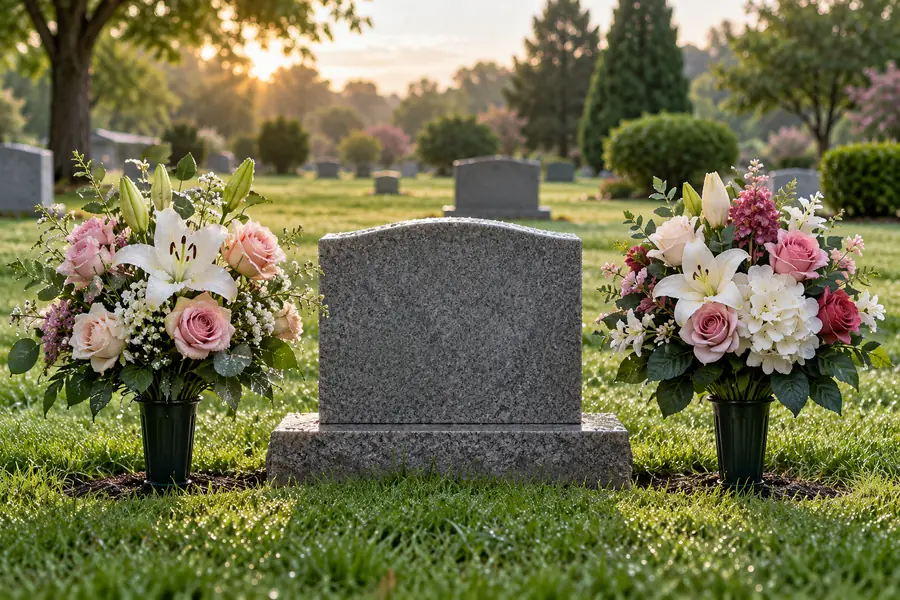
Flowers at a gravesite can express love, memory, tradition, and continued connection. The difficult question is whether fresh flowers or longer-lasting silk arrangements are the better choice.
Fresh flowers are best when natural beauty, fragrance, seasonality, and the ritual of replacing flowers matter most. Silk flowers are more practical when the grave cannot be visited frequently, longer-lasting color is important, or regular watering and replacement are difficult. Neither is universally better, and cemetery rules may determine which option is permitted.
Fresh flowers usually last about a week and fade faster outdoors, while silk flowers last longer. Choose based on cemetery rules, climate, maintenance, and meaning.
Which Lasts Longer on a Grave: Silk or Fresh Flowers?
Silk flowers usually last much longer outdoors, but “longer” does not mean permanent.
Fresh cemetery flowers may remain attractive for several days or around a week under favorable conditions, while artificial arrangements can remain present for weeks or months depending on materials, UV exposure, weather, and cemetery maintenance schedules. Outdoor-rated artificial flowers generally perform better than indoor silk arrangements exposed to sun and rain.
Fresh Flowers Have a Natural Display Limit
Fresh flowers begin aging as soon as they are cut.
Their display life depends on:
- Flower species
- Temperature
- Water availability
- Wind
- Direct sunlight
- Humidity
- Condition at purchase
Mississippi State University Extension describes roughly seven days as a general consumer expectation for properly handled cut flowers, while emphasizing that actual vase life varies by species and care.
A cemetery can be much harder on flowers than an indoor vase.
There may be:
full afternoon sun,
drying wind,
high summer temperatures,
or limited opportunities to refill water.
A bouquet that looks excellent when placed may therefore appear wilted several days later.
Silk Flowers Eliminate Wilting
Artificial flowers do not require water and do not biologically wilt.
That is their most obvious advantage for memorial use.
They can remain visually present when family members:
- Live far away
- Visit only occasionally
- Cannot replace flowers weekly
- Want a display to remain through a holiday or anniversary period
However, outdoor exposure still affects artificial materials.
Balsam Hill’s current care guidance distinguishes products specifically marked Outdoor Safe, explaining that these flowers use UV protection intended to reduce fading. It also recommends protecting artificial flowers from direct sunlight and extreme weather where possible.
This gives me a simple rule:
Artificial does not automatically mean outdoor-rated.
Sunlight Is Usually the Main Appearance Problem
The artificial flower may not wilt, but its color can fade.
This is especially visible in:
- Deep red
- Purple
- Blue
- Dark green
Low-quality silk flowers can also become brittle or lose petals after extended outdoor exposure.
For cemetery use, I would prioritize:
- UV-resistant materials
- Secure petals
- Rust-resistant internal wire
- Natural-looking pigments
- A construction intended for exterior use
The Cemetery May Remove Either Type Early
Physical lifespan is not the only factor.
Flowers may be removed because they interfere with mowing, look faded, exceed cemetery size limits, or conflict with local floral policies.
For example, San Antonio National Cemetery allows fresh cut flowers year-round, while artificial flowers may be removed when faded or when they interfere with maintenance.
So even an artificial bouquet capable of lasting several months may not remain at the grave for that long.
Do Fresh Flowers Look Better Than Silk Flowers on a Grave?
Fresh flowers have the advantage in natural variation, but quality artificial flowers can still create a dignified memorial.
Fresh flowers usually offer the most authentic texture, fragrance, movement, and botanical detail. High-quality silk flowers can look realistic from normal viewing distances and maintain a consistent appearance much longer, but inexpensive products with glossy fabric, flat colors, or repetitive petals can look obviously artificial.
Fresh Flowers Provide Natural Imperfection
Every real flower is slightly different.
Petals:
curl differently,
open at different stages,
and reflect light differently.
Leaves may vary in tone.
Stems bend naturally.
Those small imperfections make a fresh arrangement difficult to imitate perfectly.
Fresh flowers are particularly meaningful when the person being remembered loved:
gardening,
certain seasonal flowers,
or the scent of a specific bloom.
Silk Flowers Can Provide Better Visual Consistency
Fresh flowers change quickly.
Silk flowers do not.
That can actually make artificial arrangements more visually dependable.
A fresh bouquet may be beautiful on the day it is placed but noticeably faded by the next visit.
A good artificial arrangement can maintain:
color,
shape,
and volume
for a longer period.
Mississippi State University Extension explains that artificial “silk” flowers are static when removed from packaging and often need to be bent and manipulated to imitate natural growth.
That is important for grave arrangements.
I would not place artificial flowers directly from the package.
I would:
- Separate the stems.
- Vary flower heights.
- Bend some stems outward.
- Avoid perfect symmetry.
- Rotate flowers in several directions.
This makes the arrangement feel less manufactured.
Meaning Matters More Than Botanical Perfection
I would not choose flowers only according to funeral tradition.
If someone’s favorite flower was:
a sunflower,
purple iris,
yellow rose,
or bright pink peony,
that personal connection may matter more than whether the arrangement follows conventional memorial colors.
Both fresh and artificial flowers can communicate that meaning.
Are Silk Flowers or Fresh Flowers Easier to Maintain at a Cemetery?
Silk flowers require less frequent attention.
Fresh flowers need water and replacement once they wilt, while silk flowers mainly need occasional cleaning, reshaping, and replacement when they become faded or damaged. Artificial flowers are therefore more practical for graves that family members cannot visit regularly.
Fresh Flowers Require Active Care
Fresh arrangements may need:
- Clean water
- A suitable cemetery vase
- Stem trimming
- Removal once wilted
- Frequent replacement
Penn State’s 2026 fresh-flower guidance stresses the importance of clean containers and proper care for prolonging cut-flower life.
At a cemetery, that care may not always be realistic.
Someone who visits every week may enjoy replacing fresh flowers as part of a remembrance ritual.
Someone who lives hundreds of miles away may find that impossible.
Silk Flowers Require Less Frequent Maintenance
Artificial flowers do not need:
watering,
stem trimming,
or refrigeration.
They still need attention.
Outdoor artificial flowers can collect:
dust,
pollen,
dirt,
and weather residue.
Balsam Hill recommends regular dusting or gentle cleaning of artificial flowers and warns that outdoor exposure can gradually affect appearance.
For a cemetery arrangement, maintenance might mean:
- Checking fading
- Replacing damaged stems
- Cleaning dirt from petals
- Reshaping after wind
- Replacing the bouquet seasonally
So I would call artificial flowers low-maintenance, not maintenance-free.
Are Silk Flowers Allowed in Cemeteries?
This can completely change the decision.
Many cemeteries allow fresh flowers throughout the year but restrict artificial flowers to specific seasons or holidays. Other cemeteries permit both year-round. Always check the exact cemetery’s current floral policy before purchasing or placing an arrangement.
The U.S. National Cemetery Administration’s current floral policy explicitly gives individual cemetery directors responsibility for establishing the periods when artificial flowers are permitted and for setting local floral pickup schedules.
This is why there is no universal cemetery rule.
Arlington National Cemetery
Arlington allows fresh-cut flowers at graves throughout the year.
Artificial flowers are permitted from October 10 through April 15. Items may also be removed when faded, unsightly, or when necessary for grounds maintenance.
Los Angeles National Cemetery
Fresh natural cut flowers may be placed at graves throughout the year.
Artificial flowers are generally permitted only during specified periods around Easter and Memorial Day, with separate rules for seasonal holiday decorations.
National Memorial Cemetery of Arizona
This cemetery uses a different approach.
Both fresh-cut and artificial flowers may be placed on graves at any time, subject to rules such as a maximum arrangement height and restrictions against covering markers or extending into neighboring gravesites.
San Francisco National Cemetery
Fresh flowers are allowed year-round, while artificial flowers are permitted from November 1 through March 1.
These examples demonstrate why I would never buy memorial flowers before checking the specific location.
Other Rules Can Matter Too
Cemetery policies may regulate:
- Arrangement height
- Type of vase
- Number of containers
- Whether flowers can touch or cover the marker
- Whether decorations can be attached to the headstone
- Scheduled removal dates
- Holiday decorations
- Wires or breakable items
For example, San Antonio National Cemetery requires fresh and artificial flowers to be placed in approved plastic vases and prohibits attaching floral items to headstones or markers.
The respectful choice is the arrangement that honors both the person and the rules of the place where they are buried.
Which Costs More: Silk or Fresh Flowers for a Grave?
The answer depends on whether you compare the first purchase or the long-term pattern.
Fresh flowers may have a lower initial cost for a simple bouquet, but repeated replacement can increase total spending over time. Quality silk flowers can cost more upfront but may be reused or displayed longer. The better value depends on how often you visit, how quickly flowers deteriorate, and whether the cemetery permits artificial arrangements for long periods.
Fresh Flowers Create Recurring Costs
If a fresh bouquet is replaced:
every week,
every two weeks,
or every month,
the annual cost can become much higher than the price of the first arrangement suggests.
However, cost may not be the main consideration.
For some families, purchasing fresh flowers regularly is part of the memorial ritual.
That repeated action has emotional value.
Silk Flowers Spread Their Cost Over Time
A well-made artificial bouquet may be:
cleaned,
stored,
rotated,
or reused during permitted periods.
That can lower its cost per use.
This advantage becomes particularly significant for:
- Seasonal cemetery arrangements
- Holiday memorial displays
- Graves far from home
- Family members who travel long distances to visit
However, I would avoid buying an expensive artificial arrangement until confirming that the cemetery allows it.
A premium silk bouquet has little practical value if staff must remove it because local policy permits only fresh flowers at that time of year.
Are Fresh Flowers More Environmentally Friendly Than Silk Flowers?
The answer is more complicated than biodegradable versus plastic.
Fresh flowers eventually biodegrade, while modern silk flowers often contain polyester, plastic, and metal wire. However, fresh flowers also require cultivation, transportation, and repeated replacement. Artificial flowers make the strongest environmental case when they are kept and reused for a long period rather than treated as disposable décor.
Mississippi State University Extension notes that most modern silk flowers use materials such as polyester fabric, paper, plastic, and wire.
That makes end-of-life disposal a legitimate concern.
Artificial memorial flowers should not be considered disposable simply because they are inexpensive.
If I choose silk flowers, I would prefer to:
- Buy durable arrangements
- Reuse them seasonally
- Store them carefully
- Replace individual damaged stems
- Avoid discarding the entire arrangement unnecessarily
Fresh flowers have a different environmental profile.
Their advantage is that the botanical material can break down naturally.
But they may require repeated:
growing,
packaging,
transport,
and replacement.
So once again, there is no universally superior option.
When Should You Choose Fresh Flowers for a Grave?
Fresh flowers make the most sense when the act of bringing and replacing flowers is itself important.
Choose fresh flowers when you visit regularly, value natural fragrance and texture, want seasonal symbolism, or prefer the tradition of placing living botanical material at the grave. They are also the safer choice at cemeteries where artificial flowers are heavily restricted.
I would favor fresh flowers when:
- The cemetery allows fresh flowers year-round.
- Someone visits frequently.
- Water is readily available.
- A birthday or anniversary deserves a special temporary tribute.
- The deceased had a favorite seasonal flower.
- Natural fragrance has personal significance.
Fresh flowers can make a visit feel immediate.
They mark a particular day.
That temporary quality can itself be meaningful.
When Should You Choose Silk Flowers for a Grave?
Silk flowers work best when continuity and practicality matter more than freshness.
Choose artificial flowers when you cannot visit frequently, need a display to remain attractive longer, want flowers that are unavailable seasonally, or need a predictable arrangement for a holiday period. Use outdoor-rated flowers when possible and always confirm cemetery restrictions first.
I would particularly consider silk flowers when:
- Family lives far away.
- Visits are seasonal.
- Summer heat destroys fresh flowers quickly.
- The arrangement needs to remain present for longer.
- Exact colors have personal meaning.
- A favorite flower is unavailable fresh.
- The arrangement will be stored and reused.
Artificial flowers can provide continuity between visits.
That is their strongest memorial advantage.
Can You Combine Fresh and Silk Flowers?
Yes, and this can be a thoughtful compromise where cemetery rules permit it.
A hybrid arrangement can use fresh focal blooms for natural beauty while relying on artificial greenery or supporting flowers for structure and longevity. However, mixed arrangements are still subject to the cemetery’s rules regarding artificial materials, containers, size, and removal.
A hybrid design might include:
fresh roses
with
durable artificial foliage.
Or a family might alternate rather than physically mix them:
fresh flowers during regular visits
and
silk flowers during permitted winter periods.
That second approach may fit cemetery policies particularly well.
My insights: Silk vs Fresh Flowers for a Grave-An Honest Comparison
After comparing current cemetery policies, cut-flower care guidance, and artificial-flower materials, I think the biggest mistake is searching for a universal winner.
Silk vs Fresh Flowers for a Grave: An Honest Comparison comes down to what kind of remembrance is practical and meaningful. Fresh flowers offer natural beauty, fragrance, and the ritual of renewal. Silk flowers offer continuity, longer display, and less frequent care. Cemetery rules, climate, visit frequency, and personal meaning should decide the choice—not the assumption that one type is inherently more respectful.
My First Insight: The Cemetery Rule Comes Before Personal Preference
This is the most practical lesson.
A family may prefer artificial flowers because they last longer.
But a cemetery may allow them only during winter.
Another cemetery may allow them all year.
The current National Cemetery Administration directive specifically leaves artificial-flower periods to cemetery directors, which explains the wide variation among individual national cemeteries.
Therefore, my first step would always be:
check the current cemetery policy.
My Second Insight: Fresh Flowers Are About Renewal
Fresh flowers do something artificial flowers cannot.
They change.
They open.
They fade.
Then someone returns and replaces them.
For some families, that repeated act is central to remembrance.
The short lifespan is not necessarily a disadvantage.
It creates a reason to return.
My Third Insight: Silk Flowers Are About Continuity
Artificial flowers create a different kind of symbolism.
They can remain visible between visits.
That can be especially valuable when:
children live in another state,
family members are elderly,
or the grave is visited only several times each year.
In those cases, longer-lasting flowers can help a gravesite retain a cared-for appearance.
My Fourth Insight: Quality Matters More Outdoors
Indoor artificial flowers are often evaluated mainly on realism.
For cemetery flowers, I care about more.
I look for:
- UV suitability
- Secure construction
- Weather resistance
- Rust-resistant wire
- Color stability
- Easy cleaning
Balsam Hill’s guidance to distinguish Outdoor Safe artificial flowers from general indoor products reinforces this point.
The most beautiful indoor silk rose is not automatically the best cemetery rose.
My Fifth Insight: Fresh Flowers Win at Close Range
If I am visiting personally and standing beside the grave, I usually prefer fresh flowers for sensory reasons.
I can see subtle petals.
I can smell them.
I can arrange them by hand.
That experience can be difficult to replace.
Fresh flowers feel especially appropriate for:
- Birthdays
- Anniversaries
- Mother’s Day
- Father’s Day
- Personal memorial dates
My Sixth Insight: Silk Flowers Win When Distance Is the Problem
The strongest argument for artificial flowers is not that they are “better.”
It is that they solve a practical problem.
If a grave is several hours away, weekly flower replacement is unrealistic.
A durable arrangement makes more sense.
The practical advantage becomes even stronger where hot weather shortens the life of fresh-cut flowers.
My Seventh Insight: “Silk” Does Not Mean Natural Silk
This terminology can be confusing.
Mississippi State University Extension explains that commercial silk flowers are artificial and may use polyester fabrics, paper, plastic, and wire.
That matters when choosing outdoor flowers.
I would buy according to:
construction and outdoor performance
rather than simply seeing the word:
silk.
My Eighth Insight: Neither Type Should Be Left Neglected
A wilted fresh bouquet should be removed.
A badly faded artificial bouquet should also be removed.
National cemetery policies repeatedly reflect this principle.
Arlington removes floral items once they become faded or unsightly, while National Memorial Cemetery of Arizona similarly removes arrangements when they become withered, faded, unsafe, or otherwise unsightly.
For me, that is a useful standard everywhere:
the goal is not maximum display time; it is a memorial that looks cared for.
Fresh vs Silk Flowers at a Glance
| Factor | Fresh flowers | Silk flowers |
|---|---|---|
| Natural appearance | Excellent | Quality-dependent |
| Fragrance | Yes | No natural fragrance |
| Typical display duration | Short | Longer |
| Water required | Yes | No |
| Seasonal availability | Can vary | Available year-round |
| Weather sensitivity | High | Lower, but still present |
| UV fading | Not relevant to lifespan | Important outdoors |
| Regular replacement | Frequent | Less frequent |
| Reuse | Limited | Often possible |
| Cemetery restrictions | Often fewer | Frequently seasonal |
| Personal ritual | Strong | Strong in a different way |
| Best for distant graves | Less practical | Often more practical |
My Decision Guide
I would choose fresh flowers when:
- I visit regularly.
- Natural fragrance matters.
- The cemetery restricts artificial flowers.
- The visit itself is part of the remembrance ritual.
- A meaningful seasonal flower is available.
I would choose silk flowers when:
- Visits are infrequent.
- Longer-lasting color is important.
- The grave is exposed to heat that quickly damages fresh flowers.
- I want to reuse seasonal arrangements.
- The cemetery permits them during the intended period.
I would alternate between both when:
- Fresh flowers are preferred during personal visits.
- Artificial flowers are permitted seasonally.
- The family wants continuity between visits without abandoning fresh-flower traditions.
My Final View
So, silk vs fresh flowers for a grave—which is better?
Fresh flowers create a living, temporary tribute.
They offer:
natural texture,
fragrance,
seasonality,
and the meaningful act of returning to replace them.
Silk flowers create a more stable memorial.
They offer:
longer-lasting color,
less frequent maintenance,
seasonal flexibility,
and practicality when family members cannot visit often.
Neither option measures how much someone is remembered.
A fresh bouquet that lasts five days can carry enormous meaning.
An artificial bouquet carefully chosen and maintained for months can carry the same meaning.
The most respectful choice is the one that:
reflects the person, follows cemetery rules, suits the environment, and remains cared for.
That matters more than whether the petals are fresh or artificial.
FAQ
Are silk flowers appropriate for a grave?
Yes, if the cemetery permits artificial flowers. They can be especially practical for graves that are visited infrequently or exposed to conditions that quickly wilt fresh flowers.
How long do fresh flowers last at a grave?
Cut flowers commonly have an expected vase life of around seven days under good care, although species and conditions vary. Outdoor cemetery exposure can shorten that period.
How long do silk flowers last outside at a cemetery?
There is no universal lifespan. UV exposure, rain, wind, material quality, and cemetery removal policies all matter. Products specifically rated for outdoor use generally resist fading better than ordinary indoor artificial flowers.
Are artificial flowers allowed at every cemetery?
No. Rules vary widely. Current VA policy allows individual national cemetery directors to establish when artificial flowers are permitted.
Are fresh flowers allowed year-round at national cemeteries?
Many national cemeteries allow fresh-cut flowers throughout the year, including Arlington, Los Angeles, San Antonio, and San Francisco, but local rules should always be checked.
Do silk flowers need maintenance?
Yes. They may need cleaning, reshaping, and eventual replacement when faded or damaged. Outdoor exposure still affects artificial materials.
Are silk flowers actually made from silk?
Usually not. Modern commercial silk flowers commonly contain materials such as polyester fabric, plastic, paper, and wire.
Which flowers are best for a grave?
Roses, lilies, carnations, chrysanthemums, hydrangeas, and flowers with personal significance all work well. The most meaningful choice is often the deceased person’s favorite flower or color rather than a generic funeral arrangement.
Conclusion
Fresh flowers offer natural beauty and meaningful renewal; silk flowers offer durability and convenience. Check cemetery rules first, then choose the option that best reflects your remembrance.

