
Struggling to find the perfect Christmas centerpiece for your holiday table? Many hosts seek unique and festive ideas that truly capture the spirit of the season. A well-designed centerpiece completes any festive setting.
A striking Christmas floral centerpiece often integrates artificial flowers, natural greenery, and seasonal accents like berries or small ornaments. The most effective choices are durable, allow for customization to match various decor themes, and fit the specific size and style of the display area. Focus on a mix of textures and holiday sparkle.
Creating memorable displays is a common goal during the holiday season. Exploring various elements and design principles can help in achieving a beautiful and long-lasting Christmas centerpiece.
What can be used for a Christmas centerpiece?
Are you wondering what elements can be combined to create a captivating Christmas centerpiece? Many individuals search for ideas that are both visually appealing and simple to arrange. The desire is for a centerpiece that embodies the holiday spirit without being overly complicated.
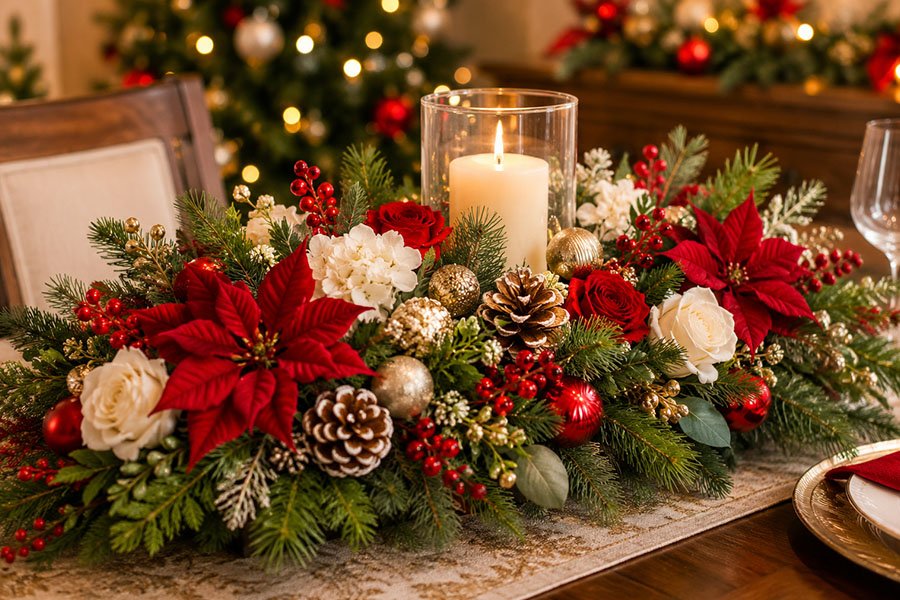
For an impactful Christmas centerpiece, common elements include artificial flowers, evergreen branches, pinecones, and red berries. Integrating candles, metallic accents, or small ornaments adds sparkle and warmth. The selection of components should prioritize durability, visual appeal, and alignment with the overall Christmas theme of the setting.
Developing effective decor solutions is a key aspect of creating festive environments. Understanding the versatility of various materials allows for diverse and beautiful centerpiece designs.
Core Elements: Artificial Flowers and Greenery
Artificial flowers and greenery provide lasting beauty for Christmas centerpieces. They maintain their appearance throughout the holiday season, unlike fresh options which require constant care.
- Red Poinsettias: These are a classic choice for Christmas. They introduce vibrant color and a traditional aesthetic. Using different sizes can add visual depth.
- White Roses or Lilies: For an elegant or winter-themed display, white flowers are ideal. They pair well with silver or gold accents for a sophisticated look.
- Evergreen Branches: Artificial pine, spruce, or cedar branches form a lush base. They replicate the appearance of natural foliage without the maintenance.
Incorporating Festive Accents
Beyond flowers, specific items can enhance a centerpiece’s festive appeal.
| Element | Description | Application in Centerpieces |
|---|---|---|
| Pinecones | Provide natural texture; available in various dimensions. | Can be nestled within greenery, lightly flocked, or glittered. |
| Red Berries | Offer a classic festive color contrast. | Woven into branches or grouped in small clusters. |
| Ornaments | Small, decorative spheres or figures. | Placed strategically among floral elements, chosen to match colors. |
| Candles | Generate warmth and a pleasant ambiance. | Pillar candles of differing heights or votives in holders. |
| Ribbons | Add texture and color variations. | Tied into bows around candle bases or integrated into the arrangement. |
Design Considerations
When planning a centerpiece, consider the setting. For a formal dining table, a linear arrangement with a consistent color palette might be preferred. For a more casual gathering, a clustered, asymmetrical design with varied textures can be more inviting. The goal is to create a harmonious blend of elements that enhance the festive atmosphere.
What items can be used as a centerpiece?
Considering the wide range of items suitable for a centerpiece beyond traditional flowers? Many people are unaware of the diverse materials that can be combined to create an engaging focal point. The aim is often to achieve a distinctive and memorable display.
A centerpiece can integrate a variety of items such as candles, natural elements like pinecones and branches, reflective surfaces like polished trays, or specialized holiday figurines. The selection process should focus on components that offer complementary colors, textures, and styles, ensuring a cohesive and visually rich presentation.
Exploring various decorative components allows for the creation of unique and appealing centerpieces. The right combination of materials can significantly enhance any festive arrangement.
Expanding Beyond Floral: Diverse Centerpiece Components
While flowers are a common choice, other items can contribute distinct character and charm.
- Natural Elements: Examples include birch logs, small branches, or dried fruit slices. These introduce an organic and rustic feel.
- Metallic Accents: Gold or silver-sprayed branches, small decorative animals, or shimmering votive holders can add a touch of sophistication and glamour.
- Glassware: Elegant vases, hurricane lamps designed for candles, or clear bowls filled with decorative objects can be highly effective.
Integrating Themes and Textures
Consider how different items contribute to the overarching theme of the centerpiece.
| Category | Item Examples | Textural Impact | Thematic Contribution |
|---|---|---|---|
| Natural | Pinecones, dried orange slices, cinnamon sticks | Rough, aromatic | Warm, earthy, traditional holiday |
| Shimmering | Glittered ornaments, metallic sprigs, baubles | Smooth, reflective | Glamorous, festive, luxurious |
| Soft | Faux fur, velvet ribbons | Plush, opulent | Cozy, elegant, sophisticated |
| Light | LED candles, string lights, lanterns | Warm glow, delicate | Ambiance, magic, inviting |
Creating Cohesive Displays
To ensure a cohesive display, consider the scale of the items relative to the table and surrounding decor. A large table might benefit from a multi-component centerpiece, while a smaller surface might require a more compact arrangement. Varying heights and forms within the centerpiece prevents a flat, uninteresting look. Layering different textures also adds depth, making the arrangement more engaging from various angles.
What are some simple DIY centerpiece ideas?
Are you seeking straightforward and impactful DIY Christmas centerpiece ideas that are both cost-effective and time-efficient? Many people desire festive decorations but prefer less complex crafting projects. The demand is for ideas that are simple to execute yet visually appealing.
Simple DIY Christmas centerpieces typically involve easily sourced natural elements such as evergreen sprigs, pinecones, and cranberries, combined with common household items like mason jars, candles, or fresh fruit. The focus is on arrangements that are quick to assemble, utilizing readily available materials to achieve a charming and customized aesthetic.
Accessible decorative solutions are often preferred for holiday preparations. Utilizing versatile and realistic materials can simplify DIY projects. Here are several simple DIY ideas that can be implemented with ease.
Accessible and Impactful Arrangements
These ideas require minimal effort but offer significant decorative impact.
- Mason Jar Displays: Fill mason jars with artificial cranberries, small evergreen sprigs, and water, then add a floating candle. Layering faux snow at the bottom can enhance a wintry appearance.
- Rustic Wood Accents: Use a small piece of wood or bark as a base. Arrange artificial tea lights, a few sprigs of artificial pine, and some pinecones on it. This creates a natural, cozy aesthetic.
- Ornament Bowls: Select a decorative bowl or platter. Fill it with a mix of colorful or metallic Christmas ornaments. Adding artificial berries or a string of battery-operated fairy lights can provide extra sparkle.
Recommended Materials for DIY Projects
Using durable and realistic materials facilitates stress-free DIY crafting.
| DIY Element | Benefits | Practical Tip |
|---|---|---|
| Artificial Greenery | No wilting, suitable for reuse across multiple seasons. | Can be cut into smaller sprigs for individual jars or specific placements. |
| Faux Berries | Maintain vibrant color and do not spoil. | Cluster them for a more pronounced color accent. |
| LED Candles | Safe, long-lasting, and mess-free alternative to traditional candles. | Choose varying heights to introduce visual dynamics. |
| Glass Vases/Jars | Versatile, allows for layering, reflects ambient light. | Ensure they are clean to maximize their reflective qualities. |
| Pinecones (Faux or Real) | Adds natural texture and a sense of warmth. | Lightly spray with glitter for a festive embellishment. |
Enhancing Simple Designs
To elevate simple DIY designs, consider the placement. A cluster of three mason jar centerpieces down the length of a table often looks more intentional than a single one. Adding a simple burlap runner or a sprinkle of faux snow around the base can further integrate the centerpiece with the table setting, creating a cohesive and inviting display. These small additions can transform a basic arrangement into a more polished holiday feature.
What is the rule of 3 for centerpieces?
Are you seeking clarity on how to achieve a balanced and aesthetically pleasing centerpiece? The ‘rule of 3’ is a fundamental design principle that can optimize visual harmony. The objective is to create a professional and organized arrangement.
The rule of 3 for centerpieces advocates for arranging elements in odd numbers, typically three, to achieve a more balanced, dynamic, and visually engaging composition. This principle is applied to items of varying heights, sizes, or types, guiding the viewer’s eye through the arrangement and making it appear more natural and less static.
Understanding basic design principles is crucial for maximizing the impact of any decorative display. The rule of 3 serves as an effective guideline for creating compelling centerpieces.
Understanding the Principle of Odd Numbers
Odd numbers, particularly three, are often perceived as more visually appealing.
- Visual Stability: Three items create a triangular form, which is a stable and naturally pleasing geometric shape.
- Dynamic Flow: This arrangement encourages the eye to move across the display, preventing a static or overly symmetrical appearance.
- Focal Point Establishment: One item often naturally becomes the primary focus, with the other two providing support and context.
Applying the Rule to Christmas Centerpieces
This principle can be implemented in multiple aspects of centerpiece design:
- Three Primary Elements: For example, three artificial pillar candles of differing heights positioned together.
- Three Groupings of Items: Creating three distinct clusters of artificial berries or ornaments within a larger arrangement.
- Three Distinct Textures: Combining diverse textures such as smooth glass, rough pinecones, and soft faux flowers.
Practical Application Guidelines
Here is a breakdown of how the rule of 3 can be applied to various centerpiece components:
| Component | Rule of 3 Application | Christmas Example |
|---|---|---|
| Height | Incorporate three items with distinct heights (tall, medium, short). | A tall artificial white lily, a medium red poinsettia, a shorter candle. |
| Clusters | Arrange elements into three smaller, distinct groups. | Three small bunches of artificial red berries integrated into greenery. |
| Types of Items | Combine three different categories of decorative items. | Artificial evergreen branches, pinecones, and small silver ornaments. |
| Color Accents | Utilize a primary color, a secondary color, and an accent color. | Red (dominant), green (support), gold (accent). |
| Focal Points | Designate one main focal point with two supplementary elements. | A large artificial poinsettia as the central feature, flanked by two candles. |
Design Flexibility
While the rule of 3 is a powerful guideline, it is not an inflexible rule. For larger tables or more elaborate displays, using other odd numbers such as five or seven elements can also maintain visual harmony. The objective is to ensure the arrangement appears natural and thoughtfully composed, avoiding a rigid, overly symmetrical presentation. This principle assists in crafting designs that are both attractive and memorable.
My insights: What Can I Use for a Christmas Floral Centerpiece?
Struggling to find the perfect Christmas centerpiece? Your table deserves a festive focal point that wows!
For a stunning Christmas floral centerpiece, combine traditional evergreenery like pine, fir, or holly with vibrant seasonal flowers such as red and white roses, poinsettias, or carnations. Enhance the holiday spirit with accents like pinecones, berries, cranberries, and elegant ribbons or candles.
Choosing the Perfect Elements for Your Festive Centerpiece
Creating a memorable Christmas floral centerpiece is all about balancing traditional charm with personal flair. Whether you opt for fresh or artificial elements, the key is to select components that complement your existing holiday decor and desired aesthetic. From classic greenery to modern metallic touches, the possibilities are endless for crafting a display that truly captures the spirit of the season.
Essential Components and Their Impact
Consider the following categories when designing your centerpiece to ensure a cohesive and captivating arrangement:
| Component Type | Examples | Aesthetic Contribution |
|---|---|---|
| Greenery | Pine, fir, cedar, holly, eucalyptus, boxwood | Provides a lush, natural base and classic holiday scent |
| Primary Flowers | Roses (red/white), amaryllis, poinsettias | Adds focal points, color, and elegance |
| Secondary Flowers | Carnations, lilies, button poms | Fills gaps, adds texture, and supports primary blooms |
| Holiday Accents | Pinecones, berries, cranberries, ornaments | Infuses festive details and rich textures |
| Lighting/Sparkle | LED lights, candles, gold/silver foliage | Creates warmth, ambiance, and a luxurious feel |
Styling Your Centerpiece: From Rustic to Elegant
The beauty of a Christmas centerpiece lies in its versatility. You can easily tailor the style to suit your taste:
Rustic Charm
Embrace natural elements with a base of pine branches, accented with clusters of pinecones, cranberry sprigs, and a simple wooden container. Burlap or plaid ribbons can further enhance this cozy, homespun look.
Classic Elegance
Combine deep red roses, white lilies, and sprigs of fresh holly with a touch of noble fir. Use a silver or gold compote dish, and integrate taper candles for a sophisticated and timeless appeal.
Modern & Glamorous
Start with artificial snow-dusted greenery and mix in white silk flowers, such as amaryllis, with striking gold or silver metallic faux foliage. LED-integrated arrangements can add a contemporary glow, perfect for a chic holiday setting.
Conclusion
Crafting an appealing Christmas floral centerpiece is achievable for everyone. By selecting artificial flowers, incorporating festive elements, and utilizing straightforward DIY methods, beautiful displays can be created. Applying the rule of 3 ensures balance and visual interest, making any holiday table inviting.