
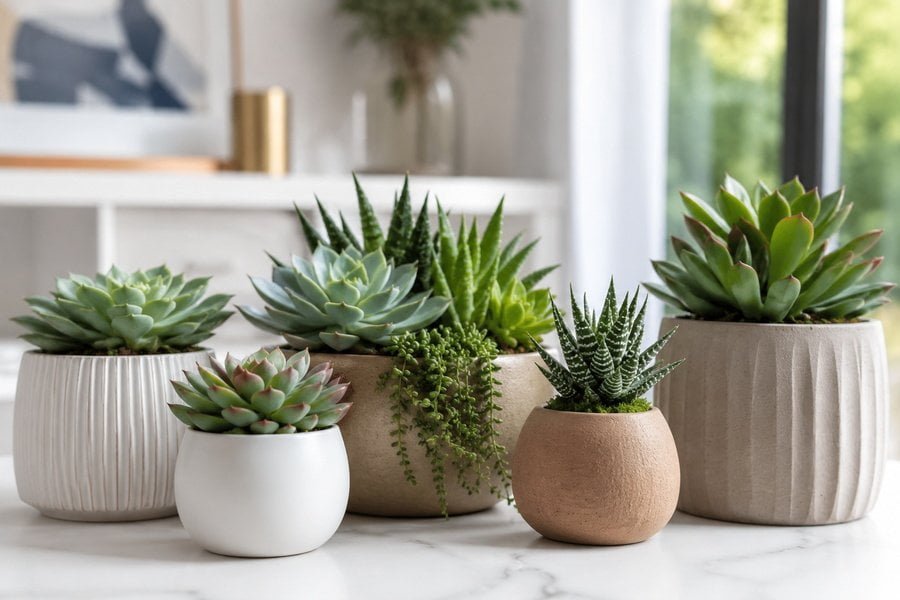
Real succulents are hard to keep alive. They often die from too much water or poor light. This leaves you with empty pots and a waste of your hard-earned money.
An artificial succulent plant is a high-quality replica made from synthetic materials like plastic or latex. These plants mimic the thick leaves and unique shapes of real desert plants. They require no water or sunlight, making them a perfect, long-lasting decoration for any indoor or outdoor environment.
I have worked with floral designs for over ten years. I have seen many people feel bad when their plants die. If you want to know how to pick the best greenery for your space, follow my guide below.
What is a faux succulent plant?
Do you struggle to keep plants alive in a dark office? Real succulents need very specific light to stay green. Without it, they stretch out and eventually turn brown and die.
A faux succulent is a man-made version of a natural succulent. These plants use materials like polyethylene to recreate the fleshy leaves and vibrant colors of nature. They provide a permanent green look for homes, offices, and large events without any maintenance work.
I often see people get confused by the different types of fake plants. Some are made of silk, while others use heavy plastics. For succulents, the goal is to copy that thick, water-filled look. I find that the best versions use high-grade molds. These molds are taken from real plants. This helps the factory get the shape of the leaves just right. When you look at a high-quality faux succulent, it should have the same weight and thickness as a real one. This makes them very different from standard silk flowers which are thin and light.
Why professionals use faux succulents
Many event planners choose these because they are tough. You can transport them in boxes and they will not break. Real succulents have leaves that fall off if you touch them too hard. Faux ones stay together. They also work well in places where real plants cannot go. This includes high shelves or windowless bathrooms. Since they do not grow, you never have to worry about them outgrowing their pots or becoming messy.
Technical details of faux plants
| Feature | Details |
|---|---|
| Common Materials | Polyethylene (PE), Latex, EVA foam |
| Typical Size | 2 inches to 12 inches for individual stems |
| Coloring | Airbrushed gradients and hand-painted tips |
| Durability | Can last 5 to 10 years indoors |
I always suggest checking the stem of the plant. A good faux succulent has a wire inside the stem. This allows you to bend it and place it exactly where you want. This flexibility is great for creating wall art or complex centerpieces. You can mix different types together to create a look that stays perfect for years.
Can fake plants cause allergies?
Real plants can make your eyes itchy and your nose run. They carry pollen and can grow mold in their damp soil. This makes it very hard for people with allergies to enjoy indoor greenery.
No, fake plants do not cause allergies because they do not have pollen. They are made of safe, synthetic materials that do not attract bugs or grow mold. As long as you wipe the dust off them, they are a healthy choice for sensitive people.
I have helped many clients who wanted a green home but could not stop sneezing. Real soil is a big problem because it stays wet. Wet soil is the perfect place for mold to grow. It also attracts small bugs like gnats. When you switch to artificial plants, you remove these problems completely. You get the beauty of nature without the health risks. This is why I often recommend them for hospitals, schools, and bedrooms where clean air is very important.
Keeping your air clean
Even though these plants don’t have pollen, they can collect dust. Dust is a common trigger for allergies too. I tell my clients to set a simple schedule. You do not need to be a gardener to do this. A quick wipe once a month is enough to keep the air fresh. If you have many plants, you can even use a hair dryer on a cool setting to blow the dust away quickly.
Health and Safety Comparison
- Pollen: Real succulents bloom and release pollen; fake ones never do.
- Mold: Real plants need water which creates moisture; fake ones stay dry.
- Insects: Bugs live in real soil; fake plants offer no food or home for pests.
- VOCs: Low-quality plastic can smell, but high-quality faux plants use safe materials.
I believe that everyone should be able to enjoy the look of a garden. If your body reacts badly to nature, artificial options are the best solution. They help lower stress and make a room look better without making you feel sick. Just make sure to buy from a source that uses non-toxic materials. This ensures your home stays a safe place for your family and pets.
What is the most realistic looking fake plant?
Most people are afraid that fake plants will look cheap and shiny. If a plant looks like a toy, it ruins the style of your room. Finding a plant that looks truly real can be a difficult task.
The most realistic looking fake plants are made using "Real Touch" technology or PE plastic. These versions use 3D molds of real leaves and have a matte finish. This removes the plastic shine and adds a natural, waxy texture that looks and feels like a living plant.
In my years of work, I have noticed that color is the most important part of realism. Real plants are not just one shade of green. They have red tips, yellow edges, or a white powdery look on the surface. This powder is called farina. High-end artificial succulents use a light coating to mimic this powder. When you look at them from a few inches away, you cannot tell the difference. This level of detail is what separates a professional product from a cheap one.
How to spot a high-quality fake
When you are shopping, look at the edges of the leaves. Cheap plants have "seams" or extra plastic hanging off. A realistic plant will have clean, smooth edges. You should also look at how the leaves are attached to the stem. In nature, this transition is smooth. Good artificial plants copy this look perfectly.
Realism Check List
| Checkpoint | What to Look For |
|---|---|
| Surface | Matte or slightly waxy, not shiny plastic |
| Color | Multiple shades of green, red, or purple on one leaf |
| Texture | Soft and slightly flexible to the touch |
| Potting | Topped with real stones or preserved moss |
I always tell people to touch the plant. If it feels too hard, it will look fake under bright lights. If it has a bit of give, it will absorb light like a real leaf does. This "light absorption" is a big secret in the industry. It makes the plant look like it is full of water. This is why many top designers choose specific materials that reflect light in a soft, natural way.
Does Dollar Tree sell fake succulents?
If you are on a tight budget, you might look for the cheapest option possible. Discount stores offer many home items for a very low price. However, price often tells you a lot about the quality you are getting.
Yes, Dollar Tree sells small fake succulents. These are usually very basic and made of hard plastic. While they are fine for small crafts or children’s projects, they lack the realistic detail and size needed for professional décor or high-end home styling.
I understand the pull of a low price. I have seen many people buy a large amount of cheap plants for a party. The problem is that these plants often look very fake. They are usually much smaller than a standard succulent. This means you have to buy more of them to fill a space. The colors can also be very bright and unnatural, like neon green. For a professional project, this can make the work look lower in quality.
Why quality matters for business
If you are a business owner or a decorator, your reputation is based on how things look. Using very cheap materials can be a risk. I find that it is better to spend a bit more on a product that will last. Cheap plastic often turns yellow or becomes brittle when it sits in the sun. If you have a plant in a window, a low-quality one might fall apart in a few months. A better-quality version will stay the same for years.
Comparing Budget vs. Premium
- Size: Budget plants are often "mini" (1-2 inches). Premium ones come in many sizes.
- Material: Budget uses thin, hard plastic. Premium uses thick PE or latex.
- Design: Budget plants are mass-produced with little detail. Premium ones are hand-finished.
- Packaging: Cheap plants often arrive squashed. Better suppliers use protective packing.
I think budget stores are great for some things. If you are making a tiny garden with kids, they are perfect. But if you want a beautiful arrangement for your dining table, you should look for a higher grade. Buying in bulk from a specialized supplier can often give you a high-quality product for a price that is still very fair. This way, you get the best look without wasting money on something you will throw away soon.
My insights: The Perfection of Faux Flora: Why Artificial Succulents are the Ultimate Maintenance-Free Alternative
Tired of killing your "low-maintenance" succulents? Real plants rot and shrivel easily, but artificial succulents offer permanent, realistic beauty without the constant worry of light, water, or soil.
An artificial succulent is a decorative replica of drought-tolerant plants like Echeveria or Aloe. Crafted from materials like silicone, resin, or PE, they mimic fleshy textures and natural gradients. They provide a maintenance-free greenery solution for low-light interiors, events, and DIY projects without needing sunlight or watering.
The Anatomy of Modern Faux Flora: Materials, Versatility, and Value
Artificial succulents are unique among faux greenery because their natural counterparts already possess a thick, waxy, and almost "synthetic" appearance. This allows high-quality replicas—using silicone or soft-touch PE—to be virtually indistinguishable from living specimens. Unlike silk flowers that may fray, artificial succulents maintain structural integrity, making them ideal for high-traffic or outdoor-adjacent areas.
Material Innovation and Realism
Modern manufacturing uses 3D molding and hand-painting to replicate "farina" (the dusty coating on real succulents) and "blushing" (color shifts at the leaf tips). This evolution transforms them from mere plastic toys into sophisticated design assets that hold up under close inspection.
Design Versatility in Modern Decor
Their structural variety makes them architectural tools. From delicate Sedum to sharp Agave, they fit into spaces where organic soil would be unhygienic or impractical, such as kitchen countertops, hospital rooms, or office desks.
| Feature | Professional Grade | Budget Grade |
|---|---|---|
| Material | Soft-touch silicone or latex | Hard PVC or recycled plastic |
| Detailing | Hand-painted natural gradients | Uniform, single-color spray |
| Finish | Matte with realistic "dusty" texture | Shiny and obviously synthetic |
| Durability | UV-resistant and flexible | Brittle and prone to fading |
Conclusion
Artificial succulents are a smart, beautiful choice for any décor project. They solve the problems of maintenance and allergies while providing a realistic look that stays fresh for many years.