
Planning a wedding involves many decisions, especially regarding budget allocation for various elements. Understanding the typical costs associated with wedding flowers is crucial for effective financial planning. This information helps couples set realistic expectations.
The average cost of hiring a wedding florist generally ranges from $2,000 to $5,000. This estimate can vary significantly based on factors such as the chosen flower types, seasonal availability, the complexity of arrangements, and the event’s geographical location.
Knowing the average costs helps couples make informed decisions. It allows for a more controlled budget for the wedding day. This knowledge can also guide discussions with florists and wedding planners.
How Much Do Flowers Cost for a 100 Person Wedding?
When planning a wedding with 100 guests, one common question concerns the expenditure for floral arrangements. The scale of such an event often leads to uncertainty regarding flower budget. Many planners seek clear guidance on this specific cost.
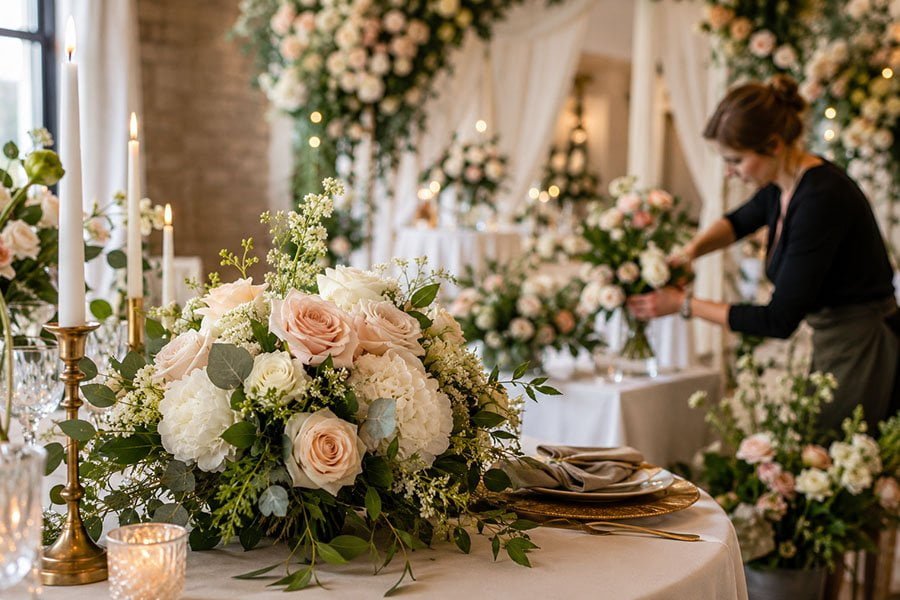
For a wedding with 100 guests, floral expenses can range from $1,500 to $7,000 or more. This broad spectrum reflects differences in flower choices, the volume of arrangements, and the overall design aesthetic. Simpler, elegant designs typically incur lower costs compared to more elaborate, opulent displays.
The cost of flowers for a 100-person wedding is influenced by several elements. These factors contribute to the total expenditure for floral decorations. Understanding these components helps in budget allocation.
Key Factors for 100-Person Wedding Floral Costs
- Flower Variety: The selection of exotic or out-of-season flowers typically increases costs. Commonly available, in-season blooms are more economical.
- Arrangement Complexity: Intricate centerpieces, large floral arches, and extensive installations require more flowers and labor.
- Number of Arrangements: A larger number of tables, a bigger bridal party, and extensive venue decoration necessitate more individual floral pieces.
Typical Floral Needs for a 100-Person Wedding
| Item | Quantity (Approx.) | Notes |
|---|---|---|
| Bridal Bouquet | 1 | Often a focal point and the most detailed personal flower. |
| Bridesmaid Bouquets | 3-6 | Generally less elaborate than the bridal bouquet. |
| Boutonnieres (Groom/Groomsmen) | 5-10 | Small floral accents for lapels; quantity depends on party size. |
| Corsages (Mothers/Grandmothers) | 2-4 | Typically worn on the wrist or pinned to clothing. |
| Ceremony Altar/Arch | 1 | Can be a significant cost if designed with extensive florals. |
| Aisle Markers | 6-12 | Simple pew decorations or more detailed floral accents. |
| Table Centerpieces | 10-12 | For ten tables of 10 guests; size and complexity vary widely. |
| Cake Flowers | 1 | Small floral additions to enhance the wedding cake’s appearance. |
| Welcome Table Arrangement | 1 | A single, prominent display for the reception entrance. |
When planning florals for 100 guests, consider where the visual impact is most desired. For instance, a highly decorated ceremony backdrop might be prioritized over numerous small aisle arrangements. High-quality artificial flowers can offer a cost-effective and visually appealing alternative. Such options can reduce expenses while providing consistent aesthetic appeal. Customization services also ensure specific design requirements are met within budget.
What Is a Normal Budget for Wedding Flowers?
Many individuals planning their wedding often inquire about typical spending habits for floral arrangements. The wide array of choices and price points can make budget setting challenging. Understanding common financial allocations helps in this process.
A normal budget for wedding flowers usually constitutes 8% to 15% of the total wedding budget. For an average wedding, this often means an expenditure of $2,000 to $5,000. This percentage can fluctuate based on personal preferences and the overall scale of the event.
Establishing a floral budget early helps in managing expectations for the wedding day. It also assists in guiding decisions regarding flower types and arrangement styles. This initial planning step is crucial for financial control.
Factors Influencing a Normal Floral Budget
- Overall Wedding Budget: A larger total wedding budget typically allows for a greater allocation to floral designs.
- Style and Vision: A lavish, flower-intensive design will naturally cost more than a minimalist or understated approach.
- Flower Availability: Seasonal flowers are generally more affordable. Rare or out-of-season blooms usually incur higher costs.
- Labor and Delivery: Fees for installation, setup, and teardown services are an integral part of the florist’s charges.
Budget Allocation for Wedding Flowers
| Floral Item | Percentage of Total Floral Budget (Approx.) |
|---|---|
| Personal Flowers | 15-20% |
| Ceremony Flowers | 20-30% |
| Reception Flowers | 40-50% |
| Delivery/Setup Fees | 10-15% |
Understanding these typical allocations helps in deciding where to direct funds. For example, if reception centerpieces are a high priority, a larger portion of the budget might be assigned there. High-quality artificial flowers present a viable option for managing costs while achieving desired aesthetic outcomes. Such products can offer durability and realism, suitable for various event settings. Customization options ensure that specific design visions are realized within budget constraints.
What Is a Realistic Budget for a 100 Person Wedding?
Planning a wedding for 100 guests requires a comprehensive financial strategy. A common concern for couples involves establishing a practical budget that covers all necessary elements, including flowers. It is important to avoid both overspending and insufficient allocation.
A realistic comprehensive budget for a 100-person wedding generally ranges from $20,000 to $40,000. This figure encompasses all major expenditures such as venue, catering, photography, attire, and floral arrangements. Specifically for flowers, a realistic allocation within this total budget typically falls between $2,000 and $5,000.
A realistic budget for a 100-person wedding involves thoughtful prioritization. It is essential to view floral costs within the context of the overall wedding expenses. This approach helps in achieving a balanced financial plan.
Overall Budget Allocation for a 100-Person Wedding
- Venue & Catering: This often represents the largest expense, typically 40-50% of the budget.
- Photography & Videography: Crucial for capturing memories, usually accounts for 10-15%.
- Attire & Accessories: Includes the wedding gown, suits, and related items, around 5-10%.
- Entertainment: Costs for a DJ or band are typically 5-10%.
- Flowers & Décor: This category generally occupies 8-15% of the total budget.
- Miscellaneous/Buffer: It is prudent to allocate 5-10% for unforeseen expenditures.
Breakdown of a $30,000 Wedding Budget (100 Guests)
| Category | Estimated Cost | Notes |
|---|---|---|
| Venue & Catering | $12,000-15,000 | Costs vary significantly by location and service level. |
| Photography & Videography | $3,000-4,500 | Professional services are an important investment for memories. |
| Attire & Accessories | $1,500-3,000 | Includes wedding dress, suits, and accompanying items. |
| Entertainment (DJ/Band) | $2,000-3,000 | Establishes the atmosphere for the celebration. |
| Flowers & Décor | $2,400-4,500 | Strategic planning in this area can maximize visual impact. |
| Cake | $400-700 | Often priced per serving. |
| Hair & Makeup | $300-600 | For the bride and potentially other members of the bridal party. |
| Invitations & Stationery | $300-600 | Digital options can help manage these costs. |
| Rings | $1,000-2,000 | Engagement rings are typically a separate consideration. |
| Transportation | $200-500 | For bridal party or guest shuttles. |
| Officiant | $200-500 | Essential for legalizing the ceremony. |
| Favors & Gifts | $300-600 | Optional tokens of appreciation for guests. |
| Miscellaneous/Buffer (10%) | $3,000 | Recommended for unexpected costs or minor adjustments. |
A realistic floral budget for a 100-person wedding considers both the guest count and the desired aesthetic. High-quality artificial flowers offer a realistic and sustainable alternative. These products eliminate concerns about seasonality and provide consistent beauty. They also reduce logistical challenges and maintenance costs. Customization services are available to ensure each client’s specific vision is met.
Is $5000 Enough for Wedding Flowers?
Many couples consider whether a $5,000 budget is sufficient for their wedding flower needs. It is common to question if this amount can adequately cover desired décor and overall scale. Understanding the possibilities within this budget is important for planning.
Yes, $5,000 is often enough for wedding flowers. This budget can accommodate a range of styles, from simple elegance to moderately elaborate designs. It typically covers personal flowers, ceremony decor, and reception centerpieces for a medium-sized wedding.
A $5,000 budget provides a solid foundation for achieving beautiful wedding floral arrangements. It allows for strategic choices that can maximize visual impact. This budget enables a balance between cost and aesthetic goals.
What You Can Get with a $5,000 Floral Budget
- Mid-Sized Wedding (75-120 Guests): This budget is generally appropriate for weddings within this guest range.
- Key Floral Elements Covered:
- One bridal bouquet and several bridesmaid bouquets.
- Boutonnieres and corsages for immediate family members.
- Ceremony decor, such as an arch or altar arrangements.
- Reception centerpieces for approximately 10-15 tables.
- A few additional accent arrangements, like for a welcome table or cake table.
Making the Most of a $5,000 Budget
| Strategy | Description |
|---|---|
| Prioritize Impact | Allocate more funds to high-visibility areas, such as the ceremony backdrop or head table. |
| Choose Seasonal Flowers | Select flowers that are naturally in season to benefit from lower prices. |
| Repurpose Arrangements | Utilize ceremony floral arrangements as reception décor to reduce waste and cost. |
| Mix & Match | Combine premium flowers with more affordable filler flowers or greenery to create lushness. |
| Consider Artificial Flowers | High-quality artificial flowers can provide significant savings and offer reusability. |
With a $5,000 budget, strategic decisions are critical. Utilizing high-quality artificial flowers can significantly extend this budget’s reach. Such products offer durability and consistent beauty without the higher costs of fresh blooms or ongoing maintenance. This approach can be particularly beneficial for various event types, ensuring reliable and lasting décor. This budget also allows for creative customization, resulting in visually stunning arrangements.
My Insights: The True Cost of Wedding Flowers
Facing the floral conundrum for your big day? Don’t let budgeting wilt your wedding dreams! Understanding the real costs helps you bloom with confidence.
The average cost of a wedding florist typically ranges from $2,000 to $4,000, with many couples spending more depending on the wedding’s size and style. For comprehensive floral services, budgets often land between $5,100 and $7,600, with some high-end luxury services exceeding $10,000.
Unpacking Your Floral Investment
Your wedding flower budget isn’t just about pretty petals; it’s a dynamic interplay of various elements. Typically, 8% to 10% of your overall wedding budget is a good rule of thumb for flowers, though this can fluctuate based on your vision.
Key Factors Influencing Floral Costs:
- Flower Variety & Seasonality:
- In-season, local blooms are generally more budget-friendly.
- Exotic or out-of-season flowers drive up costs significantly due to sourcing and transportation.
- Design Complexity & Wedding Size:
- Intricate arrangements, custom installations (like arches or hanging florals), and a large number of tables or guests naturally require more materials and labor.
- Smaller, more intimate weddings can expect costs closer to the $500-$3,000 range.
- Geographic Location:
- Prices vary by region, reflecting local market rates and florists’ operating costs.
- Services Included:
- Delivery, setup, and teardown fees are common additional charges.
- Full-service florists often bundle these into packages, while à la carte options might incur separate fees.
Cost Breakdown Example: Standard vs. Luxurious
| Item | Standard Package (Approx. $) | Luxurious Design (Approx. $) |
|---|---|---|
| Bridal Bouquet | 200-350 | 400-800+ |
| Bridesmaids’ Bouquets (x3) | 300-450 | 500-900+ |
| Boutonnieres & Corsages (x5) | 75-125 | 150-250+ |
| Ceremony Altar/Arch | 400-800 | 1,500-3,000+ |
| Reception Centerpieces (x10) | 1,000-2,000 | 3,000-6,000+ |
| Total Estimated Cost | ~2,000-3,700 | ~5,500-11,000+ |
To manage costs, consider alternatives like DIY elements, faux flowers, or focusing on statement pieces rather than widespread elaborate decor.
Conclusion
Understanding wedding flower costs is fundamental for effective event planning. A budget of $5,000 can adequately support beautiful floral designs for many weddings. Prioritizing key elements, selecting seasonal flowers, or choosing high-quality artificial options helps optimize this budget.