
Artificial palm trees can look convincing in product photos but disappoint in a real room. Glossy leaves, rigid stems, and identical fronds quickly reveal a poor imitation.
The most realistic artificial palm trees are well-made areca (golden cane), kentia, and Robellini palms. Areca palms offer full, feathery indoor greenery. Kentia palms have elegant, arching fronds. Robellini palms create a more defined tropical silhouette. Natural trunk texture, varied leaf color, flexible fronds, and correct proportions matter more than a product’s label or price.
I judge an artificial palm by how it looks at normal viewing distance and up close. A realistic tree should resemble a particular living palm, not simply a collection of green leaves. The best option also depends on the room, the light, and whether the display will stand indoors or outdoors.
Which Types of Artificial Palm Trees Look the Most Realistic?
Many artificial palms use the same general tropical shape. That makes it difficult to know which species will look natural in a specific setting.
I would start with areca or golden cane palms for a full indoor display, kentia palms for a softer and more elegant shape, and Robellini or pygmy date palms for a stronger tropical statement. Each type can look realistic when its fronds, trunk, and overall growth pattern match the living plant.
Areca or Golden Cane Palm: Best All-Round Indoor Choice
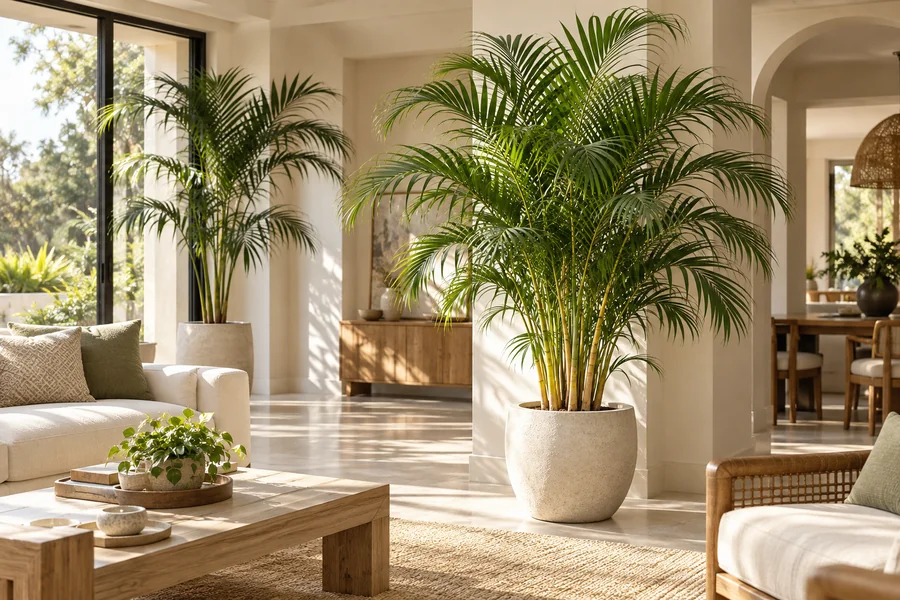
Areca palm and golden cane palm are common names for the same plant. A convincing artificial version has several slender, slightly golden canes and plenty of fine, arching leaflets. I look for a layered canopy with open spaces between the fronds. A solid, perfectly rounded mass of foliage tends to look manufactured.
This is an easy style to place beside a sofa, reception desk, or window. Architectural Digest has included the Nearly Natural Golden Cane Palm Tree among its recommended fake plants. That is a useful product example, although appearance still depends on the size and model selected.
Kentia Palm: Best for a Graceful, Understated Look
A realistic kentia palm has relatively dark green, long, arching fronds and a lighter, more open outline. I prefer it for calm interiors, hotel lounges, and spaces where an overly dense tree would dominate the furniture. I also check that the leaflets droop naturally rather than sticking out in identical horizontal rows.
Robellini Palm: Best for a Distinct Tropical Focal Point
Robellini, also called pygmy date palm, has a recognizable textured trunk and a crown of fine, feather-shaped leaves. Forbes Vetted selected the Nearly Natural Artificial Double Robellini Palm Tree as a tropical faux-plant pick. This style suits a spacious entryway, covered patio, or resort-inspired room when the product is rated for that location.
| Artificial palm type | Features that make it convincing | Where I would use it |
|---|---|---|
| Areca / Golden Cane | Clustered canes, fine leaflets, varied frond angles | Living rooms, offices, retail interiors |
| Kentia | Long, drooping fronds and a relaxed, open shape | Hotels, lounges, modern interiors |
| Robellini / Pygmy Date | Textured trunk and a defined feather-leaf crown | Entrances, tropical interiors, suitable patios |
| Parlor Palm | Delicate, compact fronds and restrained height | Desks, small rooms, shelves |
What Makes an Artificial Palm Tree Look Real?
A tall artificial palm is not automatically convincing. Even expensive designs can look fake when the leaf shape or trunk construction is wrong.
The most important realism features are species-correct fronds, natural color variation, matte or softly reflective leaf surfaces, flexible stems, and textured trunks. I also check the depth of the canopy and the way the leaves connect to each stem. These details make a bigger difference than height or leaf count alone.
Frond Shape Matters More Than Fullness
Real palms rarely have fronds that point at exactly the same angle. Some leaves grow upright, some reach sideways, and older ones arch down. I look for wired or adjustable fronds so I can create these differences after unpacking. A high leaf count helps only when the leaves form a believable structure. A dense bundle of repeated plastic fronds can look less realistic than a smaller, better-shaped palm.
Color, Finish, and Leaf Detail Need to Work Together
I prefer foliage with several close shades of green. Some palms naturally have warmer new growth or deeper older leaves, but bright yellow patches should not be added without a botanical reason. I avoid hard plastic shine, flat printed color, obvious mold seams, and leaflets that look too thick. A soft finish can help, but I examine close-up product photos rather than relying on terms such as "silk" or "real touch." Those descriptions alone do not prove quality.
A Natural-Looking Trunk Completes the Illusion
Areca palms need convincing clustered canes. Robellini palms need a textured, slightly irregular trunk. Kentia palms should keep the more restrained form of the actual species. A smooth brown tube under a realistic crown can ruin the entire effect. I also inspect the base where stems enter the planter, because exposed glue, foam, or plastic hardware immediately draws attention.
For a sample review, I use the same simple checks:
- I view the whole tree from several steps away and then inspect the leaves up close.
- I compare the trunk and canopy with photographs of the living species.
- I bend a few fronds gently to see whether they hold a natural curve.
- I check the tree under daylight and normal indoor lighting.
- I confirm that the product photos show the exact size and configuration offered.
Can Realistic Artificial Palm Trees Be Used Outdoors?
A palm that looks excellent in a living room may fade, become brittle, or lose its shape outdoors. Indoor realism and outdoor durability are separate requirements.
Artificial palm trees can be used outdoors only when their materials and construction suit the intended exposure. I look for documented UV-stabilized foliage, a secure base, and suitable resistance to weather. A general "indoor/outdoor" label does not establish how long a tree will keep its color in direct sunlight.
Indoor, Covered Outdoor, and Full-Sun Locations Are Different
For an indoor display, my main concerns are leaf texture, shape, and close-up appearance. For a covered patio, I add moisture, heat, and occasional wind to the assessment. For an exposed terrace or poolside installation, I also consider prolonged sunlight, strong wind, drainage, and the risk of the planter tipping over.
A realistic outdoor palm should not be selected only from a staged photograph. I ask whether the exact foliage material has been evaluated for weathering. UV-stabilized materials can help reduce damage, but no artificial plant is permanently fade-proof. A useful test report explains the specimen, test method, exposure conditions, and measured changes. It should not present a laboratory exposure time as a guaranteed number of outdoor years. For more detail, I would use this artificial-plant UV testing guide.
Commercial Installations Need More Than a Good Photograph
For hotels, retail projects, and event venues, I would ask for a physical sample or clear close-up video before approving a large order. I would confirm the complete tree height and width, packed dimensions, stem connections, and pot stability. If the site has fire-performance requirements, I would request applicable evidence for the exact product rather than assuming every artificial tree meets the same rules.
The outdoor choice should match the installation plan. A shaded entrance may need a completely different specification from a fully exposed rooftop. I would rather choose a realistic, properly rated palm for a sheltered position than buy an unverified "UV-resistant" design for direct sun.
How Can I Make an Artificial Palm Tree Look More Realistic?
Even a good artificial palm can appear stiff when it comes straight out of its carton. Poor placement and an undersized pot can make the effect worse.
I make an artificial palm look more realistic by shaping its fronds at different angles, leaving natural gaps in the canopy, hiding the production pot, and choosing a height that fits the room. I also keep the foliage clean and place the tree where its silhouette looks believable.
Shape the Fronds Instead of Making a Perfect Fan
I begin with the central fronds and work outward. I raise some leaves, bend others slightly downward, and turn a few to the side. I avoid forcing sharp bends or twisting stems beyond the manufacturer’s instructions. The goal is an uneven but balanced crown, not perfect symmetry. Real palms grow toward light and age at different rates, so a little variation improves the impression.
Choose a Suitable Height and Spread
I measure the available floor space, ceiling height, and the tree’s total width after shaping. In a typical room with an approximately 8-foot ceiling, I often start by comparing palms around 4–6 feet tall. Larger rooms and higher ceilings may support 6–8-foot models. These are design starting points, not fixed rules. I leave clear space above the fronds and make sure leaves do not project into doorways or busy walkways.
The width matters as much as the height. A full areca may need more side clearance than a slim kentia of similar height. A large tree squeezed between furniture can look fake because its natural growth shape has been lost.
Finish the Planter Like a Real Plant
I place the small factory pot inside a heavier decorative container when the design allows it. I conceal exposed fixing material with suitable decorative moss, pebbles, or another clean top dressing. The container needs to remain stable, especially where people may brush past the fronds. I then dust the foliage gently following the supplier’s care instructions. Dust buildup and bent, neglected leaves can make even good artificial greenery look cheap.
My Insights: Which Artificial Palm Trees Are the Most Realistic
Choosing a faux palm by brand name alone can lead to disappointment. Different models from the same supplier may use very different leaves, trunks, and materials.
For most indoor projects, I would choose a well-made areca or golden cane palm first, then consider kentia for a more open silhouette. For a stronger tropical feature, I would compare realistic Robellini designs. I make the final decision from the actual sample, room proportions, leaf detail, and installation conditions—not a generic "most realistic" label.
I Start With the Living Palm, Not the Catalog Image
I first decide which species suits the space. An areca should have grouped canes and light, feathery foliage. A kentia should look calmer and more open. A Robellini should carry a convincing date-palm crown above a distinctive trunk. This species-first approach helps me reject artificial designs that mix unrelated features into one tree.
Next, I evaluate the viewing distance. A palm positioned across a large lobby can look convincing with a strong silhouette and good canopy depth. A palm next to a sofa needs better leaflet surfaces, stem connections, and trunk detail because people see it closely. The lighting matters too. A shiny leaf that seems acceptable in soft product photography may look obviously artificial in direct window light.
I Compare Samples Before Making a Bulk Decision
For retail, interior design, and event projects, I would ask suppliers for both a full-tree photo and close-up images of foliage, trunks, and the base. I would also check the assembled spread against the shipping size. A tree that arrives compressed may need careful reshaping, while a poorly engineered tree may never achieve the shape shown online.
I also separate appearance from durability. A beautiful indoor model is not automatically right for an outdoor resort installation. For exposed spaces, I require relevant material and weathering information. For repeated commercial orders, I would request an approved sample and clear product specifications so later deliveries match the design.
The most realistic artificial palm is therefore the one that preserves the natural features of its species and continues to look believable in the actual setting. I see areca, kentia, and Robellini as strong starting points, not universal winners. Good proportions, thoughtful styling, and reliable construction determine the final result.
Conclusion
I recommend realistic areca, kentia, or Robellini palms based on the space. I always check frond detail, trunk texture, proportions, and outdoor suitability before buying.