
Keeping real plants alive in busy homes or large event halls is a constant struggle. Most people deal with yellowing leaves, messy soil, and the high cost of regular replacements. Artificial hanging vines solve these problems by offering a lush, evergreen look that never requires a drop of water.
Artificial hanging vines are dominating decor in 2025 because they combine high realism with zero maintenance. They allow designers to create green environments in places where real plants cannot survive. Modern materials like "real-touch" polymers ensure these vines look indistinguishable from natural foliage, making them a cost-effective choice for long-term use.
I have worked in the floral industry for over a decade, and I have seen the shift firsthand. Many of my clients used to be skeptical about anything "fake." Now, they specifically ask for artificial vines because the quality has reached a level that was impossible years ago. If you want to know how these products can change your space, keep reading.
Are fake plants out of style in 2025?
Do you worry that using artificial greenery makes your design look dated or behind the times? Many people still think of the shiny, plastic leaves from the 1990s and fear their home will look cheap. This fear often stops designers from using a tool that is actually very popular right now.
Fake plants are definitely not out of style in 2025; they are currently a staple in modern "biophilic" interior design. The focus today is on high-quality, realistic pieces that bring the feeling of nature indoors without the work. Professionals now use them to soften hard architectural lines and add warmth to minimalist spaces.
The Shift Toward Permanent Greenery
In my years of experience, I have noticed that the demand for "permanent botanicals" is at an all-time high. In 2025, people value their time more than ever. They want a beautiful home but do not want more chores. This shift has pushed manufacturers to create vines that mimic the exact movement and color of real ivy or eucalyptus. We are seeing these products in luxury hotels, modern offices, and high-end homes because they look great every single day.
Comparison: Real vs. High-End Artificial
| Feature | Real Hanging Vines | Modern Artificial Vines |
|---|---|---|
| Initial Cost | Lower | Higher |
| Long-term Cost | Very High (Replacement/Water) | Zero |
| Placement | Only near windows | Anywhere (even dark halls) |
| Allergy Risk | High (Pollen/Mold) | None |
| Weight | Heavy (needs wet soil) | Light and easy to hang |
Why Modern Aesthetics Embrace Faux
Modern homes often have large windows or very dark corners. Real plants struggle in both extremes. I often see people put a real plant in a dark corner only for it to die in a month. This is where artificial vines shine. They provide the visual "break" of green color that eyes need in a modern room. Designers use them to trail down from high shelves or wrap around indoor pillars. Because they do not grow, the design stays exactly how you planned it. This control is why they remain a top choice for professionals this year.
Are fake flowers tacky for home decor?
Are you afraid that your friends or clients will judge you for having artificial flowers in your living room? The word "tacky" is a big concern for anyone who cares about their home’s image. It is hard to feel confident in your decor if you think it looks like a cheap imitation of the real thing.
Fake flowers are only tacky if they are low-quality or poorly styled; premium artificial flowers are now considered luxury decor. When you choose items with natural color gradients and realistic textures, they add elegance to a room. Today’s high-end faux florals are designed to be "floral art" rather than just a plastic substitute.
Identifying Quality Over "Tackiness"
I always tell my customers that the difference between "tacky" and "tasteful" is in the details. Cheap flowers have visible seams from the plastic molds and colors that are too bright to be real. High-quality vines and flowers use 3D printing and silk-blend fabrics. They have small "imperfections" like varied leaf sizes or slight brown spots on the stems, just like nature. These details trick the eye and make the piece look expensive and intentional.
How to Style Faux Greenery Like a Pro
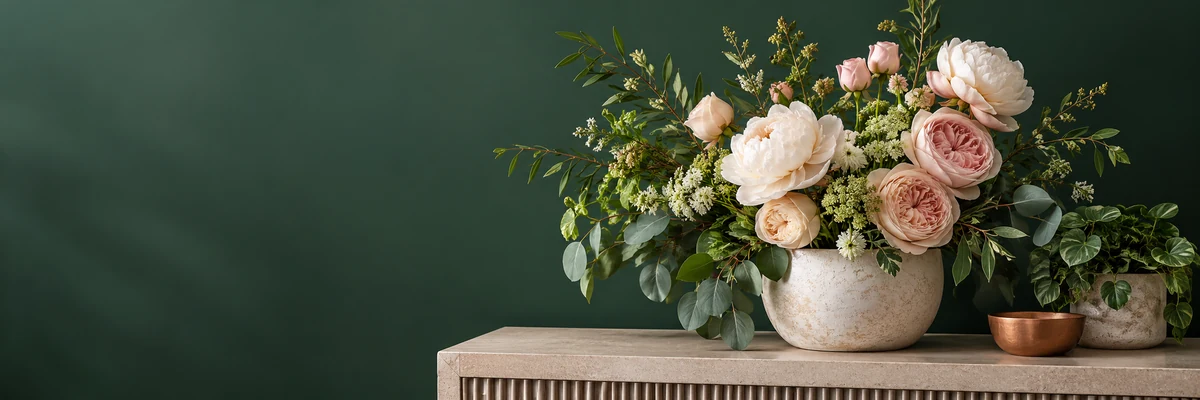
- Use Natural Containers: Put your vines in handmade ceramic pots or stone vases to ground the look.
- Layering: Mix different types of vines, like ivy with eucalyptus, to create a more organic and full appearance.
- Occasional Cleaning: A simple dust once a month keeps the "fresh" look alive.
- Location Matters: Place them where a real plant would logically live. A vine hanging from a bookshelf near a window looks much more realistic than one in a basement closet.
I once worked with a client who hated the idea of faux plants. I installed a single high-quality vine in their guest room. A week later, they asked me to do the whole house. They realized that the "tackiness" they feared was a thing of the past. When the quality is right, the only thing people notice is how beautiful and green the room looks. This is why artificial options are now a key part of upscale interior design.
Are fake plants in or out of style?
Are you finding it difficult to stay on top of design trends that seem to change every month? You might be hesitant to buy artificial vines because you do not want to invest in something that will be "out" by next season. It is frustrating to spend money on decor that loses its value quickly.
Fake plants are very much "in" style and are actually becoming a standard part of sustainable and functional decor. The trend has moved away from "disposable" items toward long-lasting pieces that improve the atmosphere of a room. As urban living spaces get smaller and have less natural light, the popularity of artificial greenery continues to grow.
The Role of Artificial Vines in Commercial Design
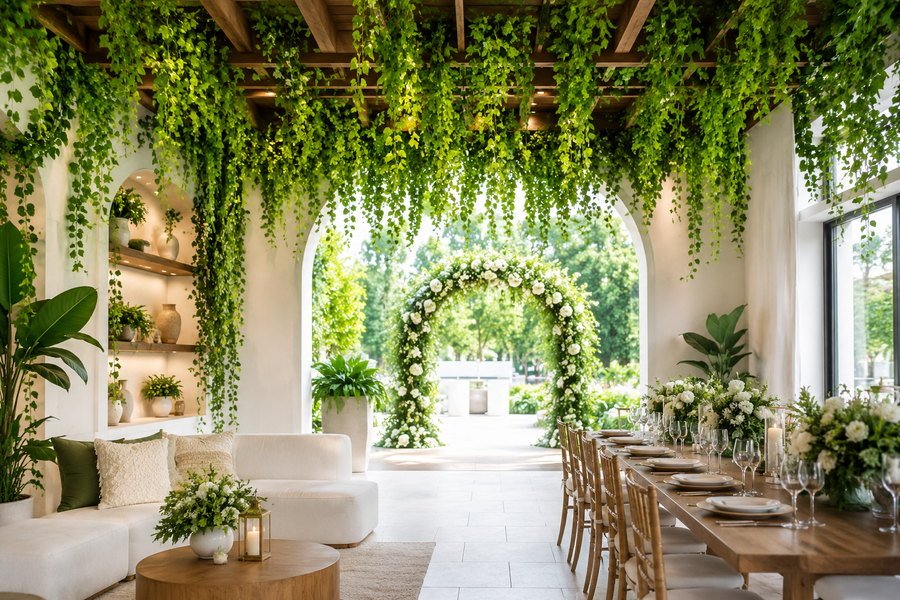
In the business world, artificial plants have never been more popular. Event planners and hotel managers need decor that is durable. A wedding planner needs to set up a floral arch that looks perfect for ten hours under hot lights. Real flowers would wilt and look sad. Artificial vines stay crisp and vibrant. This reliability is why the industry sees them as a permanent trend. They are a tool for creating an "experience" without the logistical nightmare of live plants.
Market Trends and Why They Stay "In"
| Trend Category | Why it Favors Artificial Vines |
|---|---|
| Biophilic Design | Increases the "green" surface area in a room easily. |
| Sustainable Living | Reduces water waste and the need for chemical fertilizers. |
| Remote Work | Home offices look better on video calls with a green backdrop. |
| Minimalism | Provides a clean, unchanging look that fits simple styles. |
I see more and more "green walls" being installed in restaurants and malls. Most of these are high-quality artificial vines. It is simply too expensive and difficult to maintain a living wall of that size. By using faux materials, these businesses get the psychological benefits of greenery without the recurring costs. This practical benefit ensures that faux plants will stay in style for many years to come. They are no longer a "filler" item; they are a focal point.
Are faux plants in style in 2026?
Are you worried that the decor you buy today will look like a mistake in 2026? Making long-term decisions for your home or business is stressful. You want to make sure your investment in artificial greenery will still be relevant and stylish as we move further into the decade.
Faux plants will remain a major design trend in 2026 as the technology for "bio-mimicry" continues to advance. We are moving into an era where "permanent greenery" is treated as a construction material rather than just an accessory. With a growing focus on low-maintenance lifestyles, artificial plants will be a standard feature in most modern interior designs.
Future-Proofing with Quality Materials
As we look toward 2026, the market is focusing on eco-friendly and fire-retardant materials. I am seeing a huge increase in the demand for vines that can be used in public spaces while meeting safety codes. This shift means that artificial greenery is becoming more integrated into the "bones" of a building. Instead of a plant in a pot, we will see vines built into ceilings and light fixtures. This level of integration shows that the trend is not going away; it is just becoming more sophisticated.
Why 2026 Will See Even More Faux
- Advancements in Texture: New polymers will make leaves feel even more like real skin and wax.
- Global Logistics: It is much easier and cheaper to ship artificial plants than live ones across borders.
- Climate Adaptation: As indoor climates become more controlled with AC and heating, real plants struggle more, making faux a safer bet.
- Customization: We can now create vines in any color or length to fit specific brand identities or themes.
I believe the future is green, but it is a "smart" green. People want the look of the jungle without the bugs or the mold. In 2026, having a lush, artificial vine installation will be seen as a sign of a well-maintained and modern space. It shows that the owner values aesthetics and efficiency. For anyone looking to decorate, investing in high-quality artificial vines now is a move that will pay off for years to come.
My insights: The Biophilic Revolution: Why Artificial Vines are 2025’s Design MVP
Struggling with dying plants and high maintenance costs? Artificial hanging vines provide the perfect 2025 solution, offering lush, maintenance-free greenery that instantly transforms any space into a stunning sanctuary.
Artificial hanging vines dominate 2025 decor by merging biophilic aesthetics with hyper-realistic materials. They provide instant, maintenance-free vertical greenery for low-light homes and high-impact event backdrops. Their reusability, cost-effectiveness, and ability to create "floating garden" effects without sunlight or watering make them the ultimate modern styling solution.
Beyond the Surface: The Strategic Shift to Faux Greenery
The surge in artificial vine popularity represents a critical shift in design philosophy: the democratization of high-end aesthetics. In 2025, the "look" of a secret garden or a tropical oasis is no longer reserved for those with professional gardeners or massive floral budgets. By decoupling the psychological benefits of greenery—such as reduced stress and visual softness—from the biological requirements of living plants, faux vines allow for "functional biophilia" in environments where nature previously couldn’t survive.
Whether it is a windowless basement apartment or a high-traffic retail ceiling, these vines offer a "plug-and-play" approach to maximalism and cottagecore trends. They solve the logistical nightmare of event planning by providing lightweight, reusable volume that looks as fresh in the tenth hour as it did in the first.
| Strategic Driver | Impact on Home Decor | Impact on Event Planning |
|---|---|---|
| Sustainability & Cost | One-time investment for year-round style. | Reusable assets that lower per-event floral costs. |
| Spatial Optimization | Uses vertical space; ideal for small apartments. | Creates massive visual volume without floor clutter. |
| Durability | Thrives in HVAC-heavy or low-light rooms. | Lightweight for easy rigging on temporary structures. |
| Visual Consistency | Matches specific color palettes perfectly. | Ensures a camera-ready look for social media content. |
Conclusion
Artificial hanging vines are a lasting trend because they offer a perfect mix of beauty and practicality. They stay in style by evolving with technology and modern needs.