
Overseas buyers have more sourcing options than before, but artificial flowers are not easy products to replace with a random low-cost supplier.
Overseas buyers still source artificial flowers from China because China offers deep supply chains, wide product variety, flexible customization, mature export experience, competitive pricing, and faster sampling for bulk orders. For wedding suppliers, wholesalers, retailers, event planners, and home decor brands, China remains practical because buyers can compare many styles, materials, grades, and factories in one sourcing ecosystem.
Global demand is rising as buyers need realistic, low-maintenance artificial flowers, greenery, centerpieces, garlands, flower walls, and seasonal decor from suppliers with stable quality and repeatable production for growing markets.
Where Can I Buy the Most Realistic Artificial Flowers?
Finding realistic artificial flowers is hard because many products look good in photos but cheap in real life. Buyers need to check material, shape, color, and supplier skill.
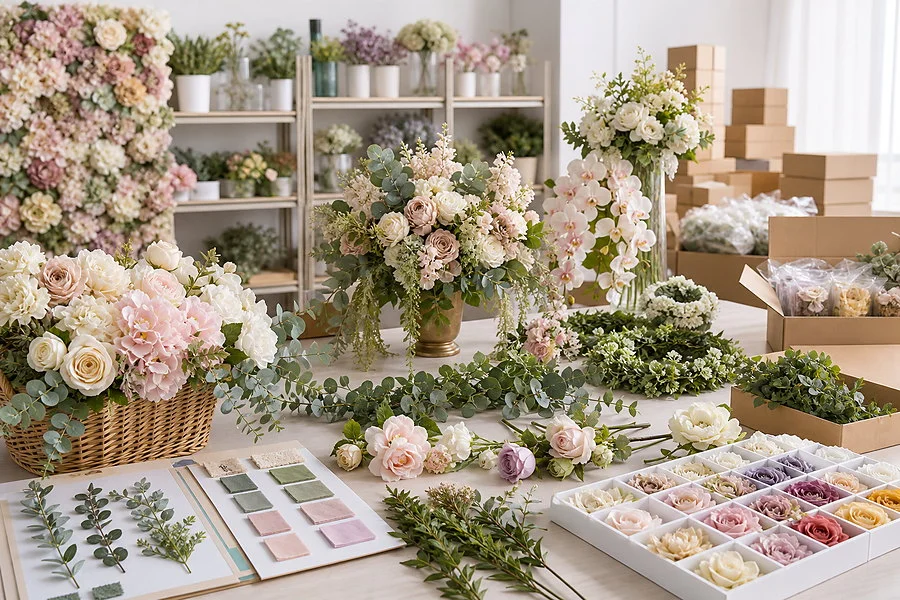
The most realistic artificial flowers can be bought from specialized manufacturers, wholesale floral markets, B2B sourcing platforms, trade fairs, and professional showrooms in China. Buyers usually find better results when they compare real-touch flowers, silk flowers, PU flowers, latex flowers, preserved-look stems, and artificial greenery samples before placing bulk orders.
Realism Starts With Material and Craft
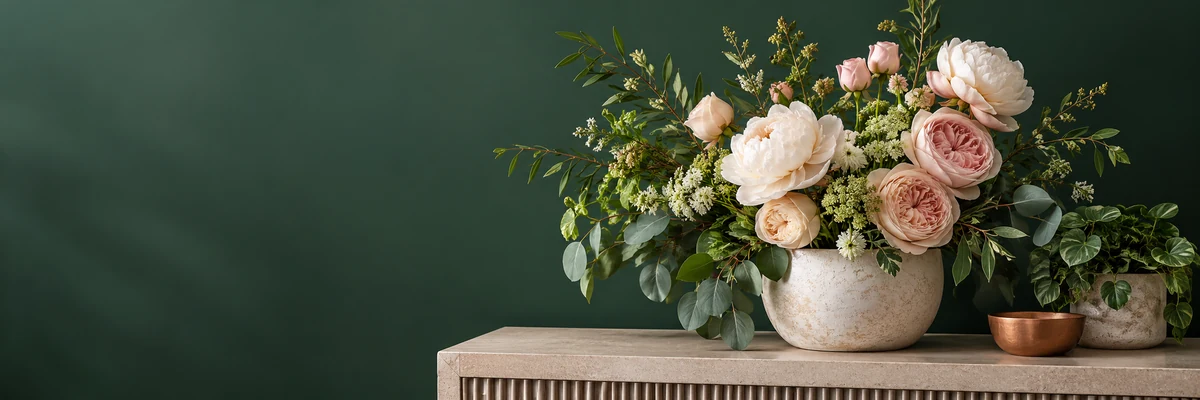
Realistic artificial flowers are not defined by one material only. A good silk rose, a real-touch tulip, a PU orchid, and a high-end hydrangea can all look premium when the shape, texture, and color are right. Buyers should look for petals with soft color variation, flexible stems, natural leaf veins, and realistic flower heads that are not too shiny.
The strongest suppliers usually offer sample orders before bulk production. This matters because overseas buyers cannot judge realism only from catalog photos. A supplier may show a beautiful image, but the actual item may have stiff petals, thin fabric, poor glue marks, weak stem wire, or unnatural color. A sample lets the buyer test hand feel, display effect, packaging strength, and color accuracy.
China Gives Buyers More Comparison Options
China is still attractive because buyers can compare many styles in one place. Yiwu, Guangzhou, Dongguan, Foshan, and other sourcing hubs give buyers access to different grades of artificial flowers. Yiwu is known for wholesale variety and small commodity sourcing, and Yiwugo listings show many artificial flower firms located inside Yiwu International Trade Mart District 1.
A buyer looking for realistic wedding flowers may not want the cheapest flower. They may want better silk peonies, real-touch roses, hydrangeas, orchids, eucalyptus garlands, and flower wall panels. A buyer for discount retail may want lower-cost mixed bouquets and seasonal stems. China’s sourcing advantage is that both needs can often be handled in the same broader supply chain.
Practical Buyer Viewpoint
The best place to buy realistic artificial flowers is not always the cheapest platform. It is the supplier who can show stable samples, explain material differences, support packaging requirements, and repeat the same color across orders. Overseas buyers should ask for close-up videos, side-by-side sample photos, stem bend tests, packaging photos, and previous export case examples before confirming production.
Where Are Most Artificial Flowers Made?
Many buyers ask this because the label matters for cost, quality control, lead time, and customs planning.
A large share of artificial flowers are made in China, especially in manufacturing and trading hubs such as Guangdong and Zhejiang. Guangdong is known for export-oriented production, larger artificial trees, and higher-end artificial plants, while Yiwu in Zhejiang is known for wholesale variety, mixed orders, and small commodity trade.
China Has a Mature Artificial Flower Cluster
Artificial flowers require more than simple assembly. A complete supply chain may include fabric suppliers, plastic injection parts, wire stems, printing, cutting, dyeing, shaping, hand assembly, packaging, cartons, labels, and export logistics. China remains strong because these supporting industries are close to one another.
Sourcing guides commonly identify Guangzhou and Dongguan in Guangdong as important artificial flower and plant production areas, with factories and wholesale markets supporting fabric flowers, silk yarn flowers, larger artificial trees, and commercial decor. Industry sourcing pages also describe Guangdong as a major hub for large-scale, commercial-grade silk flowers and artificial trees because of its links with textiles and injection molding.
Yiwu Still Matters for Variety
Yiwu is important for buyers who want many SKUs and mixed categories. Yiwu International Trade City is widely known as a major small-commodity wholesale market, and public market guides place the artificial flowers market inside District 1. This makes Yiwu useful for wholesalers, importers, small retailers, event supply sellers, and online stores that need variety more than a single custom factory line.
The advantage is not only price. Yiwu helps buyers see many artificial flower styles quickly. A buyer can compare wedding bouquets, fake roses, silk peonies, artificial leaves, flower baskets, seasonal stems, garlands, and decoration accessories in one trip. This reduces search time and helps buyers test trends faster.
What This Means for Overseas Buyers
Overseas buyers still need to choose the right sourcing region. A low-cost mixed bouquet buyer may start in Yiwu. A buyer who needs real-touch premium flowers may compare Guangdong suppliers. A buyer who wants artificial trees and commercial greenery may look at larger plant factories. A buyer who wants custom wedding flower centerpieces may need a supplier with design and assembly ability, not only a trading booth.
Are Artificial Flowers Made in China?
The question sounds simple, but the real answer is about product grade, supply chain depth, and export readiness.
Yes, many artificial flowers are made in China. China produces a wide range of artificial flowers, including silk flowers, plastic flowers, PU real-touch flowers, faux greenery, wedding floral arrangements, artificial trees, wreaths, garlands, and flower walls. However, quality varies widely, so buyers should evaluate supplier capability, not only country of origin.
Made in China Does Not Mean One Quality Level
Artificial flowers made in China can be very cheap, very premium, or somewhere in the middle. A supermarket stem, a luxury hotel orchid arrangement, a wedding arch flower set, and a UV-resistant outdoor artificial plant are different products. They need different materials, molds, workers, inspection steps, and packaging.
This is why overseas buyers still source from China even when they worry about quality. China gives them choice. A buyer can request low-cost retail stems, mid-range home decor flowers, or premium real-touch artificial flowers with custom colors. The challenge is not whether China can make the product. The challenge is finding the right supplier for the required quality level.
Customs and Product Classification Matter
Artificial flowers are also a clear trade category. HS code 6702 covers artificial flowers, foliage, fruit, parts, and articles made from them. The category includes plastic artificial flowers under 6702.10 and other materials such as fabric or paper under 6702.90, though buyers must confirm local customs rules before import.
This matters because overseas buyers need correct product descriptions, material declarations, tariffs, packaging labels, and import documents. A professional supplier should understand these basics. They should also provide commercial invoices, packing lists, carton details, product photos, and shipping marks that match the buyer’s logistics process.
Buyer Viewpoint: The Label Is Not Enough
A “Made in China” label does not tell the whole story. The better question is: which factory, which material, which sample standard, which packaging method, and which inspection process? Buyers should ask suppliers to confirm material composition, MOQ, lead time, packaging size, carton strength, color tolerance, and replacement policy.
For artificial flowers, small details change the final selling value. A realistic petal edge, a stronger wire stem, a better printed leaf, or a more secure flower head can make the product easier to sell. Good buyers do not only ask for the lowest price. They ask whether the supplier can repeat the same quality after the sample is approved.
Who Makes Artificial Flowers in China?
Overseas buyers often think there is one type of supplier. In reality, China’s artificial flower supply chain has many supplier types.
Artificial flowers in China are made by specialized factories, trading companies, wholesale market vendors, export manufacturers, craft workshops, and integrated suppliers that combine design, production, packaging, and logistics. The right supplier depends on whether the buyer needs low MOQ, custom design, premium realism, fast delivery, or large-volume export production.
Main Supplier Types in China
Specialized factories are usually the best choice for buyers who need stable quality, private label packaging, custom colors, or repeat orders. These factories may focus on silk flowers, real-touch flowers, artificial plants, trees, wedding flowers, or seasonal decorations.
Trading companies are useful when buyers need many categories. A wedding supply importer may need artificial flowers, vases, candles, table decor, ribbons, and arches. A trading company can combine suppliers and manage mixed shipments.
Wholesale market vendors are useful for small to mid-size buyers who need quick product discovery. Yiwu vendors often help buyers compare many designs without visiting every factory. Yiwugo listings show long-running artificial flower firms and craft flower sellers inside the International Trade Mart, which supports this wholesale sourcing model.
How Buyers Should Match Supplier Type to Business Type
A retailer should focus on product consistency, barcode packaging, shelf appeal, and carton durability. An event planner should focus on realism, color matching, storage, and reusability. A wedding wholesaler should focus on trend speed, stable colors, and easy assembly. A home decor brand should focus on private label design, photography quality, and premium packaging.
A buyer should not send the same inquiry to every supplier. A better inquiry explains the use case. For example, “We need artificial rose bouquets for wedding rental decor” is clearer than “Send price for fake flowers.” The supplier can then recommend the right flower head size, stem length, color card, carton method, and MOQ.
Red Flags When Choosing a Supplier
Avoid suppliers who cannot provide real sample photos, material details, packaging photos, or clear production timelines. Be careful if every product is described as “best quality” without any grade difference. Be careful if the supplier cannot explain whether the flower is silk, polyester, PE, PU, latex, or mixed material.
Good suppliers usually answer practical questions clearly. They can explain the difference between indoor and outdoor use. They can suggest carton sizes. They can show showroom videos. They can support inspection. They can also tell buyers when a requested price is too low for the quality target.
My insights: Why Do Overseas Buyers Still Source Artificial Flowers From China
Some buyers want to diversify supply chains, but many still return to China because artificial flowers need more than cheap labor.
Overseas buyers still source artificial flowers from China because China combines product variety, skilled hand assembly, fast sampling, flexible customization, mature wholesale markets, export logistics, and supplier density. This combination helps buyers reduce sourcing time, compare quality levels, control costs, and build repeatable product lines for weddings, retail, events, and home decor.
The Real Advantage Is Supplier Density
The strongest reason is density. In China, buyers can find many suppliers for the same category, but each supplier may have a different strength. One factory may be good at real-touch roses. Another may be better at hydrangeas. Another may focus on artificial trees. Another may make low-cost seasonal bundles for chain stores.
This density creates speed. If one supplier cannot meet the target, the buyer can compare another. If one material is too expensive, the supplier can suggest another construction. If one flower head looks too flat, a buyer can test a different mold. This is difficult in sourcing regions where artificial flower production is smaller or less specialized.
China Still Has Strong Export Infrastructure
China’s broader export system also matters. The Canton Fair remains a major sourcing event where overseas buyers meet manufacturers across many categories. Reuters reported that Canton Fair includes more than 30,000 exhibitors, while Le Monde described the 2025 fair as gathering around 200,000 buyers from around the world. Even with trade tension and tariff uncertainty, these events show that global buyers still use China as a major sourcing base.
Artificial flower buyers benefit from this infrastructure. They can arrange samples, inspections, freight forwarding, consolidation, export documents, and mixed-category shipments more easily. For smaller buyers, this is important because logistics problems can destroy profit. For larger buyers, stable export handling protects delivery schedules.
The Best Buyers Source More Strategically Now
Overseas buyers are no longer choosing China only because of low price. They choose China because they can build a better sourcing system. They can compare factories, request private label packaging, build seasonal collections, ask for trend-based samples, and order across several product levels.
A strong sourcing strategy may include:
- Premium real-touch flowers for wedding and event clients
- Mid-range silk bouquets for home decor retail
- Low-cost seasonal stems for volume sales
- Artificial greenery for commercial interiors
- Custom packaging for brand presentation
- Sample approval before bulk production
- Third-party inspection for large orders
The most successful buyers do not treat artificial flowers as simple decoration goods. They treat them as visual products with quality grades, trend cycles, and end-user expectations. China remains useful because its supplier ecosystem can support that complexity.
China Is Not Perfect, But It Is Still Practical
China sourcing still has challenges. Tariffs, shipping costs, quality differences, communication gaps, and MOQ requirements can affect decisions. Some buyers are also testing Vietnam, India, Thailand, Turkey, Mexico, and local suppliers for selected categories. But artificial flowers depend heavily on variety, component supply, hand assembly, and fast trend response. China still has a strong advantage in these areas.
The practical conclusion is clear. Overseas buyers continue to source artificial flowers from China because it gives them more control over product choice, cost structure, customization, and supply speed. For buyers who know how to evaluate samples and suppliers, China is not just a cheap source. It is a complete artificial flower sourcing ecosystem.
Conclusion
Overseas buyers still source artificial flowers from China because China offers variety, speed, customization, export experience, and supplier density that remain hard to replace.