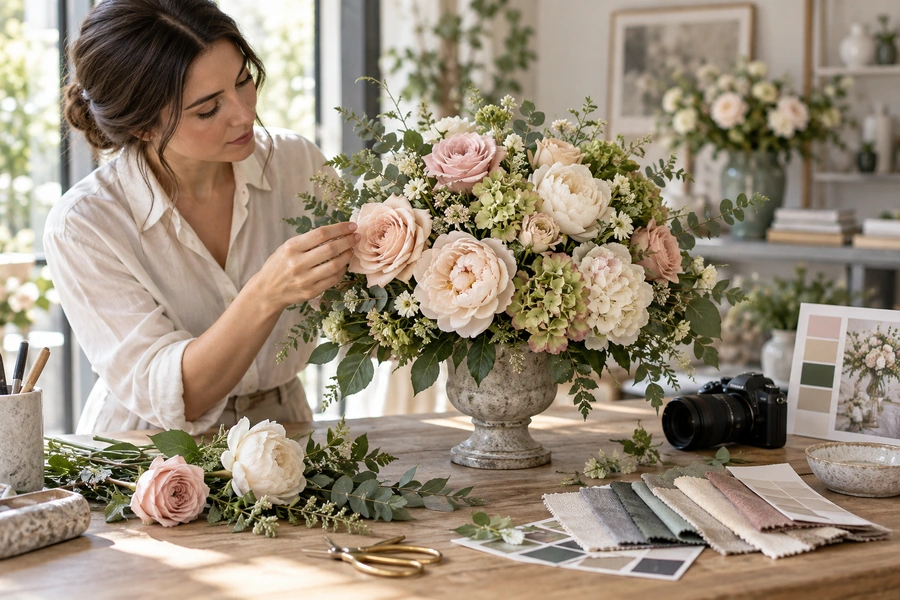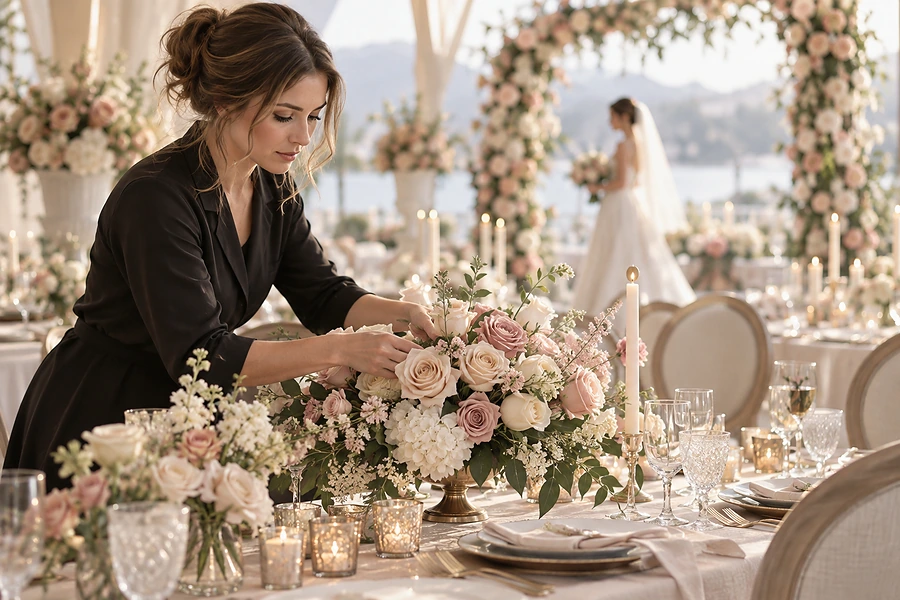

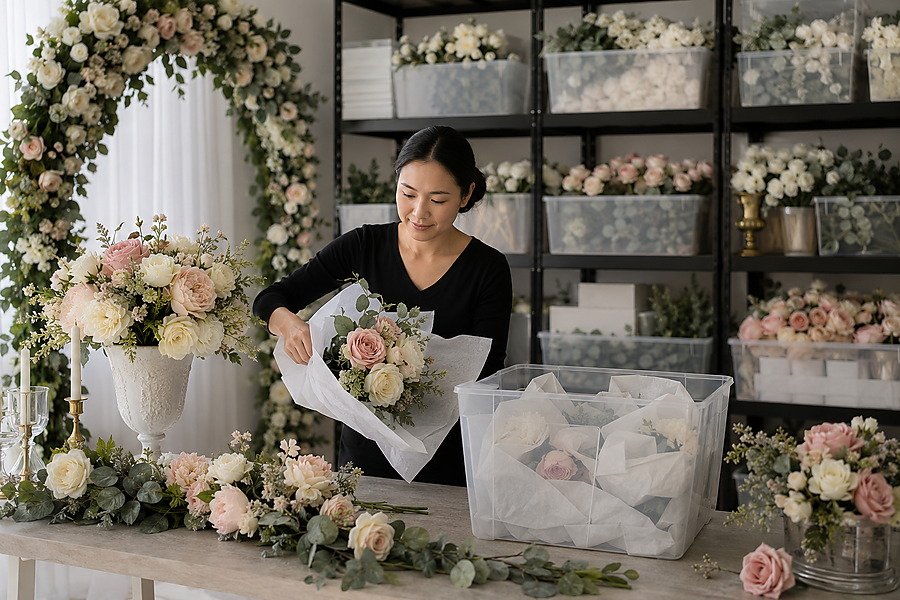
Artificial wedding flowers can look beautiful for one day, but poor storage can ruin them fast. Crushed petals, dust, fading, and tangled stems make reuse much harder.
To store and reuse artificial wedding flowers, clean them first, let them dry fully, group them by type, wrap delicate blooms, use sturdy labeled containers, and keep them in a cool, dry place away from sunlight. For future events, refresh their shape, update ribbons or vases, and restyle them for new themes.
Artificial wedding flowers are not single-use décor. With a simple system, bouquets, arches, garlands, centerpieces, aisle flowers, and floral backdrops can become valuable event inventory. The key is to treat storage as part of the design plan, not as an afterthought.
How Should You Clean Artificial Wedding Flowers Before Storing Them?
Wedding flowers collect dust, pollen, makeup, outdoor dirt, candle smoke, and handling marks during the event. If they go into storage dirty, the damage can become harder to fix later.
Clean artificial wedding flowers before storing them by gently shaking off loose dust, brushing petals with a soft brush, wiping leaves with a dry or lightly damp microfiber cloth, and letting every piece air dry fully. Avoid harsh chemicals, soaking, and heavy water use, especially on silk or delicate fabric flowers.
Start With a Gentle Inspection
I would first place all flowers on a clean table and separate them into groups. Bouquets, centerpieces, garlands, corsages, aisle flowers, arch flowers, and loose stems should not all go into one pile. This first step prevents tangling and helps you see what needs attention.
Look for bent stems, loose petals, missing leaves, broken ties, glue marks, and wet spots. Outdoor ceremony flowers may have grass, dust, or moisture. Reception flowers may have candle wax, food marks, or drink splashes. These details decide how careful the cleaning should be.
Use the Right Cleaning Method for Each Piece
| Flower Item | Best Cleaning Method | What to Avoid |
|---|---|---|
| Bridal bouquet | Soft brush and light cloth wipe | Pulling tight ribbon wraps apart |
| Loose stems | Microfiber cloth from bloom to stem | Bending wired stems too hard |
| Garlands | Cool air or soft brush | Crushing leaves while cleaning |
| Flower arch pieces | Dust first, then reshape | Storing before checking damp areas |
| Corsages and boutonnieres | Detail brush | Soaking glue, pins, or ribbon |
A soft brush works well for detailed petals. A microfiber cloth works better for smooth leaves. A cool hair dryer on a low setting can help remove dust from large garlands, but the airflow should not be too strong. Strong air can loosen small filler flowers.
Let the Flowers Dry Completely
Drying is not optional. Even a small amount of trapped moisture can create smell, staining, or mold risk in storage. This matters more when flowers were used outdoors, near water features, in humid venues, or during rainy weather.
Place cleaned flowers in a well-ventilated room. Do not pack them right away. Do not place them under strong direct sunlight to “dry faster,” because color fading can become a problem. A clean, dry indoor space is safer.
Before packing, touch the petals, leaves, ribbons, and stems. If anything feels damp, give it more time. Artificial wedding flowers are easier to protect when they go into storage clean, dry, and already sorted.
What Is the Best Way to Store Artificial Wedding Flowers After the Wedding?
Many people put artificial flowers into random bags after the wedding. That saves time for one day, but it often crushes the flowers before the next event.
The best way to store artificial wedding flowers is to use sturdy containers, wrap delicate blooms, leave enough space around arrangements, label every box, and store them in a cool, dry area away from direct sunlight, heat, and humidity. Tall stems, arches, garlands, and bouquets may need different storage methods.
Choose Storage Based on Shape
Artificial flowers are not all shaped the same way. A bouquet needs protection around the flower head. A garland needs space so leaves do not fold permanently. A floral arch may need sectioned bags or long containers. Loose stems may store best upright in tall boxes or bins.
The worst storage mistake is compression. When flowers are packed too tightly, petals flatten and stems bend. Some wired stems can be reshaped, but delicate fabric petals may not fully recover. A little extra storage space protects the value of the flowers.
Use a Storage System That Matches the Event Pieces
| Wedding Flower Type | Best Storage Option | Useful Label |
|---|---|---|
| Bridal bouquet | Tall box with tissue support | “Bridal Bouquet – Ivory/Blush” |
| Bridesmaid bouquets | Individual sleeves or divided bin | “Bridesmaid Set – 6 Pieces” |
| Centerpieces | Wide bin with no heavy stacking | “Table Centerpieces – Low Bowls” |
| Garlands | Breathable bag or long bin | “Greenery Garland – 10 ft” |
| Arch flowers | Sectioned bags or large labeled cartons | “Arch Left / Arch Right / Top” |
| Boutonnieres | Small divided box | “Boutonnieres – Groom Party” |
Wrap Delicate Flowers Without Flattening Them
I like to use tissue paper, kraft paper, or soft fabric around delicate flower heads. The wrap should protect the bloom, not squeeze it. Large flowers like peonies, roses, hydrangeas, orchids, and dahlias need more space than small filler flowers.
For bouquets, support the flower head and handle separately. For wired stems, keep them straight unless they were already curved for a specific arrangement. For garlands, coil them loosely. Do not fold them into sharp angles.
Keep the Storage Location Stable
A storage room matters as much as the box. Choose a cool, dry, clean space. Avoid direct sunlight, damp basements, hot attics, and garages with strong temperature changes. Heat can affect glue, plastic, and stem shape. Sunlight can fade petals. Moisture can create odor and damage.
If the flowers are part of a business inventory, add a simple storage map. This can list the box number, flower type, color, quantity, and condition. That way, future event preparation becomes faster.
How Can You Reuse Artificial Wedding Flowers for Future Events?
Artificial wedding flowers are valuable because they can move from one event to another. The secret is to restyle them so they do not look like the exact same wedding design every time.
You can reuse artificial wedding flowers by changing the vessel, ribbon, greenery, accent color, placement, or event purpose. A bridal bouquet can become a sweetheart table arrangement, ceremony flowers can become reception décor, garlands can frame signage, and arch flowers can be reused for photo backdrops or future celebrations.
Reuse by Changing the Context
The same faux flowers can feel new when the setting changes. A blush rose bouquet used at a wedding can become a baby shower centerpiece with cream ribbons. White orchids from a ceremony arch can become a modern corporate dinner backdrop. Greenery garlands from reception tables can become mantel décor, welcome signage, or staircase decoration.
This is where artificial flowers become more than wedding décor. They become flexible design pieces. You can reuse them for bridal showers, anniversary parties, engagement parties, retail displays, hotel décor, restaurant events, home styling, and seasonal installations.
Easy Ways to Give Old Flowers a New Look
| Original Wedding Piece | Future Reuse Idea | Simple Refresh |
|---|---|---|
| Bridal bouquet | Anniversary table arrangement | Change ribbon and vase |
| Bridesmaid bouquets | Small event centerpieces | Separate into bud vases |
| Ceremony arch flowers | Photo booth backdrop | Add new greenery or fabric |
| Aisle flowers | Chair back décor | Replace ribbon color |
| Table centerpieces | Holiday dinner décor | Add seasonal accents |
| Greenery garlands | Mantel, staircase, or welcome sign | Fluff and add lights |
Rebuild Instead of Repeating
A good reuse plan does not always keep the original arrangement intact. Sometimes it is better to take the flowers apart and rebuild them. This works well when the wedding design was very specific, such as burgundy and black, dusty blue and ivory, or tropical white and green.
Remove accent stems that make the arrangement feel too tied to one theme. Keep the base flowers that are more neutral. Ivory roses, white hydrangeas, soft greenery, and champagne flowers are easy to reuse. Bright accent flowers can be stored separately and added only when they match the next event.
Add One New Detail Each Time
You do not need to buy all new flowers for each event. Often, one new detail is enough. New ribbon, new vases, new candles, new table runners, new signage, or new accent blooms can change the full mood.
For example, the same ivory faux roses can look romantic with blush ribbons, modern with black vases, rustic with wood boxes, or festive with gold candle holders. The flower stays the same. The styling tells a new story.
How Do You Keep Artificial Wedding Flowers Looking Fresh Between Events?
Storage protects flowers, but maintenance keeps them ready. If flowers sit untouched for months, they may collect dust, lose shape, or smell stale.
Keep artificial wedding flowers looking fresh between events by checking them every few months, removing dust, reshaping petals and wired stems, replacing damaged pieces, and airing them out before use. Store them by color and type so they are easy to find and restyle when a new event comes up.
Create a Simple Maintenance Schedule
I would not wait until the night before an event to check stored flowers. That creates pressure. Instead, set a simple inspection schedule. For personal use, checking twice a year may be enough. For event planners, rental companies, florists, or décor suppliers, checking after every event and before every new booking is better.
During inspection, look for fading, dust, loose leaves, broken stems, crushed petals, missing pins, and weak floral tape. Also check whether the flower color still matches the theme you plan to use. Some flowers age better than others, especially if they were stored away from sunlight and moisture.
Refresh Checklist Before Reuse
| Refresh Step | Why It Helps | Best Timing |
|---|---|---|
| Dust petals and leaves | Removes dullness | 1–2 weeks before event |
| Fluff flower heads | Restores volume | After unpacking |
| Bend wired stems gently | Adds natural movement | During restyling |
| Replace ribbons | Updates the design | Before final styling |
| Check glue and ties | Prevents pieces falling off | Before transport |
| Test in venue lighting | Checks realism in photos | Before event day |
Store by Color, Flower Type, and Use
A good labeling system saves time. Store roses with roses, greenery with greenery, and filler flowers with filler flowers. You can also sort by color family: whites, blush tones, warm tones, dark tones, greenery, and seasonal accents.
For event businesses, add quantity labels. A label like “Ivory Roses – 48 Stems – 2025 Wedding Set” is much more useful than “Flowers.” If one box includes arch flowers, write which side or section each piece belongs to. This prevents confusion during setup.
Keep a Photo Record
Before storing a finished arrangement, take photos from several angles. This is useful when you want to rebuild the same look later. It also helps assistants, planners, or venue teams understand how the pieces should be placed.
A photo record can include the full arrangement, close-ups, box labels, and setup notes. For example, “Top arch cluster needs two zip ties and one extra greenery stem on the left side.” These small notes make future reuse faster and more consistent.
My Insights: How to Store and Reuse Artificial Wedding Flowers for Future Events
Artificial wedding flowers are worth more when they are managed like reusable event assets. They should not be treated as leftover decorations after the wedding.
The best way to store and reuse artificial wedding flowers for future events is to build a full care cycle: clean, dry, sort, label, protect, store, inspect, refresh, and restyle. This cycle keeps the flowers attractive and makes each future event easier to design.
Think Beyond the Wedding Day
My main insight is that reuse starts before storage. If the flowers are designed only for one wedding, reuse becomes harder. If they are designed with flexible colors, removable accents, and strong base pieces, reuse becomes simple.
For example, an ivory and greenery base can work for many events. You can add blush for a romantic wedding, terracotta for autumn, burgundy for winter, or blue ribbons for a coastal theme. A strong neutral base gives you more options.
This matters for couples, planners, event companies, and retailers. A couple may reuse flowers at home after the wedding. A planner may reuse flowers for styled shoots and future clients. A venue may use them for ceremony packages. A retailer may restyle them for seasonal displays.
The Best Reuse System
| Step | Action | Result |
|---|---|---|
| Clean | Remove dust and dirt before packing | Prevents dullness and odor |
| Dry | Air out all pieces fully | Reduces moisture risk |
| Sort | Group by type, color, and use | Makes future styling faster |
| Label | Mark boxes and sections clearly | Prevents setup confusion |
| Protect | Wrap delicate blooms and avoid crushing | Keeps shape and texture |
| Store | Use a stable, cool, dry space | Reduces fading and damage |
| Refresh | Fluff, dust, and replace accents | Makes old flowers feel new |
| Restyle | Change vessels, ribbons, and placement | Creates a new event look |
Reuse Should Feel Intentional
The biggest mistake is reusing flowers without restyling them. Guests may not notice the exact flower, but they will notice if the design feels tired. A few thoughtful changes make the flowers feel fresh.
Change the container. Replace the ribbon. Add new greenery. Use different candles. Move the arrangement from a table to a sign. Split a large bouquet into several small vases. Combine old flowers with one new accent color. These steps are simple, but they change the final mood.
Keep What Works and Retire What Does Not
Not every artificial flower should be reused forever. Some pieces may become faded, bent, stained, or outdated. Keep the flowers that still look realistic and photograph well. Retire the ones that lower the quality of the design.
A good reuse system should include a “repair or replace” box. Place damaged stems there after each event. Later, decide whether to fix them, use them for filler, donate them, or remove them from the inventory.
Artificial wedding flowers can support many future events when they are cared for properly. The value is not only in the first purchase. The value is in how many beautiful moments the same flowers can create over time.
Conclusion
Store artificial wedding flowers clean, dry, protected, and labeled. Reuse them by refreshing shape, changing accents, and restyling them for each future event.