
Wrought iron can look timeless in one room and surprisingly dated in another. The difference usually comes from the shape, finish, scale, and surrounding décor.
No, wrought iron decor is not out of style. In 2026, I still see iron used in furniture, lighting, railings, mirrors, and outdoor spaces. What looks dated is usually heavy scrollwork, matching Tuscan-style sets, or excessive black iron. Slim silhouettes, handcrafted pieces, aged finishes, and simple sculptural forms feel much more current.
I think of wrought iron as a material rather than a trend. The material can remain relevant for decades, while the way I use it changes with interior design.
Is Wrought Iron Decor Still in Style in 2026?
Some people associate wrought iron with dark Tuscan kitchens, ornate wall plaques, and heavy furniture from the 1990s and early 2000s. That specific look has aged, but iron itself has not disappeared.
Yes, wrought iron decor is still in style in 2026. Current design trends favor craftsmanship, character, vintage influence, sculptural metalwork, and interiors that feel collected instead of perfectly matched. I find that wrought iron works especially well when it appears as one thoughtful accent rather than as a repeated theme throughout the entire room.
Iron Fits the Current Interest in Craftsmanship
One reason wrought iron still works is that current interiors are moving toward materials with texture and character.
Vogue’s 2026 interior trend report highlights sculptural metalwork, tactile materials, visible craftsmanship, vintage influence, and rooms that feel more personal and lived in. Iron fits naturally into that direction because it can provide contrast without relying on bright color.
I can use a dark iron object beside:
- Warm oak
- Walnut
- Linen
- Limestone
- Terracotta
- Plaster
- Natural woven fibers
- Aged brass
- Ceramic pieces
These combinations soften the metal.
The result feels very different from a room where everything is dark brown, beige, and covered in black scrollwork.
I also see wrought iron appearing in current professional interiors. Architectural Digest featured a Paris apartment in 2026 with a sculptural black wrought-iron pendant made by a London workshop. The fixture works because it behaves almost like art rather than generic themed décor.
That is the direction I find most relevant today.
Outdoor Wrought Iron Is Especially Current
Wrought iron remains particularly strong outdoors.
Homes & Gardens identified wrought-iron bistro furniture as part of a major 2026 outdoor furniture direction inspired by European cafés and gardens. House Beautiful also included wrought iron furniture among the materials used in the current Provençal garden trend.
This makes sense to me.
A small iron table and chairs look natural beside gravel, climbing plants, terracotta pots, and stone.
The setting gives the material context.
It does not feel like I am trying to revive an old decorating trend.
| Wrought iron use | How it feels in 2026 |
|---|---|
| Slim bistro furniture | Current |
| Sculptural iron lighting | Current |
| Simple stair railings | Timeless to current |
| Vintage iron console | Current |
| Handmade iron mirror | Current |
| Large scroll wall plaque | More dated |
| Matching iron décor set | More dated |
| Heavy Tuscan chandelier + matching accents | More dated |
| Iron mixed with wood and stone | Current |
| Iron used throughout every room | Easy to overdo |
So I would not remove iron simply because I am worried about trends.
I would first look at the design of the individual piece.
What Wrought Iron Decor Looks Outdated?
Wrought iron itself is not usually the problem. I find that certain decorative patterns immediately connect a room to a specific period.
The wrought iron decor that looks most outdated is usually oversized, highly ornate, and heavily coordinated. Large wall medallions, elaborate scrollwork, matching candle sconces, dark iron chandeliers, and repeated Tuscan-style accessories can make a room feel like an early-2000s themed interior. Simpler lines and fewer iron accents usually feel more current.
Heavy Scrollwork Can Date a Room
Scrollwork is probably the first detail I examine.
Iron curves and decorative forging can be beautiful. I would not say that every curve is outdated.
The problem appears when the ornament becomes excessive.
A large iron wall panel with repeated curls, leaves, and symmetrical flourishes can strongly recall the American Tuscan decorating period of the 1990s and 2000s.
That style often combined:
- Dark stained wood
- Beige walls
- Faux-aged plaster
- Heavy brown furniture
- Terracotta
- Dark iron chandeliers
- Decorative scrollwork
- Grape or wine motifs
Current Mediterranean interiors are generally lighter and more restrained. Recent design coverage distinguishes modern Mediterranean rooms from their older Tuscan counterparts by reducing ornament and letting plaster, wood, stone, and terracotta carry more of the visual weight.
I therefore do not necessarily remove every traditional iron object.
I reduce repetition.
Matching Everything Can Feel More Dated Than the Material
A single iron chandelier can look interesting.
An iron chandelier, iron mirror, iron curtain rod, iron wall art, iron candleholder, and iron table in one room can begin to feel themed.
This is an important distinction.
Current interiors often favor collected combinations rather than complete matching sets. Homes & Gardens’ 2026 coverage of “found luxury,” for example, emphasizes character, craftsmanship, history, and pieces collected over time rather than perfectly coordinated rooms. It even features an antique wrought-iron console within that approach.
I use the same principle with wrought iron.
One significant object can create contrast.
Too many similar objects can make the room look like a catalog from one specific period.
Cheap Imitation Iron Can Also Look Dated
There is another issue hidden inside the term “wrought iron.”
Much of the decorative material sold today as wrought iron is actually mild steel made in a wrought-iron style. Traditional wrought iron is no longer widely manufactured commercially, and conservation sources note that the term is often applied loosely to ornamental mild steel.
For decorating purposes, that is not necessarily a problem.
What matters more to me is whether the object has convincing construction and proportions.
Thin stamped scrolls, rough welding, overly uniform machine patterns, and thick black paint can make an item feel cheaper than a simple steel piece with a cleaner design.
I prefer quality of form over the label.
How Can I Make Wrought Iron Decor Look Modern?
I do not need to replace wrought iron with another metal to modernize a room. Often I only need to change what surrounds it.
I make wrought iron decor look modern by using it selectively, choosing cleaner lines, mixing it with warm natural materials, and avoiding overly coordinated black accents. Matte or aged finishes, simple geometry, and sculptural shapes work especially well. I also let one important iron feature stand out instead of repeating the material everywhere.
I Pair Iron With Lighter Materials
Contrast is one of the easiest ways to update wrought iron.
A black iron table against dark brown furniture can feel heavy.
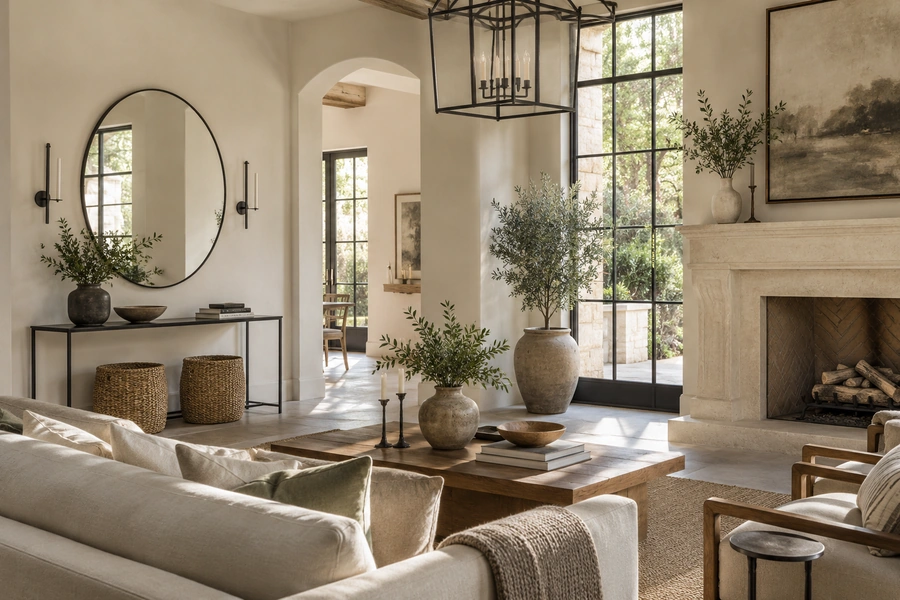
The same table beside pale plaster walls, linen upholstery, warm oak, and a textured rug can feel much lighter.
Homes & Gardens used a wrought-iron coffee table in its 2026 coverage of warm minimalism, where restrained forms are combined with soft colors and tactile materials.
That tells me the material can work in a contemporary setting when the surrounding palette is right.
I especially like these combinations:
| Iron | Pair with |
|---|---|
| Black iron | Pale oak |
| Aged iron | Limestone |
| Slim iron frame | Linen upholstery |
| Iron console | Plaster wall |
| Iron mirror | Natural wood |
| Iron table base | Stone top |
| Iron candleholder | Handmade ceramics |
| Outdoor iron furniture | Terracotta and greenery |
I Choose Simple Silhouettes
If I want a modern look, I usually reduce ornament.
Straight lines, thin frames, open shapes, and simple curves feel more architectural.
I may choose:
- A thin black metal console
- A simple iron-framed mirror
- A linear candleholder
- A restrained iron chandelier
- A narrow railing with vertical balusters
- A sculptural metal side table
I am more cautious with large repetitive scroll patterns.
The goal is not to remove all historical character. It is to make the shape feel intentional.
I Mix Metals Instead of Matching Everything
I also do not think every metal finish in a home needs to match.
Iron can sit beside brass, bronze, nickel, or copper.
HGTV’s 2026 metal-finish coverage specifically shows designers moving beyond one dominant metal and using a broader palette that includes black metal, bronze, chrome, copper, and brass.
This helps wrought iron feel less like a theme.
For example, I might have:
- A black iron railing
- Aged brass lighting
- Bronze cabinet hardware
- A stainless-steel appliance
As long as the finishes repeat thoughtfully and the overall palette feels connected, I do not need to make every metal black.
I Update the Objects Around Existing Iron
If I already have a good iron piece, I would not replace it automatically.
I might modernize the room around it.
For an iron bed, I can use simple linen bedding instead of ornate traditional textiles.
For an iron chandelier, I can remove other heavy Tuscan accessories.
For an iron console, I can add contemporary art and a ceramic lamp.
For an iron stair railing, I can pair it with warm wood treads and restrained wall colors.
This approach often costs less and preserves architectural character.
What Interior Styles Work Best With Wrought Iron?
Wrought iron has a long decorative history, so I can use it in more than one style. The important part is adjusting the form.
Wrought iron works particularly well with Mediterranean, Spanish Revival, French country, Provençal, traditional, rustic, industrial, warm minimalist, and collected contemporary interiors. I choose ornate forms for historically inspired rooms and simpler iron shapes for modern spaces. The same material can feel traditional or contemporary depending on its silhouette and surrounding materials.
Mediterranean and Spanish Revival
Iron feels very natural in Spanish and Mediterranean architecture.
Architectural Digest currently identifies wrought iron, terracotta, natural fibers, and patinated materials as characteristic of Spanish Revival style.
In this setting, I might use:
- Iron gates
- Stair railings
- Window grilles
- Lanterns
- Mirrors
- Candleholders
- Table bases
I still use restraint.
One architectural iron detail usually feels more authentic to me than adding decorative scrollwork to every wall.
Provençal and French-Inspired Spaces
Wrought iron works beautifully outdoors in French-inspired settings.
House Beautiful’s 2026 coverage of Provençal gardens specifically includes wrought iron furniture alongside stone, gravel, terracotta, and aromatic planting.
A small bistro set can give me the look without redesigning the entire garden.
I might pair it with lavender, aged terracotta pots, gravel, and simple outdoor cushions.
Warm Minimalism
This combination can seem surprising, but I think it works well.
Minimal rooms need contrast.
Iron provides a dark structural line without requiring a large decorative object.
A thin iron coffee table or black metal lamp can give a pale neutral room enough definition to avoid feeling flat.
The key is keeping the shape simple.
Collected and Vintage Interiors
Vintage iron also fits the growing preference for rooms with history.
I particularly like old iron candleholders, tables, screens, architectural fragments, and mirrors when they show a natural patina.
Current design coverage is shifting toward rooms that feel collected over time rather than bought as complete matching sets.
Iron works well here because an aged piece can add visible history without dominating the room.
My insights: Is Wrought Iron Decor Out of Style
After comparing current interiors with the older Tuscan look, I do not think the useful question is whether wrought iron itself is fashionable. I think the important question is how the material is designed and used.
No, wrought iron decor is not out of style. In 2026, it fits several current directions, including sculptural metalwork, vintage furniture, collected interiors, Spanish Revival, warm minimalism, and European-inspired outdoor spaces. What feels outdated is usually excessive ornament, matching black iron sets, and heavy Tuscan styling—not the iron material itself.
My First Insight: Material Ages Better Than a Decorative Motif
This is the distinction I consider most important.
Iron has existed in architecture and furniture for centuries.
A particular decorative pattern may only feel fashionable for a decade.
That means I should not judge the material by one historical trend.
Heavy scrollwork can look dated because it became strongly associated with a particular decorating period.
A simple forged railing is different.
A handmade iron table is different.
A sculptural contemporary light is different.
These pieces are using the same general material language without repeating the same visual trend.
My Second Insight: Current Design Actually Supports Iron
The 2026 design environment is surprisingly friendly to wrought iron.
Vogue identifies sculptural metalwork and tactile craftsmanship as part of current interior trends. Homes & Gardens is showing wrought-iron bistro furniture, antique iron consoles, and iron accents in warm minimalist interiors. House Beautiful includes wrought iron in the current Provençal outdoor trend.
That does not mean every wrought iron item is trending.
It means the material still fits what designers are doing.
My Third Insight: Restraint Makes Iron Look More Expensive
I find iron looks strongest when it provides contrast.
One dark chandelier in a pale room creates a focal point.
One iron console against plaster creates depth.
One iron bistro set among greenery looks romantic.
Ten matching iron objects can reduce that effect.
So I use iron more like punctuation than wallpaper.
| If I want… | I would choose… |
|---|---|
| Contemporary look | Slim, linear iron |
| Traditional look | Restrained forged curves |
| Mediterranean look | Iron with plaster and terracotta |
| Outdoor European look | Bistro furniture |
| Collected interior | Vintage iron accent |
| Minimal room | One black metal focal point |
| Rustic room | Aged or patinated iron |
| Luxury look | Custom or sculptural metalwork |
My Fourth Insight: I Would Update Good Iron Before Replacing It
If I already own quality iron furniture or have original iron architectural details, I would not remove them simply because they are old.
Current thinking about timeless interiors increasingly emphasizes respecting architecture and choosing materials that suit the home rather than replacing everything according to short trend cycles.
I may instead change:
- Wall color
- Upholstery
- Lighting
- Rugs
- Nearby furniture
- Decorative accessories
Removing surrounding visual heaviness can make the iron feel fresh again.
My Fifth Insight: The Real Test Is Whether It Looks Intentional
When someone asks me, “Is wrought iron decor out of style?”, my answer is no.
But I would still examine the individual piece.
I ask:
- Is the silhouette simple or overly busy?
- Does the finish look authentic?
- Is the scale right?
- Does the room contain too much matching iron?
- Does the piece relate to the architecture?
- Is it mixed with warmer materials?
- Is it handmade or visually distinctive?
- Does it add character rather than simply fill space?
If the answers are strong, I see no reason to remove the iron.
I also remember that many products marketed today as “wrought iron” are technically ornamental steel rather than traditional wrought iron. Historic-building guidance notes that true wrought iron is no longer commonly manufactured and that the name is now often used for decorative mild-steel work.
For decorating, this makes design quality even more important than terminology.
The piece does not become timeless just because a retailer calls it wrought iron.
It becomes successful because the form, finish, craftsmanship, and surrounding room work together.
So I would describe wrought iron as timeless material with both timeless and dated expressions.
Simple ironwork, vintage pieces, architectural railings, sculptural lighting, and European-style outdoor furniture can feel very current.
Heavy matching scrollwork can still make a room look stuck in another decade.
That difference is what I would use to decide what to keep, update, or replace.
Conclusion
Wrought iron decor is not out of style. I keep it current by choosing simpler forms, quality craftsmanship, natural materials, restrained placement, and less heavy scrollwork.