
A home can feel flat when every surface is soft, pale, and predictable. Wrought iron adds the contrast, structure, and handcrafted character that many rooms need.
You can accent your home with wrought iron through furniture, lighting, wall art, mirrors, cabinet hardware, fireplace screens, wine racks, pot racks, sculptures, and architectural details. For a current look, use iron selectively and pair its dark structure with warm wood, natural stone, plaster, linen, ceramics, glass, and greenery.
Wrought iron works because it can be both decorative and useful. Current iron décor collections include tables, chandeliers, sconces, mirrors, brackets, wall art, fireplace accessories, storage, hardware, and outdoor pieces, so you can introduce the material at almost any scale.
Is Wrought Iron Home Decor Still in Style?
Wrought iron has a long design history, so the material itself is not the problem. What changes is the way designers shape, finish, and combine it.
Yes, wrought iron home décor can still look stylish in 2026. The current approach favors thinner profiles, sculptural forms, artisan-made details, aged or matte finishes, and a limited number of statement pieces. Pairing iron with warm wood, stone, textured fabrics, and softer colors keeps it contemporary instead of recreating heavy Tuscan-style interiors.
Why Wrought Iron Works With 2026 Interiors
Current interior design is moving toward rooms that feel less generic.
Vogue’s 2026 trend coverage describes increasing interest in lived-in, time-worn interiors rather than spaces that feel perfectly new.
That direction suits iron particularly well.
Iron can bring:
- Visible craftsmanship
- Texture
- Dark contrast
- Historical references
- Structural lines
- A sense of permanence
Architectural Digest’s 2026 coverage of a Paris apartment provides a good contemporary example. Its dining room combines a wrought-iron pendant made in a London workshop with modern furniture and rich decorative materials.
The result is not a historical reproduction.
It is old material language used in a current room.
The New Wrought Iron Is More Restrained
An older decorating formula often used:
- Thick scrolls
- Heavy dark furniture
- Matching chandeliers
- Ornate mirrors
- Decorative vines
- Brown walls
- Tuscan accessories
The more current version keeps the iron but reduces repetition.
Try:
Then: ornate railing + ornate chandelier + ornate table + ornate mirror
Now: slim iron railing + oak + plaster + one sculptural light
This gives the metal more visual importance because there is less competition around it.
Handcrafted Variation Can Be an Advantage
Current iron retailers emphasize hand-forged and hand-finished pieces where small variations in:
- Texture
- Finish
- Patina
- Form
are expected rather than treated as defects.
That works well with the wider shift toward interiors that feel collected rather than completely standardized.
Modern and Traditional Homes Can Both Use Iron
For a traditional room, choose:
- Gentle curves
- Aged finishes
- Decorative brackets
- Candle-style lighting
For a contemporary room, choose:
- Straight lines
- Geometric wall art
- Thin frames
- Minimal black hardware
The material can stay similar.
The shape changes.
Current vs Dated Wrought Iron
| More Current | More Likely to Feel Dated |
|---|---|
| Thin profiles | Heavy repeated scrolls |
| Matte or aged finish | Thick glossy black |
| One statement piece | Matching iron everywhere |
| Iron + oak | Iron + dark furniture |
| Iron + stone | Faux Tuscan finishes |
| Handcrafted variation | Repetitive stamped ornament |
| Geometric shapes | Excessive grape and vine motifs |
| Open negative space | Dense decorative patterns |
Do Not Confuse Style With Material
A useful distinction is that many products marketed today as “wrought iron” may actually use modern steel shaped into traditional decorative forms.
Historic England notes that historical gates and railings can contain true wrought iron, cast iron, and later steel, which are distinct materials with different manufacturing characteristics.
For ordinary decorative styling, the visual effect may be your main concern.
For:
- Restoration
- Valuable antiques
- Structural railings
- Historic houses
the exact metal matters much more.
How Can You Use Wrought Iron Home Decor in Your Home?
Wrought iron works best when it performs a clear visual or practical job. You do not need to decorate the entire house with metal to create continuity.
Use wrought iron as furniture, lighting, hardware, wall décor, fireplace accessories, storage, sculptures, railings, or small functional accents. Start with one strong piece, such as a chandelier, console table, mirror, or fireplace screen, then repeat the metal more subtly through handles, brackets, candle holders, or hooks rather than buying a complete matching set.
1. Wrought Iron Furniture
Iron can create the structural base for:
- Dining tables
- Coffee tables
- Consoles
- Side tables
- Benches
- Chairs
Artistic Iron Works identifies tables and furniture as one of the main ways to introduce wrought iron into residential interiors and notes that iron can be combined with wood, glass, or tile.
I especially like:
iron + oak
and
iron + natural stone
because the materials balance each other.
Iron provides the dark line.
Wood or stone provides visual warmth.
2. Iron Lighting
Lighting may be the highest-impact way to use wrought iron.
Options include:
- Chandeliers
- Pendants
- Wall sconces
- Table lamps
- Candle holders
Current specialty iron décor collections include wrought iron chandeliers, sconces, lamps, and candle holders ranging from traditional to more eclectic designs.
A dining chandelier can establish the metal language for an entire room.
You may only need small dark details elsewhere to repeat it.
3. Iron Wall Art
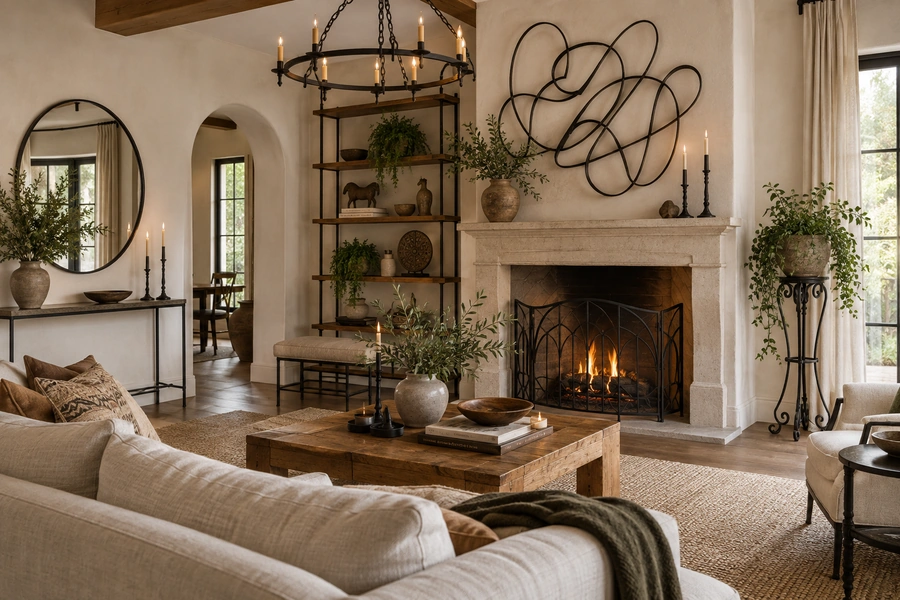
Metal wall art adds depth because it projects away from the wall and creates shadows.
Current wrought iron wall-art ranges include:
- Scrollwork
- Grilles
- Botanical forms
- Plaques
- Decorative silhouettes
- Cleaner sculptural forms
and can work in traditional, Mediterranean, rustic, transitional, or contemporary interiors.
For a large wall, I would usually choose:
one substantial iron piece
rather than:
many small metal decorations.
4. Wrought Iron Mirrors
A mirror gives you dark metal without reducing the amount of reflected light in a room.
Use an iron-framed mirror:
- Above an entry console
- Over a sideboard
- In a bedroom
- In a powder room
- Near a fireplace
An arched iron frame can subtly reference European architecture without making the whole room historical.
5. Cabinet and Door Hardware
Small details can be more effective than large pieces.
Artistic Iron Works includes:
- Cabinet hardware
- Door hardware
- Hinges
among common residential wrought iron applications.
Try dark iron:
- Handles
- Pulls
- Hinges
- Knobs
- Hooks
against:
- Oak cabinets
- Painted cabinetry
- Reclaimed wood doors
This is an easy way to add texture without changing the furniture.
6. Fireplace Screens
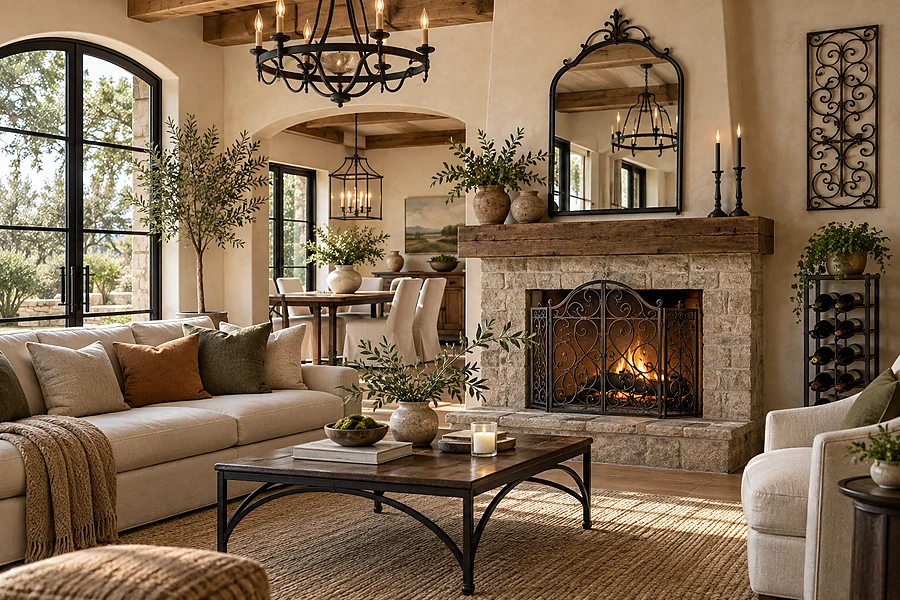
A fireplace naturally suits iron because the metal already has an architectural connection with hearths and traditional interiors.
Look for:
- Fine frames
- Simple mesh
- Restrained forged curves
- Small decorative finials
Current iron décor suppliers continue to list fireplace screens and covers as major functional home décor categories.
7. Wine Racks and Pot Racks
Iron works especially well when storage becomes decoration.
Functional options include:
- Wine racks
- Pot racks
- Wall shelves
- Hooks
- Decorative brackets
Artistic Iron Works specifically lists wine racks and pot racks within functional wrought iron décor.
This kind of functional iron often ages better stylistically than purely decorative novelty items.
8. Sculptures
Iron sculpture can work:
- On a console
- On a mantel
- In an entryway
- In a garden
Custom fabrication also allows the object to be more personal.
Current wrought iron fabricators offer both stocked and custom sculpture as part of home décor.
9. Railings and Architectural Features
Iron can move beyond objects and become part of the architecture.
Examples include:
- Stair railings
- Balcony railings
- Decorative panels
- Gates
- Door inserts
A slim iron stair railing may provide more lasting impact than several small decorative objects.
Wrought Iron Accent Guide
| Product | Visual Impact | Best Pairing |
|---|---|---|
| Chandelier | High | Wood dining table |
| Console | High | Stone or wood top |
| Wall art | Medium-high | Light plaster wall |
| Mirror | Medium | Entry console |
| Fireplace screen | High | Stone fireplace |
| Hardware | Subtle | Wood cabinetry |
| Wine rack | Medium | Warm lighting |
| Shelf bracket | Subtle | Reclaimed wood |
| Sculpture | Medium | Simple surface |
| Railing | Very high | Oak or stone stairs |
What Rooms Are Best for Wrought Iron Home Decor?
Wrought iron can work in almost every room, but each space needs a different amount of visual weight. Large open rooms can support stronger pieces than small bedrooms or bathrooms.
Living rooms, dining rooms, entryways, kitchens, staircases, bedrooms, and covered outdoor spaces can all use wrought iron successfully. Dining rooms and entries suit larger statement pieces, while kitchens and bedrooms usually benefit from smaller accents. The best room is one where the dark metal has enough warm, light, or soft material around it for balance.
Living Room
The living room is ideal for:
- Fireplace screen
- Coffee table
- Wall art
- Console
- Candle holders
One large focal piece is usually enough.
For example:
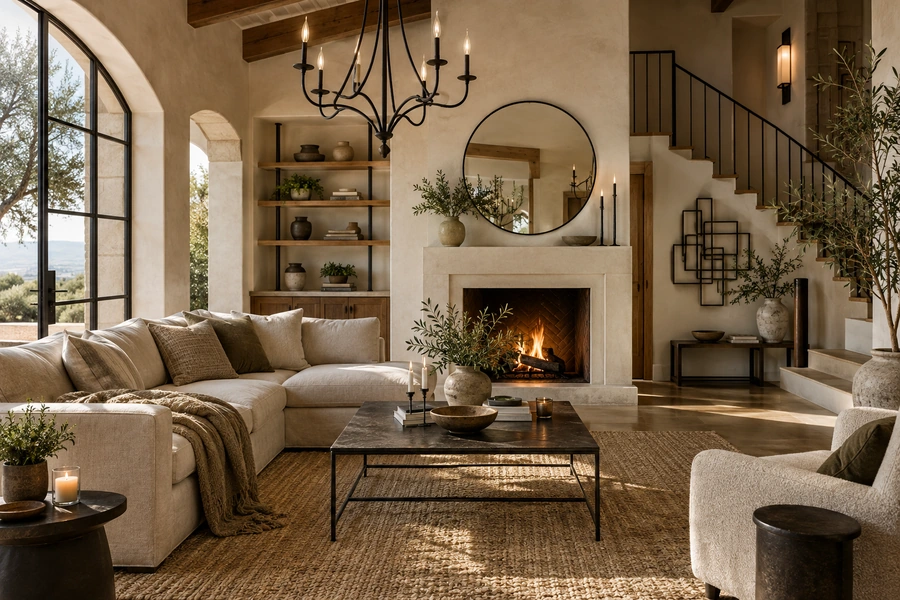
**black iron fireplace screen
- limestone surround
- warm oak table
- cream upholstery
- wool rug**
The iron gives the room definition.
The remaining materials prevent it from feeling hard.
Dining Room
This may be the easiest room for wrought iron.
Use:
- Chandelier
- Table base
- Candle holders
- Wine rack
A wrought iron chandelier can sit over:
- Oak
- Walnut
- Marble
- Travertine
and create an immediate focal point.
Do not automatically add matching iron dining chairs.
If the chandelier is ornate, keep the rest simpler.
Entryway
An entry can handle more drama because people experience it quickly.
Good combinations include:
iron console + stone top
or
iron mirror + timber console
or
one sculptural wall grille
The entry establishes the design language for the house without requiring many accessories.
Kitchen
In a kitchen, I prefer functional iron.
Use:
- Pot rack
- Shelf brackets
- Cabinet handles
- Hooks
- Lighting
An iron bracket under a natural oak shelf can create more character than adding decorative iron wall art simply to fill space.
Staircase
A staircase is one of the strongest places for permanent ironwork.
Current iron fabricators offer both sleek modern railings and more intricate handcrafted scrollwork, so the material can work with different architectural styles.
For a current look:
- Keep balusters slim
- Limit repeated scrolls
- Use an oak handrail
- Leave visual space between elements
Bedroom
Bedrooms need more softness.
Use iron sparingly.
Possible accents include:
- Bed frame
- Mirror
- One pair of sconces
- Small bench
An iron bed works best with:
- Linen
- Cotton
- Wool
- Timber
- Warm wall colors
Avoid combining a large iron bed with multiple heavy matching metal furnishings.
Bathroom
Use small details such as:
- Mirror
- Towel bar
- Hooks
- Shelf brackets
Humidity deserves more attention here because exposed ferrous metal can corrode if protective coatings fail.
Patio and Garden
Iron naturally suits exterior spaces through:
- Trellises
- Patio furniture
- Garden sculpture
- Wall art
- Gates
Current wrought iron fabricators offer all of these applications.
Outdoor iron needs more maintenance because moisture drives corrosion.
Room-by-Room Guide
| Room | Strong Wrought Iron Accent |
|---|---|
| Living room | Fireplace screen |
| Dining room | Chandelier |
| Entry | Console or mirror |
| Kitchen | Brackets and hardware |
| Staircase | Railing |
| Bedroom | Bed or sconces |
| Bathroom | Mirror or hooks |
| Home bar | Wine rack |
| Patio | Furniture |
| Garden | Trellis or sculpture |
Repeat the Finish, Not the Exact Design
One of the easiest ways to make a home feel coordinated is to repeat:
- Matte black
- Charcoal
- Aged iron
in different forms.
For example:
entry: iron console
dining room: iron chandelier
kitchen: dark hardware
They relate visually without looking like a furniture set.
How Do You Care for Wrought Iron Home Decor?
Iron is strong, but ferrous metals can corrode when moisture reaches unprotected surfaces. Indoor pieces generally face less exposure than railings, gates, or patio furniture.
Keep wrought iron décor clean and dry, remove dust with a soft cloth, inspect the finish for scratches or chips, and address corrosion early. Outdoor and humid-area pieces need more frequent inspection. Protective paint and coatings slow corrosion, but maintenance should follow the exact material and finish rather than assuming every product marketed as wrought iron requires identical treatment.
Understand What You Own
True historic wrought iron is not identical to:
- Cast iron
- Mild steel
- Decorative steel
Historic England explains that traditional gates and railings were made from wrought iron, cast iron, and later steel, sometimes combining more than one metal in the same structure.
Modern décor sellers may use “wrought iron” more broadly to describe the style or fabrication tradition.
For basic indoor decoration, that distinction may not affect styling.
For maintenance, restoration, or structural work, it can matter.
Dust Indoor Iron Regularly
Dust settles inside:
- Scrolls
- Corners
- Textured finishes
- Decorative joints
Use:
- Soft cloth
- Soft brush
before reaching for water.
The goal is to remove dirt without damaging the protective finish.
Keep Moisture Low
Historic England identifies water as a primary driver of iron corrosion, particularly where moisture becomes trapped in joints and crevices.
Pay extra attention to iron in:
- Bathrooms
- Kitchens
- Coastal houses
- Damp basements
- Outdoor patios
Dry wet surfaces promptly.
Inspect the Coating
Protective finishes isolate iron from moisture.
Look for:
- Chips
- Scratches
- Blisters
- Peeling
- Rust spots
Historic England emphasizes that regular maintenance and protective coatings can slow or prevent harmful corrosion.
Outdoor Pieces Need More Attention
Outdoor iron receives:
- Rain
- Dew
- Condensation
- Salt
- Pollution
- Temperature changes
Maintenance therefore matters more than with a decorative indoor mirror.
Historic England notes that consistent maintenance is central to the preservation of exterior iron gates and railings because water and coating failure drive corrosion.
Do Not Apply Random Oils to Valuable Iron
For a modern mass-market product, follow its care instructions.
For:
- Antique iron
- Historic ironwork
- Valuable handmade pieces
avoid improvising with coatings that may complicate future restoration.
The existing finish matters.
Basic Care Table
| Condition | Recommended Response |
|---|---|
| Dust | Soft dry cloth |
| Light dirt | Manufacturer-approved gentle cleaning |
| Moisture | Dry promptly |
| Small finish chip | Inspect and repair appropriately |
| Rust | Treat according to metal/finish |
| Outdoor exposure | Inspect frequently |
| Historic piece | Use conservation guidance |
| Unknown coating | Identify before treatment |
My Insights: How Can You Accent Your Home With Wrought Iron Home Decor
The strongest wrought iron interiors are not the ones containing the most iron. They are the ones where every iron piece has a reason to be there.
Accent your home with wrought iron by choosing one significant feature—such as a chandelier, console, railing, fireplace screen, or wall sculpture—and repeating the material through smaller functional details. Keep the forms restrained and pair iron with wood, stone, plaster, linen, ceramics, and greenery so the contrast feels warm, handcrafted, and intentional.
My First Insight: Start With Function
I would choose functional iron before decorative iron.
My priority would be:
- Lighting
- Furniture
- Railings
- Fireplace accessories
- Hardware
- Storage
- Wall decoration
A beautiful bracket is still useful.
A beautiful pot rack is still useful.
That usually gives the material more longevity.
My Second Insight: One Major Piece Is Usually Enough
A dining room may only need:
one iron chandelier.
An entry may only need:
one iron console.
A staircase may already have enough iron through:
one railing.
Once the main piece is present, use smaller dark details rather than adding another major object.
My Third Insight: Iron Looks Best Beside Warm Materials
My favorite combinations are:
Iron + oak
Iron + walnut
Iron + limestone
Iron + travertine
Iron + plaster
Iron + linen
The contrast is the point.
An entire room of dark metal loses that contrast.
My Fourth Insight: Current Style Favors Collected Character
Vogue’s 2026 interior trend coverage highlights a stronger interest in time-worn, lived-in spaces.
Iron naturally supports that direction when:
- The finish has texture
- The shape feels crafted
- The piece is not perfectly generic
This makes hand-forged or artisan-looking details especially useful.
My Fifth Insight: Do Not Make Everything Match
Current iron décor specialists themselves emphasize collections chosen to work together without looking identical.
That is exactly how I would style a home.
Repeat:
- Color
- Finish
- Material
but vary:
- Shape
- Scale
- Purpose
My Sixth Insight: Small Iron Details Can Transform a Plain Room
Not every update needs a new table.
A room can gain character from:
- Two shelf brackets
- Cabinet pulls
- Hooks
- Curtain hardware
- Candle holders
This is useful when you want the iron look without committing to a major renovation.
My Seventh Insight: Wall Art Needs Negative Space
Current metal wall décor guidance emphasizes scale, balance, and the relationship between wall art and the furniture beneath it.
I would rather place one substantial iron panel above a console than cover an entire wall with small metal pieces.
Iron already has strong visual weight.
Give it space.
My Eighth Insight: Modern Homes Should Simplify the Shape
For contemporary interiors, keep:
- Thin lines
- Geometric forms
- Simple arches
- Matte finishes
For traditional interiors, you can add:
- Scrolls
- Botanical details
- Forged curves
But even in a traditional home, restraint usually keeps the room more timeless.
My Ninth Insight: Real Wrought Iron and Wrought-Iron Style Are Not Always the Same
Historic England’s conservation guidance makes the material distinction clear: true wrought iron, cast iron, and steel have different structures and fabrication histories.
For a decorative purchase, ask what you are actually buying if:
- Craftsmanship matters
- You are paying a premium
- You expect restoration value
- The item will be outdoors
My Tenth Insight: Maintenance Begins With Placement
Do not put untreated or poorly protected iron where it will constantly receive:
- Water
- Steam
- Condensation
and then depend on cleaning to fix the problem.
Historic England identifies moisture and failed coatings as major causes of corrosion.
Choose the location and finish together.
My Preferred Wrought Iron Formula
For one room, I would use:
**1 major iron feature
- 1 warm wood element
- 1 natural stone or ceramic surface
- 1 soft textile
- plenty of visual space**
For example:
**wrought iron chandelier
- oak dining table
- stone vase
- linen curtains
- warm plaster walls**
That creates character without turning the room into an iron showroom.
Best Wrought Iron Accent by Goal
| Design Goal | Best Starting Piece |
|---|---|
| Create drama | Chandelier |
| Add architectural character | Railing |
| Improve entryway | Console |
| Upgrade fireplace | Screen |
| Add subtle detail | Hardware |
| Fill a large wall | Iron wall sculpture |
| Add storage | Wine or pot rack |
| Create old-world mood | Candle holders |
| Add outdoor character | Trellis or furniture |
| Mix old and modern | Minimal iron light |
My Final Rule
The best use of wrought iron is contrast.
If everything is dark, ornate, and metallic, nothing stands out.
If wrought iron sits beside:
- Warm wood
- Pale plaster
- Natural stone
- Soft linen
- Greenery
its shape becomes more visible and its craftsmanship becomes more important.
That is how wrought iron moves from theme décor to timeless architectural accent.
Conclusion
Accent your home with a few purposeful wrought iron pieces, not a complete matching collection. Balance dark metal with warm natural materials for a timeless, current result.