
Real touch flowers look beautiful outdoors, but sun, rain, wind, and heat can shorten their life when I choose the wrong type.
Yes, I can use real touch flowers outside, but I first check whether the specific product is made for outdoor use. UV-treated or weather-resistant real touch flowers are better for patios and protected exterior spaces. Standard indoor real touch flowers are better for short events or covered locations because long exposure can damage them.
I do not treat “real touch” as another word for “weatherproof.” I treat realism and outdoor durability as two separate product features. That simple distinction helps me choose artificial flowers that look natural and last longer.
Can Real Touch Flowers Get Wet?
A little outdoor moisture may seem harmless, but I do not assume every soft real touch petal can handle rain simply because it is artificial.
Some real touch flowers can handle light moisture, while others should stay dry. I always check the material and outdoor rating before exposing them to rain. Standard latex, foam, or soft-coated flowers may deteriorate after repeated moisture, while products specifically made as water-resistant outdoor artificial flowers can perform much better.
I Check the Material Before I Check the Weather
When I choose flowers for an outdoor display, I first look beyond the phrase real touch flowers.
Real touch describes how a flower looks and feels. It does not describe one single material. Manufacturers may use polyurethane, latex-like coatings, polyester, plastic, PVC, or several materials together. That is why two real touch roses can feel similar but react very differently outdoors.
Some suppliers clearly advise keeping standard real touch flowers away from rain. Their soft coating can break down after repeated exposure to water. Other manufacturers sell real touch artificial flowers that have been treated for covered outdoor use or made with added weather protection.
Because of this difference, I never use appearance alone to decide whether a flower can get wet.
| Product label | How I would use it |
|---|---|
| Real touch | I check the care instructions first |
| Indoor only | I keep it away from outdoor weather |
| Covered outdoor | I use it on porches or sheltered patios |
| UV treated | I consider it for brighter outdoor areas |
| Water-resistant | I allow limited moisture as directed |
| Weather-resistant / outdoor safe | I choose it for more exposed displays |
I Also Consider How Much Water Is Involved
There is a big difference between a few drops of rain and being left through repeated storms.
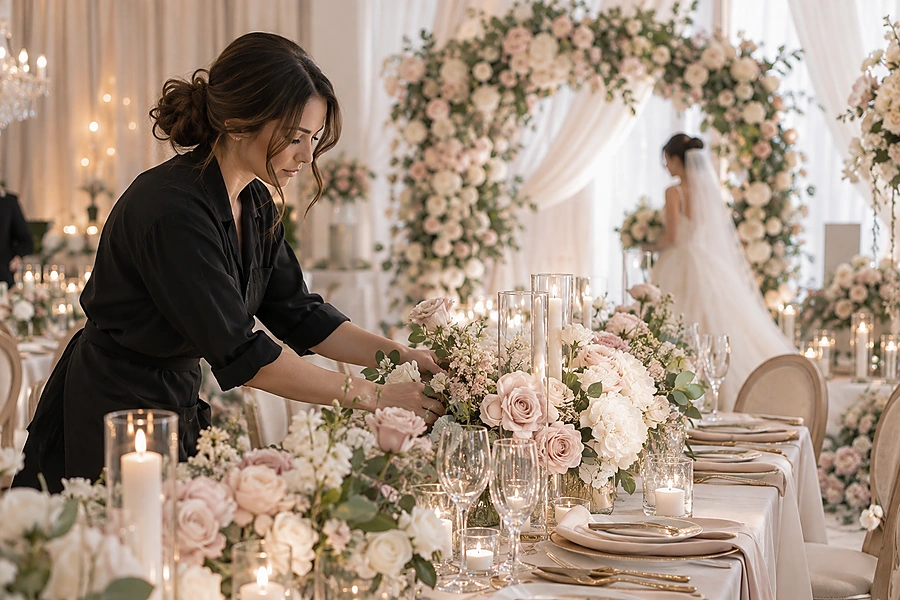
For a one-day wedding, ceremony, photo shoot, or garden party, I may use high-quality real touch flowers outside when the forecast is good. I protect them before the event and move them under shelter if heavy rain starts.
For a restaurant patio or shop entrance, I use more caution because the flowers may remain outside for weeks or months.
For an open garden planter, I usually choose outdoor artificial flowers with clear UV and weather-resistance information instead of assuming standard real touch stems will survive.
This approach gives me the realistic appearance I want without asking a delicate indoor product to perform like an exterior product.
How Long Do Real Touch Flowers Last Outside?
I cannot give every outdoor real touch flower the same lifespan because a shaded porch and a sunny open garden create completely different conditions.
How long real touch flowers last outside depends on UV protection, material quality, sunlight, rain, temperature, wind, and location. Outdoor-rated artificial flowers normally perform better than untreated indoor stems. Even UV-resistant artificial flowers can gradually fade, so I see UV protection as a way to slow weather damage rather than prevent it forever.
I Measure Exposure Instead of Only Counting Months
When I estimate the life of artificial flowers outside, I think about exposure first.
A real touch flower used for an eight-hour wedding does not face the same conditions as a flower left on a sunny balcony every day.
A display under a hotel canopy is also different from an arrangement installed beside a swimming pool in full sun.
The more direct sunlight, moisture, temperature change, and wind the flowers receive, the more demanding the environment becomes.
Direct sunlight is especially important. UV-treated products are designed to resist fading better, but the treatment does not make the flowers permanently fade-proof. One current UV-treated real touch rose product, for example, is sold for indoor and covered outdoor use while still warning that stronger sunlight can make the color fade faster.
These Outdoor Conditions Matter Most to Me
| Condition | Possible effect | What I prefer |
|---|---|---|
| Direct sunlight | Color may fade | UV-resistant artificial flowers |
| Heavy rain | Some coatings may deteriorate | Outdoor-rated materials |
| Strong wind | Stems may bend or move | Secure installation |
| High heat | Some materials may soften or age faster | Partial shade |
| Freezing weather | Some petals may become stiff | Seasonal storage |
| Dust and pollution | Flowers lose their fresh appearance | Regular gentle cleaning |
| High humidity | Materials and adhesives face more stress | Good airflow and inspection |
I also consider color.
White, cream, blush, and other light flowers can show yellowing or dirt differently from darker colors. Strong pigments may also change after long UV exposure.
For commercial projects or large orders, I prefer to test several samples first. I can place them in the actual environment and compare them after a period of sun and weather exposure.
That small test can tell me much more than the phrase “high quality” on its own.
I also look at the whole flower, not only the petals. Outdoor durability can depend on the stem wire, glue, leaf material, coating, and connection points. A realistic petal is only one part of the finished artificial flower.
Can Artificial Flowers Be Left Outside All Year?
I can leave some artificial flowers outside for long periods, but I would never assume that every faux flower can survive four seasons without protection.
Artificial flowers can remain outside all year when they are specifically designed for exterior conditions, but standard real touch flowers may need more protection. For permanent displays, I look for UV-resistant, weather-resistant, and outdoor-rated artificial flowers. I also consider seasonal heat, rain, snow, wind, and direct sunlight before choosing the material.
I Separate Realistic Touch From Weather Resistance
When I select faux flowers, I usually have two different goals.
First, I want the flower to look natural.
Second, I want the flower to survive the environment where I plan to use it.
Those goals are related, but they are not the same.
Real touch flowers are often designed to create a soft, natural petal surface. This makes them useful when people will see or touch the arrangement closely. I especially like this type of flower for wedding centerpieces, reception tables, ceremony arrangements, showroom displays, interior styling, and photography.
Outdoor flowers have another job. They must deal with sunlight, moisture, dirt, wind, and changing temperatures.
A flower can look extremely realistic and still be unsuitable for permanent exterior use. A more durable plastic flower may survive outdoor weather better even if its petals feel less like a fresh flower.
This is why I match the material to the location.
| Location | What I would usually choose |
|---|---|
| Dining table | Premium real touch flowers |
| Indoor wedding centerpiece | Premium real touch flowers |
| One-day outdoor wedding | Real touch with weather planning |
| Covered porch | Covered-outdoor or UV-treated real touch |
| Covered restaurant patio | UV-treated artificial flowers |
| Sunny balcony | UV-resistant outdoor artificial flowers |
| Open garden planter | Weather-resistant faux flowers |
| Exterior shop display | Outdoor-rated artificial flowers |
| Rooftop installation | Weather-resistant flowers with secure fixing |
I Treat Year-Round Décor as an Exterior Installation
If I want flowers outside all year, I think about the display differently.
I do not simply put an indoor arrangement outside and expect it to last.
I consider drainage around the container. I secure the stems against wind. I reduce unnecessary direct sunlight where possible. I inspect the arrangement after severe weather. I clean away dirt before it builds up.
I also replace individual stems when they begin to fade instead of waiting until the entire arrangement looks tired.
This is particularly useful for commercial displays. A restaurant, hotel, event venue, shop, or office entrance needs to stay presentable. Regular small maintenance usually creates a better result than leaving one arrangement untouched throughout the year.
For seasonal projects, I often prefer another option. I use the artificial flowers during the required season, clean them, store them correctly, and bring them back when they are needed again.
How Do You Protect Artificial Flowers Outside?
I get better results from outdoor artificial flowers when I protect them from unnecessary stress instead of expecting a product label to do all the work.
I protect artificial flowers outside by choosing UV-resistant products, reducing direct sun when possible, sheltering sensitive real touch flowers from rain, securing stems against wind, and cleaning them gently. I also move delicate arrangements indoors during severe weather and only use protective sprays when the product manufacturer says they are safe for that material.
I Start With UV Protection
Sunlight is one of the first things I consider.
If I know an arrangement will stand near an entrance, pool, balcony, garden, or window, I look for UV resistant artificial flowers or UV treated artificial flowers.
I still do not expect UV treatment to stop every color change.
Instead, I see it as added protection that can slow fading.
When I can choose the location, I also use shade to my advantage. A porch roof, pergola, awning, covered terrace, or shaded wall can reduce direct exposure while still creating an outdoor floral display.
I Secure the Stems
Wind can damage an outdoor arrangement even when rain and sunlight do not.
I use a stable container. I insert stems deeply enough to hold their shape. For large arrangements, I can use suitable floral foam, wire, ties, stones, weighted bases, or other hidden support.
The correct method depends on the project.
A small balcony planter may need simple support. A large wedding arch or commercial entrance arrangement may need a much stronger structure.
I Clean Flowers According to Their Material
Outdoor faux flowers collect dust, pollen, dirt, and other residue.
I do not clean every material in the same way.
For delicate real touch flowers, I usually begin with a soft dry cloth, microfiber cloth, gentle brush, or low-pressure air. Some care guides advise avoiding soaking real touch stems because water or cleaning products may damage certain surfaces.
For outdoor-rated plastic flowers, the cleaning instructions may be less restrictive.
I always follow the care directions for the exact product.
I Remove Flowers During Extreme Weather
Artificial does not mean indestructible.
If strong storms, extreme heat, snow, or freezing conditions are expected, I move reusable arrangements to a protected area when practical.
This is especially important when I have invested in premium real touch flowers.
A few minutes of protection can be more useful than trying to repair damaged petals and stems later.
My insights: Can Real Touch Flowers Be Used Outside
I find that the best answer is not simply “yes” or “no.” I need to know what kind of real touch flower I have and exactly where I will use it.
Yes, I can use real touch flowers outside, but I treat outdoor suitability as a separate specification. I use ordinary real touch flowers mainly for temporary or protected displays. For long-term exterior décor, I choose products clearly marked UV-resistant, weather-resistant, covered-outdoor, or outdoor-safe and match their material to the actual environment.
“Real Touch” Tells Me About Realism, Not the Complete Performance
This is the most important point I take from comparing real touch flowers for different uses.
The words real touch tell me that a manufacturer is trying to reproduce the look and feel of a fresh flower. They do not automatically tell me how well the product handles direct sun or rain.
This explains why outdoor advice sometimes looks contradictory.
Some care guides tell users not to place latex, foam, or standard real touch flowers outdoors because the materials can deteriorate. At the same time, other manufacturers sell specific UV-treated real touch flowers for patios, porches, and covered outdoor areas.
I do not see these statements as a reason to avoid real touch flowers.
I see them as a reason to check the exact product.
For Outdoor Weddings, I Focus on Short-Term Performance
An outdoor wedding is one of the situations where real touch flowers can make a lot of sense.
The arrangement may only need to stay outside for a few hours. Artificial flowers also do not wilt during the ceremony in the same way fresh flowers can.
I can prepare the arrangements before the event. I can use flowers that are not in season. I can also keep the visual style more consistent from setup to the final photographs.
For this type of temporary use, I still plan around rain and wind.
If the product is not outdoor-rated, I keep it dry before installation. I use shelter when possible. I also have a plan to move delicate pieces if severe weather arrives.
Short-term outdoor use is also specifically recommended by some real touch flower suppliers for weddings and celebrations.
For Covered Outdoor Spaces, I Balance Realism and Durability
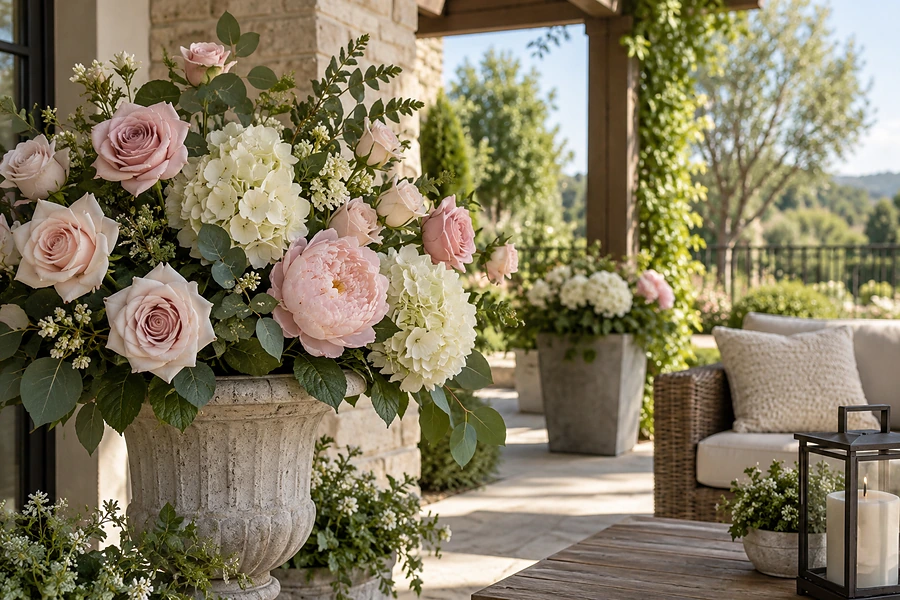
Covered patios, porches, hotel entrances, restaurant terraces, shop entrances, and event venues give me more options.
These locations often reduce rain and direct sunlight while still allowing people to see the flowers from close range.
That makes them useful places for realistic artificial flowers.
I still check the product description. If a flower says “indoor/covered outdoor,” I respect that limit. I do not move it into an exposed garden simply because it performed well under a roof.
For Permanent Open-Air Displays, I Put Durability First
My priorities change when an arrangement must stay in an open garden, rooftop, sunny balcony, roadside planter, uncovered entrance, or other fully exposed location.
In those spaces, I start with outdoor performance.
I look for:
- UV-resistant or UV-treated materials
- Clear outdoor-use instructions
- Weather-resistant construction
- Suitable moisture resistance
- Stable pigments
- Strong stems
- Secure flower heads
- Durable connection points
Then I choose the most realistic flowers from the products that meet those needs.
I believe this order is more reliable than choosing the most realistic flower first and trying to protect it later.
I Use This Checklist Before Buying Outdoor Real Touch Flowers
| Question I ask | Why it matters |
|---|---|
| Is it specifically rated for outdoor use? | “Real touch” alone does not answer this |
| Is it UV treated? | Direct sunlight can cause fading |
| Is it suitable for rain? | Some soft materials should remain dry |
| Is it for covered outdoor use only? | A porch is different from an open garden |
| What are the petals made from? | Materials respond differently to weather |
| What is inside the stem? | Outdoor moisture can affect some internal wire |
| How much direct sun will it receive? | More UV usually means faster aging |
| Is the display temporary? | Short events create less exposure |
| Can I move it during bad weather? | Protection can extend useful life |
| How should I clean it? | The wrong method can damage soft coatings |
I Match the Flower to the Project
When someone asks me, “Can real touch flowers be used outside?”, I answer yes, but with an important condition.
I match the flower to the environment.
For a one-day outdoor wedding, I may use highly realistic real touch roses, hydrangeas, peonies, or orchids with sensible weather protection.
For a covered patio, I look for real touch flowers approved for covered outdoor use.
For a permanent exposed planter, I usually start with UV-resistant and weather-resistant artificial flowers. I then choose the most realistic style available within that category.
This approach also helps when I am buying artificial flowers in larger quantities. Instead of asking only whether the flowers look real in a sample, I can ask about UV treatment, outdoor rating, material composition, moisture resistance, and recommended care.
That information helps me compare products more fairly.
It also reduces the risk of replacing large floral installations earlier than expected.
Real touch technology is valuable because it can make faux flowers look and feel much closer to fresh blooms. I simply do not expect that feature to replace proper outdoor engineering.
When I separate realism, UV resistance, weather resistance, and installation conditions, choosing the right outdoor artificial flowers becomes much easier.
Conclusion
Real touch flowers can be used outside, but I choose outdoor-rated materials, control weather exposure, and match UV and moisture resistance to the exact location.