
Outdoor wrought iron decor can add structure and character to a garden, but good design alone is not enough. The metal also needs to survive rain, moisture, sunlight, and temperature changes.
I make outdoor wrought iron decor by designing the shape, selecting suitable steel or iron, cutting and forming the pieces, joining them by welding or mechanical fasteners, smoothing the edges, and applying a rust-resistant outdoor finish. For most modern DIY projects, I use mild steel rather than true traditional wrought iron because it is easier to source and fabricate.
The most important part is not creating complicated scrollwork. I focus on a strong silhouette, secure construction, drainage, corrosion protection, and safe installation so the finished piece can remain attractive outdoors.
What Materials Do I Need to Make Outdoor Wrought Iron Decor?
The exact materials depend on whether I am making a garden stake, wall panel, trellis, sculpture, planter stand, or decorative screen. I usually start with simple steel bar, rod, tube, or flat stock.
For DIY outdoor wrought iron-style decor, I typically need mild steel rod or flat bar, measuring and marking tools, metal-cutting equipment, clamps, a grinder, and either welding equipment or suitable mechanical fasteners. I also need a rust-inhibiting metal primer and exterior metal paint, because untreated mild steel can corrode rapidly outdoors.
I First Decide What “Wrought Iron” Means for My Project
This distinction helps me avoid confusion.
Traditional wrought iron is an old iron material made with a fibrous internal structure. Genuine wrought iron is now uncommon in ordinary modern fabrication.
Most new products sold as wrought iron decor are actually made from mild steel that has been bent, forged, welded, or formed into a traditional ornamental style.
For a DIY garden project, that is usually practical.
Mild steel is:
- Widely available
- Relatively affordable
- Easy to cut
- Easy to weld
- Easy to bend with the right tools
- Compatible with paint and many decorative finishes
Modern metal sculpture fabricators commonly use mild steel because it accepts welding, grinding, paint, clear finishes, and other surface treatments well. The trade-off is corrosion: untreated mild steel needs protection outdoors.
I Choose the Steel Shape According to the Design
Different steel forms create different visual effects.
| Steel form | Good use |
|---|---|
| Round rod | Flowers, stems, curves, garden stakes |
| Square bar | Geometric designs and frames |
| Flat bar | Scrolls, leaves, borders, abstract forms |
| Round tube | Larger lightweight structures |
| Square tube | Screens, frames, trellises |
| Sheet steel | Leaves, birds, flowers, silhouettes |
| Steel plate | Heavy bases and structural components |
For beginner projects, I prefer flat bar and round rod.
They let me make simple botanical shapes, geometric patterns, garden stakes, and wall decorations without creating a complicated three-dimensional structure.
My Basic Tool List
Depending on the project, I may prepare:
- Tape measure
- Metal ruler
- Marker or metal scribe
- Bench vise
- Strong clamps
- Angle grinder
- Metal cutting discs
- Flap discs or grinding discs
- Drill and metal drill bits
- Welding machine if required
- Welding helmet and welding gloves
- Safety glasses
- Hearing protection
- Appropriate respirator or ventilation
- Wire brush
- Rust-inhibiting metal primer
- Exterior metal paint
For larger outdoor sculpture, professional fabrication may also involve plasma cutting, MIG or TIG welding, forging, bending equipment, and engineered mounting systems.
I do not use equipment that I am not trained to operate. Cutting, grinding, heating, and welding metal can produce sparks, hot surfaces, sharp edges, fumes, and intense light. For a first project, a simple design or a no-weld construction can be a better starting point.
How Do I Make Outdoor Wrought Iron Decor Step by Step?
I get better results when I treat the project as a sequence of design, fabrication, finishing, and installation rather than trying to create and paint everything at once.
To make outdoor wrought iron decor, I sketch the design at full scale, measure and cut the metal, form any bends or curves, temporarily assemble the pieces, weld or fasten the joints, grind sharp edges, clean the entire surface, apply rust-inhibiting primer, add exterior metal paint, and finally install the piece securely in its outdoor location.
Step 1: I Start With a Simple Design
I first decide where the decor will go.
A narrow garden stake needs a different design from a large wall panel.
I consider:
- Viewing distance
- Available space
- Wind exposure
- Overall height
- Weight
- Mounting method
- Nearby plants
- Whether people can touch the piece
Then I sketch the design.
For a first project, I like simple ideas such as:
- Metal flower garden stake
- Leaf silhouette
- Butterfly
- Geometric garden panel
- Simple trellis
- Sunburst wall decor
- Abstract circles
- Minimal plant support
- Small garden sculpture
I avoid adding too many curls just because wrought iron is associated with scrollwork.
Simple shapes are easier to fabricate and often look more contemporary.
Step 2: I Make a Full-Size Pattern
A small sketch can hide proportion problems.
I therefore draw the main shape at full size on cardboard, plywood, or heavy paper when practical.
This becomes my template.
For a flower, I can place steel rod directly over the drawing.
For a geometric panel, I can mark the length and angle of every section.
For a curved design, the pattern helps me judge whether the bend looks natural before I permanently join the parts.
Professional and hobby metal sculptors often work by laying pieces out, tack-welding them, checking the proportions, and adjusting the form before completing the welds.
Step 3: I Measure, Mark, and Cut
I mark each piece before cutting.
The basic rule is simple: I check the measurement before removing material.
Steel can be cut with several tools depending on thickness and available equipment.
Common options include:
- Angle grinder
- Metal chop saw
- Bandsaw
- Plasma cutter
A current steel-sculpture fabrication walkthrough recommends securely clamping bar stock before cutting and smoothing rough cut edges afterward with a grinder or flap disc.
I remove sharp burrs immediately.
Even if the final decor is purely decorative, exposed sharp metal edges can become a safety issue.
Step 4: I Shape the Metal
This is where the decorative character begins.
Simple curves in smaller mild-steel rod or flat bar may be formed with a vise, bending jig, or suitable bending equipment.
More complex traditional ironwork can involve heating metal and shaping it around forms or over an anvil.
Professional metal artists may use controlled torch heat for bending and forming ornamental sections.
For a beginner project, I avoid complicated hot forging.
I can still create attractive outdoor wrought iron-style decor with:
- Circles
- Arcs
- Straight lines
- Gentle bends
- Repeated geometric shapes
I test the pieces against my original pattern as I work.
Step 5: I Assemble the Design
I place all the pieces together before making permanent joints.
This is my chance to change the composition.
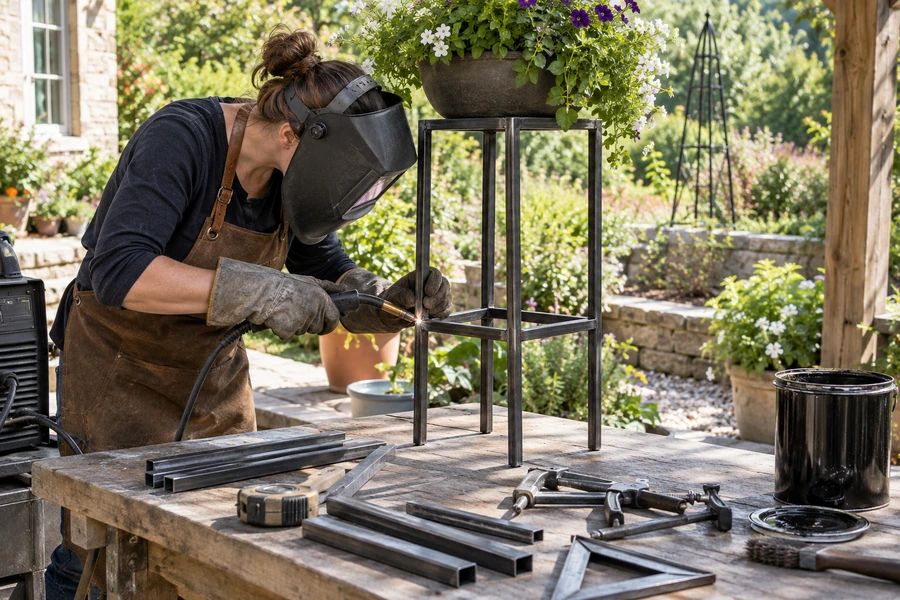
For a welded piece, I may make small tack welds first.
Tack welds hold the design together while still allowing me to inspect alignment and proportions before completing the final welds.
For decorative metal sculpture, MIG, TIG, stick, and other welding processes can all be used depending on the steel, thickness, scale, and desired appearance.
If I am not trained in welding, I use a professional fabricator for structural joints or choose a project that can be assembled mechanically.
Step 6: I Grind and Finish the Joints
After welding, I decide whether I want the welds visible.
An industrial-style sculpture can use the weld texture as part of the design.
A cleaner decorative panel may look better when the welds are carefully blended.
I grind only as much as the design requires.
Then I inspect the entire piece for:
- Sharp edges
- Welding spatter
- Rough joints
- Loose components
- Places where water may collect
This last point matters outdoors.
A decorative shape that traps rainwater can develop corrosion more quickly.
For hollow outdoor metal sculptures, professional fabrication guidance specifically emphasizes drainage and avoiding areas where water can remain trapped.
How Do I Keep Outdoor Wrought Iron Decor From Rusting?
Outdoor iron and ordinary steel need protection because moisture and oxygen create corrosion. I treat the finish as part of the construction, not as an optional decorative step.
I protect outdoor wrought iron decor by removing rust and scale, cleaning and drying the surface, applying a rust-inhibiting metal primer, and finishing with compatible exterior metal paint. I give extra attention to welds, joints, corners, and crevices because dirt and moisture can collect there and accelerate corrosion.
I Prepare the Surface Carefully
Paint performs better on a properly prepared surface.
Before priming, I remove:
- Loose mill scale
- Rust
- Oil
- Grease
- Welding residue
- Dust
- Loose paint if I am restoring an older piece
A wire brush, abrasive paper, or grinder can help clean rusty steel.
This Old House recommends removing rust and loose coatings from wrought iron or steel before applying metal primer and an exterior enamel finish.
I also let the metal dry completely before coating it.
I Use a Rust-Inhibiting Primer
Primer creates the foundation for the protective paint system.
I choose a product specifically designed for ferrous metal and exterior exposure.
I do not assume ordinary wall primer will work.
For ornamental metalwork, current restoration guidance recommends a rust-inhibiting metal primer followed by an exterior rust-resistant enamel that is compatible with the primer.
I pay special attention to:
- Welds
- Corners
- Ground areas
- Joints
- Decorative crevices
- Cut ends
These areas can be easy to miss.
They are also places where moisture may sit.
I Add Exterior Metal Paint
After the primer has dried according to the product instructions, I apply an exterior-rated metal finish.
I prefer several controlled coats rather than one very thick coat.
For traditional outdoor wrought iron decor, black remains a practical choice, but I can also use:
- Charcoal
- Bronze
- Dark green
- Cream
- Aged white
- Deep brown
- Muted blue
- Other exterior-rated colors
Professional outdoor mild-steel sculpture may use much more sophisticated coating systems. One artist describes using multiple coats of primer, two-part urethane color, and a UV-resistant clear topcoat for outdoor steel works.
For a home DIY project, I follow the complete coating system recommended by the primer and paint manufacturer rather than mixing incompatible products.
Spray or Brush?
Both can work.
Spray application can reach ornamental shapes and can create a smoother finish when used correctly.
A brush is useful for working primer into rough surfaces, joints, and detailed areas.
This Old House recommends spray application for smooth coverage on ornamental iron while noting that brushing primer into badly rusted or rough areas can improve protection.
For an ornate piece, I may combine both techniques.
I Do Not Forget Future Maintenance
Outdoor coatings eventually get scratched.
A small chip can expose bare steel.
Once moisture reaches that exposed area, corrosion can begin.
I inspect my outdoor metal decor periodically.
If I find a small rust spot, I deal with it early rather than waiting for a large area to peel.
My maintenance sequence is usually:
- Clean the area.
- Remove loose rust and paint.
- Smooth the edge.
- Apply compatible metal primer.
- Touch up with exterior paint.
Regular cleaning also helps because dirt and moisture can collect in ornamental joints and speed up corrosion.
Can I Make Outdoor Wrought Iron Decor Without Welding?
Welding gives me the greatest freedom, but it is not required for every outdoor metal project. A no-weld design can be a much better choice for a beginner.
Yes, I can make some outdoor wrought iron-style decor without welding by using bolts, screws, metal brackets, threaded rod, wire connections, prefabricated metal shapes, or existing steel frames. I still choose outdoor-compatible fasteners and protect all exposed steel surfaces against corrosion. Large structural pieces should use connections designed for the expected weight and wind load.
I Use Mechanical Connections for Simple Projects
A decorative garden panel can sometimes be assembled inside an existing metal or wooden frame.
A wall decoration can use overlapping metal strips joined with bolts.
Garden stakes can use preformed decorative elements attached with suitable hardware.
This approach allows me to create the wrought iron look without learning welding as part of the same project.
Possible no-weld ideas include:
- Bolted geometric wall panel
- Metal garden stake
- Hanging metal ornaments
- Decor attached to an existing trellis
- Prefabricated scroll arrangement
- Metal plant support
- Decorative sign frame
I still make sure the fasteners are appropriate for exterior exposure.
A connection that rusts faster than the main decor can become the weak point.
I Can Combine Purchased Metal Elements
Another easy approach is to buy unfinished steel scrolls, leaves, rings, or decorative components and combine them into my own composition.
This reduces the amount of metal forming I need to do.
I can arrange several components on a frame and use mechanical connections where the design allows.
For a permanently welded composition, I can also prepare the entire design myself and have a local metal fabricator complete the welding.
That lets me control the creative side without taking unnecessary safety risks.
Larger Pieces Need More Engineering
I treat small wall decor differently from a tall free-standing sculpture.
Outdoor pieces must deal with:
- Wind
- Weight
- People touching them
- Ground movement
- Corrosion
- Water
- Thermal expansion
Professional outdoor sculpture fabrication therefore includes structural design, foundation planning, anchoring, and installation rather than focusing only on the artwork itself.
If I am making something tall, heavy, load-bearing, overhead, or accessible to the public, I do not improvise the structural connections.
I use appropriate professional help.
What Finish Is Best for Outdoor Wrought Iron Decor?
The right finish depends on whether I want traditional black iron, aged metal, bright color, or a naturally weathered appearance.
For most DIY outdoor wrought iron-style decor made from mild steel, I prefer a rust-inhibiting metal primer followed by a compatible exterior enamel or direct-to-metal coating. Powder coating is another durable option when professional finishing is available. If I want a rusted appearance, I prefer a controlled decorative finish rather than allowing structural steel to corrode indefinitely.
Black Is Classic but Not Mandatory
Black works because it creates a strong silhouette against plants and pale walls.
It also fits many styles:
- Traditional gardens
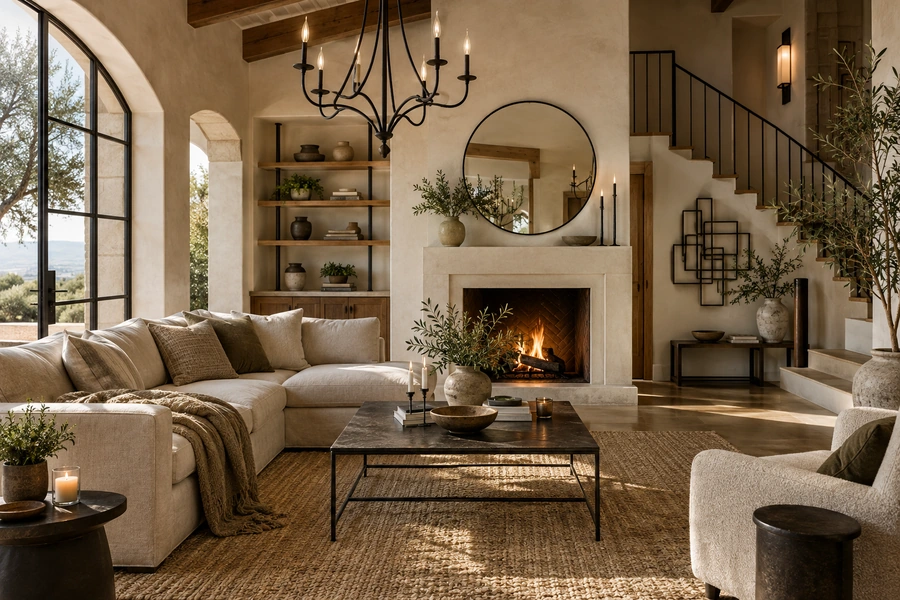
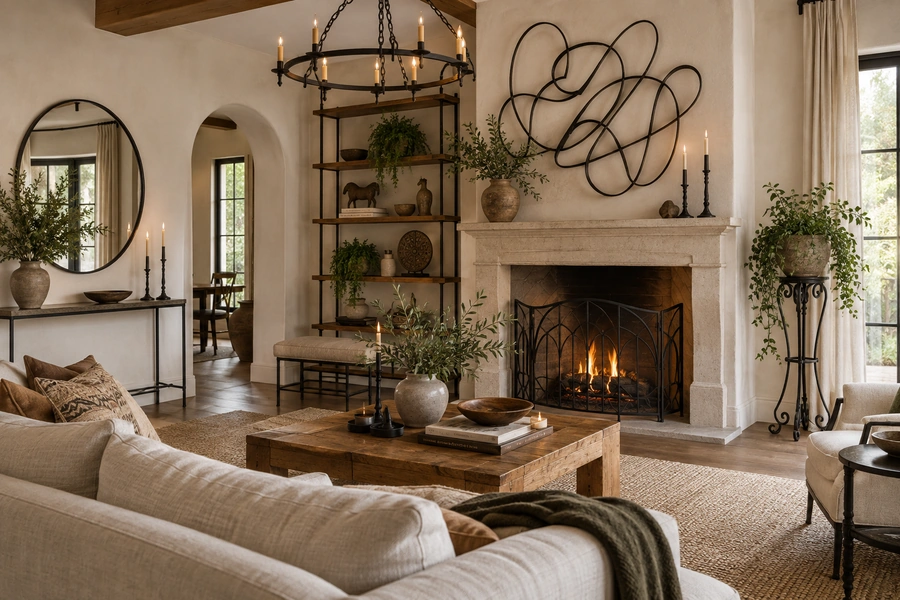
- Mediterranean homes
- Farmhouse exteriors
- Modern landscapes
- French-inspired courtyards
However, black is not the only option.
A dark bronze can feel softer.
A muted green can blend with foliage.
A cream or aged white finish can suit cottage-style spaces.
A natural rust appearance can work in more contemporary landscapes.
I Am Careful With Real Rust
Rust can be attractive.
But uncontrolled rust is still corrosion.
This Old House describes faux-rust finishing as a way to create the appearance of aged metal without relying on structural deterioration.
For ordinary mild steel, I normally protect the metal and create the aged appearance with paint or a controlled finishing system.
Weathering steel is different.
It is designed to form a protective patina under suitable environmental conditions, although early runoff can stain nearby paving or masonry.
I do not assume ordinary mild steel behaves like weathering steel.
Powder Coating Can Be Useful
Powder coating is another option for outdoor metal decor.
The metal is professionally prepared, electrically coated with powder, and cured under heat.
It can create a durable, uniform finish.
For custom architectural sculpture, powder coating is one of the finishing systems currently used on exterior mild-steel artworks.
It is especially useful when I want:
- Even color
- A clean professional appearance
- Good exterior durability
- Many color choices
The quality still depends heavily on surface preparation and the complete coating system.
My insights: How to Make Outdoor Wrought Iron Decor
After looking at fabrication and outdoor-maintenance practices together, I think the most successful project is not the one with the most complicated metalwork. It is the one designed for outdoor exposure from the beginning.
I make durable outdoor wrought iron decor by starting with a simple design, fabricating it from suitable mild steel or ornamental metal, creating strong joints, eliminating sharp edges and water traps, and protecting every exposed surface with an exterior corrosion-control system. I also design the mounting method before fabrication because durability depends on both the artwork and its installation.
My First Insight: I Design for Weather Before I Design the Scrollwork
This is the biggest difference between indoor and outdoor metal decor.
An indoor wall ornament mainly needs to look good and remain securely attached.
An outdoor decoration faces:
- Rain
- Condensation
- Humidity
- Sunlight
- Wind
- Temperature changes
- Dirt
- Pollution
- Irrigation water
Professional exterior sculpture guidance treats environmental assessment, corrosion strategy, drainage, fabrication, foundation preparation, and installation as part of one design process.
I use the same principle on a smaller DIY scale.
I ask where the rain will go.
I check whether a hollow section can collect water.
I think about whether the base will remain wet after irrigation.
I decide how the decor will be removed if it ever needs repainting.
These practical questions make the piece last longer.
My Second Insight: Modern “Wrought Iron” Does Not Need to Be Traditional Wrought Iron
For most DIY decoration, I do not need antique wrought iron.
Mild steel gives me the appearance and fabrication flexibility I need.
I can cut it.
I can bend it.
I can weld it.
I can paint it.
That is why modern ornamental ironwork and metal sculpture often rely on steel.
The important part is recognizing that ordinary mild steel requires corrosion protection outdoors.
This understanding also changes how I shop for materials.
Instead of searching only for “wrought iron,” I can look for:
- Mild steel flat bar
- Steel round rod
- Ornamental steel scrolls
- Steel rings
- Decorative metal leaves
- Steel tubing
Then I build the wrought iron-style design myself.
My Third Insight: Simpler Designs Often Work Better Outdoors
Complex scrollwork contains more intersections, corners, and tight spaces.
Those areas can trap dirt and moisture.
They can also make painting and maintenance more difficult.
This does not mean I avoid ornamental details.
I simply use them intentionally.
For a contemporary garden, I may create:
- Repeated circles
- Botanical silhouettes
- Simple leaves
- Geometric lines
- Abstract branches
For a traditional garden, I can add restrained curls and scrolls.
The silhouette should still be readable from the normal viewing distance.
My Fourth Insight: The Finish Is Part of the Construction
I do not think of paint as decoration added at the end.
For mild steel outdoors, the coating system is part of the durability strategy.
This Old House’s ornamental metal guidance emphasizes cleaning, rust removal, protective primer, exterior finish coats, and continued maintenance because moisture eventually attacks exposed iron.
So my process is:
| Stage | My priority |
|---|---|
| Design | Good silhouette and outdoor suitability |
| Material | Fabrication-friendly steel |
| Cutting | Accurate shape and safe edges |
| Forming | Natural curves and proportions |
| Joining | Secure connections |
| Grinding | Clean finish |
| Drainage | No unnecessary water traps |
| Cleaning | Remove contamination |
| Primer | Rust inhibition |
| Paint | Exterior protection and color |
| Installation | Secure mounting |
| Maintenance | Repair chips early |
I see all of these stages as part of one finished piece.
My Fifth Insight: Installation Determines Whether the Decor Is Truly Outdoor-Ready
A beautiful metal sculpture that falls over in wind is not a successful outdoor project.
I decide the installation before I finish fabrication.
A garden stake needs enough depth or support in the ground.
A wall panel needs exterior-rated anchors that suit the wall construction.
A free-standing sculpture may need a wide weighted base or permanent anchoring.
A large installation may require a concrete foundation or engineered mounting.
Professional outdoor metal sculpture projects use mounting and foundation systems designed around the weight, scale, wind, and site rather than treating installation as an afterthought.
My Final Method
When someone asks me, “How to make outdoor wrought iron decor?”, I use a straightforward sequence.
I first decide what the piece should look like and where it will be installed.
I draw it at full size.
I choose mild steel rod, flat bar, tube, or sheet that fits the design.
I cut and form the individual pieces.
I assemble the composition temporarily.
Then I weld it securely or use properly designed mechanical connections.
I grind sharp edges and clean the surface.
Before painting, I check every corner for places where water can sit.
I apply a suitable rust-inhibiting metal primer.
Then I apply a compatible exterior metal finish.
Finally, I install the decoration with a mounting system appropriate for its size and exposure.
After installation, I inspect it periodically for paint chips or early rust.
That maintenance step matters because outdoor metalwork is never completely separated from its environment.
A well-made piece can remain attractive for many years, but its lifespan depends on material, fabrication, finish, location, and care working together.
So I do not define successful outdoor wrought iron decor by the number of scrolls or decorative details.
I define it by good proportions, strong construction, controlled corrosion, secure installation, and a finish that complements the garden around it.
Conclusion
I make outdoor wrought iron decor by combining a simple metal design, strong fabrication, safe edges, good drainage, rust-inhibiting primer, exterior paint, secure installation, and regular maintenance.